
Matthew Sparkes in New Scientist:
 Buying or selling bitcoin uses 16,000 litres of clean water for every single transaction, which could exacerbate existing droughts around the world. While the energy consumption and carbon emissions produced by bitcoin and other cryptocurrencies have been well studied, this is the first assessment of its water use and wider environmental impact.
Alex de Vries at the VU Amsterdam School of Business and Economics in the Netherlands has calculated that mining – the computational process that secures the bitcoin network – uses between 8.6 and 35.1 billion litres of water per year in the US alone. He says that bitcoin used 1.6 trillion litres of water globally in 2021, and expects this to rise to 2.3 trillion litres this year. Broken down per transaction, that means a single bitcoin trade consumes 16,000 litres of water – enough to fill a small swimming pool. This is “increasingly hard to defend”, says de Vries.
More here.
 DNA mutations
 Nonprofit hospitals have been caught doing some surprising things, given how they are supposed to serve the public good in exchange for being exempt from federal, state and local taxes — exemptions that added up to
 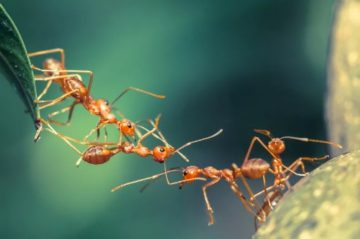 Biologists have discovered another incredible skill of ants that put humans to shame—they have a special technique to avoid traffic jams. Scientists from Texas Tech University and other institutions studied the 20-minute rhythms of the Leptothorax ant and discovered that their clever synchronization skills allowed them to avoid congestion. Their findings are published in a Proceedings of the Royal Society study.
 On that gray February morning, the exhibit galleries smelled of perfumed wool and vibrated with a hushed reverence for Picasso’s creatures—two-legged, four-legged, winged, taloned, hooved. A man with a goat, a tiny horse with casters for feet, a girl jumping rope, Picasso’s ever-present Minotaur. And many, many women.
 The Artificial Intelligence landscape is changing with remarkable speed these days, and the capability of Large Language Models in particular has led to speculation (and hope, and fear) that we could be on the verge of achieving
  Henry Farrell: You’ve written a very influential
 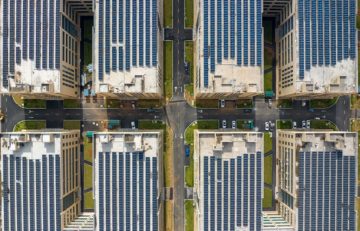 On the outskirts of Brandenburg an der Havel, Germany, nestled among car dealerships and hardware shops, sits a two-storey factory stuffed with solar-power secrets. It’s here where UK firm
  As we age, our memory declines. This is an ingrained assumption for many of us; however, according to neuroscientist Dr. Richard Restak, a neurologist and clinical professor at George Washington Hospital University School of Medicine and Health, decline is not inevitable. The author of more than 20 books on the mind, Dr. Restak has decades’ worth of experience in guiding patients with memory problems. “The Complete Guide to Memory: The Science of Strengthening Your Mind,” Dr. Restak’s latest book, includes tools such as mental exercises, sleep habits and diet that can help boost memory.
 Even though Kierkegaard treats despair as a spiritual and existential condition rather than just a psychological state, The Sickness Unto Death sparkles with psychological insight. Especially compelling is his diagnosis of the different forms of despair that arise from an imbalance between the various pairs that make up the human synthesis (those first folds in our sheets of paper). Too much necessity, and we lose all imagination and hope—we cannot breathe; too much possibility, and we float airily, ineffectually, above our own lives. Too much finitude, and we lose ourselves in trivial things; too much infinitude, and we’re disconnected from the world. Since life is so rarely in balance, despair is the inevitable state—but understanding this, for Kierkegaard, opens up a renewed perspective on how to live with this inevitability.
 Elizabeth Bishop delighted in the postcard. It suited her poetic subject matter and her way of life—this poet of travel who was more often on the move than at home, “wherever that may be,” as she put it in her poem “Questions of Travel.” She told James Merrill in a postcard written in 1979 that she seldom wrote “anything of any value at the desk or in the room where I was supposed to be doing it—it’s always in someone else’s house, or in a bar, or standing up in the kitchen in the middle of the night.”
 K
K W
W