
A.O. Scott in the New York Times:
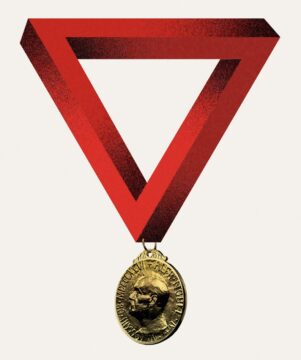 The Swedish Academy is not here to tell you what writers you might like. Greatness is not the same as popularity. It may even be the opposite of popularity. Great books are by definition not the books you read for pleasure — even if some of them turn out to be, and may even have been intended to be, fun — and great writers, being mostly dead, don’t care if they’re your favorites. The great books are the ones you’re supposed to feel bad about not having read. Great writers are the ones who matter whether you read them or not.
How strange. And yet, how normal. “It is natural to believe in great men,” Ralph Waldo Emerson wrote. “We call our children and our lands by their names. Their names are wrought into the verbs of language, their works and effigies are in our houses, and every circumstance of the day recalls an anecdote of them.” That’s from the beginning of “Representative Men,” an 1850 collection of essays, influenced by Thomas Carlyle’s “On Heroes, Hero-Worship, and the Heroic in History,” that pursues the principle of greatness through time, locating it in a half-dozen exemplary individuals.
Given Emerson’s title and his times, it’s not surprising that all his exemplars are male. But it is notable that most are writers and thinkers, including Plato, Montaigne, Shakespeare and Goethe and Emerson’s favorite, the theologian Emanuel Swedenborg. Napoleon is the only political leader in the group, perhaps in keeping with a mid-19th-century New Englander’s temperamental mistrust of monarchic or imperial power.
More here.
Enjoying the content on 3QD? Help keep us going by donating now.
 The U.S. presidential election is decided by American citizens in a handful of states, but its outcome reverberates internationally: the new president will have the power to shape trade, migration, security and rising authoritarianism across the world, as well as the wars in Gaza and Ukraine. The race is therefore a global event, the subject of countless newspaper articles, debates and calculations. We asked 12 writers, each from a different country, to share what the conversation sounds like where they live: What are politicians saying, and how is the press covering the race? What are the hopes for a Kamala Harris presidency, or a Donald Trump one — and what are the fears? Our writers describe widely divergent attitudes toward the election and its unknown conclusion, from apathy and disillusionment to anxiety, hope and glee.
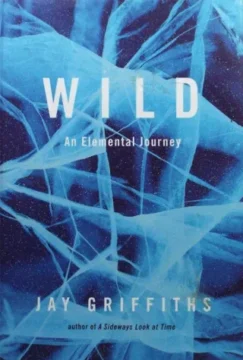 Jay Griffiths offers a mighty antidote in her 2006 masterpiece
 In 2012, at the age of 25, I quit my part-time jobs cooking and cleaning houses and, having dropped out during my first semester seven years earlier, went back to school. To help pay for the modest tuition at Indiana University Southeast in New Albany, Indiana, I took a work-study gig at the university library. The campus of IUS is small, and most students are commuters; the library was accordingly quiet, the work languid. So in the many slow periods between tasks, I read. Essays, stories, poems—whatever I could get my hands on. My reading was omnivorous and unstructured: like the critics in the first part of Roberto Bolaño’s 2666, I pursued knowledge like sleuths in a roman noir, or like the poet Juan García Madero from his Savage Detectives, for whom “every book in the world is out there waiting to be read by me.” I followed a friend onto Twitter—the early 140-character years, with few journalists and politicians and no blue checkmarks—and there I came into contact for the first time with the world of magazines, small and large, that constituted the internal chatter of the educated American upper-middle class.
 A year later, the 28-year-old is still documenting the lived experience of Palestinians in a place with scars
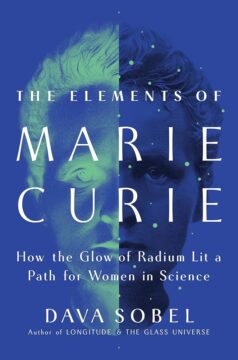 Marie Curie’s life was defined by professional triumph and personal tragedy. Ninety years after her death, she remains history’s most famous woman scientist. Curie was the first woman to receive a Nobel Prize – in 1903, she and her husband, Pierre, received the award for physics. In 1911, she was awarded a second Nobel Prize, this time for chemistry. She is still the only Nobel laureate to be garlanded in two scientific fields.

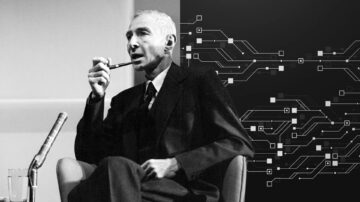 A few days after the atomic bombs were dropped on Hiroshima, Robert Oppenheimer (one of the author’s grandfather) wrote in a letter to his old teacher, Herbert Smith, that “the future, which has so many elements of high promise, is yet only a stone’s throw from despair.” The promise that Oppenheimer was talking about was the promise that the horror of nuclear weapons might abolish war. The despair that he was talking about was the despair that mankind may not be wise enough to handle this millennial source of power without destroying itself.
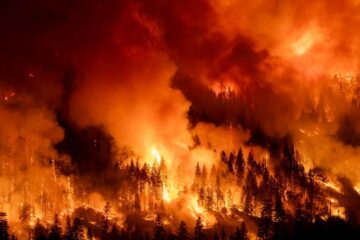 A growing number of the planet’s “vital signs” have reached record levels due to climate change and other environmental threats, according to a stark report by a group of prominent researchers.
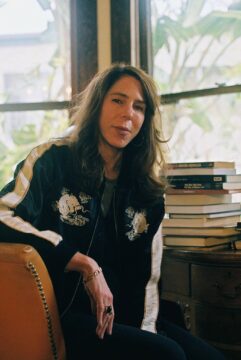 Rachel Kushner’s new novel, “Creation Lake,” is set in rural France, but not the rural France of guidebooks and
 I