
Jeff Tollefson in Nature:
 Plagiarism is one of academia’s oldest crimes, but Claudine Gay’s resignation as Harvard University’s president following plagiarism allegations has sparked a fresh online debate: about when copying text should be a punishable offence. Some academics are even advocating for a more streamlined publishing model in which researchers can copy more and write less — so long as the source of the information is clear.
The notion that all researchers must compose their own sentences remains a bedrock principle for many, but that view might encounter new resistance in a world with essentially limitless access to information and increasingly sophisticated artificial intelligence (AI) algorithms that can reproduce language with eerie accuracy. “I think the idea that one should never ever copy somebody else’s words is a bit outdated,” says Lior Pachter, a computational biologist at the California Institute of Technology in Pasadena, adding that the key is to ensure that information is properly sourced. Academia has larger problems, he says, including data fabrication.
More here.
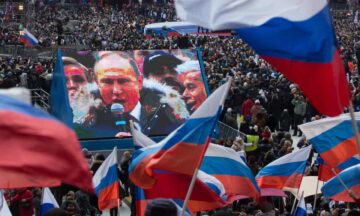 Just who is Vladimir Putin? In the 20-odd years he’s been in power, even the Russian leader’s physical appearance has undergone a series of ominous transformations. The alert but colourless apparatchik of his early years first became a smooth-faced enigma, then a tsar of such feline menace that you half expect to see bloody feathers at the corner of his mouth. And that’s nothing compared to the changes that have happened in Russia: at the dawn of the millennium it seemed to be stumbling towards democracy. It had, albeit imperfectly, such things as free speech and opposition politicians. Even Putin seemed to talk sincerely of partnership with his former cold war opponents. So what on earth happened?
 One of the most important conceptual developments of the past few decades is the realisation that belief comes in degrees. We don’t just believe something or not: much of our thinking, and decision-making, is driven by varying levels of confidence. These confidence levels can be measured as probabilities, on a scale from zero to
 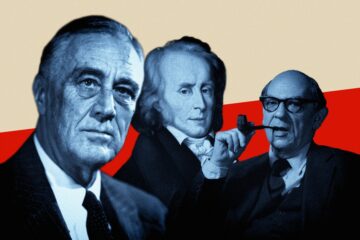 Becca Rothfeld: The first question I wanted to ask is how to improve liberalism. Despite some misreadings of Liberalism Against Itself as illiberal, it’s very much not an anti-liberal book. It’s a book that’s disappointed with the direction that postwar liberalism has taken, but it’s also cautiously optimistic about the liberal tradition’s ability to redeem itself.
 V
V I
I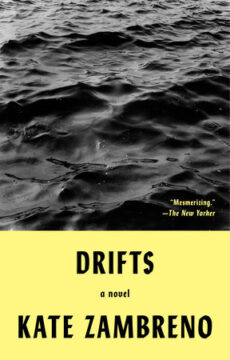 Toward the end of “The Light Room,”
 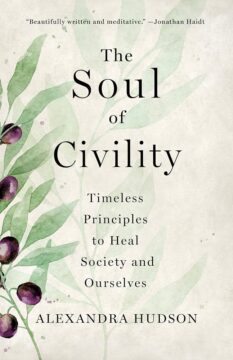 I understand why many find civility a deeply questionable—if not totally worthless—discourse: cries for civility are often just attempts to silence desperate demands for justice, cloaked in the language of liberal rationality and tolerance. As Martin Luther King Jr. himself famously put it, civility is too often a weapon of the “white moderate, who is more devoted to ‘order’ than to justice; who prefers a negative peace which is the absence of tension to a positive peace which is the presence of justice.” Many of us are skeptical when someone brings up civility, and for good reason.
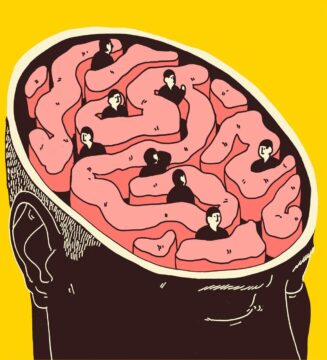 The hardest question in neuroscience [is] a very simple one, and devastating in its simplicity. If even small artificial neural networks are mathematical black boxes, such that the people who build them don’t know how to control them, nor why they work, nor what their true capabilities are… why do you think that the brain, a higher-parameter and more messy biological neural network, is not similarly a black box?
 In 2021 the polling firm Ipsos asked 21,000 people in 30 countries to choose from a list of nine actions which ones they thought would most reduce greenhouse gas emissions for individuals living in a richer country. Most people picked recycling, followed by buying renewable energy, switching to an electric/hybrid car, and opting for low-energy light bulbs. When these actions were ranked by their actual impact on emissions, recycling was third-from-bottom and low-energy light bulbs were last. None of the top-three options selected by people appeared in the “real” top three when ranked by greenhouse gas reductions, which were having one fewer child, not having a car, and avoiding one long-distance flight.
 The media headlines of the past year suggest that things have gotten a lot worse since 2017—and both Thomas and
  S
S Brutalist architecture. You either love it or hate it, right? However you feel, we can all agree that Brutalism is an architectural style that continues to elicit strong reactions some seventy years into its existence. At times, it seems like everyone hates it. Take, for instance, Ian Fleming,