
The Editors at The Point:
In this issue, in lieu of our own commentary, we have decided to publish a conversation that took place on October 24th between Israeli and Palestinian activists. In the nearly two months since, the conflict has continued and deepened, notwithstanding the week-long “pause” for the exchange of hostages and political prisoners at the end of November. As we finish this issue, Israel’s aerial bombardment of Gaza and ground war are ongoing, resulting in a humanitarian crisis and the deaths of a reported sixteen thousand Palestinians, while Hamas and affiliated groups still hold 136 hostages abducted from Israel. Yet these developments have done little to alter the backdrop under which this dialogue was convened—a “very dark passage,” in the words of moderator Charles Lenchner—while only making even more urgent its central themes. We recommend it for many reasons: because the speakers’ understanding of the situation is extensive, nuanced and personal; because they are not addressing captive, convinced audiences but each other; because they are attempting, as they speak, to come to terms with both the possibilities and the limitations of their power; because the stakes for them are in no way symbolic or abstract; because they speak, credibly, as if their lives depend on what they say and do.
more here.
 Nigeria is the
 One recurring point of contention in political debates is what language we should use to discuss matters of moral and political significance. Many on the progressive left prefer particularist moral language, which emphasizes the specific needs and grievances of particular groups. Others prefer to use universalistic language, which refuses to draw distinctions between groups and focuses on what unites us. The paradigm of this disagreement is the debate between those who prefer the slogan “all lives matter” and those who prefer “black lives matter,” although the conflict is larger than this. For example, many progressives have adopted slogans like “black is beautiful” or “the future is female” that those on the
  M
M At an
At an  W
W Others explored even darker recesses. In 1925, Alwar’s ruler mowed down five hundred farmers and then torched their village after they had the temerity to protest against his rapacious land tax – an episode far grislier than the Amritsar Massacre of six years earlier. The penultimate ruler of Patiala’s appetite for quail – he devoured twenty-five in a single sitting – was equalled only by his appetite for tax and sex. Some 60 per cent of the state’s income was spent on his sustenance. Bureaucrats were jailed for failing to supply him with a ‘constant stream of young peasant girls for his sexual gratification’. It was left to his son and successor, Yadavindra Singh, to deal with Partition. ‘Death to all Muslims,’ he intoned on learning in 1947 that Pakistan coveted his kingdom, in which Sikhs were the largest group, before leading a conga through his palace. As it was, his problem solved itself. Around the time of Partition, fear whittled down the Muslim population in the Punjab princely states from a million to under fifty thousand. Patiala went to India.
 Senior Biden administration leaders have self-consciously styled Biden’s approach as a move away from the neoliberal presumptions of the
  The
The  Meredith Lue, president of the Mary Ellen Mark Foundation told CNN via video call that the photographer, who experienced a challenging family life in her youth, found herself gravitating toward — and connecting with — people in vulnerable situations.
 “Palestine is a story away.” This is what Refaat Alareer wrote on my copy of the short story anthology he edited in 2014, Gaza Writes Back. The contributors were his students at the Islamic University of Gaza.
 Every year at this time, people making resolutions look to self-help books to guide them in their new goals and ambitions. But our self-help is over-simplified easy optimism, a hangover from the days when How to Win Friends and Influence People defined the genre. It’s a mass of stoicism, wellbeing, minimalism, misunderstood Taoism, and productivity and habit advice. This sort of self-help can often be useful, but it is not a whole way of living. Rules for life and aphorisms are a starting point. The Ten Commandments are the original ten rules for life, but they came with the Bible, one of the largest, most challenging books ever written. The more accessible self-help becomes, the less useful it really is.
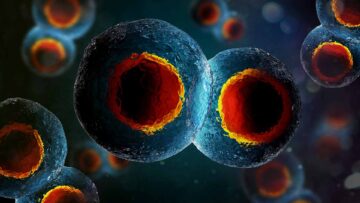 In September, scientists at the Guangzhou Institutes of Biomedicine and Health