
Category: Recommended Reading
Sunday Poem
On the Pavement
Ahmad Shamlou
My unseen friends
are like falling stars
Such landed on the stabbed
heart of the earth
that I said the Earth
will forever be left
with no blaze
will forever be left
a darkened night
***
And then
Who was I?
Who?
The silent owl,
hidden
trapped in a nest
of his own inert
sorrow.
***
I put away
my lyre and its broken string,
I took up a lantern
and stepped into the road,
moving around the lane
Singing: “Behold!
Look out of the window!
Behold the blood
all over the pavement!”
“You can see the blood
is from the opened veins of the Sun
Don’t you hear the heartbeat of the Sun
from every drop?”
Barack cooks Keema, Daal; reads Urdu poetry. I knew it: he’s a secret Pakistani!
Anwar Iqbal interviews POTUS for Dawn:
‘Any plan to visit Pakistan in the near future?’
‘I would love to visit. As you know, I had Pakistani roommates in college who were very close friends of mine. I went to visit them when I was still in college; was in Karachi and went to Hyderabad. Their mothers taught me to cook,’ said Mr Obama.
‘What can you cook?’
‘Oh, keema … daal … You name it, I can cook it. And so I have a great affinity for Pakistani culture and the great Urdu poets.’
‘You read Urdu poetry?’
‘Absolutely. So my hope is that I’m going to have an opportunity at some point to visit Pakistan,’ said Mr Obama.
‘And obviously one of the things that I think ties our countries together is the extraordinary Pakistani-American community that is here in the United States who are thriving and doing great work as physicians and as lawyers and as business people. And one of the great opportunities I think for Pakistan is to be able to draw on all this talent and extraordinary entrepreneurship to help provide concrete benefits to the Pakistani people, and I think that’s one of the biggest challenges for Pakistan,’ he said.
More here.
Inside Roy Lichtenstein’s Studio
From lensculture:
Anyone who has had the privilege of visiting a great artist in his or her studio knows how exciting it can be to witness creative work in progress — and to check out the sketches, notes, objects and images that the artist chooses to keep in the space for inspiration.
A new series of photographs has recently emerged that provide an intimate look at the studio and working environment of Pop artist Roy Lichtenstein. Photographer Laurie Lambrecht worked as his part-time assistant from 1990 to 1992, helping him to inventory his studio in preparation for his 1993 retrospective at the Solomon R. Guggenheim Museum in Manhattan.
While they were re-visiting files and scrapbooks together, Lichtenstein encouraged her to make photographs from time to time, and was often pleased and amused by the results. Lambrecht’s photos offer fascinating insight into Lichtenstein’s working processes and source materials, as well as being vibrant works of art in their own right.
More here.
Mousavi’s Latest Statement: “I Followed Them”
Via Andrew Sullivan:
“In the name of God, the kind and the merciful
Indeed god demands you to safe keep what people entrust in you, and to rule them with justice. [this a verse of Koran]
Respectable and intelligent people of Iran, These nights and days, a pivotal moment in our history is taking place. People ask each other: “what should we do?, which way should we go?”. It is my duty to share with you what I believe, and to learn from you, may we never forget our historical task and not give up on the duty we are given by the destiny of times and generations.
30 years ago, in this country a revolution became victorious in the name of Islam, a revolution for freedom, a revolution for reviving the dignity of men, a revolution for truth and justice. In those times, especially when our enlightened Imam [Khomeini] was alive, large amount of lives and matters were invested to legitimize this foundation and many valuable achievements were attained. An unprecedented enlightenment captured our society, and our people reached a new life where they endured the hardest of hardships with a sweet taste. What this people gained was dignity and freedom and a gift of the life of the pure ones [i.e. 12 Imams of Shiites]. I am certain that those who have seen those days will not be satisfied with anything less. Had we as a people lost certain talents that we were unable to experience that early spirituality? I had come to say that that was not the case. It is not late yet, we are not far from that enlightened space yet.
I had come to show that it was possible to live spiritually while living in a modern world. I had come to repeat Imam’s warnings about fundamentalism. I had come to say that evading the law leads to dictatorship; and to remind that paying attention to people’s dignity does not diminish the foundations of the regime, but strengthens it.
I had come to say that people wish honesty and integrity from their servants, and that many of our perils have arisen from lies. I had come to say that poverty and backwardness, corruption and injustice were not our destiny. I had come to re-invite to the Islamic revolution, as it had to be, and Islamic republic as it has to be. In this invitation, I was not charismatic [articulate], but the core message of revolution was so appealing that it surpassed my articulation and excited the young generation who had not seen those days to recreate scenes which we had not seen since the days of revolution[1979] and the sacred defense. The people’s movement chose green as its symbol. I confess that in this, I followed them.
More here.
Modern Iranian Culture for Dummies
From Vanity Fair:
If you couldn’t get enough of momentous national street protests before, Iran’s ongoing Tweet-volution will certainly keep you buried in a backlog of must-see/read/post-to-Facebook digital tidbits of cyber-democracy in action for a long time. Between refreshing Andrew Sullivan’s page for the next tsunami of Persian-green tweets, and watching all those YouTube videos with bigger crowds than Braveheart, it might be easy to think you know the nooks and crannies of Tehran like the back of your hijab. However, while the mainstream media’s coverage of the posts linked round the world may resemble a brontosaurus trying to win the 100m dash, there is only so much depth you can get out of 10 mins of low-res cell phone footage or texts with a 160 character limit. So for those of us curious for a window into Iran that allows for a more leisurely, reflective glimpse, there’s certainly been no shortage of sources of late that don’t require a DSL connection—and won’t strain your eyes without the proper gamma correction:
If you’ve been within eyeshot of a New York Times best-seller list anytime with in the past five years, chances are you’ve heard of Azar Nafisi’s acclaimed 2003 memoir, Reading Lolita in Tehran. After resigning from a comparatively liberal Iranian university in the mid-90s, Nafisi hand-picked female students to read “forbidden” works by Fitzgerald, James and of course, the grandiloquent patron of literary perversion himself, Vladimir Nabokov. Then, she wrote down her experience and the stories of her students demonstrating how a book club can be an act of sedition. More recently, Iranian-American Azadeh Moaveni, who first re-connected with her inner Iranian in Lipstick Jihad, returned to Tehran in 2005 to cover Mahmoud Ahmadinejad’s election. After she fell in love, got pregnant, and got married, she tried to make a permanent home there for herself—she didn’t quite succeed but her clashes with the Ministry of Intelligence became the backbone of her new book Honeymoon in Tehran.
More here.
Saturday, June 20, 2009
A Supreme Leader Loses His Aura as Iranians Flock to the Streets
Roger Cohen in the New York Times:
Khamenei has taken a radical risk. He has factionalized himself, so losing the arbiter’s lofty garb, by aligning himself with President Mahmoud Ahmadinejad against both Mir Hussein Moussavi, the opposition leader, and Ali Akbar Hashemi Rafsanjani, a founding father of the revolution.
He has taunted millions of Iranians by praising their unprecedented participation in an election many now view as a ballot-box putsch. He has ridiculed the notion that an official inquiry into the vote might yield a different result. He has tried pathos and he has tried pounding his lectern. In short, he has lost his aura.
The taboo-breaking response was unequivocal. It’s funny how people’s obsessions come back to bite them. I’ve been hearing about Khamenei’s fear of “velvet revolutions” for months now. There was nothing velvet about Saturday’s clashes. In fact, the initial quest to have Moussavi’s votes properly counted and Ahmadinejad unseated has shifted to a broader confrontation with the regime itself.
More here. [Thanks to Kris Kotarski.]
he loved l.a.

In the late 1960s, a tall and ungainly Englishman named Peter Reyner Banham brought his shaggy beard and wonky teeth to Los Angeles and declared that he loved the city with a passion. It helped that, as a visiting architecture professor (Banham was teaching at USC), he was given some pretty fancy digs: He stayed in Greene & Greene’s Gamble house in Pasadena, one of the most beautiful and romantic houses in America. So Banham had a privileged base from which to explore. But what he went looking for, and the way he wrote about what he saw and felt, redefined the way the intellectual world — and then the wider world — perceived the city. Reyner’s ” Los Angeles: The Architecture of Four Ecologies” — first published in 1971 — has now been reissued in a new edition with an excellent introduction by architect and scholar Joe Day. It is a landmark in the history of writing L.A. Banham came from abroad, but he came, not to escape something, not to try to reinvent himself or to sneer at us. He came to celebrate, and, in 1971, this bucked a 40-year trend in which Los Angeles had been cast as a schlock dystopia. Banham declared (outrageously, many said at the time) that L.A. was a great city, praising not only the émigré modernist designs of its architect pioneers like Rudolph Schindler and Richard Neutra but also its busy vernacular: gas stations, surfboards, muscle cars and freeways.
more from Richard Rayner at the LA Times here.
The Omo People
[Thanks to Maniza Naqvi.]
boys behaving badly
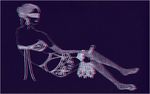
“Harem culture.” Is that like HBO’s series “Big Love” except Muslim, not Mormon, and with tassels, a potted palm and no bickering? Well yes, sort of. But there are a lot more women in a harem. A lot. The seraglio of the sultan of the Ottoman Empire housed about 1,600 virgins, each hoping to be chosen for one night of honor. The sultan makes Brigham Young, who had only a few dozen wives, look like a piker with low self-esteem. Yet after reading Richard Bernstein’s fascinating new book, “The East, the West, and Sex” (which could have been subtitled “Boys Behaving Badly”), you really have to give the Mormons credit for trying to implement an American version of the infamous harem of “the East.” As if that were going to work around here. Most of the world is not only not around here, of course, but also so old and so vast that the United States is less than a blip on the screen of human erotic history. India was playing Twister — the Kama Sutra version — more than a thousand years before Columbus got a boat and came to find us.
more from Toni Bentley at the NYT here.
Preventing a Taliban victory
Pervez Hoodbhoy in Dawn:
If public support were absent, extremist violence could be relatively easy to deal with. But extremism does not lie merely at the fringes. As an example, let us recall that 5,000 people crammed the streets outside Lal Masjid to pray behind the battle-hardened pro-Taliban militant leader, Maulana Abdul Aziz, the day after he was released from prison on the orders of interior minister Rehman Malik.
In the political arena, the extremists have high-profile cheerleaders like Imran Khan, Qazi Hussain Ahmad and Hamid Gul who rush to justify every attack on Pakistan’s people and culture. To them it makes no difference that Baitullah Mehsud proudly admits to the murder of Allama Dr Sarfaraz Ahmad Naeemi, the recent Peshawar mosque bombing, the earlier Wah slaughter and scores of other hideous suicide attacks. Like broken gramophone records, they chant “Amrika, Amrika, Amrika” after every new Taliban atrocity.
Nevertheless, bad as things are, there is a respite. To the relief of those who wish to see Pakistan survive, the army finally moved against the Taliban menace. But, while the state has committed men to battle, it cannot provide them a convincing reason why they must fight.
For now some soldiers have bought into the amazing invention that the Baitullahs and Fazlullahs are India’s secret agents. Others have been told that they are actually fighting a nefarious American-Jewish plot to destabilise Pakistan. To inspire revenge, still others are being shown the revolting Taliban-produced videos of Pakistani soldiers being tortured and beheaded.
More here.
Saturday Poem
The bird may die
Forough Farokhzad
I feel sad,
I feel blue.
I go outside and rub my fingers
on the sleek shell of the night.
“I see that lights of contact are blocked,
All lights of contact are blocked.”
“Nobody will introduce me to the sun,
Nobody will take me to the gathering of doves.”
Keep the flight in mind,
The bird may die.
Translation: Maryam Dilmaghani
Obama cracks jokes
Richard Dawkins interviews Steven Pinker
No More Mr. Tough Guy
From Root:
Black men need their swagger and their game, but on Fathers’ Day it is worth remembering a little vulnerability is not the worst thing in the world. In spite of the compelling TCBY promotion that offers a free yogurt for dad on Father’s Day, many of us are in search of a more substantive and memorable family experience this third Sunday in June. In fact, when I became a dad in the early 1990s, I so wanted to help folks have meaningful Father’s Days that I edited a collection of essays called Faith of our Fathers: African American Men Reflect on Fatherhood (Dutton/Penguin). Essentially, I asked brothers I knew (Cornel West, Robin D.G. Kelley, Charles Ogletree, and others) to write about their experiences as fathers or with their fathers. I wanted the collection to be an intimate conversation between black men that would help fathers deepen their own self-awareness and more closely connect with their children, and with their dads.
I was pleasantly surprised that the most common reaction to the book was that it presented the vulnerability of African American men in a way that was not often captured in mainstream media. The images of black masculinity that are most often generated by mainstream media are patriarchal ones, meaning they feature the tough, emotionally invulnerable guy who is hardened by society and unable to make real emotional connections. While black men are still the most feared group in our society and there are reasons for them to hide their vulnerability, the media images are vastly one-sided. Thus, I realized that the presentation of black male vulnerability in my book was a way to challenge common perceptions of black masculinity. This, I knew, served the interests of both men and women.
More here.
THE SIMPLIFIER
From Edge:
“They say that in science there are complicators and there are simplifiers,” says John Bargh, Yale social psychologist known for his early work on the topic of automaticity, and more recently for bringing experimental methodology to the philosophical question of free will. According to Bargh, the tension between the complicators and the simplifiers is a good thing in any field of ideas or science. “I've always been a simplifier.” he says, “looking for the simple mechanisms that produce complex effect, instead of building a complicated model. Once we find one of these veins — one of these avenues of research — we just go for it and mine it and mine it until we run out of gold.
Bargh's lines of research all focus on unconscious mechanisms that underlie social perception, evaluation and preferences, and motivation and goal pursuit in realistic and complex social environments. That each of these basic psychological phenomena occur without the person's intention and awareness, yet have such strong effects on the person's decisions and behavior, has considerable implications for philosophical matters such as free will, and the nature and purpose of consciousness itself. He maintains that the resulting findings “are very consistent and in harmony with evolutionary biology. And this is very unlike psychology, which has always presumed a kind of consciousness bottle-neck or a self, some kind of a homunculus type of self sitting there, making all the decisions and deciding without any explanation of where they comes from or what's causing the self or what's causing the conscious choices. Emphasizing what our unconscious systems do for us, in turn, links us very strongly to other organisms and other animals very closely. Recent primate research is showing that primates are closer to us than we thought. They fall for the same kind of economic fallacies that Kahneman and Tversky talked about in humans 30 years ago.”
More here.
Friday, June 19, 2009
Ya Hussain! Iran stands on the brink of a bloodbath
Readers,
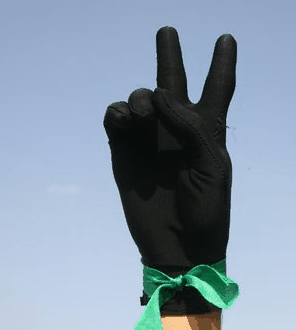
Let the rest of the world no longer remain quiet and hope that by doing so, we will protect the brave forces of change from charges of being allied with foreign interests who are meddling in Iran. The time to remain silent is over. It is time to take sides, AND to urge our governments to take sides. I am a US citizen, and I will use every means at my disposal to push my government to make sure that they let the government of Iran know in no uncertain terms that they will be held accountable and punished if the innocent civilians and the brave youth of Iran are attacked, killed, or injured in any way. I hope you will, too. It is NOW the time for the desperate, weak, and lying government of Iran to know that not only their own children, but the world is against them.
If you don't yet understand the urgency of this moment or the imminent savagery that awaits Iranis, have a look at some of the Twitter messages coming out of Iran (all other media are too heavily censored, or completely blocked) that are appended below this note. This is NOT a matter of supporting any Western or other interests, it is a matter of supporting the courageous hopes and defiant dreams of freedom of the Irani masses. This collection of Tweets comes via Andrew Sullivan (whom I proclaim an honorary Shia for his extraordinary decency, humanity, skill, and good moral judgment in covering the post-election crisis in Iran!).
Do something now! Write to whitehouse.gov or your representative. Do something! NOW! NOW! NOW!
Death to tyranny! Long live Iran!
Yours ever,
Abbas
Recent Tweets from Iran:
In Iran, Friday Prayers are rallying toward Hashemi Rafsanjani's office. They calls him “Head of Devilry”.
Maryam Ameri central party headquarters was arrested Mehdi Karroubi [Google translation]
is called Tajzadh, Amin Zadeh, Rmzanzadh, Abtahi and other detainees severely confession fabricated for television are under pressure [Google translation]
hold Quran and cite Quran 8.61 “If they seek peace then seek you peace” Shame them into peace!
Protest with the Quran in your hand, sit down if they attack, while citing the Quaran 8.61, Use Gandhi method
Khamenei had declared war, but Green must remain calm and continue silent rallies.
@PerezHilton aww that's so sweet! Thanks! From Tehran 😉
unconfirmed reports – Revolutionary Guard has been mobilised to secure Tehran
Dear UN & NGOs, why is Iran allowed to butcher civilians without even a word from you?
The situation in Iran is now CRITICAL – the nation is heartbroken – suppression is iminent
Pls:Mousavi:PEOPLE OF THE WORLD: We need help and sourvernity, today it turned out we need it more than ever.
Imprisoned bloggers: Mohammad Ali Abtahi. Mhsaamrabady, Arghndh Karim Pour, Emad Bhavr, Shyvanzrahary, Mohsen and Mojtaba Poor Somayeh Tvhydlv [Google translation]
Mousavi spox Makhmalbaf says 7OO campaign workers and advisors have been arrested, he is 2O% free, 8O% under house arrest
Another Gulmohar Tree
Sameer Rahim in The Telegraph:
Aamer Hussein writes only short fiction. Since 1993 he has published four collections of stories set mainly in Pakistan and London. Among those who appreciated his early work, there was an expectation that a full-scale novel would follow. It has not. In fact his last two books, Turquoise (2002) and Insomnia (2007), have been his most compact in terms of length and style.
His new book, Another Gulmohar Tree, barely breaks 100 pages. It tells the story of a marriage between an Englishwoman and a Pakistani in the Fifties. Lydia first meets Usman at a symposium at Senate House in London. She wants to hear the discussion on newly independent countries. He is spending a year on The Daily Telegraph’s foreign desk and is speaking on behalf of Pakistan. They soon form a close friendship: “When Usman was with Lydia, everything seemed spontaneous and natural, even the long silent lapses in their conversation.” She is a painter and he is a story writer. Lydia suggests they work together on translating his stories which, unlike other writers of his background, are in Urdu. “You don’t choose the language you write in, it chooses you,” Usman tells her.
More here.
The beginning of the end for the regime?
As Robin reminded me earlier today by IM (en route from Johannesburg to Rome!) things did not turn decisively against the Shah in 1978/79 until the labor unions went on strike, crippling the economy. Now, via Andrew Sullivan, there this from Al Giordano in The Field:
The workers of the Khodro automobile company in Iran today issued the following declaration (translated for The Field from the original Farsi by Iraj Omidvar):
Strike in Iran Khodro:
We declare our solidarity with the movement of the people of Iran.
Autoworker, Fellow Laborers (Laborer Friends): What we witness today, is an insult to the intelligence of the people, and disregard for their votes, the trampling of the principles of the Constitution by the government. It is our duty to join this people's movement.
We the workers of Iran Khodro, Thursday 28/3/88 in each working shift will stop working for half an hour to protest the suppression of students, workers, women, and the Constitution and declare our solidarity with the movement of the people of Iran. The morning and afternoon shifts from 10 to 10:30. The night shift from 3 to 3:30.
Laborers of IranKhodor
This announcement – to my knowledge this is the first place it appears in English anywhere – obtained by The Field by the auto workers of the largest automobile producer in Iran, is significant on multiple levels.
The obvious one is that once the workers begin to flex their muscles on the means of production, no illegitimate regime can continue standing.
Another is that it reveals the malicious lie spread by some that the Iranian resistance is an upper class phenomenon restricted to one or two regions for what it is: untrue.
More here.
painting as thought itself
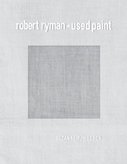
It is part of Robert Ryman’s legend that he is a self-taught artist. He moved to New York in 1952, at age twenty-two, to pursue a career in jazz. A year later, he took a job at the Museum of Modern Art as a security guard. Paintings had begun to interest him “not so much because of what was painted but how they were done. I thought maybe it would be an interesting thing for me to look into—how the paint worked and what I could do with it.” So he bought some art supplies and began to experiment. At no point, then or later, did he try to depict anything—a face, a figure, a natural object like a tree or a flower, an artifact like a bottle or a guitar: “I thought I would try and see what would happen. I wanted to see what the paint would do, how the brushes would work. . . . I had nothing really in mind to paint. I was just finding out how the paint worked, colors, thick and thin, the brushes, surfaces.” He evidently found the activity sufficiently absorbing that he put music aside. By the end of the ’50s, Ryman was using white paint almost exclusively, as if color interested him far less than certain physical properties of paint. He had developed a signature style. Suzanne P. Hudson’s Robert Ryman: Used Paint is the first book-length study of the artist’s achievement, and it comes with an interesting thesis, namely that his paintings exemplify what the author calls “embodied thinking,” which I interpret to mean that his paintings are not the product of thought, but thought itself.
more from Arthur Danto at Bookforum here.