Leviathan or, The Whale

Our own PD Smith in the Times Literary Supplement:

Leviathan1-183x300 Herman Melville’s epic novel Moby-Dick (1851) is Philip Hoare’s guiding star in this beautifully written celebration of cetaceans, a word that comes from the Greek word ketos, sea monster. He glosses Melville’s fiction as a meditation on “man, whale, life, death”. Hoare’s book, like Moby-Dick, is on one level a rich source of information about these ancient mammals, from natural history to their role in our lives and myths. But Leviathan is also a deeply personal narrative that weaves together travelogue, memoir and literary history.

In Moby-Dick, Ishmael’s “splintered heart and maddened hand were turned against the wolfish world” and he seeks the solace of the sea. Disillusioned with city life, Hoare, who admits that he has “always been afraid of deep water”, also turns to the ocean – “the last true wilderness” – as an antidote to London, for the “place that had represented all my youthful aspirations now felt like a viral infection”. He follows in Ishmael’s wake, travelling from New York down to Cape Cod and New Bedford – aka the Whaling City, where he visits Father Mapple’s chapel – and then on to Nantucket. In the sea off Cape Cod, Hoare watches the whales: “I envied them the fact that they were always swimming; that they were always free”, and later visits Melville’s grave on “a bare Bronx hill”, where the writer lies next to his two sons who preceded him into the grave.

Even today, in the age of particle colliders and space exploration, we know precious little about some of the planet’s oldest inhabitants; as Hoare says, “cetaceans remain unfathomable.”

More here.

Sperm-like cells made from human embryonic stem cells

From Nature:

Ssc Human embryonic stem cells have been coaxed into forming sperm-like cells, researchers report today1. The cells have some of the hallmarks of sperm — they can swim, for example — but require much more characterization before they can be embraced as an experimental model for the study of inherited diseases and infertility.

Meanwhile, the use of such cells to help infertile couples to have children remains a distant prospect; in several countries, including the UK, it would actually be illegal even if they were properly characterised. With approximately one in seven couples experiencing fertility problems, there is a strong push to develop a robust method for generating sperm and eggs for research. But researchers have struggled for years to produce reproductive cells from stem cells. The task is particularly difficult because it requires a complex form of cell division called meiosis, which reduces the number of chromosomes per cell by half.

More here.

Tuesday, July 7, 2009

How chaos drives the brain

David Robson in New Scientist:

Have you ever experienced that eerie feeling of a thought popping into your head as if from nowhere, with no clue as to why you had that particular idea at that particular time? You may think that such fleeting thoughts, however random they seem, must be the product of predictable and rational processes. After all, the brain cannot be random, can it? Surely it processes information using ordered, logical operations, like a powerful computer?

Actually, no. In reality, your brain operates on the edge of chaos. Though much of the time it runs in an orderly and stable way, every now and again it suddenly and unpredictably lurches into a blizzard of noise.

Neuroscientists have long suspected as much. Only recently, however, have they come up with proof that brains work this way. Now they are trying to work out why. Some believe that near-chaotic states may be crucial to memory, and could explain why some people are smarter than others.

In technical terms, systems on the edge of chaos are said to be in a state of “self-organised criticality”. These systems are right on the boundary between stable, orderly behaviour – such as a swinging pendulum – and the unpredictable world of chaos, as exemplified by turbulence.

More here.

Same-sex Marriage and Constitutional Law

Martha Nussbaum in Dissent:

ScreenHunter_05 Jul. 08 11.45 Before we approach the issue of same-sex marriage, we must define marriage. But marriage, it soon becomes evident, is no single thing. It is plural in both content and meaning. The institution of marriage houses and supports several distinct aspects of human life: sexual relations, friendship and companionship, love, conversation, procreation and child-rearing, mutual responsibility. Marriages can exist without each of these. (We have always granted marriage licenses to sterile people, people too old to have children, irresponsible people, and people incapable of love and friendship. Impotence, lack of interest in sex, and refusal to allow intercourse may count as grounds for divorce, but they don’t preclude marriage.) Marriages can exist even in cases where none of these is present, though such marriages are probably unhappy. Each of these important aspects of human life, in turn, can exist outside of marriage, and they can even exist all together outside of marriage, as is evident from the fact that many unmarried couples live lives of intimacy, friendship, and mutual responsibility, and have and raise children. Nonetheless, when people ask themselves what the content of marriage is, they typically think of this cluster of things.

More here.

Robert Strange McNamara, 1916-2009

090706_WS_McNamara

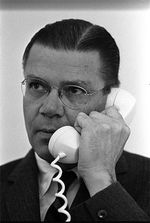
Not until publication of his memoirs in 1995, two decades after the war ended, did McNamara publicly admit that it had always been a mistake. In The Fog of War, Errol Morris’ 2003 documentary about the former defense secretary, McNamara recited some of the lessons he learned in office, one of which was, as he put it, “Rationality will not save us”—a notion that the McNamara of 40 years earlier would have dismissed as absurd. Another lesson was that military power should never be used unilaterally. Until the end, he misremembered—some would say he lied about—certain aspects of his history. He claimed that he helped JFK work toward a peaceful solution to the 1962 Cuban Missile Crisis, when Kennedy’s secret White House tapes reveal that after the first few days he advocated attacking the Soviet missile sites, even at the risk of a broader war. He said that LBJ pushed him to escalate in Vietnam, when Johnson’s secret tapes reveal that the pushing went both ways. He once told me, when I interviewed him for a book about nuclear strategy (The Wizards of Armageddon, 1983), that he would never have approved the multiple-warhead missiles known as MIRVs—although declassified documents show that he signed off on the program from its inception. Someday someone will write a great biography of McNamara. It will be the story not only of his life but of the vast tangle of contradictions and cataclysms that marked America in the 20th century and beyond.

more from Fred Kaplan at Slate here.

north by northwest

MCDNOBY_EC002_H

A number of New York subway trains currently have posted in them an advertisement for a suspense novel (Brad Meltzer’s Book of Lies) said to be a combination of The Da Vinci Code and North by Northwest. We know about the huge success of the former, especially in its book shape, but it’s reassuring news that a 50-year-old film is still taken to be a household, or rolling stock word. But what about the combination? Meltzer’s novel will tell us how and if it works, but we could still be left puzzling over the intended meaning of the ad, the sign value of the two titles. The Da Vinci Code is pretty easy: murder story with roots in ancient times and entangled in religion. And North by Northwest? Witty, stylish thriller where a man can almost get killed in the middle of nowhere and later scramble about the face of Mount Rushmore? Film where the notion of real-life probability is not just abandoned but lampooned, Hitchcock’s finest attack on the very notion of cause and motive? ‘Here, you see’, he said to Truffaut, speaking about this movie, ‘the MacGuffin has been boiled down to its purest expression: nothing at all!’ He is saying that the espionage that drives the plot does just that: it drives the plot. We don’t have to know what the spies are after or what’s at stake, even if there is a flicker of a mention of the Cold War in the movie. Do the stolen secrets matter? In the world of actual espionage that would probably be a secret too, but in Hitchcock the answer is a revelation. Of course they matter, even in the entire absence of any content for them. They are the way the film pretends it’s about something.

more from Michael Wood at the LRB here.

vice squad

Ideastemptationcenter__1246712453_7445

THERE ARE PLENTY of people who cheat on their spouses, plenty of people who hire prostitutes. It’s hardly unheard of for an office to be plagued by a boss sending sexually explicit emails to underlings, even much younger ones, or for a man to solicit sex in a public restroom or to hire a male prostitute and then buy drugs from him. In other words, it’s not just public figures with careers built around denouncing moral turpitude – crusading prosecutors like Eliot Spitzer, evangelical leaders like Ted Haggard, socially conservative politicians like Mark Foley, David Vitter and Larry Craig – who end up confessing to those very acts. And yet, with the back-to-back revelations of marital infidelity by Nevada senator John Ensign and South Carolina governor Mark Sanford, two more cultural conservatives, the question once again arises: why is it that people who set themselves up as moral paragons seem to have the hardest time living up to their own standards?

more from Drake Bennett at the Boston Globe here.

Kill Khalid

Sameer Rahim in The Telegraph:

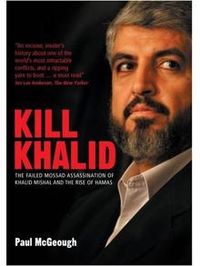
Khalidstory1_1437872f When I lived in Damascus, my fellow Arabic students were always spotting Khalid Mishal around town. I suspected they were mistaken. Mishal was one of the exiled leaders of Hamas. It was the summer of 2006 and the Palestinian militant group had just captured an Israeli soldier in a cross-border tunnelling raid. Israel had carried out assassinations in Damascus before and Mishal would now be top of their list. Added to this, as Paul McGeough relates in his biography of Mishal and history of Hamas, Israel was still smarting from the humiliation of Mossad’s failed attempt to kill Mishal nine years earlier. That September, two agents disguised as Canadian tourists entered the Jordanian capital armed with a specially designed camera, loaded with poison. When Mishal’s bodyguards dropped him outside his offices, one agent approached and knelt down in front of him – then rose suddenly and sprayed the liquid in Mishal’s ear. He and his accomplice tried to escape but the bodyguards gave chase and eventually surrendered them to Jordanian custody. Mishal, meanwhile, was starting to feel unwell. The poison was designed to slowly paralyse his nervous system, leading to death.

When King Hussein was told of the plot he was furious. Jordan had signed a peace treaty with Israel in 1994 and was its closest Arab ally. Hussein knew that if Mishal died his people would suspect him of having co-operated with the Israelis. His careful balancing of interests meant that Amman hosted both an Israeli embassy and Hamas headquarters. Though no friend to Hamas, this meant he could appease his country’s large Palestinian population and maintain some control over the group. The stability of his kingdom was under threat, so he bypassed diplomatic protocol and made a direct call to the US president Bill Clinton.

More here.

A Doctor by Choice, a Businessman by Necessity

Sandeep Jauhar in The New York Times:

Sandeep To meet the expenses of my growing family, I recently started moonlighting at a private medical practice in Queens. On Saturday mornings, I drive past Chinese takeout places and storefronts advertising cheap divorces to a white-shingled office building in a middle-class neighborhood. I often reflect on how different this job is from my regular one, at an academic medical center on Long Island. For it forces me, again and again, to think about how much money my practice is generating. A patient comes in with chest pains. It is hard not to order a heart-stress test when the nuclear camera is in the next room. Palpitations? Get a Holter monitor — and throw in an echocardiogram for good measure. It is not easy to ignore reimbursement when prescribing tests, especially in a practice where nearly half the revenue goes to paying overhead.

Few people believed the recent pledge by leaders of the hospital, insurance and drug and device industries to cut billions of dollars in wasteful spending. We’ve heard it before. Without fundamental changes in health financing, this promise, like the ones before it, will be impossible to fulfill. What one person calls waste, another calls income. It is doubtful that doctors and other medical professionals would voluntarily cut their own income (even if some of it is generated by profligate spending). Most doctors I know say they are not paid enough. Their practices are like cars on a hill with the parking brake on. Looking on, you don’t realize how much force is being applied just to maintain stasis.

More here.

Monday, July 6, 2009

Sunday, July 5, 2009

Ousted Honduran president seeks to return after OAS move

Patrick Markey in the Washington Post:

Ho Ousted Honduran President Manuel Zelaya prepared to fly back home on Sunday, setting the stage for a possible confrontation as the interim government that has defied international pressure said it would not let him enter the country.

Honduras' interim government, slapped with suspension from the Organization of American States over its refusal to reinstate Zelaya, said it would refuse Zelaya permission to land.

Zelaya, a leftist who had been due to leave power in 2010, was bundled out of office by troops and into exile a week ago in a military coup that has been widely condemned abroad.

Ecuadorean President Rafael Correa, a leftist ally of Zelaya's, said U.N. General Assembly President Miguel D'Escoto would accompany the ousted president on his planned return to Honduras.

More here.

Meis on Rye

Our own Morgan Meis in The Smart Set:

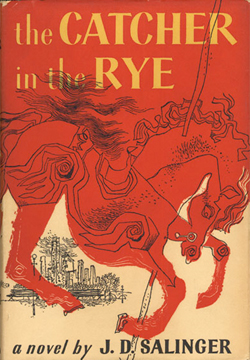
ID_IC_MEIS_CATCH_AP_001 I'm for the kids. It’s crazy not to be. Are you, dear reader, mighty Atlas, going to hold the world in place and keep it from changing into something new? One lesson of all hitherto existing human history is that the kids have the advantage in the long run. This is a function of time and finitude. The only real wisdom comes in realizing that the kids of today will get their comeuppance with the swift passing of a decade or so. They, too, will wake up one day to find themselves representatives of what was, instead of what shall be. The kids keep on coming.

We learned recently (from a New York Times article by Jennifer Schuessler) that Holden Caulfield, the anti-hero of J.D. Salinger's The Catcher in the Rye, has lost his appeal among the teenage crowd. This came without fair warning. No pimply representative of the Millennials stepped forward to cushion the blow. Instead, we are informed by Barbara Feinberg — “who has observed numerous class discussions of 'Catcher'” — that a 15-year-old boy from Long Island has said, “Oh, we all hated Holden in my class. We just wanted to tell him, ‘Shut up and take your Prozac.’”

It is easy to respond defensively and with contempt. People don't like to have their heroes snubbed, especially when the snubbing comes from some little punk from Long Island whose fingers are surely rubbed raw from constant tweeting, texting, gaming, and masturbation. We (shall we define 'we' as that part of the population over 30?) find subtle ways to undercut the legions of cheeky hormone machines. Trying to explain the sudden disdain for Mr. Caulfield, a cultural critic by the name of Mr. Dickstein says,

The skepticism, the belief in the purity of the soul against the tawdry, trashy culture plays very well in the counterculture and post-counterculture generation. [Today], I wouldn’t say we have a more gullible youth culture, but it may be more of a joining or togetherness culture.

Indeed, Mr. Dickstein would never say that we have a more gullible youth culture now than in his time, except that he just did. Such are the sneaky tactics of the older generations in the face of youthful boldness.

More here.

A priest, a rabbi, an imam, and a Buddhist monk walk into a game show…

From CBC News:

ScreenHunter_04 Jul. 05 18.17 A new game show on Turkish television will pit a Greek Orthodox priest, a rabbi, an imam and a Buddhist monk against one another in attempt to convert atheists to their respective religions.

In each episode of Penitents Compete, to be broadcast by Turkey's Kanal T television station in September, the four faith guides will try to persuade 10 atheists of the merits and truth of their creeds.

The show's producers say there is a good chance none of the atheists will be converted, Turkey's Hurriyet Daily News and Economic Review reports.

But those who are will be sent on a pilgrimage. New Muslims will head to Mecca, Buddhists to Tibet and Jews and Christians to Jerusalem – with television cameras following them.

More here.

Saudis give nod to Israeli raid on Iran

Uri Mahnaimi and Sarah Baxter in The Sunday Times:

Israeli%20F16 The head of Mossad, Israel’s overseas intelligence service, has assured Benjamin Netanyahu, its prime minister, that Saudi Arabia would turn a blind eye to Israeli jets flying over the kingdom during any future raid on Iran’s nuclear sites.

Earlier this year Meir Dagan, Mossad’s director since 2002, held secret talks with Saudi officials to discuss the possibility.

The Israeli press has already carried unconfirmed reports that high-ranking officials, including Ehud Olmert, the former prime minister, held meetings with Saudi colleagues. The reports were denied by Saudi officials.

“The Saudis have tacitly agreed to the Israeli air force flying through their airspace on a mission which is supposed to be in the common interests of both Israel and Saudi Arabia,” a diplomatic source said last week.

Although the countries have no formal diplomatic relations, an Israeli defence source confirmed that Mossad maintained “working relations” with the Saudis.

More here.

Sunday Poem

Got a Bird that Whistles

Allan Peterson

A small song floats over the reef of dishes in the sink.
If I love her, later we will catalog the moons.

I do, so right off there are four out of the ordinary:
ours and three tonight of Jupiter counted by binoculars.

Then there are thousands, one for every ripple in the sound
a universe of glass and a reservoir of questions.

Moon, paper plates, some thick as dishes
some as dunes, softly as she answers to my hands.

Got a bird that wishes baby got a bird with springs
and I cannot count up these hours by birdsong

and cannot say baby since you are so deliciously full-grown
I can only listen quietly, dry the platters and ask.

I can only say swallows are the needlework of noon