Life is out of whack

From Salon:

Story Current ecological data, much of it cited by Kricher in the tedious manner of an Ecology 101 lecture, scientifically supports the notion of balance in nature at least as strongly as it refutes the idea. For instance, consider research on the sea otter, which Kricher describes at great length, only rather obviously to conclude that “humans can unwittingly induce major alterations in ecosystem food webs.”

In fact, the research illustrates much more than that. Between 1990 and 1997, in the western Aleutian Islands, the otter population plummeted by 90 percent because orcas began feeding on them. Previously orcas subsisted on fish-eating harbor seals and sea lions, but human over-fishing in the region led to a drop in seal and sea lion populations, forcing orcas to broaden their diet. Since the otters preyed on sea urchins, fewer otters meant more urchins, a rapidly expanding population that decimated the undersea kelp forests on which they fed. The loss of kelp in turn further disturbed the fish in the area, which relied on kelp for shelter, exacerbating the seal and sea lion famine, impelling orcas to eat more otters. The effect was so dramatic because otters were a “keystone” species in the region, meaning that the stability of the food web depended disproportionately on their well-being. Which is to say that a steady otter population helped to maintain the balance of nature.

More here.

Calorie-Counting Monkeys Live Longer

From Science:

Monkeys Rodents, yeast, and roundworms all have something in common: They live longer when they consume less. Now a primate has joined the calorie-restriction club. After 20 long years of waiting, scientists have concluded that rhesus monkeys that eat nearly a third less food than normal monkeys age more slowly. The results come as close as any can to proving that calorie restriction could significantly slow aging in humans–even if such a lean diet would not appeal to most of us. Researchers first discovered the connection between lean diets and extended life spans in a 1935 study of calorie-restricted rats. In the past decade, studies in yeast and worms have pinpointed some genes that may be responsible. Scientists believe the genes somehow ramp up systems to protect an organism from environmental stress and may have evolved to help organisms survive in environments where food was scarce. In rodent studies, calorie restriction can extend life span by 20% to 80%. Whether calorie restriction also slows aging in primates wasn't known, however.

Two decades ago, three different research groups in the United States decided to fill this gap. The groups have previously published updates on their monkeys' health, but in tomorrow's issue of Science, one of them reports survival data from their colony of 76 rhesus monkeys. The team, led by gerontologist Richard Weindruch of the University of Wisconsin, Madison, began monitoring the animals when they hit 7 to 14 years old–monkey adulthood. Researchers allowed half of the monkeys to eat as much as they wanted during the day, while restricting the other half to a diet with 30% fewer calories. The scientists gave the restricted monkeys vitamin and mineral supplements to ensure they did not suffer malnutrition and treated any animals that fell sick, says Weindruch. Studying aging in monkeys takes patience. Mice and rats only live for a couple of years, while these monkeys can live to 40, and the average life span is 27 years. Now that the surviving monkeys have reached their mid- to late 20s, the Wisconsin group could glean how calorie restriction was affecting their life span. Sixty-three percent of the calorie-restricted animals are still alive compared to only 45% of their free-feeding counterparts.

More here.

Thursday, July 9, 2009

Iran erupts again, and here’s an intellectual history of the Green Wave

Abbas Milani in The New Republic:

Iran What we are witnessing right now in the streets of Tehran is, first and foremost, a political battle for the future of the Iranian state. But closely linked to this political fight is also an old theological dispute about the nature of Shiism–a dispute that has been roiling Iran for more than a century.

Shiism, like most religions, is no stranger to heated schisms. Shia and Sunnis split over the question of whether Muhammad had designated his son-in-law, Ali, as his successor (Shia believed he had). Some Shia, called Alawites, believe the only divinely designated successor was Ali, while another group, Zaydis, believe there were four imams. A large, intellectually vibrant third group is known as the Ismailis because it believes the line of imams ended with the seventh, Ismail. And the largest Shia sect is called the Ithna Ashari–or the Twelvers. Dominant in Iran, they believe in twelve imams and posit that the last imam went into hiding some 1,100 years ago. His return, bloody and vengeful, will mark the redemptive dawn of the age of justice.

It is within this branch that a further split took place beginning in the late nineteenth century–the moment when the Iranian elite began to confront the challenge of modernity. Ideas like rationalism, individualism, constitutionalism, rule of law, equality, democracy, secularism, privacy, and separation of powers began to find currency in Iran's political discourse. By 1905, these ideas, prevalent primarily among the intelligentsia, led to the Constitutional Revolution–the first of its kind in the Muslim world. The Shia clergy were faced with a historic challenge not unlike what the Catholic Church experienced with the advent of the Renaissance. How two rival ayatollahs reacted to that challenge would divide Iranian Shiism–and lay the groundwork for what is taking place today.

More here.

Hopper & Company

515AXFMQ5DL._SL500_AA240_

Let’s leave him out of it, for the moment, because this isn’t really about him. Or if it is, it’s about the influence he had on these forty years of photographs. Influence is impossible to map; it’s impressionistic, repetitive, deceptive. It eludes us, as he does. We begin in the company of strangers. A pool of light splits open the middle third of Harry Callahan’s Chicago, Fall 1958. We seem to be moving toward the scene in the distance, perhaps because we must actually step toward the picture to see what it depicts. People are moving along the sidewalk, under the unnatural night light of an enormous sign that says PARK. At the sight of this mirage in the wilderness, an urban wilderness, we feel we’ve been away too long from the society that gathers under street lamps. We’re not there yet; we are still a few steps out in the dark. But still the scene is like a hall light under a child’s bedroom door: a promise of wakefulness, attention, care just beyond the threshold. Its distance evokes a passing feeling, the sense that only a moment ago the darkness was menacing. And it says: nothing can be so wrong out here if everyone is okay up ahead. Still, it will be better to be with them and not alone. Can a photograph evoke a sense of relief? This one seems to.

more from Kathryn Crim at the Threepenny Review here.

tatlin

Merridale_07_09

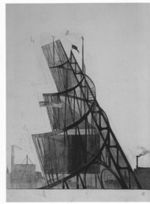
Utopianism has a bleak reputation in the early twenty-first century. In our violent, anti-intellectual and destructive age, the idea that humans, using their creativity and reason, might perfect society and resolve their conflict with nature is laughable, though the notion that we might perfect ourselves enjoys a dismal vogue. Less than a hundred years ago, after all, utopian politics led to the Gulag, while its handmaid, the science of the late industrial era, created bombs and smoke and industrial battlefields. If today’s Left has a colour after all that, it is probably greenish-yellowish (or red-brownish, with chauvinist overtones, in Russia). The contrast with the confident scarlet banners of the revolutionary Russian avant-garde of a century ago could not be greater. Vladimir Tatlin, the artist whose work is the subject of Norbert Lynton’s last – and posthumous – book, was a dreamer in that great utopian age.

more from Catherine Merridale at Literary Review here.

Ah the singing, ah the delight, the passion!

TLS_Bate_585970a

April 10 this year marked the centenary of the death of Algernon Charles Swinburne at the age of seventy-two. The anniversary went largely unremarked, though an observation to that effect in the Guardian provoked an “Oh no it didn’t” letter, announcing that there was to be a centenary conference at the University of London and a collection of academic essays later in the year. Swinburne has indeed been well served within the professional enclave of Victorian studies. The distinguished critic and editor Jerome McGann, in particular, has been an unstinting advocate, from his early Swinburne: An experiment in criticism (1972) to an exemplary edition of the selected Major Poems and Selected Prose (2004). In the wider culture Swinburne is now no more than a name, if that. Early biographical records are usefully gathered in Lives of Victorian Literary Figures VI, Volume Three: Algernon Charles Swinburne, edited by Rikky Rooksby (Pickering and Chatto, 2008). Rooksby is also the author of the most recent Life of Swinburne (1997): it is a highly informative work, as is Swinburne: The portrait of a poet by Philip Henderson (1974). But what is lacking is a biography that really gets under his skin in the manner of Richard Holmes’s Shelley: The pursuit, while his copious poetic output has long languished on the shelves of second-hand bookshops.

more from Jonathan Bate at the TLS here.

Holy Lolita! Hefner Hoovers Up First Serial Rights to Nabokov’s Last Novella

Leon Neyfakh in the NY Observer:

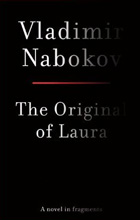
Laura Hugh Hefner’s Playboy has acquired the first serial rights to The Original of Laura, the final, unfinished novella of the late Vladmir Nabokov.

For years, Nabokov’s son Dmitri indicated that, per his father’s dying wishes, Laura would never see the light of day. Then last spring he had a change of heart and entrusted the super-agent Andrew Wylie to find a publisher. Knopf secured the rights for an undisclosed sum, and a publication date was set for this coming fall. When Amy Grace Loyd, Playboy’s literary editor since 2005, heard the news, she began an intense courtship process. “I did it with orchids, mostly,” Ms. Loyd said.

It was an inspired method, the flowers serving as a reference to Nabokov’s 1969 novel Ada, or Ardor, which was excerpted in Playboy—thus a reminder for Mr. Wylie of the magazine’s long and treasured association with the author. “It was part of my pitch to Andrew that Nabokov really liked publishing with Playboy, and how devoted Hef is to Nabokov and his legacy,” Ms. Loyd said.

Mr. Wylie was initially unresponsive.

More here. [Thanks to Laura Claridge.]

Thursday Poem

Corporate Identity

this saturday you’re behind the counter

in the work coat you want to shed

like an unwanted skin at the end of your shift.

there’s the 5 o’clock rush to get through

& you don’t want to hear how Michael on bags

got an extra shift at subway to save for his car.

Your white name tag lets the customers think

they can call you by your name;

the logo on your chest promises a New World

but little was gained from the shelvers’ lockout.

What’s left after the prepaid’s paid for

you’ll put to a silver Playboy necklace

with an imitation diamond eye, or

a pair of Nike trainers, each whoosh

a tick for a Vietnamese child’s

fourteen hour day. last week tala

gave you resurrection & you copied

tupac shakur’s name into your senior

social studies notebook in the style

of a typeface owned by the sony Corporation.

You hand back the man’s Flybuy card, try

not to frown as he fumes when the EFTPOS

doesn’t take his PIN. on your inside

left thigh there’s a tattoo of the Vietnamese

character for love you let no–one but tala

see. You got the idea from angelina Jolie—

now it has become your own & beneath black

polyester pants the sigil warms you;

keeps you real.

by Harvey Molloy

Albatross, Spring 2009; Anabiosis Press

Lessons from an Unexpected Life

From Harvard Magazine:

Khaled Khaled became my patient 41 years ago, when he was a tiny misshapen six-year-old with paper-thin, distorted bones. He was close to heart failure and so anemic when I met him that his blood was watery. I thought he might die in front of me. He has thalassemia, a severe anemia arising from the inheritance of two defective hemoglobin-production genes, one from each parent, both of whom are healthy (albeit mildly anemic) because they each carry only one such defective gene. There are many thousands of patients like Khaled throughout the old malarious world, but only a handful in the United States. The many ancient gene mutations that shut down hemoglobin production in red blood cells have been preserved and enhanced in humans because infant carriers of the mutations are partially protected from a particularly lethal type of malaria. Therefore the thalassemia genes have persisted by Darwinian natural selection of carriers; an unfortunate circumstance in which a disease gene persists because it provides partial protection from a lethal infection. The result is the proliferation of carriers and the birth of thousands of babies with two defective genes who become profoundly anemic and require lifelong transfusion of red cells. The patients–the “lucky” ones–are huge consumers of medical care; most often, the carrier parents face the loss of their child at an early age.

During the past four decades I have been forced to give Khaled red-blood-cell transfusions every three to four weeks. Such treatment, though an absolute requirement of his care, is fraught with devastating complications. Consequently he has had to endure and surmount one massive medical assault after another. But he has survived, and today he is a successful entrepreneur. Nonetheless, he has been battered by all the major consequences of managing his disease. His success is largely due to his own resilient, positive outlook (admittedly maddening when he would refuse to do what I told him to do), the support of his family, the commitment of Children’s Hospital Boston and its entire staff to children in need, and the continued and remarkable explosion in biomedical and pharmaceutical science that permits physicians like me to offer care that was impossible when Khaled and I first met. In this 40-year relationship–fully half my own life–I have found unexpected lessons about doctoring, the advance of medicine, and our system of healthcare itself.

More here.

A pill for longer life?

From Nature:

Life Rapamycin, a drug commonly used in humans to prevent transplanted organs from being rejected, has been found to extend the lives of mice by up to 14% — even when given to the mice late in life. In flies and worms, drug treatments have been shown to prolong lifespan, but until now, the only robust way to extend life in mammals has been to heavily restrict diet. The researchers caution, however, that using this drug to extend the lifespan of humans might be problematic because it suppresses the immune system — potentially making people who take it more susceptible to infectious diseases. Research teams at three different US institutions — the University of Texas Health Science Center in San Antonio, the University of Michigan in Ann Arbor and the Jackson Laboratory in Bar Harbor, Maine — ran the same experiment in parallel, splitting nearly 2,000 mice between them. The mice were bred to ensure that they were genetically different enough that no single strain would be more or less susceptible to ageing-related diseases or the effects of the drug. They then gave the mice food that included rapamycin.

Problems formulating the feed meant that the teams couldn't start the treatment until the mice were rather older than they had planned — 20 months of age, or the equivalent of about 60 years in human terms. As it happened, this delay was a fortuitous accident. Compared with the non-drug-taking group, the lifespans of the mice given rapamycin increased by up to 14%, even though they were middle-aged when treatment began. Their life expectancy at 20 months shot up by 28% for the males and 38% for the females.

More here.

Wednesday, July 8, 2009

Philosophy as Complementary Science

Hasok Chang in The Philosopher's Magazine:

What is the use of philosophy? That is a challenging question to answer in the modern intellectual landscape dominated by empirical science. There is a common impression that philosophers just sit around and engage in idle talk, while scientists make real investigations and deliver results that are useful as well as truthful. Even professional philosophers feel the pressure of the success of science and often respond with a subservient naturalism, which would reduce philosophy of mind to neurophysiology, epistemology to cognitive psychology, and metaphysics to the latest fashion in physics. A completion of such a naturalist project would be the end of philosophy as we know it; if philosophy’s subject matter is really science, then it would be best to leave it to scientists. It is absurd conceit to think that we philosophers can “think” better than anyone, so that we can step in and draw some wise conclusions from the scientific material, which scientists themselves are missing because they are sloppy or limited in their thinking.

I wish to resist this self-denigrating naturalism in philosophy, fashionable as it is these days. The relation between philosophy and science needs to be seen in a new light. A look back at the long-term history of scholarship will help us re-orientate ourselves here. There was a time when nearly all academic inquiry was called “philosophy”. But various scientific disciplines (and other practices such as law and medicine) gradually carved themselves out and left the realm of philosophy. After the departure of astronomy, mechanics, experimental physics, chemistry, geology, biology, psychology, anthropology, sociology, economics, and so on, what is left in philosophy proper seems an empty shell. Our current academic discipline called “philosophy” became restricted and defined, as it were, against its own will.

Read more »

Che’s Afterlife: The Legacy of an Image

CheGMaurice Isserman in The Nation:

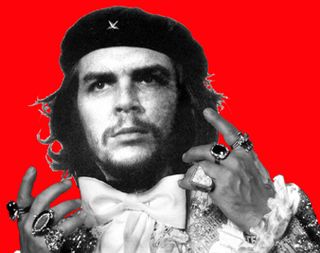
In Che’s Afterlife: The Legacy of an Image, Michael Casey reports that local peasant women who paraded by Che’s corpse on October 9 with the permission of triumphant Bolivian officers “surreptitiously clipped locks of hair from Che’s head, saving themselves a future talisman.” A few weeks later, the journalist and novelist Jose Yglesias, reporting on Che’s death for The Nation, indulged his readers with a different sort of memorabilia. Yglesias wrote that like the relics of St. Teresa of Avila, a sixteenth-century Carmelite nun and mystic, Che’s hands “may well be with us for a long time to strengthen the nonreligious but barefoot Order–like Saint Teresa’s stoical Carmelites–of the guerrillas of South America.” The mythic appeal of the slain revolutionary, known to many today in Latin America as “San Ernesto,” has only grown in subsequent years. “Unwittingly, the Bolivian military delivered the world a lasting and sympathetic picture of the man they’d hunted down,” Casey writes. “They gave it a crucified Che.” Indeed, John Berger and other art critics have argued that Freddy Alborta’s photo of Che’s corpse bears a startling resemblance to Renaissance depictions of Jesus Christ at the moment he was brought down from the cross by the Romans.

Che hardly ever sat for a bad photo–even in death. But of all surviving photographs of him, one in particular stands out: the head-and-shoulders portrait of a bearded, longhaired, 31-year-old Che, wearing a bomber jacket and his trademark beret emblazoned with the comandante star. Casey makes this image the central concern of Che’s Afterlife, and in the book’s opening chapter he offers a vivid re-creation of the “frozen millisecond” when the photo was taken. The date was March 5, 1960; the location a spot near Havana’s Colón cemetery; the occasion a public funeral sponsored by the revolutionary government. The previous day a French munitions ship delivering arms to Cuba had mysteriously blown up in Havana harbor, killing scores of people and wounding hundreds. CIA involvement was suspected but never proven. Che, who had been at a meeting nearby in downtown Havana when the ship exploded, rushed to the docks and helped provide medical aid to the wounded and the dying.

Baldwin in Istanbul

BildeIn The National (Abu Dhabi), Suzy Hansen:

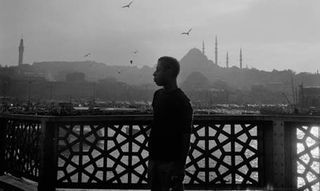
Some time after James Baldwin arrived in Istanbul he settled in Gumussuyu, a neighbourhood that hangs on the side of one of the city’s many hills, above the Golden Horn, the shores of Asia, and even the Sea of Marmara. Baldwin was a drinker, and one of his favourite neighbourhood spots was the Park Hotel. These days that glamorous meeting place is a terrible hulking carcass of a stunted building project, all grey, barren floors and trash heaps, stray dogs barking at nothing all hours of the day. Both vistas – the fabled view, the hovering skeleton – loom outside the living room windows of the great Turkish actor Engin Cezzar, who was largely responsible for Baldwin’s little-known sojourn in Turkey, where he lived on and off throughout the 1960s.

When I went to visit Cezzar last winter, a collection of letters between Baldwin and Cezzar had just been showcased in an Istanbul bookstore along with Baldwin’s translated works, and I told Cezzar I’d bought them. He scowled: “Don’t read Jimmy Baldwin in Turkish, for Christ’s sake.” Cezzar seemed proud of his book, and his special friendship with “Jimmy,” but he had priorities. He prized Baldwin as one thing above all else: a writer.

Todd Shea: The Improbable 3QD Commenter

Now that Todd (The Improbable American) Shea is rivaling Aguy109, Fred Lapides, Dave Ranning, and Carlos (:-)) for frequency of commenting at 3QD, I thought I should post the story which accompanied the video about him that I had posted a couple of days ago. This is by Adam B. Ellick in the New York Times:

Todd Mr. Shea is an unlikely person to reform Chikar’s decades of medical neglect. When he was 12, his mother died of a Valium overdose. By 18, he was addicted to crack cocaine.

In 1992, he moved from his native Maryland to Nashville to pursue a music career, he said, and spent the next decade playing in bars and restaurants around the country. At one point, he was forced to sell his own blood plasma for $40 a week to pay the bills.

He moved to New York City in 1998, and had a gig booked at CBGB, the famed music club, on Sept. 12, 2001. As he watched the World Trade Center burn and fall, he said, he promptly emptied his band van and used it over the next week to ferry meals to firefighters at Ground Zero.

He soon became addicted to rescue efforts, and volunteered in Sri Lanka after the 2004 tsunami. It was his first time overseas. After Hurricane Katrina, he said, he volunteered with another rescue organization. Then the earthquake hit Pakistan, and he left for a country he knew nothing about.

Once in Chikar, he met a local M.B.A. student, Afzel Makhdoom, who had just dragged his aunt out from under the rubble of his home. As soon as he could scrape together the money, Mr. Shea hired him.

“I had never met an American before,” said Mr. Makhdoom, now 24. “My first impression was: They just want to kill Muslims; it’s an invasion, and they’ll never go back home. But now we want to keep this American here.”

More here.

Evidence that Osama bin Laden visited America

Steve Coll in The New Yorker:

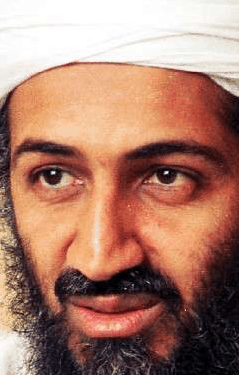
ScreenHunter_06 Jul. 08 17.17 The question of whether Osama bin Laden has ever visited the United States, a subject on which I have expended an unhealthy amount of energy in the course of various journalistic and biographical research, has now seemingly been settled. Osama was here for two weeks in 1979, it seems, and he visited Indiana and Los Angeles, among other places. He had a favorable encounter with an American medical doctor; he also reportedly met in Los Angeles with his spiritual mentor of the time, the Palestinian radical Abdullah Azzam. All this is according to a forthcoming book by Osama’s first wife, Najwa Bin Laden, and his son Omar Bin Laden, to be published in the autumn by St. Martin’s Press.

First, some context for the book’s disclosures:

In the autumn of 2005, while conducting research in Saudi Arabia for the book that became “The Bin Ladens: An Arabian Family in the American Century,” I met a Saudi journalist named Khaled Batarfi, who had been a neighbor and friend of Osama Bin Laden in their teenage years. During one of our interviews, Batarfi offered an account of Osama’s early travels—to London, to Africa on Safari, and to the United States—that was suggestive of a young man who had more direct experience of the West than was generally understood.

More here.

Dendroids

Roxy-paine-1

Maelstrom, Roxy Paine’s magnificently intricate installation currently on the roof garden of the Metropolitan Museum of Art, is to date the most prominent offspring of a rapidly evolving typology, lifesize tree golems rendered in stainless steel. Paine manages to steer these leafless “Dendroids,” as he calls them, between the Scylla of transparency and the Charibdis of mechanization, unyielding hazards to authorship of his own contrarian devising established by two other families of sculpture. On one side are Paine’s “Replicants,” portraits of notorious, untrustworthy plants and fungi fixed in eternal plastic with an exegetical fidelity to surpass the craftsmanship of the best diorama and Hollywood prop technicians. Here the hand dissolves like the Cheshire Cat around the grin of its expertise. But looming off to starboard are the industrial prototypes that have been tuned to glop, dip, carve, or spray potentially numberless unique artworks, induced but not touched by the artist. Most disconcerting about these machines is how undeniably ravishing are the objects they produce. The minimalist stalactites of Paint Dipper, the scholar’s canyons of Erosion Machine, and the impeccably grotesque, groovy meltdowns of SCUMAK, for example, flout the prerogatives of painting and sculpture not merely with sly, assembly-line standardization but in manifesting a literal and figurative gravity to die for.

more from David Brody at artcritical here.

Joseph Conrad’s Heart of Darkness

From The Telegraph:

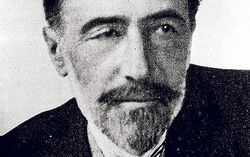
Conrad_1434429c Like some deeply bruised cloud hovering thunderously above a summer picnic, Joseph Conrad’s Heart of Darkness threatens us still, more than a century since its publication.

Few works have entertained, excited and troubled minds as much. It has inspired music – including a forthcoming opera by Tarik O’Regan – and spawned numerous radio, theatre, film and television adaptations, the most famous being Apocalypse Now. TS Eliot’s The Hollow Men did more for the work’s projection towards a readership, quoting the phrase: “Mistah Kurtz, he dead.” It infused Ronan Bennett’s The Catastrophist and haunts both John le Carré’s The Constant Gardener and The Mission Song. VS Naipaul and Graham Greene were swept up by it, as were Nick Davies in writing Dark Heart along with Sven Lindquist’s Exterminate All the Brutes, Michaela Wrong’s In the Footsteps of Mr Kurtz, and Tim Butcher’s Blood River. This weekend, at the Festival Hall in London, there will be two five-hour readings of the book, complete with piano accompaniment.

What is it about Heart of Darkness that has this horrid hold on our consciousness?

More here.

Liquid Sand

Mark Trodden in Cosmic Variance:

One of the more fun physics stories that I’ve seen recently is from an area of research quite removed from my own, but that I have found fascinating for a while now. I have been fortunate to have excellent condensed matter colleagues at both my recent institutions, and quite a number of them are interested in soft condensed matter – classical physics that describes the behavior of large numbers of particles, far from equilibrium, often when entropic considerations dominate the dynamics.

The field covers such diverse systems as the behavior of biological membranes and the dynamics of grain in silos, and contains many examples in which nontrivial geometry and topology lead to the possibility of discovering new phenomena that, unlike in my own field, can increasingly often be checked in a laboratory experiment designed and built in a relatively short time.

The story that caught my eye (via Wired Science) recently concerns the behavior of a system that is so simple that you would think we know all that there is to be known about it – falling sand.

In the video above, a stream of sand is allowed to fall over several feet, and is filmed using a high speed video camera that falls at the same speed as the sand. The result, as you can see, is that the sand forms “droplets” just as water would, even though most people would not think of granular materials as anything like a liquid.

More here.

The resignation speech of Sarah Palin: a deconstruction

From Nonrhotic:

Sarah-palin-1 In what can best be described as mildly coherent rambling, Sarah Palin, the Governor of Alaska, announced her resignation on July 3. During her speech, she alluded to a combination of factors that lead to her decision. Reading through the full text of her speech, I was able to extract 11 reasons that were buried deep amidst her wandering prose and tangled logic. They are paraphrased below (along with the relevant text from her speech in italics):

1. Defending myself against claims of ethics violations by political operatives is distracting me from doing my job as governor. Therefore, I resign.
“Political operatives descended on Alaska last August, digging for dirt. The ethics law I championed became their weapon of choice. Over the past nine months I’ve been accused of all sorts of frivolous ethics violations … Every one – all 15 of the ethics complaints have been dismissed. We’ve won! But it hasn’t been cheap – the State has wasted THOUSANDS of hours of YOUR time and shelled out some two million of YOUR dollars to respond to “opposition research” – that’s money NOT going to fund teachers or troopers – or safer roads.

2. Life is short. Time is too precious to waste. I am wasting my time as governor. Therefore, I resign to make better use of my time.
“Life is too short to compromise time and resources… Productive, fulfilled people determine where to put their efforts, choosing to wisely utilize precious time… to BUILD UP.”

3. I am expected to serve out the term I was elected for. But that would make me a quitter. Therefore, I am quitting because I don’t want to be a quitter.
“… it may be tempting and more comfortable to just keep your head down, plod along, and appease those who demand: “Sit down and shut up”, but that’s the worthless, easy path; that’s a quitter’s way out. And a problem in our country today is apathy. It would be apathetic to just hunker down and “go with the flow. Nah, only dead fish “go with the flow”.”

More here.