
Benjamin A. Schupmann at the Oxford University Press Blog:
 That a popular candidate could be disqualified from running and removed from the ballot might, at first glance, seem at odds with the very idea of democracy. For that reason, despite his evident role in instigating an insurrection, many Republican senators demurred and chose not to impeach former President Donald J. Trump on 13 January 2021. There was no need, they thought. The American voters had already passed judgment. Trump would now fade away.
Three years later, with Trump still fully in control of the Republican Party and poised to regain the Presidency, the US Supreme Court decided per curiam that Courts cannot declare a candidate ineligible for public office under the “insurrection clause” of the Fourteenth Amendment. Moreover, the Supreme Court’s scheduled hearing of Trump’s executive immunity claim seems intended to guarantee that the federal January 6 case will occur too late to influence or interfere with the 2024 US Presidential Election.
In these and other cases, we can see that, despite the existence of constitutional mechanisms to disqualify antidemocrats from obtaining power, elected representatives, judges, and other officials are reluctant to use them.
More here.
 ‘Philosophical theories are much more like good stories than scientific explanations.’ This provocative remark comes from the paper ‘Linguistic Philosophy and Perception’ (1953) by Margaret Macdonald. Macdonald was a figure at the institutional heart of British philosophy in the mid-
 How the brain processes visual information — and its perception of time — is heavily influenced by what we’re looking at, a study has found. In the experiment, participants perceived the amount of time they had spent looking at an image differently depending on how large, cluttered or memorable the contents of the picture were. They were also more likely to remember images that they thought they had viewed for longer. The findings, published on 22 April in Nature Human Behaviour
 Taylor Swift isn’t just a
 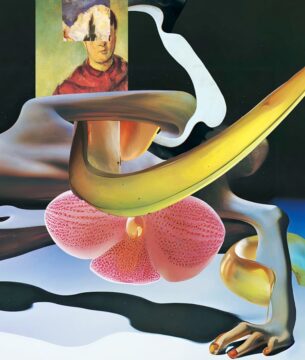 They are assembled from components that are networked together to process information. Electrical signals propagate throughout, controlling every aspect of their functioning. Being general problem-solvers, many of them have high IQs, but they routinely make mistakes and confabulate. They take on different personas, learning to please their makers, but sometimes they abruptly turn on them, rejecting cherished values and developing new ones spontaneously. They convincingly describe things they don’t really understand. And they’re going to change everything.
 In the coming days Israel will have to make historic policy decisions, ones that could shape its fate and the fate of the entire region for generations to come. Unfortunately, Benjamin Netanyahu and his political partners have repeatedly proven that they are unfit to make such decisions. The policies they pursued for many years have brought Israel to the brink of destruction. So far, they have shown no regret for their past mistakes, and no inclination to change direction. If they continue to shape policy, they will lead us and the whole Middle East to perdition. Instead of rushing into a new war with Iran, we should first learn the lessons of Israel’s failures over the past six months of war.
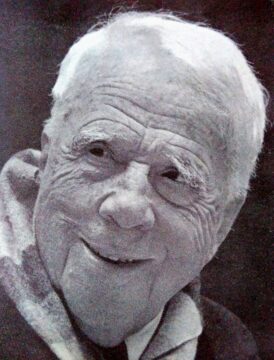 Facing west from his white clapboard Victorian house, surrounded by acres of skeletally bare oak, maple, and hickory reaching up from the snow-covered New Hampshire woods, Robert Frost might have gazed at the granitoid solidity of Ryan’s Hill while he contemplated the demonic. “It was far in the sameness of the wood; / I was running with joy on the Demon’s trail, / Though I knew what I hunted was no true god,” writes Frost in a poem from his first collection, A Boy’s Will, published in 1913 when the poet was already nearly forty. Written on that farm in Derry, New Hampshire, while Frost was teaching at the nearby Pinkerton Academy, “The Demiurge’s Laugh” is uncharacteristically gothic, a thread of the supernatural running through this little horror story of a lyric. The narrator, disoriented in his errand into wilderness, hears an ever-shifting “sleepy sound, but mocking half,” a sound that was “all I needed to hear: / It has lasted me many and many a year.”
 Imagine you’d been born in 1899. Imagine living through the invention of the Model T, the jet aircraft, the liquid-fuelled rocket, and the computer chip. Now imagine looking back on all this in 1965 and writing, as though with a shrug, “How slow will we appear some day?”
 If high intelligence is the ability to hold two opposing ideas in our heads at the same time, then most of us are geniuses about aging a few times over. We think it will never come for us. We think it might come but it will stop before it reaches us. We think it’s coming and there is absolutely nothing we can do about it. It was the great molecular biologist Seymour Benzer who got me interested in the idea that aging might be malleable. Benzer was a night owl. I was writing
 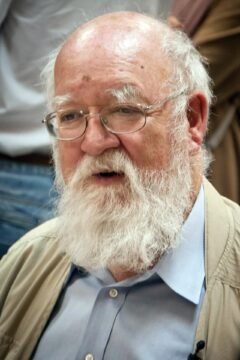 I just received the very sad news about the passing of Dan Dennett, a lodestar in my life and in many thoughtful people’s lives.
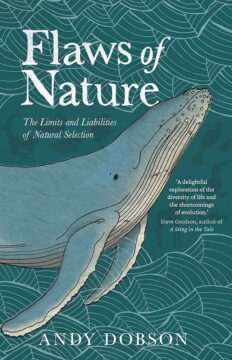 Most popular accounts of evolution focus on the amazing adaptations of organisms to their environment. But, Dobson counters, “whilst there seems no end to evolution’s artistry, it is all too easy to be blinded by the pyrotechnics on display” (p. 14). To better understand natural selection it is equally instructive to consider what it can not do. Though on paper it is a relentless mechanism to weed out the evolutionary unfit, in practice the process often results in suboptimal adaptations, cumbersome traits, evolutionary dead ends, and runaway selection that in the end is costly to all parties involved.
 In December, Indian Prime Minister Narendra Modi received a personal request from his friend and political ally, Israeli Prime Minister Benjamin Netanyahu: expedite the supply of Indian construction labor and other migrant workers to Israel. Prior to October 7, Palestinians from the West Bank and Gaza made up the majority of workers in Israel’s construction and agriculture sectors, doing crucial, if invisible, work in the country’s
 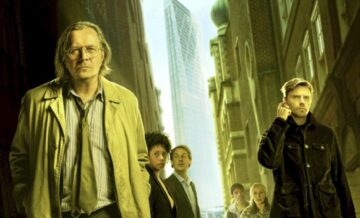 The conceit at the heart of Mick Herron’s Slow Horses novels is simple. There is a house in London for misfit spies. When MI5 is unable, for one reason or another, to fire failed employees, it opts to send them there. The exile is permanent, though the losers who suffer it do their best to pretend it isn’t. It’s a win-win for the service, in any case. No one gets sued. HR is pacified. And banishment proves either so unbearably dull and humiliating that the misfit spies voluntarily quit, or they remain there forever, whiling away the hours without hope of redemption. It is said of the souls in Dante’s purgatorio that the unhappiest are happier than the happiest on earth. Conversely, the happiest in Herron’s inferno are unhappier than the unhappiest outside its walls.
 Comedian