Tino Sehgal at the Guggenheim

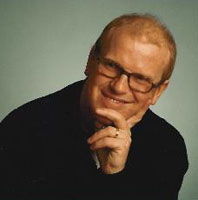
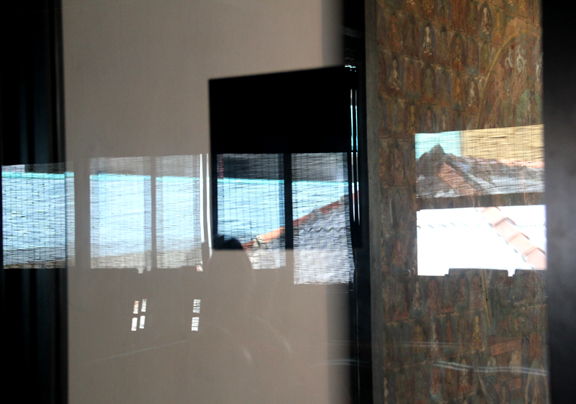
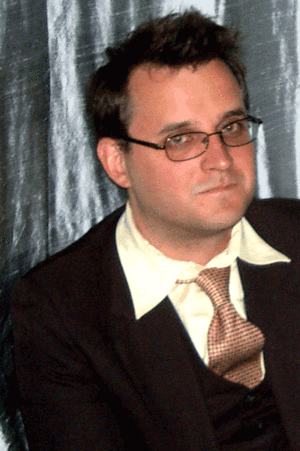
Our own Asad Raza spent the last year producing this Tino Sehgal show which is currently at the Guggenheim in New York. In an email about the New York Times review (below), Asad [shown in photo here] writes:

Asad-at-Weingallerie I think Holland Cotter got it pretty well. We are, I think, doing something, reaching so many people in their subjective particularity rather than as a mass audience, on a scale that no one has ever done before, which took lot of homework–in addition to finding and training all the people and organizing everyone and everything, we were running computer models, studying how it would work with thousands of people a day–we had 3753 people on saturday! Tino said to me the other night, as we were sitting alone talking over the next day, that this scale is way beyond anything he's ever done. It really is a big operation.

Holland Cotter writes about the show in the New York Times:

It begins when you walk a short way up the rotunda ramp. A child comes over to greet you. My greeter, a girl of 9 or 10, introduced herself as Giuliana and stated matter-of-factly, “This is a piece by Tino Sehgal.” She invited me to follow her and asked if she could ask me a question. “What is progress?” I gave a broad answer, then at her request, a clarifying example. We went further up the ramp.

Soon we were joined by a young man, a teenager, who said his name was Will. Giuliana carefully and accurately paraphrased for him my response to her question and slipped away. I walked on with Will, who commented on my comments on progress, which prompted me to try to refine my initial thoughts.

About halfway up the rotunda, Will was replaced by Tom, whom I took to be in his mid-30s and who introduced a new topic.

He had read a scientific report that morning saying that dinosaurs, long envisioned as drab-gray and green, might have been brightly colored, even gaudily striped. We had both, we said, been fascinated by dinosaurs as kids, as was his young son today. And now everyone would have to reimagine them, though artists already had done that. So Maurice Sendak’s “Where the Wild Things Are” turns out to be natural history. Art beats science to the punch.

As we neared the last stretch of the ramp, Tom handed me over to Bob, who was, like me, in late middle age and who broached another topic. He had just returned from Bulgaria where he had talked with a range of people over 20 about their feelings about the state of their country and lives. He found, he said, a pervasive nostalgia for life under Communism, a yearning for a society that promised to take care of everyone.

More here.
Culture-Changing Genius

Christopher Lydon in conversation over at Open Source:

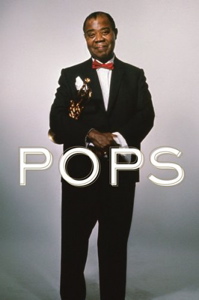
Pops Terry Teachout’s fine reconsideration of the man called “Pops” solidifies Louis Armstrong’s standing as not just the greatest horn player since the angel Gabriel, but an all-transforming artist at the level of James Joyce or even Shakespeare, and a black American freedom fighter of character and conscience, too. Louis Armstrong’s power to astonish was never in doubt. Hoagy Carmichael, the songwriter of “Stardust” and “Georgia,” dropped his cigarette and gulped his drink the first time he heard Louis, barely out of his teens, in 1921. “Why,” Hoagy moaned, “isn’t everybody in the world listening to that?” Over the next 50 years the whole world heard Louis, and marveled, but there were always questions, too: Could honky-tonk music from red-light New Orleans get standing, really, with Schubert and Bach? Was Louis in artistic decline after the Twenties? Was he an Uncle Tom in all that Satchelmouth clowning?

All the modern answers as Terry Teachout documents them are over the top now in favor of Louis Armstrong. Listen to the testimonies his fellow horn players Ruby Braff and Wynton Marsalis gave me on Louis’s legendary centennial, July 4, 1900: that if Louis wasn’t actually God, he was at least proof of God. His grandeur, complexity and consistency as man and artist seem now beyond question. Harold Bloom, keeper of the cultural canon and an astute jazz listener, too, pairs Armstrong with Walt Whitman as the greatest American contributor to the world’s art, the genius of this nation at its best. It turns out we could believe our ears after all.

More here. (Note: Thanks to Bryon Giddens-White)

CLOUD CULTURE: THE PROMISE AND THE THREAT

Charles Leadbeater in Edge:

Leadbeater200 We are about to get a very different kind of Internet, one replete with huge potential and danger. The spread of cloud computing will allow much greater personalisation and mobility, constant real time connection and easier collaboration. Cloud computing will give rise to a cloud culture. Many of the purveyors of that culture will be cloud capitalists. Our chief challenge will be to make cloud culture and cloud capitalism work, for public as well as private good.

The Net we have grown up with was based around data and software stored quite close to where it is used on personal and mainframe computers. That gave people a sense of ownership and control, exploiting cheap local storage because the bandwidth to download data from remote sources was too expensive and unreliable. The Net was a way for us easily to link these disparate and disconnected machines, with their separate data and software. In the world of cloud computing our data — emails, documents, pictures, songs — would be stored remotely in a digital cloud hanging above us, always there for us to access from any device we like: computer, television, games console, handheld and mobile, embedded in our kitchen table, bathroom mirror or car dashboard. We should be able to access our data from anywhere, thanks to always on broadband and draw down as much or as little as and when we need. Instead of installing software on our computer we would pay for it only when we needed it.

More here.

Tuesday, February 2, 2010

The lilac—dying, it drinks, goes on swilling

Article_writing

One day back in graduate school my advisor, a savvy and successful novelist whose books meant a lot to me and whom I had just traveled three thousand miles to come work with, called me into his office and sat me down sternly. “Look, no offense,” he said, holding up a page of my manuscript, a page so capillaried with red marks it looked like the face of a stroke victim, “but you’ve got to cut it out with these frigging F. Scott Fitzgerald sentences.” This was, on one level, the nicest compliment the man ever gave me. After all, it was my love for Fitzgerald and his frigging sentences that had made me want to be a novelist in the first place. If every writer, as Bellow once said, is a reader moved to emulation (and my advisor wasn’t so hot on Bellow’s sentences either), then to be told I was now writing the kinds of frigging sentences that had made me want to, uh, write those kinds of frigging sentences? On one level it was very nice to hear. Unfortunately my advisor didn’t mean it on that level. He meant it on a different level, a lower level. He meant that being enthralled as I was to lovely, thrilling, Daisy Buchananish prose was in my case less the solution than the problem. He himself was a rough-and-tumble realist, streety and sharp—a Redskin, in Philip Rahv’s famous phrase. Already he had me pegged as a member of that wan lesser tribe, the Palefaces, one of those cerebral, overly refined aesthetes who hung out in libraries and coffee shops doodling bon mots in overpriced notebooks. Moi! That this peremptory judgment was ludicrously unfair, ungenerous, and reductive did not make it any less true. I hurried out of his office that day with my face burning, my hands clenching and unclenching, shadow-boxing with shame.

more from Robert Cohen at The Believer here.

bomb power

Cover00

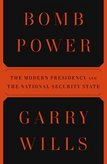
One day last November, I spent the morning at Garry Wills’s elegant brick home along the main street of Evanston, Illinois, pondering the Promethean scale of presidential power in the atomic age. Wills’s startling new book, Bomb Power (Penguin Press, $28), argues that the prototype of the modern president is not Abraham Lincoln, Franklin Delano Roosevelt, or Ronald Reagan. It’s General Leslie Groves—the administrator of the Manhattan Project, which Wills says was the inadvertent template for today’s secret government and imperial presidency. And his reasoning will scare the hell out of you. The Manhattan Project was the single most awesome undertaking in the history of the country, occupying some eighty facilities nationwide. Hanford, in Washington State, where project officials collected and prepared the plutonium, employed more than one hundred thousand people. The electromagnetic plant at Oak Ridge, Tennessee, covered 825 acres. Project administrators also commandeered an entire Pacific island as the staging ground for the fatal atomic-bomb flights. To staff the laboratories at Los Alamos, New Mexico, Groves enjoyed the kind of powers ascribed to Jesus in the Left Behind series: All of a sudden, the greatest scientists in the country and their families would suddenly disappear, Hoovered up into the desert behind a triple ring of fences, “with sentries on horseback or in jeeps patrolling the circuit twenty-four hours a day.” Almost nobody was allowed to know what any of it was for, and only one man understood how to master all its parts: Groves, who “carried the whole enterprise in his head.”

more from Rick Perlstein at Bookforum here.

123 Count With Me

I have a friend who gets a tremendous kick out of science, even though he’s an artist. Whenever we get together all he wants to do is chat about the latest thing in evolution or quantum mechanics. But when it comes to math, he feels at sea, and it saddens him. The strange symbols keep him out. He says he doesn’t even know how to pronounce them. In fact, his alienation runs a lot deeper. He’s not sure what mathematicians do all day, or what they mean when they say a proof is elegant. Sometimes we joke that I just should sit him down and teach him everything, starting with 1 + 1 = 2 and going as far as we can. Crazy as it sounds, over the next several weeks I’m going to try to do something close to that. I’ll be writing about the elements of mathematics, from pre-school to grad school, for anyone out there who’d like to have a second chance at the subject — but this time from an adult perspective. It’s not intended to be remedial. The goal is to give you a better feeling for what math is all about and why it’s so enthralling to those who get it.

more from Steven Strogatz at The Opinionater here.

Make Black History Month Your History Month

February is Black History Month. Like previous years, we will be posting at least one story each day which pays tribute to African Americans.

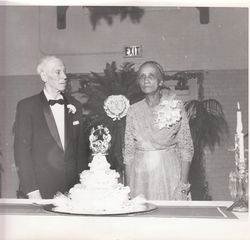
50thweddinganniversary From The Root:

The Root wants you to help us celebrate Black History Month. We will publish photos that chronicle your family’s experience in this country. We’re looking for historical photographs, family reunions, graduations, weddings and funerals—in other words, images that chronicle African-American life, past and present.

We will post these photos to our site throughout February. We've published some of our favorites here as inspiration.

(Picture: 50th wedding anniversary)

More here.

Tuesday Poem

Magritte

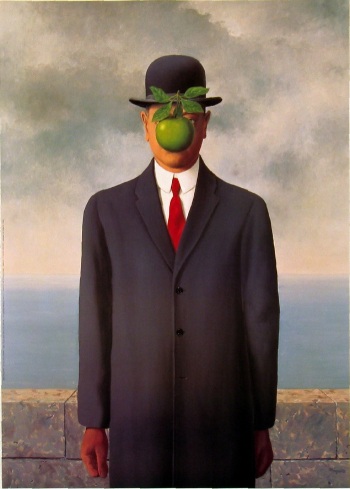
I am a man in a black bowler hat, Magritte
showing my back to the world.
If I turn, an apple blocks my face.

My first glimpse of art was in a churchyard,
so close it is to death.
I listened to the silence of that place.

Sometimes, laid out, she elevates behind me
as I walk the towpath.
Stiff-necked, I do not look around.

My art has no laws of gravity,
but a woman’s chestnut hair falls to the ground
and bowler-hatted men are falling rain.

I have seen boulders floating in the sky,
and every day a cloud comes in my door.
Baguettes, instead of clouds, go drifting by.

In woods, between the horse’s head and rider,
a vista slips, slim as the trunk of a tree.
What’s visible hides what’s also visible.

The sea is one with what is not the sea.

by Ciaran O'Driscoll

from Surreal Man; Pighog Pres, Brighton, 2006

Magritte

Abstract Thoughts? The Body Takes Them Literally

Natalie Angier in The New York Times:

Abstract The theory of relativity showed us that time and space are intertwined. To which our smarty-pants body might well reply: Tell me something I didn’t already know, Einstein. Researchers at the University of Aberdeen found that when people were asked to engage in a bit of mental time travel, and to recall past events or imagine future ones, participants’ bodies subliminally acted out the metaphors embedded in how we commonly conceptualized the flow of time. As they thought about years gone by, participants leaned slightly backward, while in fantasizing about the future, they listed to the fore. The deviations were not exactly Tower of Pisa leanings, amounting to some two or three millimeters’ shift one way or the other. Nevertheless, the directionality was clear and consistent.

“When we talk about time, we often use spatial metaphors like ‘I’m looking forward to seeing you’ or ‘I’m reflecting back on the past,’ ” said Lynden K. Miles, who conducted the study with his colleagues Louise K. Nind and C. Neil Macrae. “It was pleasing to us that we could take an abstract concept such as time and show that it was manifested in body movements.”

More here.

Monday, February 1, 2010

Sunday, January 31, 2010

Dialogue, debate or disagreement? How useful is the distinction between ‘East’ and ‘West’ in today’s world?

From Himal Southasian:

East If it was Johann Wolfgang von Goethe who preached that the East and the West are inseparable, it was Rudyard Kipling who became famous for advocating the idea of their perpetual incompatibility. Today, the foremost characteristic of any East-West discourse continues to be a wrangle over a mutual cultural misunderstanding. The ‘West’, the East Asian studies scholar Martin Bernal has suggested, is as much a construction as the ‘East’ of Edward Said’s Orientalism. Likewise, Victor David Hanson, the author of the influential book Why the West has Won: Carnage and Culture fron Salamis to Vietnam, wrote in 2002 that “the East continues to stereotype the West, with not a clue about its intrinsic nature.” Hanson mockingly portrayed non-Westerners as baffled by a “mysterious Western paradigm – the freedom to speak freely”. For Avishai Margalit and Ian Buruma, Occidentalism, or the popular understanding of Western cultures, constitutes “a cluster of images and ideas of the West in the minds of its haters”. They infer that what is really hated about the West by those who only know it from afar is its secularity and rationalism. But do such vague notions on either side really hold any water in today’s globalised context?

More here.

Sunday Poem

Only one thing I did wrong
Stayed in Mississippi a day too long.
–Bob Dylan, Mississippi, Love and Theft

Bad Timing

Our enthusiasm fostered these days that run
among the crowd of days all alike.
Our weakness placed on them
our last hope.
We used to think and time that should have been priceless
was passing us poorly
and these are, well, the coming years.

We were going to solve everything now.
Life was ahead of us.
It was best not to act rashly.

by Enrique Lihn
from The Dark Room and other poems;
New Directions Books, 1963

Destiempo

Nuestro entusiasmo alentaba a estos días que corren
entre la multitud de la igualdad de los días.
Nuestra debilidad cifraba en ellos
nuestra última esperanza.
Pensábamos y el tiempo que no tendría precio
se nos iba pasando pobremente
y estos son, pues, los años venideros.

Todo lo íbamos a resolver ahora.
Teníamos la vida por delante.
Lo mejor era no precipitarse.

The Intersecting Lives of da Vinci, Machiavelli, and Borgia and the World They Shaped

From The Wshington Post:

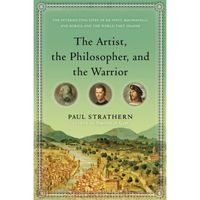
Book Five hundred years after his death, Cesare Borgia still ranks as one of history's most reprehensible figures: ruthless, power-hungry and peacock-vain. But his reputation as a brute obscures the full human dimensions of this duke who sought to reunite Italy and place himself at the head of a new Roman Empire. As Paul Strathern explains in his masterful narrative history, “The Artist, the Philosopher, and the Warrior,” Borgia was also brilliant, handsome, charismatic and well-versed in the classics, “a superb exemplar of the Renaissance man.”

Borgia is joined in these pages by two other exemplars of the age: Niccolò Machiavelli and Leonardo da Vinci. Strathern has produced a compact triple biography that focuses on the intersection of these three extraordinary men in late 1502. The trio spent only a few months in close proximity, but the impact on their own lives and on the Renaissance was far-reaching. Strathern, a novelist and author of other popular histories, does for Machiavelli and da Vinci what he does for Borgia: creates a flesh-and-blood portrait for each that defies historical stereotype. Using his novelist's eye and a historian's sweep, Strathern conveys the emotional subtleties that animated their lives. It's no small feat that he makes you care deeply for these complex figures who lived half a millennium ago.

More here.

A Colledge for the Promoting of Physico-Mathematicall Experimentall Learning

Our own PD Smith in The Independent:

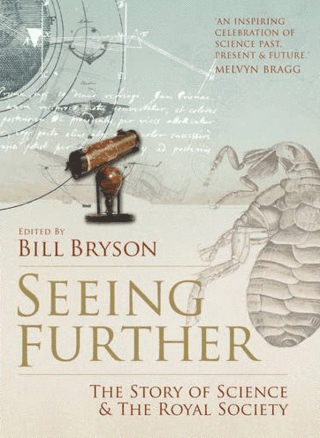
ScreenHunter_08 Jan. 31 10.08 This year the Royal Society celebrates its 350th birthday. The “Royal Society of London for Improving Natural Knowledge” was founded on 28 November 1660, when a dozen “ingenious and curious gentlemen” met at Gresham College, London, after a lecture by Christopher Wren, the 28-year-old Professor of Astronomy, and decided to found “a Colledge for the Promoting of Physico-Mathematicall Experimentall Learning.” Among the signatories of that historic memorandum were Wren, chemist Robert Boyle, clergyman and polymath John Wilkins, Sir Robert Moray, and mathematician William, Viscount Brouncker.

Today it is the longest-lived scientific society in the world and this superb collection of essays, extensively illustrated, is a fitting tribute. It has had 8,200 members, including Isaac Newton, Benjamin Franklin, Charles Darwin, Ernest Rutherford and Francis Crick: people who radically transformed the way we see the world. As Bill Bryson rightly says, “this isn't just the most venerable learned society in the world, it is the finest club.”

There had been earlier scientific societies such as Prince Federico Cesi's Academy of Linceans in Italy. But the Royal Society is without doubt the most influential. In 1665 it began the tradition of publishing scientific research. Its Philosophical Transactions is the oldest scientific journal in continuous publication. From the outset, under its German-born editor Henry Oldenburg, the journal was truly international, as was the Society itself. As Bryson puts it, the Society “created modern science”. The original members gathered on Wednesday afternoons in Gresham College where they would observe experiments – conducted by Robert Hooke – and engage in debates. “They loved to talk”, says James Gleick in his essay on their limitless curiosity. Anything could be discussed apart from God or politics.

More here.

Howard Zinn, a radical treasure

Bob Herbert in the New York Times:

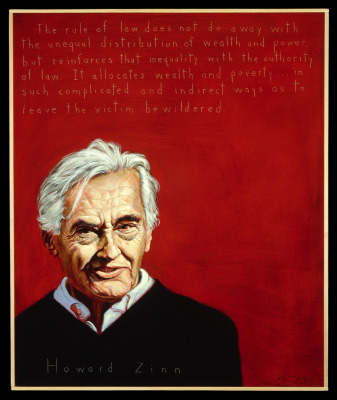
Howard-zin Think of those who joined in — and in many cases became leaders of — the abolitionist movement, the labor movement, the civil rights movement, the feminist revolution, the gay rights movement, and so on.

Think of what this country would have been like if those ordinary people had never bothered to fight and sometimes die for what they believed in. Mr. Zinn refers to them as “the people who have given this country whatever liberty and democracy we have.”

Our tendency is to give these true American heroes short shrift, just as we gave Howard Zinn short shrift. In the nitwit era that we’re living through now, it’s fashionable, for example, to bad-mouth labor unions and feminists even as workers throughout the land are treated like so much trash and the culture is so riddled with sexism that most people don’t even notice it. (There’s a restaurant chain called “Hooters,” for crying out loud.)

I always wondered why Howard Zinn was considered a radical. (He called himself a radical.) He was an unbelievably decent man who felt obliged to challenge injustice and unfairness wherever he found it. What was so radical about believing that workers should get a fair shake on the job, that corporations have too much power over our lives and much too much influence with the government, that wars are so murderously destructive that alternatives to warfare should be found, that blacks and other racial and ethnic minorities should have the same rights as whites, that the interests of powerful political leaders and corporate elites are not the same as those of ordinary people who are struggling from week to week to make ends meet?

More here.

Be free! Or I’ll kill you

Muhammad Idrees Ahmad in Pulse:

ScreenHunter_07 Jan. 31 09.40 Some strands of feminism have a long history of serving as adjuncts of Western imperialism. Today they also enable domestic prejudice. Gore Vidal once mocked George Bush’s idea of democracy promotion as being synonymous with: ‘Be free! Or I’ll kill you’. In a similar vein, some feminists today want to ‘liberate’ Arab-Muslim women by constraining their freedoms. These women can’t possibly know what they really want, you see. The European feminists, like Bush, know what’s best for them. What could my sister — who studied at a co-ed university (in Peshawar!) but turned to wearing the hijab after moving to Canada — know about her interests? She must be told by the enlightened Westerner. She must be liberated.

Ignorance and racism combine in this potent form of messianism to sanction prejudice which increasingly targets Europe’s immigrant population. Like the Orientalists of yore, this brand of feminism insists on seeing the brown or black woman in the subordinate role, wistfully awaiting a Westerner liberator. They are childlike, they must be protected in the same manner that a responsible parent protects an unruly nestling. They must be saved from the hijab, or — God forbid! — the veil. To protect their freedom of choice, their freedom to choose must be revoked.

Today more and more assertive Muslim women living in the West are taking up the hijab, as a defiant assertion of their identity and independence. It is no longer a religious symbol, it is a political symbol.

More here.

Saturday, January 30, 2010

Meis on Rye: Is it really any surprise Holden Caulfield’s not the hero he once was?

Our own Morgan Meis, six months ago, in The Smart Set:

ScreenHunter_06 Jan. 30 22.02 I'm for the kids. It’s crazy not to be. Are you, dear reader, mighty Atlas, going to hold the world in place and keep it from changing into something new? One lesson of all hitherto existing human history is that the kids have the advantage in the long run. This is a function of time and finitude. The only real wisdom comes in realizing that the kids of today will get their comeuppance with the swift passing of a decade or so. They, too, will wake up one day to find themselves representatives of what was, instead of what shall be. The kids keep on coming.

We learned recently (from a New York Times article by Jennifer Schuessler) that Holden Caulfield, the anti-hero of J.D. Salinger's The Catcher in the Rye, has lost his appeal among the teenage crowd. This came without fair warning. No pimply representative of the Millennials stepped forward to cushion the blow. Instead, we are informed by Barbara Feinberg — “who has observed numerous class discussions of 'Catcher'” — that a 15-year-old boy from Long Island has said, “Oh, we all hated Holden in my class. We just wanted to tell him, ‘Shut up and take your Prozac.’”

It is easy to respond defensively and with contempt. People don't like to have their heroes snubbed, especially when the snubbing comes from some little punk from Long Island whose fingers are surely rubbed raw from constant tweeting, texting, gaming, and masturbation. We (shall we define 'we' as that part of the population over 30?) find subtle ways to undercut the legions of cheeky hormone machines.

More here.