
Nik Popli in Time Magazine:
There’s no state that political pundits will be watching more closely this fall than Arizona. Voters in one of the nation’s biggest electoral battlegrounds are set to determine the outcome of a tossup Senate race, a pair of close congressional seats, and the winner of its 11 Electoral College votes—and now a recent court ruling has ensured abortion will be an animating issue at the ballot box. After the state Supreme Court decided on Tuesday to bring back a 160-year-old near total ban on the procedure, Arizona has effectively been thrust into the center of the national abortion debate that is expected to dominate the upcoming presidential election and once again test Republicans’ messaging strategy after Roe v. Wade was overturned.
“I don’t think it can be overstated the impact this week’s ruling will have on the November election,” says Barrett Marson, an Arizona-based Republican strategist who predicts the key battleground state now leans blue. “Everything that you thought was conventional wisdom about Arizona was thrown out the window overnight.” Democrats have already seized on the ruling to transform the 2024 race into another referendum on abortion rights, blaming former President Donald Trump for overturning the constitutional right to abortion and encouraging disaffected Democrats in the state to turn out in November.
More here.
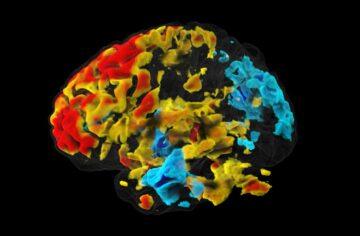 It was hailed as a potentially transformative technique for measuring brain activity in animals: direct imaging of neuronal activity (DIANA), held the promise of mapping neuronal activity so fast that neurons could be tracked as they fired. But nearly two years on from the
 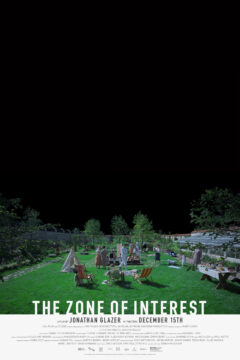 Glazer’s decision to only use hidden cameras, without any artificial lighting, creates formal limitations and challenges. But the images retain an intense tactility: patterns on fabrics, the pull of harshly parted and pinned hair, fuzz on a bee that circles a blossom, the softness of a dog’s muzzle, the glint of light reflected from an extracted human tooth. Close-ups punctuate longer observational takes, asserting the specificity of the surfaces that define this moment. The measured pacing of The Zone of Interest strikes me as distinct from the slow cinema tradition, where duration typically serves as a thematic focus. Instead, the length of the shots serves the function of extending the overarching tension. Glazer’s long takes are often paired with an uncomfortable intensity in the soundscape (perhaps the sonic analogue to an uncomfortable close-up), making these moments less an invitation to haptic reverie than an overwhelming of the senses. Suspense, tension, and a nauseating realization about what remains unseen dominate the affect, increased by the long takes that never fully reveal or resolve. The impact feels similar to the way the mind retains a vividly detailed image of a mundane moment preceding a traumatic event that itself can’t be fully recalled.
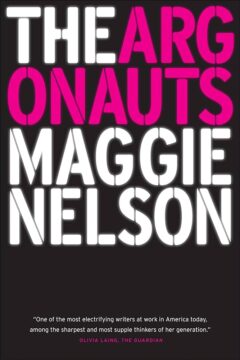 We have a sense, I think, of the false border sequestering art from theory. And so to remark on Maggie Nelson’s facility in mating the two is to say the least about how she does so—which is with a hurtling gusto that nonetheless invites us to pause and think. For this, her books are beloved by audiences with varying attachments to the categories that are often, imperfectly, applied to what they are reading: “memoir,” “art criticism,” “poetry,” “queer theory,” “feminism.” This is one way of saying that describing Nelson’s writing can be harder than consuming it, as one of its defining features involves unfurling the shorthand that governs—literally and figuratively—so much of our lives, including the terms we use to identify ourselves.
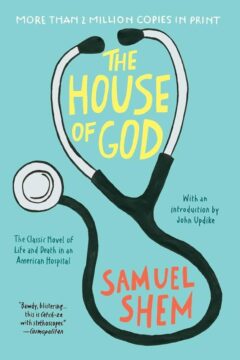 In 1968
 Daniel Kahneman died last week at the age of 90. His legacy is immense. He was, as he put it, the “grandfather” of behavioural economics — think economics but with a realistic model of what a human is — a role which won him a Nobel Prize. But Kahneman’s legacy is bigger than that. Kahneman and Tversky changed how we think about how people think, and if you change that, you change everything. You can see their influence all across the social sciences and much of the humanities.
 The detective in a typical British crime procedural would say that
 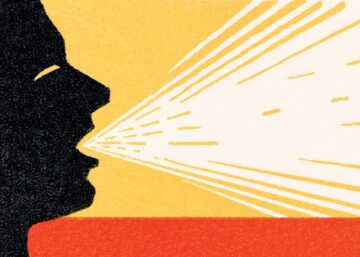 An estimated
  H
H E
E Odgers recently stated the skeptics’ case in an essay in Nature titled
  Equity has become a familiar term on American college campuses in recent years, as well as a flashpoint in the nation’s culture wars.
 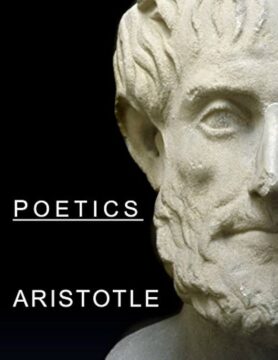 If the Poetics, Aristotle’s treatise on the subject of tragedy, is rarely studied today, it is largely because the French Neoclassicists of the seventeenth century turned Aristotle’s descriptions of Greek tragedy into prescriptions. Finessed by Corneille and Racine, ignored by Molière, challenged by the Romantics, and rejected by the Modernists, the Poetics was all but forgotten by 1953. But each in his own way, Beckett and Clarke heeded the deeper insights it contains.
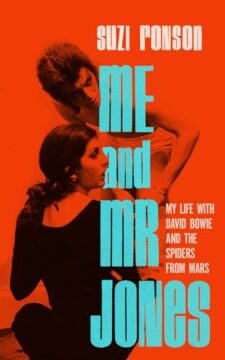 Earth was dying. We had five years left to live. Ziggy Stardust, the bisexual alien rock star, was sent from another planet to grey, binary 1970s Britain to give us a message of hope. I’m not sure about the hope part of the message, but he really turned us on.