
Edd Gent in Singularity Hub:
 Heavy industry is one of the most stubbornly difficult areas of the economy to decarbonize. But new research suggests emissions could be reduced by up to 85 percent globally using a mixture of tried-and-tested and upcoming technologies. While much of the climate debate focuses on areas like electricity, vehicle emissions, and aviation, a huge fraction of carbon emissions comes from hidden industrial processes. In 2022, the sector—which includes things like chemicals, iron and steel, and cement—accounted for a quarter of the world’s emissions, according to the International Energy Agency.
While they are often lumped together, these industries are very different, and the sources of their emissions can be highly varied. That means there’s no silver bullet and explains why the sector has proven to be one of the most challenging to decarbonize. This prompted researchers from the UK to carry out a comprehensive survey of technologies that could help get the sector’s emissions under control. They found that solutions like carbon capture and storage, switching to hydrogen or biomass fuels, or electrification of key industrial processes could cut out the bulk of the heavy industry carbon footprint. “Our findings represent a major step forward in helping to design industrial decarbonization strategies and that is a really encouraging prospect when it comes to the future health of the planet,” Dr. Ahmed Gailani, from Leeds University, said in a press release.
More here.
 “DID PORN KILL feminism?” asked Amia Srinivasan in her widely read book The Right to Sex (2021). In the internet age, it sure can look that way. As Srinivasan pointed out, top commercial porn sites host billions of visitors every month. Today’s college students grew up with those sites just a click away. Many had their first sexual experiences in front of a computer screen. When she talked with her own college students, she saw the consequences:
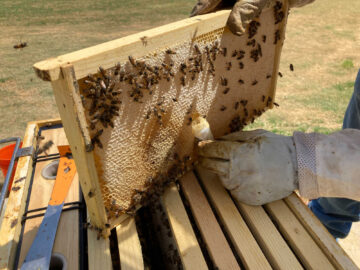 Best Bees is one of the many companies carving out a niche in a commercial landscape increasingly focused on advertising environmental responsibility, pushed by both customer demand and regulatory requirements. Testing environmental DNA, which allows data to be gathered from the tiny pieces of skin, scales, and slime that species shed as they move through the world, has been framed as a cheap and efficient way to understand a corporation’s impact.
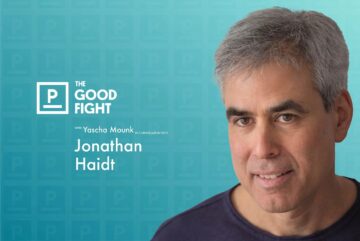 Yascha Mounk: It’s always a pleasure to have you on the podcast and particularly when you have an important new book which you have just published called
  In a surprise discovery, researchers found that cells from some types of cancers escaped destruction by the immune system by hiding inside other cancer cells. The finding, they suggested in
  The
The 
 The Port of Baltimore was on a roll. In February, Maryland Gov. Wes Moore celebrated new
  Of course, autocrats always tout their achievements, or insist that their regimes rest on the will of the people. Even Nazi Germany claimed popular legitimacy, a racist and anti-Semitic Volks-sovereignty. Soviet apologists and fellow travelers labeled Stalin’s Eastern European vassal states “people’s democracies.” The contemporary narrative seems depressingly familiar. Even so, the specter of powerful autocratic states that parasitically mimic democracy, while in reality eviscerating its core, should alarm us. Are democracy’s rivals indeed gaining ground? And, what precisely is different this time?
 THIS YEAR marks the 100th anniversary of the publication of E. M. Forster’s A Passage to India. I’ve never loved the novel, nor have I been able to let go of it. And so I started reading it again as I began a passage of my own to India—where I lived until I was eight—with my wife and our two teenage sons.
 While reading Maradona’s autobiography this past winter, I found that every few pages I would whisper or write in the margins, “I love you, Maradona.” Sadness crept up on me as I turned to the last chapter, and it intensified to heartbreak when I read its first lines: “They say I can’t keep quiet, that I talk about everything, and it’s true. They say I fell out with the Pope. It’s true.” I was devastated to be leaving Maradona’s world and returning to the ordinary one, where nobody ever picks a fight with the Pope.
 Almost 25 million adults in the U.S. have
  This six-legged animal isn’t an insect: it’s a mouse with two extra limbs where its genitals should be. Research on this genetically engineered rodent, which was published on 20 March in Nature Communications
 Despite the stereotype of being the Norman Rockwell of verse, Robert Frost’s standing, even sixty-one years after his death, remains blue-chip, still perhaps the most famous American poet among the general public. Frost’s work remains anthologized and interpreted, and taught in secondary and undergraduate classrooms; his lyrics among the handful that can be expected to be namedropped as a reader’s favorite poem (two roads and all of that). If anything, Frost has suffered from the albatross of presumed accessibility. Among the luminaries of American Modernism, Ezra Pound was experimental, T.S. Eliot cerebral, H.D. hermetic, Langston Hughes revolutionary, Wallace Stevens incandescent, and William Carlos Williams visionary, but Frost is readable. David Orr writes in his excellent book-length close reading The Road Not Taken: Finding America in the Poem Everyone Loves and Almost Everyone Gets Wrong (2015) that Frost is a poet whose “signature phrases have become so ubiquitous, so much a part of everything from coffee mugs to refrigerator magnets to graduation speeches” that it can become easy to forget the man who penned such phrases.