An ungodly row: Richard Dawkins sues his disciple

Tom Rowley and Alistair Walker in The Independent:

ScreenHunter_10 Oct. 25 08.51 Josh Timonen was one of a small coterie of young protégés around Richard Dawkins, sharing his boss's zealous atheism. But now he and the evolutionary theorist have fallen out spectacularly. Professor Dawkins's charity has accused Mr Timonen of embezzling hundreds of thousands of pounds.

The two atheists had become close in recent years, with Dawkins, the best-selling author and Emeritus Professor of Biology at Oxford University, even dedicating his latest book, The Greatest Show on Earth, to him. But Mr Timonen and the Dawkins foundation are now preparing for a legal wrangle.

The Richard Dawkins Foundation for Reason and Science, has filed four lawsuits in a Californian court alleging that Mr Timonen, who ran its online operation in America, stole $375,000 (£239,000) over three years. It is claiming $950,000 in damages, while Mr Dawkins is suing him for $14,000 owed to him personally. Mr Timonen strongly denies the allegations.

In the 18-page complaint filed in a Los Angeles court, the foundation claims that Mr Timonen said the website he was running was just “squeaking by,” making only $30,000 in three years, when in fact it was grossing 10 times that sum. The charity alleges that Mr Timonen pocketed 92 per cent of the money generated by the store, with his girlfriend spending $100,000 of the charity's money on upgrading her home before putting it on the market.

More here. [Thanks to John Ballard.]

The Real Danger from NPR’s Firing of Juan Williams

Md_horiz Glenn Greenwald over at Salon:

I'm still not quite over the most disgusting part of the Juan Williams spectacle yesterday: watching the very same people (on the Right and in the media) who remained silent about or vocally cheered on the viewpoint-based firings of Octavia Nasr, Helen Thomas, Rick Sanchez, Eason Jordan, Peter Arnett, Phil Donahue, Ashleigh Banfield, Bill Maher, Ward Churchill, Chas Freeman, Van Jones and so many others, spend all day yesterday wrapping themselves in the flag of “free expression!!!” and screeching about the perils and evils of firing journalists for expressing certain viewpoints. Even for someone who expects huge doses of principle-free hypocrisy — as I do — that behavior is really something to behold. And anyone doubting that there is a double standard when it comes to anti-Muslim speech should just compare the wailing backlash from most quarters over Williams' firing to the muted acquiescence or widespread approval of those other firings.

But there's one point from all of this I really want to highlight. The principal reason the Williams firing resonated so much and provoked so much fury is that it threatens the preservation of one of the most important American mythologies: that Muslims are a Serious Threat to America and Americans. That fact is illustrated by a Washington Post Op-Ed today from Reuel Marc Gerecht, who is as standard and pure a neocon as exists: an Israel-centric, Iran-threatening, Weekly Standard and TNR writer, former CIA Middle East analyst, former American Enterprise Institute and current Defense of Democracies “scholar,” torture advocate, etc. etc. Gerecht hails Williams as a courageous “dissident” for expressing this “truth”:

[W]hile his manner may have been clumsy, Williams was right to suggest that there is a troubling nexus between the modern Islamic identity and the embrace of terrorism as a holy act.

Above all else, this fear-generating “nexus” is what must be protected at all costs. This is the “troubling” connection — between Muslims and terrorism — that Williams lent his “liberal,” NPR-sanctioned voice to legitimizing. And it is this fear-sustaining, anti-Muslim slander that NPR's firing of Williams threatened to delegitimize. That is why NPR's firing of Williams must be attacked with such force: because if it were allowed to stand, it would be an important step toward stigmatizing anti-Muslim animus in the same way that other forms of bigotry are now off-limits, and that, above all else, is what cannot happen, because anti-Muslim animus is too important to too many factions to allow it to be delegitimized.

The Allais Paradox

Jonah Lehrer in Wired (via Delong):

Suppose somebody offered you a choice between two different vacations. Vacation number one gives you a 50 percent chance of winning a three-week tour of England, France and Italy. Vacation number two offers you a one-week tour of England for sure.

Not surprisingly, the vast majority of people (typically over 80 percent) prefer the one-week tour of England. We almost always choose certainty over risk, and are willing to trade two weeks of vacation for the guarantee of a one-week vacation. A sure thing just seems better than a gamble that might leave us with nothing. But how about this wager:

Vacation number one offers you a 5 percent chance of winning a three week tour of England, France and Italy. Vacation number two gives you a 10 percent chance of winning a one week tour of England.

In this case, most people choose the three-week trip. We figure both vacations are unlikely to happen, so we might as well go for broke on the grand European tour. (People act the same way with lotteries: we typically buy the ticket for the biggest possible prize, regardless of the odds.)

Allais presciently realized that this very popular set of decisions – almost everybody made them – violated the rational assumptions of economics. Instead of making decisions that could be predicted by a few mathematical equations, people acted with frustrating inconsistency. After all, both questions involve 50 percent reductions in probability (from 100 percent to 50 percent, and from 10 percent to 5 percent), and yet generated completely opposite responses. Our choices seemed incoherent.

The Allais paradox was mostly ignored for the next two decades. But then, in the early 1970s, two Israeli psychologists, Daniel Kahneman and Amos Tversky, read about the paradox and were instantly intrigued: they wanted to know why people didn’t respond to probabilities in a linear manner. Based upon their conversations with each other, it seemed obvious that people perceived a smaller difference between probabilities of 1 percent and 2 percent than between 0 percent and 1 percent, or between 99 percent and 100 percent. In other words, all changes in risk are not created equal. As Allais had observed decades before, we value complete certainty an inordinate amount.

But why was certainty so attractive?

Why Conservatives Love War

Corey Robin in the Chronicle of Higher Education:

Photo_7822_carousel This year is the 60th anniversary of the publication of The Authoritarian Personality. Once this was the most famous of Theodor Adorno's works. Today it's largely forgotten. With one exception: its indelible portrait of the “pseudo-conservative.” Although Richard Hofstadter is often credited with the term—his essay “The Pseudo-Conservative Revolt” appeared in 1955—it was Adorno and his three co-authors who first identified the type: that vengeful and violent citizen who avows his faith in calm and restraint while agitating for policies that “would abolish the very institutions with which he appears to identify himself.” The pseudo-conservative, in other words, is no conservative at all. Prone to “violence, anarchic impulses, and chaotic destructiveness,” he loves war and longs for bedlam in the streets. He has “little in common,” in Hofstadter's words, “with the temperate and compromising spirit of true conservatism.”

Musing on those passages last June, Andrew Sullivan wrote on his blog, “It all sounds weirdly familiar, doesn't it?” He was talking about the predatory revanchism that has stalked the Republican Party since 9/11 and now consumes it. “The Bush-Cheney presidency,” wrote Sullivan, was “the perfect pseudo-conservative administration.” The White House and its neoconservative enablers celebrated war and torture, shredded the Constitution, and bankrupted the nation. “Throughout all this,” Sullivan pointed out, “the Tea Partiers supported them.”

More here.

Testing the hypothesis of a holographic universe

Sara Reardon in Symmetry Breaking:

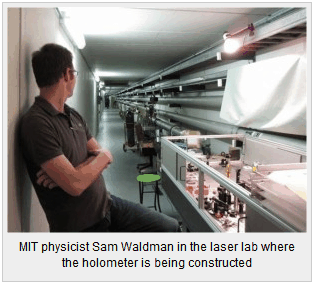
ScreenHunter_09 Oct. 24 19.22 In 2008, Fermilab particle astrophysicist Craig Hogan made waves with a mind-boggling proposition: The 3D universe in which we appear to live is no more than a hologram.

Now he is building the most precise clock of all time to directly measure whether our reality is an illusion.

The idea that spacetime may not be entirely smooth – like a digital image that becomes increasingly pixelated as you zoom in – had been previously proposed by Stephen Hawking and others. Possible evidence for this model appeared last year in the unaccountable “noise” plaguing the GEO600 experiment in Germany, which searches for gravitational waves from black holes. To Hogan, the jitteriness suggested that the experiment had stumbled upon the lower limit of the spacetime pixels’ resolution.

Black hole physics, in which space and time become compressed, provides a basis for math showing that the third dimension may not exist at all. In this two-dimensional cartoon of a universe, what we perceive as a third dimension would actually be a projection of time intertwined with depth. If this is true, the illusion can only be maintained until equipment becomes sensitive enough to find its limits.

“You can’t perceive it because nothing ever travels faster than light,” says Hogan. “This holographic view is how the universe would look if you sat on a photon.”

Not everyone agrees with this idea. Its foundation is formed with math rather than hard data, as is common in theoretical physics. And although a holographic universe would answer many questions about black hole physics and other paradoxes, it clashes with classical geometry, which demands a universe of smooth, continuous paths in space and time.

“So we want to build a machine which will be the most sensitive measurement ever made of spacetime itself,” says Hogan. “That’s the holometer.”

More here.

Anjali Joseph: ‘Stop trying to label me!’

From The Independent:

Anj Back in 1985, when I was seven, my family moved to England from Bombay. My father was a research scientist. He was going to teach at Warwick University. In his first week, a colleague offered to take him to the cafeteria at the campus arts centre. There were sandwiches, salads, baked potatoes, and something else, which the colleague indicated: “Have you tried these? They're called samosas. They're rather good.”

When we moved, I had never been to England, or anywhere outside India except for a sabbatical year my father had taken at Carnegie Mellon University in Pittsburgh when I was a toddler. I was, however, confident about what England would entail. I had been reading. There would be a village, and a fat village policeman; I would have friends, five or seven of them, and a dog; my friends and I would sit in a garden shed, go on picnics, or sleep in gorse bushes, and feast on boiled eggs (which I hated) and delicious-sounding tongue sandwiches. Some recalibration was required; I realised that England was no longer in the 1930s and, perhaps, even then, had not resembled life in the works of Enid Blyton, which I'd eagerly read from our local library in Bombay.

More here.

Aldous Huxley, The Art of Fiction

From The Paris Review (1960):

Aldous-huxley Among serious novelists, Aldous Huxley is surely the wittiest and most irreverent. Ever since the early twenties, his name has been a byword for a particular kind of social satire; in fact, he has immortalized in satire a whole period and a way of life. In addition to his ten novels, Huxley has written, during the course of an extremely prolific career, poetry, drama, essays, travel, biography, and history. Descended from two of the most eminent Victorian families, he inherited science and letters from his grandfather T. H. Huxley and his great-uncle Matthew Arnold respectively. He absorbed both strains in an erudition so unlikely that it has sometimes been regarded as a kind of literary gamesmanship. (In conversation his learning comes out spontaneously, without the slightest hint of premeditation; if someone raises the topic of Victorian gastronomy, for example, Huxley will recite a typical daily menu of Prince Edward, meal by meal, course by course, down to the last crumb.) The plain fact is that Aldous Huxley is one of the most prodigiously learned writers not merely of this century but of all time.

After Eton and Balliol, he became a member of the postwar intellectual upper crust, the society he set out to vivisect and anatomize. He first made his name with such brilliant satires as Antic Hay and Point Counter Point, writing in the process part of the social history of the twenties. In the thirties he wrote his most influential novel, Brave New World, combining satire and science fiction in the most successful of futuristic utopias. Since 1937, when he settled in Southern California, he has written fewer novels and turned his attention more to philosophy, history, and mysticism. Although remembered best for his early satires, he is still productive and provocative as ever. It is rather odd to find Aldous Huxley in a suburb of Los Angeles called Hollywoodland. He lives in an unpretentious hilltop house that suggests the Tudor period of American real-estate history. On a clear day he can look out across miles of cluttered, sprawling city at a broad sweep of the Pacific. Behind him dry brown hills rise to a monstrous sign that dominates the horizon, proclaiming hollywoodland in aluminum letters twenty feet high.

More here.

The 99: the Islamic superheroes fighting side by side with Batman

Carole Cadwalladr in The Guardian:

ScreenHunter_08 Oct. 24 13.41 Even if you deliberately set out to try to dream up the least probable superhero ever, it's unlikely that you'd manage to come up with a character as far-fetched as Batina the Hidden. Forget Wonder Worm, or a man born with the powers of a newt, Batina is a superhero of a kind the world hasn't until now seen. It's not just that she's a Muslim woman, from a country best known for harbouring al-Qaida operatives – Yemen – but that she wears an altogether new kind of super-person costume: a burqa.

She, along with her fellow crime-fighters, a vast team of characters from around the world, including Jabbar the Powerful from Saudi Arabia and Hadya the Guide from London, collectively known as “The 99”, are the world's first Islam-inspired superheroes. And this week, in what is perhaps the ultimate comic-book accolade, they will join forces with Superman, Batman and Wonder Woman. DC Comics, the US publishing giant, will publish the first of six special crossover issues in which The 99 will be fighting crime alongside the Justice League of America, the fictional superhero team that includes Superman and Batman.

More here. [Thanks to Yousaf Hyat.]

Sunday Poem

The Boys of Summer

1

On earth where many bare feet have run
We boys stretch out
We exchange embraces with no one
But we are more complete than any future

2

We boys hang down
Upon swings at the height of day
Our slight yawns
Like a ripening akebia fruit

3

Long ago, we boys left a fountain
And now go in all directions through the square
The sun which has lost its eyelids watches
The same radiant dream over and over again

4

With the soles of our feet, we kick up waves
And we leave along the muddy shore
Our arms reach further and further ahead
Perhaps toward the deep blue of the ancient sea

5

Turning the earth with our father’s bones, we spread young seeds
And cultivate summer upon cetacean memories
Each era gets its own forest
Each era gets its own graveyard

6

As if creating cairns, we stack
The corpses of cicadas caught during vacation
And with our butterfly nets over our shoulders
We depart for another, even taller summer

by Chimako Tada
from Hasukuibito (Lotophagi)
publisher: Shoshi Ringoya, Tokyo, 1980

translation: Jeffrey Angles
from Forest of Eyes: Selected Poetry of Tada Chimako
publisher: University of California Press, Berkeley, California, 2010

Saturday, October 23, 2010

On the trail of Rubens

Our own Morgan Meis in The Smart Set:

Untitled Antwerpenaars (people from Antwerp) aren't always so enthusiastic about Rubens. But what city doesn’t have mixed emotions about its most famous sons and daughters, about the clichés, about the touristical kitsch that surrounds and suffocates the great ones? More than twice I've enthusiastically related my interest in Rubens to an Antwerpenaar, only to be met with a rolling of the eyes, followed by an audible sigh. The message is clear: Only an asshole would come to Antwerp to expend time and energy on the most obvious of subjects, the most boring of all possible figures, Rubens.

Bravely, I persist. I trudge dutifully through the rain and the mist to the house that Rubens built near the center of Antwerp in the early 17th century. Some fragment of him must still inhabit the place, no? There must be a clue in that house, though, to be honest, I'm not even sure what of the riddle to which I am seeking clues. Maybe it is simply the answer to the question of why we care at all.

On my most recent trip to the house, I fell into a conversation with one of the museum guards, who likes to be called Toulouse and advised me never to speak Flemish. I took this as disgust with his own language combined with outrage with what I'd done to it. Anyway, he wanted to speak English and, like most people from Flanders, speaks it better than I do. When I told him of my interest in Rubens he became physically agitated. He pulled at his long goatee and squinched his eyes. It seemed that something distressing was happening in his bowels. This house isn't even real, he blurted out. Just before World War II, he told me, the city of Antwerp purchased the wreck of a property and then began “restoring” it through hasty guesswork and a few sketches dashed off by some clown who had visited the house a hundred years after Rubens died.

More here. [Photo taken outside Rubens' house.]

Why genes are leftwing

The right loves genetic explanations for poverty or mental illness. But science fingers society.

Oliver James in The Guardian:

ScreenHunter_05 Oct. 24 12.47 When the map of the human genome was presented to the world in 2001, psychiatrists had high hopes for it. Itemising all our genes would surely provide molecular evidence that the main cause of mental illness was genetic – something psychiatrists had long believed. Drug companies were wetting their lips at the prospect of massive profits from unique potions for every idiosyncrasy.

But a decade later, unnoticed by the media, the human genome project has not delivered what the psychiatrists hoped: we now know that genes play little part in why one sibling, social class or ethnic group is more likely to suffer mental health problems than another.

This result had been predicted by Craig Venter, one of the key researchers on the project. When the map was published, he said that because we only have about 25,000 genes psychological differences could not be much determined by them. “Our environments are critical,” he concluded. And, after only a few years of extensive genome searching, even the most convinced geneticists began to publicly admit that there are no individual genes for the vast majority of mental health problems. In 2009 Professor Robert Plomin, a leading behavioural geneticist, wrote that the evidence had proved that “genetic effects are much smaller than previously considered: the largest effects account for only 1% of quantitative traits”. However, he believed that all was not lost. Complex combinations of genes might hold the key. So far, this has not been shown, nor is it likely to be.

More here.

What Are Pakistani College Students All About?

Howard Schweber in The South Asian Idea:

Nat My first impression of Pakistani students was that they are … well, just college students. How utterly, disappointingly unexotic. Grade-conscious careerists, canny manipulators of the system, highly competitive … future engineers and finance majors.

But there are some differences, after all. That word “elite” comes into play, here. In the U.S., no college student would describe him or herself as “elite” – that word is primarily reserved for use as a political insult. Americans, notoriously, valorize the idea of belonging to “the middle class,” sometimes to a ludicrous degree. Pakistani students have no such compunctions, and are quite pleased to describe themselves and their family backgrounds by saying “we are the elites” and other words to that effect. Partly this tendency reflects an inherited colonialist culture, partly it reflects the reality of a deep economic divisions reflected in the ubiquitous servant culture that every American I spoke with privately described as jarring. American college students at top schools tend to have a sense of entitlement … but nothing that compares with the “elite” classes of Pakistani society.

More here.

Why Women Live Longer

From Scientific American:

Why-women-live-longer_1 If there are any men left who still believe that women are the weaker sex, it is long past time for them to think again. With respect to that most essential proof of robustness—the power to stay alive—women are tougher than men from birth through to extreme old age. The average man may run a 100-meter race faster than the average woman and lift heavier weights. But nowadays women outlive men by about five to six years. By age 85 there are roughly six women to every four men. At age 100 the ratio is more than two to one. And by age 122—the current world record for human longevity—the score stands at one-nil in favor of women.

So why do women live longer than men? One idea is that men drive themselves to an early grave with all the hardship and stress of their working lives. If this were so, however, then in these days of greater gender equality, you might expect the mortality gap would vanish or at least diminish. Yet there is little evidence that this is happening. Women today still outlive men by about as much as their stay-at-home mothers outlived their office-going fathers a generation ago. Furthermore, who truly believes that men’s work lives back then were so much more damaging to their health than women’s home lives? Just think about the stresses and strains that have always existed in the traditional roles of women: a woman’s life in a typical household can be just as hard as a man’s. Indeed, statistically speaking, men get a much better deal out of marriage than their wives—married men tend to live many years longer than single men, whereas married women live only a little bit longer than single women. So who actually has the easier life?

More here.

The State of Liberalism

From The New York Times:

Obama It’s a sign of how poorly liberals market themselves and their ideas that the word “liberal” is still in disrepute despite the election of the most genuinely liberal president that the political culture of this country will probably allow. “Progressive” is now the self-description of choice for liberals, though it’s musty and evasive. The basic equation remains: virtually all Republican politicians call themselves conservative; few Democratic politicians call themselves liberal. Even retired Classic Coke liberals like Walter F. Mondale are skittish about their creed. “I never signed up for any ideology,” he writes in his memoirs.

That would be fine (people are sick of labels) if clarity weren’t such an obvious political advantage. Simple ideology routinely trounces nuanced pragmatism, just as emotion so often beats reason and the varsity fullback will most likely deck the captain of the debate team in a fistfight. For four decades, conservatives have used the word “liberal” as an epithet, while liberals have used “conservative” defensively (“I’m a little conservative on . . .”). And Fox fans range out of factual bounds (“death panels”) more than their NPR-­listening counterparts in the liberal “­reality-based community” (a term attributed to a Bush White House aide by the author Ron Suskind).

More here.

It’s the Occupation, Stupid

Extensive research into the causes of suicide terrorism proves Islam isn't to blame — the root of the problem is foreign military occupations.

Robert A. Pape in Foreign Policy:

ScreenHunter_04 Oct. 23 11.43 Although no one wants to talk about it, 9/11 is still hurting America. That terrible day inflicted a wound of public fear that easily reopens with the smallest provocation, and it continues to bleed the United States of money, lives, and goodwill around the world. Indeed, America's response to its fear has, in turn, made Americans less safe and has inspired more threats and attacks.

In the decade since 9/11, the United States has conquered and occupied two large Muslim countries (Afghanistan and Iraq), compelled a huge Muslim army to root out a terrorist sanctuary (Pakistan), deployed thousands of Special Forces troops to numerous Muslim countries (Yemen, Somalia, Sudan, etc.), imprisoned hundreds of Muslims without recourse, and waged a massive war of ideas involving Muslim clerics to denounce violence and new institutions to bring Western norms to Muslim countries. Yet Americans still seem strangely mystified as to why some Muslims might be angry about this situation.

In a narrow sense, America is safer today than on 9/11. There has not been another attack on the same scale. U.S. defenses regarding immigration controls, airport security, and the disruption of potentially devastating domestic plots have all improved.

But in a broader sense, America has become perilously unsafe.

More here.

An Interview with Mark Changizi: Culture Harnessing the Brain

Daniel Lende in Neuroanthropology:

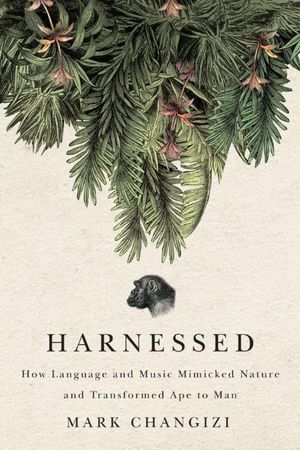
Daniel Lende: So, Mark, tell me about your forthcoming book Harnessed.

Harnessed Mark Changizi: Language and the arts are the centerpieces of what we humans are proud of. They are what we gloat to the other apes about. But how did we come to have language and art, and thereby stand so markedly apart from the rest of the animal world?

Answers traditionally come from one of two opposing poles.

The first view is that language and/or the arts are results of natural selection, and so we now have instincts for them: language instincts, music instincts, art instincts.

The opposing view is that, instead, we evolved to be highly plastic general-purpose learners who can train ourselves on loads of cultural artifacts evolution never intended for our brain, language and the arts among them.

There is a third option, however. It agrees with the ‘instinct’ view in positing that humans aren’t especially plastic. And it agrees with the ‘general-learner’ view in positing that culture matters. It is that language and the arts culturally evolved to be shaped “just right” to fit into our minds. Cultural — not natural — selection is the “brains” behind our human gloating rights. This kind of ‘cultural-selection’ view also is an old one.

What is new here is my view of how culture goes about making language and the arts good for our brain: Culture’s trick is to make language and the arts “mimic nature,” just the thing our brain *is* designed to absorb.

I refer to it as “Nature Harnessing.”

More here.

Harold McGee’s ‘Keys To Good Cooking’ For Chefs

From NPR:

ScreenHunter_03 Oct. 23 11.01 His latest book, the Keys to Good Cooking, is a how-to guide for home chefs in which McGee, a food science expert, explains techniques for kicking recipes up a few notches. McGee details why people perceive flavors differently, offers his thoughts on seasonings and explains why searing meat doesn't seal in the juices.

McGee joins Fresh Air's Terry Gross to offer advice for harried home cooks wondering whether it's safe to eat that shrimp in the back of the freezer (maybe) or whether it's worth it to buy that fancy new appliance (also maybe). Among the nuggets of wisdom he shares:

On the efficiency of gas vs. electric stovetops: “Many of us interested in cooking put a premium on big burners — powerful burners that are going to pump out a hot of heat so we can get woks really, really hot. It turns out that gas burners, as we all know from working with them and looking at them, actually send a lot of their heat into the kitchen instead of the food, just by the fact that it's an open flame. So most of the energy generated in a gas flame actually goes elsewhere than the food. In the case of a very ordinary electric stove, they're much more efficient. Even though their power rating may be lower than a fancy gas burner, they'll bring a pot to boil much faster.”

More here.