Extra Vitamin D and Calcium Aren’t Needed

Gina Kolata in The New York Times:

VITAMIN-articleInline The very high levels of vitamin D that are often recommended by doctors and testing laboratories — and can be achieved only by taking supplements — are unnecessary and could be harmful, an expert committee says. It also concludes that calcium supplements are not needed.

The group said most people have adequate amounts of vitamin D in their blood supplied by their diets and natural sources like sunshine, the committee says in a report that is to be released on Tuesday. “For most people, taking extra calcium and vitamin D supplements is not indicated,” said Dr. Clifford J. Rosen, a member of the panel and an osteoporosis expert at the Maine Medical Center Research Institute. Dr. J. Christopher Gallagher, director of the bone metabolism unit at the Creighton University School of Medicine in Omaha, Neb., agreed, adding, “The onus is on the people who propose extra calcium and vitamin D to show it is safe before they push it on people.” Over the past few years, the idea that nearly everyone needs extra calcium and vitamin D — especially vitamin D — has swept the nation. With calcium, adolescent girls may be the only group that is getting too little, the panel found. Older women, on the other hand, may take too much, putting themselves at risk for kidney stones. And there is evidence that excess calcium can increase the risk of heart disease, the group wrote.

More here.

Telomerase reverses ageing process

From Nature:

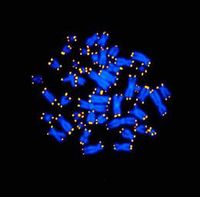
Telomerase Premature ageing can be reversed by reactivating an enzyme that protects the tips of chromosomes, a study in mice suggests.

Mice engineered to lack the enzyme, called telomerase, become prematurely decrepit. But they bounced back to health when the enzyme was replaced. The finding, published online today in Nature1, hints that some disorders characterized by early ageing could be treated by boosting telomerase activity. It also offers the possibility that normal human ageing could be slowed by reawakening the enzyme in cells where it has stopped working, says Ronald DePinho, a cancer geneticist at the Dana-Farber Cancer Institute and Harvard Medical School in Boston, Massachusetts, who led the new study. “This has implications for thinking about telomerase as a serious anti-ageing intervention.”

More here.

Monday, November 29, 2010

Lewis Lapham to Judge 2nd Annual 3QD Politics Prize

UPDATE 12/21/10: The winners have been announced.

UPDATE 12/14/10: List of finalists.

UPDATE 12/14/10: List of semifinalists.

UPDATE 12/07/10: Voting round is now open.

Dear Readers, Writers, Bloggers,
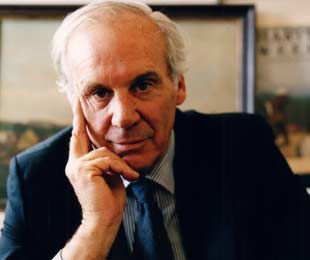
Lapham We are very honored and pleased to announce that Lewis Lapham has agreed to be the final judge for our 2nd annual prize for the best blog writing in politics. (Details of last year's prize, judged by Tariq Ali, can be found here.) Mr. Lapham needs no introduction for our American readers, but for those who do not already know him, this is from his Wikipedia entry:

Lewis Lapham served as editor of Harper's Magazine from 1976 to 2006 (with a hiatus from 1981 to 1983). He was managing editor from 1971 to 1975, after having worked for the San Francisco Examiner and New York Herald Tribune. He is largely responsible for the modern look and prominence of the magazine, having introduced many of its signature features including its famed Harper's Index. He announced that he would become editor emeritus in Spring 2006, continuing to write his Notebook column for the magazine as well as editing a new journal about history, Lapham's Quarterly. Lapham has also worked with the PEN American Center, sitting on the board of judges for the PEN/Newman's Own Award. This February, he will be inducted into the American Society of Magazine Editors' Hall of Fame. [Photo from the Boston Globe.]

As usual, this is the way it will work: the nominating period is now open, and will end at 11:59 pm EDT on December 2, 2010. There will then be a round of voting by our readers which will narrow down the entries to the top twenty semi-finalists. After this, we will take these top twenty voted-for nominees, and the four main editors of 3 Quarks Daily (Abbas Raza, Robin Varghese, Morgan Meis, and Azra Raza) will select six finalists from these, plus they may also add up to three wildcard entries of their own choosing. The three winners will be chosen from these by Mr. Lapham.

The first place award, called the “Top Quark,” will include a cash prize of one thousand dollars; the second place prize, the “Strange Quark,” will include a cash prize of three hundred dollars; and the third place winner will get the honor of winning the “Charm Quark,” along with a two hundred dollar prize.

(Welcome to those coming here for the first time. Learn more about who we are and what we do here, and do check out the full site here. Bookmark us and come back regularly, or sign up for the RSS feed.)

Details (please read before nominating):
Politics-Announcement-2010The winners of this politics prize will be announced on December 21, 2010. Here's the schedule:

November 22, 2010:

  • The nominations are opened. Please nominate your favorite politics blog entry by placing the URL for the blog post (the permalink) in the comments section of this post. You may also add a brief comment describing the entry and saying why you think it should win. (Do NOT nominate a whole blog, just one individual blog post.)
  • Blog posts longer than 4,000 words are not eligible.
  • Each person can only nominate one blog post.
  • Entries must be in English.
  • The editors of 3QD reserve the right to reject entries that we feel are not appropriate.
  • The blog entry may not be more than a year old. In other words, it must have been written after November 21, 2009.
  • You may also nominate your own entry from your own or a group blog (and we encourage you to).
  • Guest columnists at 3 Quarks Daily are also eligible to be nominated, and may also nominate themselves if they wish.
  • Nominations are limited to the first 200 entries.
  • Prize money must be claimed within a month of the announcement of winners.

December 2, 2010

  • The nominating process will end at 11:59 PM (NYC time) of this date.
  • The public voting will be opened soon afterwards.

December 8, 2010

  • Public voting ends at 11:59 PM (NYC time).

December 21, 2010

  • The winners are announced.

One Final and Important Request

If you have a blog or website, please help us spread the word about our prizes by linking to this post. Otherwise, post a link on your Facebook profile, Tweet it, or just email your friends and tell them about it! I really look forward to reading some very good material, and think this should be a lot of fun for all of us.

Best of luck and thanks for your attention!

Yours,

Abbas

Sunday, November 28, 2010

Gender and Philosophical Intuition

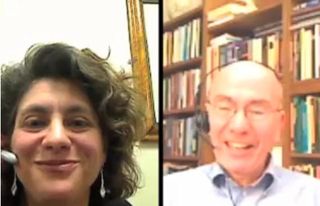
Gendlerstich Tamar Gendler and Stephen Stich, over at Philosophy TV

Empirical evidence collected by Stich and Buckwalter suggests that “standard” intuitions about philosophical thought experiments (e.g. Gettier cases) are more common among men than women. Stich and Gendler examine the merits of this evidence. They consider what might explain gendered differences in intuitions, and whether such differences can help to explain why women are underrepresented in professional philosophy. They also discuss alternative explanations for the gender gap, including the effects of sexism and the shortage of female professors and graduate students to serve as role models for female undergraduates. Finally, they ask why a gender gap has been a larger problem in philosophy than other fields.

Cables Shine Light Into Secret Diplomatic Channels

29cables-web1-articleLarge Scott Shane and Andrew Lehren in the NYT:

The cables, a huge sampling of the daily traffic between the State Department and some 270 embassies and consulates, amount to a secret chronicle of the United States’ relations with the world in an age of war and terrorism. Among their revelations, to be detailed in The Times in coming days:

¶ A dangerous standoff with Pakistan over nuclear fuel: Since 2007, the United States has mounted a highly secret effort, so far unsuccessful, to remove from a Pakistani research reactor highly enriched uranium that American officials fear could be diverted for use in an illicit nuclear device. In May 2009, Ambassador Anne W. Patterson reported that Pakistan was refusing to schedule a visit by American technical experts because, as a Pakistani official said, “if the local media got word of the fuel removal, ‘they certainly would portray it as the United States taking Pakistan’s nuclear weapons,’ he argued.”

¶ Gaming out an eventual collapse of North Korea: American and South Korean officials have discussed the prospects for a unified Korea, should the North’s economic troubles and political transition lead the state to implode. The South Koreans even considered commercial inducements to China, according to the American ambassador to Seoul. She told Washington in February that South Korean officials believe that the right business deals would “help salve” China’s “concerns about living with a reunified Korea” that is in a “benign alliance” with the United States.

The FBI successfully thwarts its own Terrorist plot

Glenn Greenwald in Salon:

Md_horiz The FBI is obviously quite pleased with itself over its arrest of a 19-year-old Somali-American, Mohamed Osman Mohamud, who — with months of encouragement, support and money from the FBI's own undercover agents — allegedly attempted to detonate a bomb at a crowded Christmas event in Portland, Oregon. Media accounts are almost uniformly trumpeting this event exactly as the FBI describes it. Loyalists of both parties are doing the same, with Democratic Party commentators proclaiming that this proves how great and effective Democrats are at stopping The Evil Terrorists, while right-wing polemicists point to this arrest as yet more proof that those menacing Muslims sure are violent and dangerous.

What's missing from all of these celebrations is an iota of questioning or skepticism. All of the information about this episode — all of it — comes exclusively from an FBI affidavit filed in connection with a Criminal Complaint against Mohamud. As shocking and upsetting as this may be to some, FBI claims are sometimes one-sided, unreliable and even untrue, especially when such claims — as here — are uncorroborated and unexamined. That's why we have what we call “trials” before assuming guilt or even before believing that we know what happened: because the government doesn't always tell the complete truth, because they often skew reality, because things often look much different once the accused is permitted to present his own facts and subject the government's claims to scrutiny. The FBI affidavit — as well as whatever its agents are whispering into the ears of reporters — contains only those facts the FBI chose to include, but omits the ones it chose to exclude. And even the “facts” that are included are merely assertions at this point and thus may not be facts at all.

More here.

I’m just here to measure your penises

Jesse Adelman in McSweeny's:

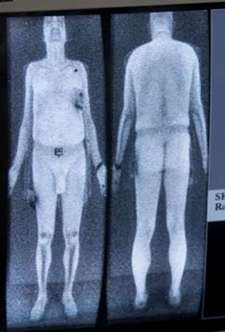
Rapi_scan_lg There's been quite a bit of scuttlebutt in the press and amongst the civil liberties crowd about what we—myself and my fellow full-body scanners—are coming to your airports to do. What is our real purpose? How invasive, truly, are these full-body scans? Will air travel, over time, become somehow less dignified, less “private”?

I'd like to take the opportunity of this writing to allay these and other misgivings. Please know: I'm just here to measure your penises. And I'm very, very good at it.

Can I see electronic components or liquid metals? Exotic bomb-making compounds? Timers or wires poking out of foreign orifices that mean us harm? No, no, and no, I cannot. And ladies, I have no interest in whatever arrangements you might have going on down there—no thanks! Fundamentally, I'm a specialist. I was built to measure penises for national security.

Many folks seem to have the impression that their penis scans will simply be appraised by a crew of chuckling, fantastically overweight elementary school dropouts in some musty back room near the baggage drop. While that may well be the case, you can rest assured that your penis will be regarded with the utmost professional care and clinical detachment until the very moment that a fine-grained digital image of your business leaves my fiber-optic cable en route to our vast federal crotch database.

More here.

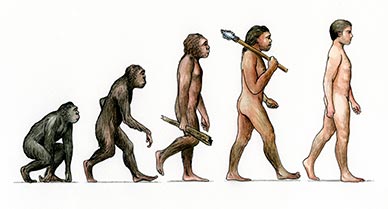
The Top Ten Daily Consequences of Having Evolved

Rob Dunn in Smithsonian Magazine:

Consequences-of-evolution-388 1. Our cells are weird chimeras
Perhaps a billion years ago, a single-celled organism arose that would ultimately give rise to all of the plants and animals on Earth, including us. This ancestor was the result of a merging: one cell swallowed, imperfectly, another cell. The predator provided the outsides, the nucleus and most of the rest of the chimera. The prey became the mitochondrion, the cellular organ that produces energy. Most of the time, this ancient symbiosis proceeds amicably. But every so often, our mitochondria and their surrounding cells fight. The result is diseases, such as mitochondrial myopathies (a range of muscle diseases) or Leigh’s disease (which affects the central nervous system).

2. Hiccups
The first air-breathing fish and amphibians extracted oxygen using gills when in the water and primitive lungs when on land—and to do so, they had to be able to close the glottis, or entryway to the lungs, when underwater. Importantly, the entryway (or glottis) to the lungs could be closed. When underwater, the animals pushed water past their gills while simultaneously pushing the glottis down. We descendants of these animals were left with vestiges of their history, including the hiccup. In hiccupping, we use ancient muscles to quickly close the glottis while sucking in (albeit air, not water). Hiccups no longer serve a function, but they persist without causing us harm—aside from frustration and occasional embarrassment. One of the reasons it is so difficult to stop hiccupping is that the entire process is controlled by a part of our brain that evolved long before consciousness, and so try as you might, you cannot think hiccups away.

More here.

Margaret Atwood interview

From The Guardian:

Margaret-atwood-in-london-007 Atwood's pressing interest, as the daughter of an eminent Canadian entomologist, is our planet and its future. Nothing seems more important to her, and since this concern animates almost everything she does, her conversation segues as easily into global warming as Canadian literature: “The threat to the planet is us. It's actually not a threat to the planet – it's a threat to us.” She goes on: “The planet will be OK in its own way. No matter what we do to it, we won't eliminate every last life form from it.” As evidence of this, there's the Canadian city of Sudbury, a favourite of Atwood's. When she was growing up in the 1940s, the place was as “barren as the moon” through overlogging, forest fires and relentless mining. “All the rain was acid,” she says. It was so bad that “a Sudbury” became a unit of pollution. But then a volunteer programme of regeneration was launched. Earth and seeds were painstakingly stuffed into the cracks between the rocks. Now, “Sudbury has forests again, birds in the trees and fish in the streams.” For her, Sudbury, “a symbol of hope”, offers a paradigm for the planet. And so, Atwood continues, with rather bracing realism, “some form of life will remain after us. We shouldn't be saying 'Save the planet'; we should be saying: 'Save viable conditions in which people can live.' That's what we're dealing with here.”

Atwood likes to tell the Amoeba's Tale as an illustration of the “magic moment” at which planet earth now finds itself. There's this test tube, and it's full of amoeba food. You put one amoeba in at 12 noon. The amoeba divides in two every minute. At 12 midnight the test tube is full of amoebas – and there's no food left. Question: at what moment in time is the tube half full? Answer: one minute to midnight. That's where we are apparently. That's when all the amoebas are saying: “We are fine. There's half a tube of food left.”

More here.

The Voyager

From The New York Times:

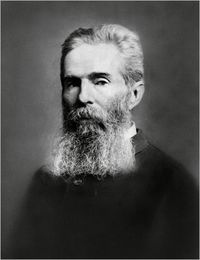
Marshall-popup Writing in The Atlantic last year, presumably while finishing work on “The Passages of H. M.,” a novel based on the life of Herman Melville, Jay Parini declared that the historical novel “has become our primary form of fiction.” The present, he speculated, “can seem too bright, too close,” requiring “the filter of memory” to sort out and deliver the profound insights readers hope to find in novels. Going a step farther, he argued that it is in fiction like Gore Vidal’s “Lincoln” or Russell Banks’s “Cloudsplitter” that “one gets ‘real’ history.”

Parini, a poet, biographer and literary critic as well as a novelist, can write with admirable lyric intensity: “In these islands, the sun shone as if from within, the moon burned in his brain. Water became sky, and night exchanged its sultry qualities with day.” But even these passages make us hunger for Melville’s own words: “Hither, and thither, on high, glided the snow-white wings of small, unspeckled birds; these were the gentle thoughts of the feminine air; but to and fro in the deeps, far down in the bottomless blue, rushed mighty Leviathans, sword-fish, and sharks; and these were the strong, troubled, murderous thinkings of the masculine sea.”

More here. (Note: I am posting this review mainly for the Melville quote in the last paragraph. To this day, Moby Dick remains my favorite American novel, one that finally made me appreciate the storms in the souls of men that make them go whaling. Read it again if it has been more than 5 years since you read it last.)

Sunday Poem

At a Jazz in Denver with my Son and His Friends
I Learn Something New

I sit and listen in the midst
of my son’s crowd, speak
a bouncy banter.
We kill time
with the Simpsons before
David plays jazz.
In jeans and casual jackets,
we drink Coors,
check the wind-tossed sky,
the flash of lightning, hoping
in spite of the weather, a crowd
will pour through the door.
After a while, I hear a shift
of tone, a carefulness
I hadn’t noticed before.
In a conversation of augmented fifths
and ninths, the friends address me
in safe thirds. I listen more carefully.
Where is the cutting edge,
the forward motion? We converse
in C major, squarely metered.
I sit back stunned. The lack
of dissonance strikes a new chord.
When did Youth leave me and move on?
I adjust my position on the barstool,
lean into her absence, wonder
how I never saw her go.

by Mary Jo Balistreri
from Joy in the Morning
Bellowing Ark Press, © 2008

Saturday, November 27, 2010

a truth beyond accuracy

The-box-gunter-grass

“The children must never find out about what their father has suppressed,” writes Günter Grass in The Box: Tales From the Darkroom, his new memoir in the form of a novel. “Not a word about guilt and other unwelcome deliveries.” The last time Grass wrote about his life, in the more straightforward 2007 memoir Peeling the Onion, suppression and guilt were all that readers wanted to talk about: in particular, the revelation that the teenage Grass, during the last days of the Second World War, had served in the Waffen SS, and concealed this fact for the next six decades. The story made headlines, and not just in book-review sections, because Grass has long been more than just another novelist. Ever since the publication of The Tin Drum, in 1959, he has been something like the conscience of postwar Germany—a position solidified when he won the Nobel Prize in 1999. In his new book, the 83-year-old writer is still reckoning with the past. But this time he turns his attention to a different, and even more complicated, kind of accounting: the one that every parent owes to his children. This means exploring types of guilt and penance that are just as painful, if less sensational, than anything in Peeling the Onion: “Now the inadequate father hopes the children will feel some compassion. For they cannot sweep aside his life, nor he theirs, pretending that none of it ever happened.”

more from Adam Kirsch at Slate here.

cranach

1b7c015e-f95b-11df-a4a5-00144feab49a

Our taste in Old Masters often tells us more about ourselves than fashions in contemporary art. El Greco was ignored until his exaggerations suddenly chimed with modernism in the 1900s. Caravaggio emerged from obscurity only when his streetwise dramas and androgynous sensibility echoed democratic, sexualised postwar culture. And now Lucas Cranach, little known beyond Germany even a few years ago, is becoming the Old Master for the early 21st century. Why? Cranach’s first UK shows took place in 2007 at the Courtauld Institute, and in 2008 at the Royal Academy – its posters advertising his slinky nudes were nearly banned from London Underground. This autumn brings further major exhibitions: Lucas Cranach, the Other Renaissance at Rome’s Galleria Borghese is the first ever display of the artist in Italy; The World of Lucas Cranach, at Brussels’ BOZAR, then travelling to Paris, is his first retrospective in France or any Benelux country.

more from Jackie Wullschlager at the FT here.

huck

57561265-11114857

“Huckleberry Finn” turns 125 this year, which is also the 175th anniversary of Twain’s birth and the 100th of his death. It’s a perfect time to reconsider his importance, not because of these anniversaries but in spite of them. Such occasions, after all, often obscure our ability to engage with a writer; they become mausoleums built around the life and work. What does it mean to call “Huckleberry Finn” a great book, and Twain a quintessential American voice? Such praise means nothing if we can’t feel it, if we can’t get inside the language, the world view, if we can’t experience it as living literature, something that transcends its time. For this reason, Norman Mailer chose, on the occasion of “Huckleberry Finn’s” centennial, to celebrate it as if it were a new book, transformative and fresh. “The book was so up-to-date!” he wrote in the New York Times Book Review. “I was not reading a classic author so much as looking at a new work sent to me in galleys by a publisher. It was as if it had arrived with one of those rare letters which says, ‘We won’t make this claim often but do think we have an extraordinary first novel to send out.’ So it was like reading ‘From Here to Eternity’ in galleys, back in 1950, or ‘Lie Down in Darkness,’ ‘Catch-22,’ or ‘The World According to Garp.'”

more from David L. Ulin at the LA Times here.

Saturday Poem

Enough Space

give me the Blues
give me
the Blues
all the space I need
is three chords
to tell a howling
'ya beautiful honey'
knuckles cracking at sun-up story
give me the
Blues
with deep pockets of bass rhythm that pumps
like the heart of black earth and
dreams deferred.
The Blues is
enough room to breathe is
three chords
and a bit of sunlight
through dirt- and smoke-fogged
windows, the Blues
is an attic garret in
Paris or Prague or New York
or Chicago or
a sharecropper's shack in
Bogaloosa Lousiana –
where art
without any name at all
first cries its be-wah-wah-be-wah-dah.

give me enough space
give me the Ba-looos

by Albert DeGenoa
Poetry From Blue Fred's Kitchen

When new narratives meet old brains

From NewScientist:

Storywriter “We are our narratives” has become a popular slogan. “We” refers to our selves, in the full-blooded person-constituting sense. “Narratives” refers to the stories we tell about our selves and our exploits in settings as trivial as cocktail parties and as serious as intimate discussions with loved ones. We express some in speech. Others we tell silently to ourselves, in that constant little inner voice. The full collection of one's internal and external narratives generates the self we are intimately acquainted with. Our narrative selves continually unfold. State-of-the-art neuro-imaging and cognitive neuropsychology both uphold the idea that we create our “selves” through narrative. Based on a half-century's research on “split-brain” patients, neuroscientist Michael Gazzaniga argues that the human brain's left hemisphere is specialised for intelligent behaviour and hypothesis formation. It also possesses the unique capacity to interpret – that is, narrate – behaviours and emotional states initiated by either hemisphere. Not surprisingly, the left hemisphere is also the language hemisphere, with specialised cortical regions for producing, interpreting and understanding speech. It is also the hemisphere that produces narratives.

More here.