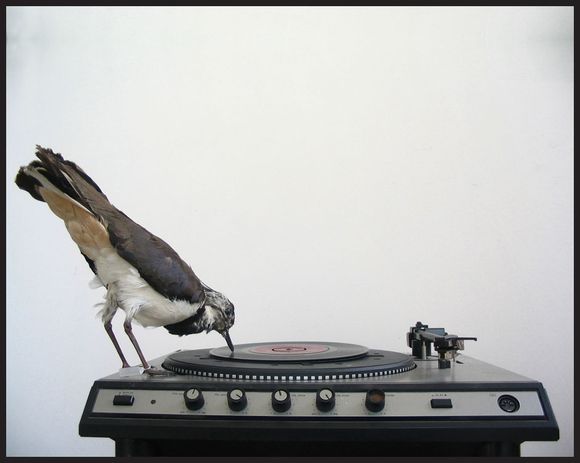
Jeroen Diepenmaat. pour des dents d'un blanc éclatant et saines (2005)
This post is especially dedicated to Abbas.

Niamh Hardiman on the Irish financial crisis, over at Crooked Timber:
Ireland’s recent €85bn bail-out package negotiated with the IMF and the EU is discussed in terms that verge on the apocalyptic. The rescue was supposed to serve as a break against the wildfire of market bondholder panic. And yet the upward trend in Portuguese bond rates has scarcely been slowed. Beyond Portugal is the much larger Spanish economy. Portugal, like Greece and Ireland, could probably just about be rescued within the terms of the current emergency scheme. It is becoming increasingly possible that the bond markets may make it too difficult for the Spanish government to refinance its loans and to raise new money on government bonds. If this were to happen, the European Financial Stability Fund would come under extreme pressure. And worse, if it is not possible to restore confidence in the stability of the Euro, there seems little reason why other countries may not also be in trouble. Spain is now where the line in the sand must be drawn. But we have heard this before. If Spain is vulnerable, why not Italy; and if Italy, why not Belgium, perhaps even France. Little wonder that the imagery of contagion, of financial plague, is brought into play.
The suddenness of the Irish deal has taken public opinion by surprise, causing shock that we have been plunged into this regime of austerity, and a smouldering anger about the terms on which the deal has been done. The terms of the bail-out will transfer all the hardships onto the taxpayers and citizens: reactions include the views that we have been held to ransom, we cannot afford this rescue package, it is a bad deal for Ireland.
Ireland’s fiscal crisis is largely caused by the collapse of the house price bubble and over-reliance on revenues from construction-related activities. This is bad enough, but by itself it would be difficult but manageable. The millstone around the neck of the Irish people is the vast scale of the crisis in the banking sector. Ireland’s banking crisis is not primarily about complicated and risky financial products: it is a common-or-garden result of reckless lending for property development and an inadequate regulatory regime.
Our friend Darcy James Argue and his band Secret Society–they played the second 3 Quarks Daily ball–have been nominated for a Grammy. Congratulations to Darcy and the rest of the band. Over at Darcy's blog are recordings from a recent show.
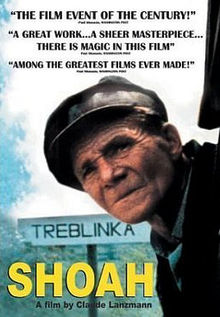
There had never been anything like Claude Lanzmann's Shoah when it was released in 1985. There were earlier documentaries about the Holocaust: Alain Resnais's Night and Fog (1955); the “Genocide” episode of the World at War series, which was broadcast on ITV without any commercial breaks in 1974; Kitty: Return to Auschwitz and Auschwitz and the Allies, transmitted in 1979 on ITV and in 1982 on the BBC, respectively. But they hardly prepared you for Lanzmann's nine-hour epic.
Lanzmann eschewed the use of archive footage. He refused to include photographs. There is not a single image of a corpse in the entire film. Instead, there are interminable landscape shots of woods, forest clearings and empty fields. And trains: trains crossing the screen, filling the frame, close up, at middle distance or silhouetted again the horizon. The constant motion of camera or of locomotive drives the film along.
Then there was the director himself: a burly figure, often wrapped in a coat against the Polish winter, interviewing his witnesses. Lanzmann was insistent, ironic and sometimes faintly contemptuous. He showed himself lying to Franz Suchomel, a former SS guard at Treblinka, who was being captured by a hidden camera, brazenly flouting the ethics of documentary film-making.
Although Shoah has been hugely influential, it was so unconventional that it remains almost sui generis. Lanzmann declined to incorporate stock footage because it was created either by the Nazis or after the camps were liberated. To him, the monochrome newsreels short-circuited our engagement with the past by offering reassuringly familiar imagery. Shoah offers no such comforts.

Your indie-rap group, Das Racist, is known for songs that wittily riff on Taco Bell, Googleand the general limitations of American consumerism. Rap is a black art form that originated in the Bronx, so why, as two Wesleyan graduates who met in college, would you think you could rap?
Himanshu Suri (top): Would you prefer your rappers to be uneducated? Victor Vazquez: And would we even be on the page of this publication if we had not gone to Wesleyan?
You jokingly describe yourself as “Puerto Rican cousins” in a song title, when in fact you are neither Puerto Rican nor cousins. What are you actually?
Suri: It’s weird. I’m an Indian-American who is participating in a historically black art form, while acknowledging that the experience of South Asians in America has been a relatively easier one than that of black Americans. Vazquez: My dad is black and my mom is white, and I don’t know if I am neither or both. And we don’t have the time to get into the identity-politics discussion that this would lead to. Suri: Then what are we doing here? Vazquez: We’re bigging up our brand so that we can make more money. Suri: To buy things. I want to start dressing more like a British colonialist in a red coat and maybe lighten my skin with that money.

While there are various legal concerns regarding these documents, my main concern is with the ethics of this leaking. I will consider various arguments in the course of the discussion.
One argument in favor of the leak is the classic Gadfly Argument (named in honor of Socrates because of his claim to the role of the gadfly to the city of Athens). The gist of the argument is that the people in government need to be watched and criticized so as to decrease the likelihood that they will conduct and conceal misdeeds in shadows and silence.
Given that governments have an extensive track record of misdeeds, it certainly makes sense to be concerned about what the folks running the show might really be doing under the cloak of secrecy and national security. If it is assumed that being part of the government does not exempt these people from moral accountability, then it would seem to follow that leaking their misdeeds is, in general, a morally acceptable action. After all, it would seem to be rather absurd to argue that people have a moral right to keep their misdeeds a secret.
The obvious reply to the Gadfly Argument is that even if it is granted, it does not cover all of the leaked material. After all, not all of the material deals with moral questionable activities that should be thus exposed to the light of day. As such, more would be needed to justify such a leak.
A second obvious argument is based on the assumption that in a democracy the citizens have a moral right to know what the folks in the government are doing in their name. This right can be based on the idea that the citizens are collectively responsible for the actions of their government and hence have a right (and need) to know what is actually going on. This right could also be based on the notion that the citizens need to be properly informed so as to make decisions. Since power comes from the people, one might argue that the people have a right to know about how that power is exercised and the information to (in theory) exercise it wisely.
Of course, the moral teachings of Vince Lombardi refer primarily to the City of Man, the fallen realm in which we strive, day after day, to liken ourselves to the angles. But from the perspective of the City of God, we are simply fallen, wretched sinners. Between us and the angels stretches an infinite chasm, a vast abyss in which lurk the demons of our besmirchéd nature. It is to that wretchedness that we now turn. Why cannot the New York Jets score any points in the first half of a football game? You suspect that there must be some hidden answer to this perplexing question but I submit to you that there is not. The weapons wielded by this offense are no less formidable than many another team. And yet, offenses around the league score away during the initial half of play while the Jets cough and sputter, tilling a field so fallow as to be barren. The 37 year-old Offensive Coordinator Brian Schottenheimer is considered, by those in a position to know, one of the best young minds in the game. He comes from a noble lineage. His father, Marty Schottenheimer, is an old warhorse of American football. Marty played linebacker for the Bills, Colts and Steelers during the 1960s and 70s, when America still made good cars. He was a head coach in the NFL for more than twenty years after that.
more from me at The Owls here.
Communion
Like a prism of oil in a puddle under a car after a storm,
Love reminds us of the impossible passing beauty
Of this world, like the nights in autumn when a streetlight dapples
A city sidewalk through a tree. It’s the same reason my heart
Breaks when I notice how tiny my niece’s hands are, breaks
A little each time I hear her laugh. Her hands will grow,
And she will not stay laughing. Leaves fall in November,
Streetlights are dark by sunrise, oil slips down a drainpipe.
Not a single one of us can promise forever, but in these bodies
We bury our love inside each other; we try to keep it safe from death.
We forage within each other, blind and starving, never
Giving or getting as much as we search for, never understanding
That none of us will ever have enough love to hold onto this world.
But what if we could learn to love within our means here,
As garlic and onions simmer on a stove,
As bodies are warmed and fed with rice and beans?
What if we left forever for death to deal with, and knuckled down
To reaping this modest, evanescent harvest?
Could we be candles and firewood and salt pork for one another?
Could we become the prism and the streetlight and the child?
Could we teach each other to let our hearts break open,
To let in the garlic, the laughter, the oil, the music, the light,
Until eternity takes us and all these seasons change?
by Rebecca T. Klein
from The Q Review
From The New Yorker:

Early recordings of Jay-Z reveal a nimble but mild-mannered virtuoso, delivering rat-a-tat syllables (he liked to rap in double-time triplets, delivering six syllables per beat) that often amounted to études rather than songs. But by 1996, when he released his début album, “Reasonable Doubt,” on a local independent label, he had slowed down and settled into a style—and, more important, settled into character. The album won him underground acclaim and a record deal with the very above-ground hip-hop label Def Jam, which helped him become one of the genre’s most dependable hitmakers. He was a cool-blooded hustler, describing a risky life in conversational verses that hid their poetic devices, disparaging the art of rapping even while perfecting it:
Who wanna bet us that we don’t touch lettuce, stack
cheddars forever, live treacherous, all the et ceteras.
To the death of us, me and my confidants, we
shine. You feel the ambiance—y’all niggas just rhyme.
More here.
From MSNBC:

More here.

It started a few years ago when I noticed that Food & Wine’s annual roundup of ten Best New Chefs always listed one token woman.
And it lingered.
In 2007 Michelin awarded French chef Anne-Sophie Pic three stars, making her only the fourth woman in her country’s history to receive that honor (fifty years had passed since the last of her sex had garnered that third sparkler).2 The following year, in the United Kingdom, it was considered breaking news when ten female chefs won any Michelin stars at all. The tabloid Telegraph announced: “It could be the beginning of the end for the foul-mouthed, macho, and defiantly male master chef. The number of women with Michelin stars has nearly doubled in just 12 months.”3
Then came the 2009 James Beard Awards gala, held after the ceremony and annually assigned a theme. “Women in Food” was the chosen motif, but since only sixteen of the evening’s ninety-six nominees were, in fact, women, it seemed like a cruel joke. In the end, only two of those sixteen went home victorious, out of nineteen winners total.4
Next, Phaidon announced the publication of its forthcoming cookbook Coco: 10 World Leading Masters Choose 100 Contemporary Chefs, for which one Alice Waters and nine of her male comrades each picked ten young chefs whose work they admire. Collectively, these culinary authorities managed to put fewer than ten women on the roster—less than 10 percent of the total talent featured.
Finally, in Bravo tv’s Top Chef Masters competition, a paltry three out of twenty-four American “Masters” were women. Really.
The “It” in the pit of my stomach was the sinking realization that female chefs do not attain the same recognition or critical acclaim as their male peers. No one doubts women’s abilities in the kitchen. They certainly have skill and creativity. So what is the problem? This conundrum reminded me of something I’d read in an undergraduate art history class, Linda Nochlin’s “Why Have There Been No Great Women Artists?” Her article was a watershed not just because it posed such a loaded question—a rhetorical device, as it turns out—but also because by posing that question Nochlin forced academics and feminists to challenge their own practices.

In early 1963 they admitted defeat. Conceived in late 1960, Revue internationale was intended by its French, German and Italian founders to be the historic realization of the idea of a “plural writing”. Yet it remained a project and no more. In 1964, a record of the collated material[1] appeared in Italy. Hans Magnus Enzensberger called it the “remnants of a shipwreck”.
Ships run into trouble not when they are in the harbour but when they are on the high seas. If the boards shatter, then the collapse, in all senses, is the result of great activity.[2] Failure results from aiming too high.
This is where the idea of an international journal comes into its own. At the point of failure it is most true to itself. “For indeed”, as Daniel Defoe noted as early as 1697 in his Essay upon Projects, “the true definition of a project, according to modern acceptation, is […] a vast undertaking, too big to be managed, and therefore likely enough to come to nothing.”[3] Defoe portrays the project-maker as a Promethean figure drawing up plans at the margins of the era, stretching the limits of what the era allows. Fascinated yet at sea, he knows that, as he steps into the realm of practice, he may run aground. As he wrote these words, Defoe, the writer and businessman, may well have been thinking of the mountain of debt his own commercial failures had saddled him with.[4]
From the perspective of a “poetics of failure”, then, successful enterprises are suspect of having played it safe from the start. Whatever can be achieved effortlessly, without a critical mass of aspirations, hopes and adversity, cannot claim the title of “project” in the emphatic sense. Somewhere below there runs a line separating projects from things one simply does (admittedly, this line has been drawn absurdly low in recent years, so that today even the most banal tasks in life qualify).
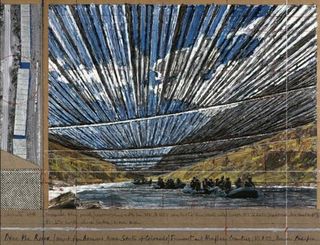
When a Christo project sets out to engage a body of water, as in Surrounded Islands, some prognosticators inevitably foresee an assault upon peaceable, innocent nature. The work completed reveals, on the contrary, acts of homage secured in reverence and affection.
And so Over the River, Christo/Jeanne-Claude’s still fought-over bid to canopy portions of the Arkansas River in Colorado. Once again, we hear the project denounced as an imposition that would deny the river and its dependents access to quickening sunshine and rain; as if the instigators were out to crush whatever under the sun grows, flows, or draws breath. But many among us foresee the river’s planned canopy delivering a benign gesture.
From Christo’s explanations and explicit drawings of what is envisioned, I anticipate certain surprises, among them a welcome revision of the river’s deportment in three-dimensional space. A river tends to be seen and thought of along the horizontality of its stream—a level course which Christo’s parallel canopy seems to confirm. But that canopy—pitched only 8 feet above the water’s surface—is to be of a transparent cloth that keeps sky and cloud always in evidence, and with it (I hope) a sharpened awareness of living under pillars of air. To say nothing of the river’s own depth in unceasing play. In other words, I expect Over the River—more precisely the low thatch overhead—to impart a livelier sense of the river’s participation in verticality.
The word “thatch,” just used, confesses another association. That of roofing for protection from, say, “inclement” weather. Not that a river needs such solicitude; what threatens it is the insidious infusion of industrial waste. But Over the River is not out to indict a pollutant. Its metaphorical idiom is content to assert the immanence of a champion, a protective agent just now engaged in benediction.

During my time as an eager undergraduate mathematician, I'd often wonder what it would feel like to prove a truly new result and have my name immortalised in the mathematical history books. I thought that dream had died when I gave up maths to become a science writer, but Aron's theorem is now a reality – and I've got the certificate to prove it.
While most mathematical theorems result from weeks of hard work and possibly a few broken pencils, mine comes courtesy of TheoryMine, a company selling personalised theorems as novelty gifts for £15 a pop.
Its automated theorem-proving software can churn out a theoretically infinite number of theorems for customers wishing to join the ranks of Pythagoras and Fermat. “We generate new theorems and let people name them after themselves, a friend, a loved one, or whoever they want to name it after,” explains Flaminia Cavallo, managing director of TheoryMine, based in Edinburgh, UK.
You may think this is an elaborate scam, or that you'll just end up with an obscure equation copied from some long-forgotten textbook, but TheoryMine claims to have far more validity than superficially similar companies selling star names.
Hirst talks about the diamond skull almost as if it’s a mythical treasure – something that Indiana Jones might don his fedora for, that criminal gangs might plan to steal. In time, he imagines people fighting over it, dying for it. He sounds almost disappointed that he can’t keep it at home – “The insurance companies would go mental.” He’d evidently like it to end up in an international museum or gallery. As I am about to leave his office, Hirst and his assistants are trying on wigs: there’s a Ramones theme to the office Christmas party; the place rings with laughter. Hirst, in the silliest of wigs, asks whether I fancy some crisps or chocolate, pulling out a drawer stuffed full of both. I help myself to a chocolate bar. It’s a childish treat from someone with a lot of money who remembers what it was like to be born with very little.
more from Nicholas Glass at the FT here.
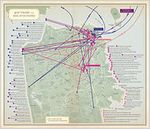
Some years ago, I began spending time in the rural Southern town where my father had been raised, and I often found myself wishing for a decoder ring. Squirrels had longer tails, wisteria bloomed off schedule, and with all the diphthongs and dropped syllables, I had no idea what people were saying. The local language sprouted from the literal and cultural landscape that informed it — its racial history and disappearing farms, the coexistence of deer festivals and meth busts, the households where people wore Carhartts without irony and put “Queer Eye” on TiVo. How to understand all this? An atlas would have helped. Not any atlas, mind you, but one as inventive and affectionate as Rebecca Solnit’s Infinite City: A San Francisco Atlas (University of California; cloth, $49.95; paper, $24.95), a collection of 22 maps and accompanying essays paying homage to the city where the author lives. “Infinite City” started as a commissioned project for the San Francisco Museum of Modern Art, which turned to Solnit as it geared up for its 75th anniversary this year.
more from Lise Funderburg at the NYT here.
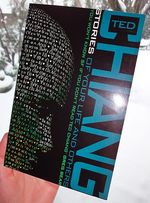
Not a short story, not quite a novella — wasn’t that a Britney Spears song? — the oxymoronic long short story is an underemployed literary form. (For argument’s sake, let’s say the long short story ranges from 30 to 60 pages.) F. Scott Fitzgerald’s “The Curious Case of Benjamin Button” (1922) is a perfect example of the length’s virtues: the story, covering the whole of a character’s life, is ample enough to be divided into chapters, yet the execution retains an antic swiftness that lofts the bizarre premise. Contemporary practitioners who thrive at this length include Alice Munro, Ethan Canin and the underread Rachel Ingalls. To this list must be added Ted Chiang, whose “Stories of Your Life and Others” (Small Beer Press: 320 pp., $16 paper) contains a half-dozen such specimens, along with a regulation-length short story and a three-pager, commissioned by the magazine Nature, in the form of a letter to the editor of a science magazine. Originally published in 2002 by Tor and newly reissued by Small Beer Press, the stories range widely in time, subject and style but are united by a patient but ruthless fascination with the limits of knowledge.
more from Ed Park at the LA Times here.