In the trenches at a molecular gastronomy mecca

From Salon:

Ferran Take an olive. Wring its pretty neck. Collect the juice, process it with algae-based gelifiers and calcium carbonate and — hey, presto! — the liquid turns into a tremulous globule of olive essence, beyond divine with your martini. It's subversive and witty, and Ferran Adria does equally outré, ravishing things to the likes of rabbit tongue, marinated fish liver, and prehistorically large cardoons, all in the service of flavor and slaying expectations, setting your hair on fire with his rarefied creations.

But all right already, enough ink has been spilled singing the praises of the avant-garde Spanish chef. What about those apprentices in the kitchen, asks Time magazine correspondent Lisa Abend, the ones actually making and plating much of the food served at the restaurant elBulli? Her book, “The Sorcerer's Apprentices,” spends a revealing, dexterously rendered six months in their company, this troop of unpaid kitchen disciples known as stagiaires, part of the feudal tradition whereby young cooks gain direction and purpose from a great mentor. They are an elect handful — Abend closely, sympathetically profiles a half-dozen of them — as lucky to get this apprenticeship as anyone else is to get a seat at elBulli, and thrilled with the opportunity, at least at first. “Like all great restaurants, elBulli's dazzle rests in large part on the willingness of the apprentices, in the name of education, to do the dreary work no one else wants to do.” Say, making 2,000 lentils a day out of clarified butter and sesame paste. That's right, lentils: typical Adria legerdemain.

More here.

Remembering Juliano Mer-Khamis

Ismail Khalidi and Jen Marlowe in The Nation:

Mer%20Khamis In 2006, the new Freedom Theatre in Jenin Refugee Camp held an art competition.

“Don’t just go for the tanks,” Juliano Mer-Khamis, the co-founder of the theater, told the children-artists. “Hope. Where is the hope?”

A 12-year-old girl named Wafaa painted a mother pulling her son out of the ruins of a demolished home. Juliano gently admonished the young student, reminding her that the painting should represent hope.

“But there’s this red flower,” the girl said, pointing to a splash of color next to the rubble. “There.”

“I almost cried,” Juliano recounted. “So…hope is there. We have to pour water, pour water, pour water. And that’s what we do here.”

That hope was badly shattered on Monday, April 4, when Juliano was shot dead by a masked gunman outside the Freedom Theatre.

Juliano, the child of a Jewish Israeli mother and Palestinian Christian father, both communists, co-founded the Freedom Theatre as an outgrowth of his 2004 documentary film, Arna’s Children. The film depicts the art and theater program that his mother, Arna, established for children in the Jenin Refugee Camp during the first intifada. Juliano returns to the camp after the massive Israeli invasion of 2002, during the second intifada, when large swaths of it were bulldozed by the Israeli army. He wants to know: what became of the children from his mother’s program? Nearly all of them, he discovers, are dead.

More here. The Jenin Freedom Theatre Today:

The day I met Abdul Sattar Edhi

Peter Oborne in The Telegraph:

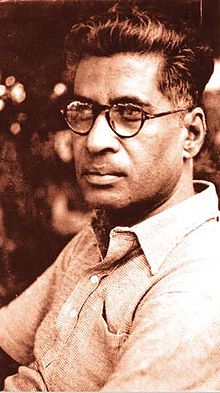
ScreenHunter_08 Apr. 12 13.37 He was born in 1928, when the British Empire was at its height, in Gujarat in what is now western India. But he and his family were forced to flee for their lives in 1947 when the division of India and creation of Pakistan inspired terrible communal tensions: millions were killed in mob violence and ethnic cleansing.

This was the moment Mr Edhi, finding himself penniless on the streets of Karachi, set out on his life's mission.

Just 20 years old, he volunteered to join a charity run by the Memons, the Islamic religious community to which his family belonged.

At first, Mr Edhi welcomed his duties; then he was appalled to discover that the charity's compassion was confined to Memons.

He confronted his employers, telling them that “humanitarian work loses its significance when you discriminate between the needy”.

So he set up a small medical centre of his own, sleeping on the cement bench outside his shop so that even those who came late at night could be served.

But he also had to face the enmity of the Memons, and became convinced they were capable of having him killed. For safety, and in search of knowledge, he set out on an overland journey to Europe, begging all the way.

One morning, he awoke on a bench at Rome railway station to discover his shoes had been stolen.

More here.

Rabbis Sound an Alarm Over Eating Disorders

From The New York Times:

Rabbi In the large and growing Orthodox Jewish communities around New York and elsewhere, rabbinic leaders are sounding an alarm about an unexpected problem: a wave of anorexia and other eating disorders among teenage girls. While no one knows whether such disorders are more prevalent among Orthodox Jews than in society at large, they may be more baffling to outsiders. Orthodox women are famously expected to dress modestly, yet matchmakers feel no qualms in asking about a prospective bride’s dress size — and her mother’s — and the preferred answer is 0 to 4, extra small. Rabbis say the problem is especially hard to treat because of the shame that has long surrounded mental illness among Orthodox Jews.

“There is an amazing stigma attached to eating disorders — this is the real problem,” said Rabbi Saul Zucker, educational director for the Union of Orthodox Jewish Congregations of America, or O.U., the organization that issues the all-important kashrut stamp for food. “But hiding it is not going to make it go away. If we don’t confront it, it’s going to get worse.” Referring to the high risk of death from heart problems and suicide in patients with anorexia, he said: “This isn’t a luxury type of disease, where, O.K., someone is a little underweight. People die.” As a teenager, Naomi Feigenbaum developed bizarre eating habits that had nothing to do with Jewish dietary laws: Cocoa Puffs and milk in the morning, when she figured she had all day to burn off the calories, and nothing but Crystal Light and chewing gum the rest of the day.

More here.

Monday, April 11, 2011

Shiban Ganju’s “Save A Mother” Annual Appeal

A message from former 3QD contributor, Dr. Shiban Ganju, founder of Save A Mother:

41661_769963149_8299_n Save A Mother is a non-profit organization working to reduce maternal and infant mortality in India. Since our beginning in 2008, we have grown steadily in our operations in India and in number of supporting chapters in the USA, UK.

In 2008, we started working in partnership with local NGOs in the state of Uttar Pradesh, India, which has one of the highest maternal mortality rates in the world. We started in one districts and now expanded to five districts including one in Karnataka. We aim to minimize suffering and death due to pregnancy and childbirth. We are currently working in 854 villages in India and we will expand to 1400 villages by the end of 2011.

Health is not possible in the absence of health literacy. Save a Mother trains health activists from the community to spread health literacy. The trained health activists educate women about pregnancy, nutrition, immunization, delivery and care of the child. The activists not only complement the public and private health delivery system but also amplify their effect. They also educate the population about their rights to hold the health delivery system accountable. Some of the key services include: three day initial health literacy training followed by many one day refresher training sessions. We conduct about 8 training sessions a month and have conducted over 950 training sessions so far.

Save A Mother conducts periodic impact analysis to assess both quantitative data and as quality of life achieved. We collect data on the number of trained health activists, number of mothers registered, number of their prenatal visits, medicines supplied, immunization status and deaths due to pregnancy and delivery. Neonatal deaths are also recorded.

We have trained over 2000 activists so far. We have successfully reduced maternal mortality ratio by 93 % from 645 to 65 and neonatal mortality by 66% from 41 to 9. We spend about $100 per village in one year to achieve these results. Our cost is low because we are a volunteer organization and our administrative cost is zero. All donations go for field work.

Save-a-Mother recognizes the need of an aware, sensitized population, who would consider health care as a collective responsibility. Health care should begin with owning responsibility of personal and community health. Many other regions in the world are in a similar situation, and we hope to bring this special effort to other countries.

We believe that one preventable death is one too many. We urge you to support Save A Mother and together we can save millions.

More here. Please contribute using the widget in the right-hand column just above the “RECENT COMMENTS” section. Thanks.

Sunday, April 10, 2011

We Don’t Know the Language We Don’t Know

Nicholson Baker in the New York Review of Books:

ScreenHunter_03 Apr. 11 09.09 One Saturday last month I went to Lafayette Park in Washington D.C., across the street from the White House, in order to protest several wars. The squirrels were out doing seasonal things. A tree was balancing big buds on the finger-ends of its curving branches; the brown bud coverings, which looked like gecko skins, were drawing back to reveal inner loaves of meaty magnolial pinkness. A policeman in sunglasses, with a blue and white helmet, sat on a Clydesdale horse, while two tourists, a father and his daughter, gazed into the horse’s eyes. The pale, squinty, early spring perfection of the day made me smile.

The demonstration wasn’t officially supposed to start until noon, but already off in the distance a few hundred people had gathered near a platform festooned with a row of black-and-white Veterans for Peace flags. It was March 19, the eighth anniversary of the shock-and-aweing of Iraq, and there was an air of expectancy: arrests were going to happen that day. I sat down on a bench and watched volunteers setting up loudspeakers. Birds were getting in as much chirping as they could before the human noise began. A woman with an armful of red and black signs passed by. Her signs said:

STOP THESE WARS
EXPOSE THE LIES
FREE BRADLEY MANNING

Jay Marx, head of Proposition One, a nuclear disarmament group, took the microphone. He was wearing a knit hat. “Testing, one, two, three,” Marx said into the microphone. “Testing our patience. Testing, four, five, six, seven, eight years of war. Eight years of lies! And we’re live! This park is live! The Vets for Peace are live in Lafayette Park!” (Cheering.)

More here.

The Goldstone Chronicles

Roger Cohen in the New York Times:

Cohen_New-articleInline We have a new verb, “to Goldstone.” Its meaning: To make a finding, and then partially retract it for uncertain motive. Etymology: the strange actions of a respected South African Jewish jurist under intense pressure from Israel, the U.S. Congress and world Jewish groups.

Richard Goldstone is an author of the “Goldstone Report,” an investigation of Israel’s military campaign in Gaza between December 2008 and January 2009. It found that Israel had engaged in a “deliberately disproportionate attack designed to punish, humiliate and terrorize a civilian population,” for which responsibility lay “in the first place with those who designed, planned, ordered and oversaw the operations.” It said both Israel and Hamas may have committed crimes against humanity in a conflict that saw a ratio of about 100 Palestinian dead (including many children) for every one Israeli.

Now Goldstone’s volte-face appears in the form of a Washington Post op-ed. It’s a bizarre effort. He says his report would have been different “if I had known then what I know now.” The core difference the judge identifies is that he’s now convinced Gaza “civilians were not intentionally targeted as a matter of policy.”

More here.

The Long Road to Equality

Women200 Julian Baggini in The Philosopher's Magazine:

Sally Haslanger is angry. “I entered philosophy about 30 years ago,” she told me at the American Philosophical Association’s Eastern Division meeting in Boston. “I had a budding feminist consciousness, and I thought then that there weren’t enough women on the reading lists in my classes or among my teachers. But I thought things would certainly change, given the importance of the feminist movement. I’ve been though the profession now and worked hard on the Committee on the Status of Women. I’ve worked hard in other forums like SWIP – the Society for Women in Philosophy – that were trying to advance women’s interests. After 30 years I was seeing that there wasn’t really that much change, and that made me mad.”

Haslanger is not alone. Women’s under-representation in philosophy has been well known for decades, but there does not seem to have been sufficient collective will to really grapple with the problem. Now, however, there are signs that things are changing. “There’s been a lot of momentum gathering in the UK dealing to a great extent with the under-representation of women in philosophy,” says Jules Holyroyd, one of the organisers of a well-attended conference in Cardiff last November, on the issue of all under-represented groups, not just women.

Although the dearth of women is obvious, until recently no one had tried to analyse the data to establish the facts. Two years ago, tpm conducted its own survey and found that only 18 percent of full-time permanent academic philosophers working in leading higher education institutions in the UK were female. The comparable figure in the USA was 22 percent. (See tpm 47)

Since then, Helen Beebee has been gathering more comprehensive data for the British Philosophical Association, of which she is director. What this shows is that women become scarcer the higher up the career ladder you go.

“Women start out not too badly under-represented,” she told me in Cardiff. “About 47 percent of undergraduates in philosophy in the UK, single or joint honours, are women. That goes down to about 30 percent at PhD level, then it drops to about 21 percent at permanent staff. It’s more than 21 percent at junior lecturer level and it goes down to about 15 percent at professor level.”

Similar patterns have been found in America and Australia. But why?

Jharia Burning

Joyce-01-thumbnail Allison Joyce in The Virginia Quarterly Review:

At the center of Dhanbad City, in the Jharia region of northeastern India, amid a handful of concrete buildings, stands the enormous bronze statue of a coal miner. He is shirtless, muscular, and handsome. He strides doggedly forward, a mining helmet on his head, a pickax slung over his shoulder. The message is clear: Coal is my life. The area around Dhanbad produces India’s highest grade of coking coal, which in turn fuels the blast furnaces used for smelting steel. Contained in twenty-three large underground mines and nine open cast mines across an expanse of 450 square kilometers, Jharia’s heart of coal also produces power: two thirds of all electricity in India is generated in coal-fired plants. The earth beneath Jharia contains one of the largest coal reserves in the world.

But the coal is also on fire.

Mining started in Jharia in the 1890s, and by 1916 newspapers were reporting underground coal fires. According to these accounts, most fires started by spontaneous combustion; the deep mine tunnels had been improperly vented, leading to a buildup of volatile gases. Those fires have now burned for nearly a century, smoldering and spreading over 60 square kilometers, both at the surface and underground, with some fires reaching depths of 140 meters. More than 12 percent of the total deposits in the Jharia coalfields, or about 1.45 billion tonnes of coal, are now blocked from further development by these fires.

The land around Jharia is dominated by open mines laced with fissures and shafts, which act as bellows and chimneys, feeding and venting the subterranean fires. In some places, smoke, gases, and flames shoot up from the earth, and the ground has been known to collapse—sometimes with fatal consequences. Waterways are endangered, infrastructure has been destroyed, and even for those who step carefully, carbon monoxide, sulfur dioxide, and methane permeate the air, and many of the eighty thousand people who live in the region suffer from respiratory and skin problems.

Bokahapadi Village is the deadliest part of this deadly region, so when I arrived in Jharia, I wanted to see it.

Unnatural Aelection: the Evolution of Zombies on Screen and on Paper

AL10APR-WALKING DEAD MAIN Jessica Holland in The National:

Gwen Dylan is an artist in her 20s living in Eugene, Oregon, who deals with the same issues as everyone else: relationships, needy friends, criticism of her work. There’s something else, though: she has to eat human brains once a month to survive. That’s the set-up of a smart new comic-book series by Chris Roberson and Michael Allred which turns the usual zombie narrative on its head.

Instead of one individual struggling to stay alive amid infected undead hoards, iZombie has our protagonist attempting to maintain her identity despite the fact that at some point – she can’t remember when – she died and came back to life hungry for human flesh. Out in May, iZombie is one more example of a trend that, like its subject matter, refuses to die. Once the preserve of B movies and nerds, zombie stories have gone mainstream in the past 10 or so years, with clever, knowing films such as Shaun of the Dead and 28 Days Later reinventing the genre as one with mass appeal. Mainstream releases such as Zombieland, starring Woody Harrelson and Jesse Eisenberg, followed, along with countless books and television series.

In its original traditions, the zombie was a corpse reanimated by witchcraft – not brought back to life, merely moving. The basic premise of the current zombie story is simple: an infection (probably caused by human folly) turns huge swathes of the population into groaning monsters with below-average IQs. Classically, they shamble along slowly and feed on brains, although there have been variations.

The central metaphor is that it takes courage to be an individual and to think for yourself; if we’re not careful we’ll allow mass culture to rot our brains.

OMG: Oprah Winfrey, Pop Religion, and the Temple of our Familiar

Oprah Over at The Immanent Frame, a few pieces on Kathryn Lofton’s Oprah: The Gospel of an Icon and an interview with Lofton about her new book. Daphne Brooks:

If, like me, you’ve filled up your sabbatical time this year logging countless hours of watching The Oprah Winfrey Show’s Season 25: The Farewell Season, as well as its behind-the-scenes sister show on OWN, the Queen of All Media’s brand new cable network, then you’ll probably find it hard to select just one favorite moment from a season so awash with the spectacular celebration, tender adoration, (self-) righteous vindication, and tearful adulation of the most successful woman ever to work in the television industry. How to choose between the mega-“my favorite things” two-day gift giving extravaganza (an event that our lady of sumptuous philanthropy likened to the beauty of good things happening to good people) and the “come-to-Jesus” estranged friends truth-and-reconciliation episodes featuring Whoopi Goldberg and former self-help protégé Iyanla Vanzant?

But the scene that stands out in my memory, and the scene that crystallizes the arguments of Oprah: The Gospel of an Icon, Kathryn Lofton’s arresting new study of “the good news” delivered and commodified by the “symbolic figure” that is Winfrey, is one in which the talk show host looked out tearfully across the Sydney Harbour Bridge in Australia and registered her awe at seeing a garnet red “O” emblazoned in lights at the center of that country’s national landmark. O-vercome with emotion, Winfrey turned the magnitude of that gesture into a teachable moment with her audience the following day, by describing how this was the symbol of what it means to work hard and dream big.

And so O goes. As Lofton brilliantly observes (and I quote at length here, as it is my favorite passage in the book),

She is capitalist and capital; she is a commodity and consumer. Oprah is a product, but Oprah’s product is not individual objects. Her patents are not mechanical innovations or engineering improvements. She does not design fabric or copyright personal recipes. Rather, her taste is her product. Her O is what sells. The O is her signature, her initial, and her trademark. It is a sound, a reminder of her televised exclaimations: “Oh, no.” “Oh, yes.” “Oh, please.” “Oh, I never.” “Oh!” “Oh?” “Oh.” Awed, orgasmic, thrilled, worried and converted, an O is the noise of emotional presence and ready delight (what I feel right now, right here, before this new thing, new experience, or new encounter—Oh!) should not confuse the consumer with its earthy sheen. The O is never unscheduled or chaotic. It is cadence. For every girly (womanly, interviewing, ministerial, listening, awakening) “oh,” there is a corporate O labeling a magazine, a book, a bracelet, or a piece of stereo equipment. The O circles her consumer selections with her emboss, bequeathing her halo upon her beloved choices. The O envelops the commodities that she has chosen expressly for herself and now, expressly for you. She is a pitchwoman of her own consumption; her consumption is her commodity.

I have been enveloped by the O for some twenty-five years now, at once seduced, delighted, and irritated by—and yet drawn to—the image of a profoundly self-assured, brash, and at times entertainingly ego-driven baby-boomer African American woman who climbed the ladder of extreme wealth, fame, and social and cultural power in the post-Civil Rights era just as I was coming into intellectual and political consciousness as a black feminist scholar in the 1980s and ’90s. For me, Oprah Winfrey took the “temple of my familiar” (to borrow a line from brilliant novelist Alice Walker, a Winfrey “legend,” whose Color Purple opened a key chapter in her own self-professed spiritual awakening odyssey)—multicultural, middle-class woman-centered popular culture—and transformed that experience into universalized self-reckoning and a mega-million dollar empire.

Sunday Poem

A Contribution to Statistics
Out of a hundred people

those who always know better
— fifty-two

doubting every step
— nearly all the rest,
glad to lend a hand
if it doesn't take too long
— as high as forty-nine,
always good
because they can't be otherwise
— four, well maybe five,
able to admire without envy
— eighteen,
suffering illusions
induced by fleeting youth
— sixty, give or take a few,
not to be taken lightly
— forty and four,
living in constant fear
of someone or something
— seventy-seven,
capable of happiness
— twenty-something tops,
harmless singly, savage in crowds
— half at least,
cruel
when forced by circumstances
— better not to know
even ballpark figures,
wise after the fact
— just a couple more
than wise before it,
taking only things from life
— thirty
(I wish I were wrong),
hunched in pain,
no flashlight in the dark
— eighty-three
sooner or later,
righteous
— thirty-five, which is a lot,
righteous
and understanding
— three,
worthy of compassion
— ninety-nine,
mortal
— a hundred out of a hundred.
Thus far this figure still remains unchanged.
by Wislawa Szymborska
from Poems: New and Selected,
trans. by S. Baranczak and C. Cavanagh

The Art of Science Learning

From Seed:

Art-learning_HS Ms. Johnson’s 8th graders are gathering for art class. They collect their pastels and charcoals, their graphite sticks and Strathmore sketchpads. But today, instead of the fake-fruit basket that’s been collecting dust since summertime, Ms. Johnson pulls out a biology textbook. “I want you to pick one thing in here to illustrate,” she says. “It can be anything — a chloroplast or a reptile, mitosis or evolution. But here’s the catch: You have to cover up the picture in the book and just use your imagination. What color would your ribosome be? How would you show out-of-Africa? Imagine that you’ve never before seen the double helix…Could you sketch some DNA?” This scenario may sound far-flung, but it’s just what American school kids need, if you ask the scientists, artists, educators, business leaders, and policy makers gathering this week in Washington DC for The Art of Science Learning.

More here.

Life after Death

From Guardian:

David Foster Wallace, the most gifted and original American novelist of his generation, took his own life in 2008. His widow, the artist Karen Green, talks of the struggle to deal her loss and her decision to publish his unfinished work, The Pale King

Karen-005 The first piece of art that Karen Green made after her husband, David Foster Wallace, took his own life on 12 September 2008, was a forgiveness machine. She is standing in the neat, white studio at her house at Petaluma, north of San Francisco, explaining to me how the machine worked and how it didn't. “Before David died,” she says, “I had been working on some machines, with a five-year old – the son of a friend who had a gallery down the road from mine.” There had been a recreating-a-pig-from-bacon machine, and a prototype for a machine that cleverly pitted dates. The day that her husband hanged himself she had been working on a political machine that involved a bright-coloured circus tent, elephants and donkeys. For a long while after that, she says, she couldn't make any art at all, wondered if she ever would again, but eventually, tentatively, she developed the idea for her conciliatory Heath-Robinson. “The forgiveness machine was seven-feet long,” she says, “with lots of weird plastic bits and pieces. Heavy as hell.” The idea was that you wrote down the thing that you wanted to forgive, or to be forgiven for, and a vacuum sucked your piece of paper in one end. At the other it was shredded, and hey presto. Green put the machine on display at a gallery in Pasadena near the Los Angeles suburb, Claremont, where she and Wallace had lived in the four years they had been married. She was fascinated by the effect that it had on people who used it. “It was strange,” she suggests, “it all looked like fun, but then when the moment came for people to put their message actually in it, they became anxious. It was like: what if it works and I really have to forgive my terrible parent or whoever.”

More here.

Saturday, April 9, 2011

Religion as Moral Innovation

In the Name of GodJolene H. Tan reviews John Teehan's In the Name of God: The Evolutionary Origins of Religious Ethics and Violence, in Evolutionary Psychology:

In the Name of God, by John Teehan, takes the evolutionary framework and applies it to the reading of religious texts. The result is a provocative discussion of the ubiquitous phenomenon of religious belief that can change the way we understand the role of religion in society. With a selected focus on the religious text of Judaism and Christianity—the Bible, Teehan persuasively argues that these religions evolved to solve the unique problems encountered as humans moved from small societies organized based on kinship, to larger complex societies made up of strangers. Religion, therefore, is an institutionalization of a moral code to implement large-scale cooperation beyond kin, in order to promote “social cohesion and individual striving” (p.192). Morality and violence, far from being contradictory concepts, are merely flip sides of the same coin.

Teehan’s analysis spans a wide range of material but his incisive and focused approach conveys arguments without overwhelming the reader. Drawing from the latest research in cognitive science, he provides a background of our evolved moral psychology (Chapter 1) and also explains the psychological basis of religious belief (Chapter 2). After setting the stage, the evolutionary lens is focused on the religious text of Judaism, as he examines the portrayal of Yahweh (God) through the Hebrew scripture and the Ten Commandments (Chapter 3), as well as on Christianity, with emphasis on the gospel teachings of Jesus Christ (Chapter 4). Finally, he addresses the critical issue of religious violence as culminated by the events of September 11 (Chapter 5) and tries to synthesize the lessons of the previous chapters with the environment of the modern day to show how a moral system that avoids the discussed pitfalls may be forged (Chapter 6).

Whereas the mention of religion and evolution in the same breath is usually accompanied by fierce criticism or emotionally charged arguments, Teehan’s take is refreshingly neutral. He sidesteps metaphysical issues of the existence of God, and instead discusses our evolved predisposition to believe in supernatural agents and the resulting conception of God. In particular, our instinct to view supernatural agents in the ontological category of person, and our ability to conceive of some minimally counter-intuitive super traits (e.g. invisibility, immortality, prescience) as plausible, led to the representation of God as a “full access strategic agent”—a divine moral enforcer who is privy to all moral lapses and capable of dealing out divine punishment.

Martin Rees and the Templeton Travesty

Astronomer-royal-Martin-R-007Jerry Coyne, also in The Guardian:

Templeton plies its enormous wealth with a single aim: to give credibility to religion by blurring its well-demarcated border with science. The Templeton Prize, which once went to people like Mother Teresa and the Reverend Billy Graham, now goes to scientists who are either religious themselves or say nice things about religion.

Rees is no exception. Though a professed nontheist, he also claims to be an “unbelieving Anglican” who goes to church “out of loyalty to the tribe”. He has criticised Stephen Hawking for arguing that we don't need God to explain the origin of the universe, and supports “peaceful co-existence between religion and science because they concern different domains”.

Templeton funds many other scientists who study Big Questions – those areas of science that the foundation sees, contra Rees, as overlapping with religion. These include studies of cosmology, human altruism, spiritual healing, and the contribution of faith to human virtue. Established scientists, all too eager to take anyone's money in an era of reduced funding, are then paraded by Templeton like prize horses and permanently installed in its online stable.

Templeton's enterprises include a $200,000 “epiphany prize” for movies and television programmes that “increase man's understanding and love of God”. Winners include Mel Gibson's baleful and antisemitic The Passion of the Christ. There are also fellowships for journalists studying science and religion, and stipends for budding theologians.

Many of these awards show a cronyism that has always infected Templeton. As journalist Sunny Bains has shown, the organisation often awards money to the people who run it. At least 8 of the last 13 Templeton Prize winners, for instance, were on Templeton's board of advisers before receiving their award (Rees is not one of them).

Templeton's mission is a serious corruption of science. Like a homeopathic remedy, it dilutes the core of the scientific enterprise, which has achieved its successes by holding doubt as a virtue and faith as a vice. The situation in religion is precisely the opposite, which is why theology remains mired in the Middle Ages.

On Czesław Miłosz’s Centenary

Czeslaw-Milosz-in-2001-007 Seamus Heaney in The Guardian:

One of the words that recur in Miłosz's prose and poetry is “incantation”, meaning rhythmical language dictated, he would affirm, by a “daimonion”. And from beginning to end the poems do seem to arrive with an unforced certitude, to be touching down into the here and now out of an elsewhere, as if he were “no more than a secretary of the invisible thing”. And that brimming creativity gives credence to his traditional sense of himself as the inspired poet:

Whatever I hold in my hand, a stylus, reed, quill or a ballpoint,
Wherever I may be, on the tiles of an atrium, in a cloister cell, in a hall before the portrait of a king,
I attend to matters I have been charged with.

And yet the poem which opens on these long perspectives (“From the Rising of the Sun”) is suddenly dramatising the displaced person's predicament in an immediate heartfelt idiom:

Never again will I kneel in my small country, by a river,
So that what is stone in me could be dissolved,
So that nothing would remain but my tears, tears.

“I attend to matters I have been charged with”: having outlived many of his Polish contemporaries, having watched the Soviets clamp down in Poland, Lithuania and the other Baltic states, Miłosz saw it as his writerly responsibility to bear in mind the dead who had perished in the uprising and the concentration camps and those others who were still suffering in the gulags. Hence his poem “Dedication” and its much-cited lines, “What is poetry which does not save / Nations or people?”.

He was poised between lyricism and witness.