Category: Recommended Reading
The Beatles: Yesterday
Captain Lockheed and the Starfighters: The Widow Maker
Moody Blues: Ride My Seesaw
Boney M: Ma Baker
Cerrone: Cerrone’s Paradise
Andy Gibb: I Just Want To Be Your Everything
Peter Frampton: Baby, I Love Your Way
Kenny Rogers: Lady
Friday Poem
On Cowee Ridge
John Gordon Boyd
died on the birthday
of three remarkable, and remarkably different, writers:
Heinrich Heine, Kenneth Patchen, Ross McDonald
John, too, was just as remarkable, blessed with an inherent “graciousness”
and with extraordinary eyes & ears…
I think of two texts
on the grievous occasion of his death:
“Religion does not help me.
The faith that others give to what is unseen,
I give to what I can touch, and look at.
My Gods dwell in temples
made with hands.”
— Oscar Wilde, in De Profundis
and two lines in Rainier Maria Rilke,
John’s favorite poet,
that say it all…
Was tun Sie, Gott,
Wenn ich bin stürbe?
“What will you do,
God, when I am dead?”
…………………….
……………………..
by Jonathan Williams
from Jubilant Thicket: New & Selected Poems.
Copper Canyon Press © 2005
Bee Gees: How Deep Is Your Love
John Lennon: Woman
Abba: Dancing Queen
Leo Sayer: When I Need You
Lynyrd Skynyrd: Free Bird
Test-tube truths
Kenan Malik in The New Humanist:
“If God does not exist, everything is permitted.” Dostoevsky never actually wrote that line, though so often is it attributed to him that he may as well have. It has become the almost reflexive response of believers when faced with an argument for a godless world. Without religious faith, runs the argument, we cannot anchor our moral truths or truly know right from wrong. Without belief in God we will be lost in a miasma of moral nihilism.In recent years, the riposte of many to this challenge has been to argue that moral codes are not revealed by God but instantiated in nature, and in particular in the brain. Ethics is not a theological matter but a scientific one. Science is not simply a means of making sense of facts about the world, but also about values, because values are in essence facts in another form.
Few people have expressed this argument more forcefully than the neuroscientist Sam Harris. Over the past few years, through books such as The End of Faith and Letter to a Christian Nation, Harris has gained a considerable reputation as a no-holds-barred critic of religion, in particular of Islam, and as an acerbic champion of science. In his new book, The Moral Landscape: How Science Can Determine Human Values, he sets out to demolish the traditional philosophical distinction between is and ought, between the way the world is and the way that it should be, a distinction we most associate with David Hume.
More here.
Thursday, April 14, 2011
History and Heartbreak: The Letters of Rosa Luxemburg
Vivian Gornick in The Nation:
At 18—already on the Warsaw police blotter—Rosa was sent to Zurich to study, and never went home again. Although she was registered at the university as a student in natural sciences, it was at the German socialist club—with its library, reading room and lecture hall—that she got her education. There, in the autumn of 1890, she met Leo Jogiches, a Lithuanian Jew three years her elder and already a student revolutionary of local reputation. A self-styled hero of Russian radical literature, Leo was brooding, angry, remote, enamored of Bakunin’s famous definition of the revolutionary as a man who “has no interests of his own, no cause of his own, no feelings, no habits, no belongings, he does not even have a name. Everything in him is absorbed by a single, exclusive interest, a single thought, a single passion—the revolution.” Rosa was enraptured. Leo, in turn, was aroused by her adoration. They became lovers in 1891; but, from the start, theirs was a misalliance.
From earliest youth, Rosa had looked upon radical politics as a means of living life fully. She wanted everything: marriage and children, books and music, walks on a summer evening and the revolution. Personal happiness and the struggle for social justice, she said, shouldn’t be mutually exclusive. If people gave up sex and art while making the revolution, they’d produce a world more heartless than the one they were setting out to replace. Leo, on the other hand, withdrawn and depressed—he hated daylight, sociability and his own sexual need—told her this was nonsense; all that mattered was the Cause. Yet Rosa’s longing for intimacy with him did not abate. It held her attention with the same unwavering strength as did the analysis of capital or the general strike. The irony is that it was precisely the compelling nature of this frustrating relationship that, over the next twenty-five years, would make her think hard, and yet harder, about what, exactly, this brave new world of theirs could be about.
Exiles
Roberto Bolaño in the NYRB:
To be exiled is not to disappear but to shrink, to slowly or quickly get smaller and smaller until we reach our real height, the true height of the self. Swift, master of exile, knew this. For him exile was the secret word for journey. Many of the exiled, freighted with more suffering than reasons to leave, would reject this statement.
All literature carries exile within it, whether the writer has had to pick up and go at the age of twenty or has never left home.
Probably the first exiles on record were Adam and Eve. This is indisputable and it raises a few questions: can it be that we’re all exiles? Is it possible that all of us are wandering strange lands?
The concept of “strange lands” (like that of “home ground”) has some holes in it, presents new questions. Are “strange lands” an objective geographic reality, or a mental construct in constant flux?
Let’s recall Alonso de Ercilla.
After a few trips through Europe, Ercilla, soldier and nobleman, travels to Chile and fights the Araucanians under Alderete. In 1561, when he’s not yet thirty, he returns and settles in Madrid. Twenty years later he publishes La Araucana, the best epic poem of his age, in which he relates the clash between Araucanians and Spaniards, with clear sympathy for the former. Was Ercilla in exile during his American ramblings through the lands of Chile and Peru? Or did he feel exiled when he returned to court, and is La Araucana the fruit of that morbus melancholicus, of his keen awareness of a kingdom lost? And if this is so, which I can’t say for sure, what has Ercilla lost in 1589, just five years before his death, but youth? And with his youth, the arduous journeys, the human experience of being exposed to the elements of an enormous and unknown continent, the long rides on horseback, the skirmishes with the Indians, the battles, the shadows of Lautaro and Caupolicán that, as time passes, loom large and speak to him, to Ercilla, the only poet and the only survivor of something that, when set down on paper, will be a poem, but that in the memory of the old poet is just a life or many lives, which amounts to the same thing.
Filters that reduce ‘brain clutter’ identified
From PhysOrg:
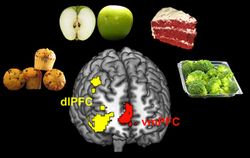
Until now, it has been assumed that people with diseases like ADHD, Tourette syndrome, obsessive compulsive disorder and schizophrenia – all of whom characteristically report symptoms of ”brain clutter” – may suffer from anomalies in the brain’s prefrontal cortex. Damage to this brain region is often associated with failure to focus on relevant things, loss of inhibitions, impulsivity and various kinds of inappropriate behaviour. So far, exactly what makes the prefrontal cortex so essential to these aspects of behaviour has remained elusive, hampering attempts to develop tools for diagnosing and treating these patients.
But new research by Julio Martinez-Trujillo, a professor in McGill University’s Department of Physiology and Canada Research Chair in Visual Neuroscience, has brought new hope to these patients. He believes the key to the “brain clutter” and impulsivity shown by individuals with dysfunctional prefrontal cortices lies in a malfunction of a specific type of brain cell. Martinez-Trujilo and his team have identified neurons in the dorsolateral sub-region of the primate prefrontal cortex that selectively filter out important from unimportant visual information. The key to the normal functioning of these “filter neurons” is their ability to, in the presence of visual clutter, selectively and strongly inhibit the unimportant information, giving the rest of the brain access to what is relevant. “Contrary to common beliefs, the brain has a limited processing capacity. It can only effectively process about one per cent of the visual information that it takes in,” Martinez-Trujilo said. “This means that the neurons responsible for perceiving objects and programming actions must constantly compete with one another to access the important information.
More here.
To be modern is one thing; to know what to do with that is quite another
Our own Morgan Meis in The Smart Set:
The poems of Illuminations barely made it into the world. Rimbaud gave them to his lover, the Decadent poet Verlaine, before leaving Europe on journeys that took him through the next two decades and to his death. Verlaine was just getting out of prison, having been put there for shooting at Rimbaud with a revolver, hitting him once in the hand. Rimbaud and Verlaine were engaged in a drink- and drug-filled binge that drove them both to the edge of sanity. They were living in filth and violence at the fringes of society, all in the name of a greater poetic truth. Rimbaud was 20 years old. He'd written a handful of poems and some prose. The poems are no less fiery today than when he first wrote them. I say fiery because that is what Rimbaud's writing does, it burns. But at 20, he was done. He had lived a few short years as a selfish and monstrous poet and that was the end of his writing career. He would live into early middle age as a traveler in the colonial world. He schemed and cheated and tricked his way through those brutal experiences and then he died. In short, it is very difficult to sympathize with or even understand Rimbaud as a human being. I suspect it is impossible.
More here.