From The Paris Review:
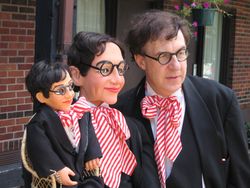 I’m waiting for the elevator in a medieval-themed hotel in Fort Mitchell, Kentucky, when the elevator doors open to reveal a heated exchange between a bald man in a Hawaiian shirt and a puppet shaped like a toucan. My presence brings an uncomfortable end to their private imbroglio. Both stare at me silently as I enter the elevator, and for five awkward floors I’m brought into direct contact with what George Bernard Shaw described as the “unvarying intensity of facial expression” of puppets, an attribute he believed makes them more compelling actors than humans. I’m at the Vent Haven ConVENTion where, each July, hundreds of ventriloquists, or “vents,” as they call themselves, gather from all over the world. For four days, they attend lectures on the business, getting advice on AV equipment, scriptwriting, or creating an audience through social networking. They listen to a keynote address by Comedy Central’s ventriloquist-in-residence, Jeff Dunham, who exhorts his notoriously defensive colleagues to “quit complaining that people say we’re weird. We talk to dolls. We are weird, ok. Just own it.” They eat at a Denny’s off the highway and visit the creationist museum down the road. And they don’t go anywhere without the accompaniment of their alter egos.
At the convention, the puppets are a slim but boisterous majority. They crowd in around you. They critique you. They grope you. They chatter continuously. Being around them approximates what it would be like to read people’s minds. It is a most unpleasant experience—a great deal more unsettling, of course, isn’t what they say but that they say anything at all. All over the hotel, in conference rooms, in hallways, at the bar, ventriloquism is practiced in its purest form: not as a stage show, but as an ongoing, unscripted social interaction, a live conversation between humans and their golems. At a drunken party one night, in the hotel’s “hospitality suite,” I witness one dummy operating another dummy, as the human source of both voices sits silently nearby, pretending to compose a text message. The mini bar has lips, which cruelly insult anyone who walks by, the origin of its voice impossible to determine. Almost as soon as I join the party, I am molested by a busty lady puppet, a faded showgirl. She swoons onto my shoulder. “Godaaamn,” she slurs. “Where have you been?” Her vent is a burly, unsmiling dude with a shaved head, a muscle shirt, and camo shorts. He smells strongly of whiskey.
More here.