Author Earns Her Stripes on First Try

Jp-book-1300128840433-articleInline-v2 Charles McGrath in the NYT:

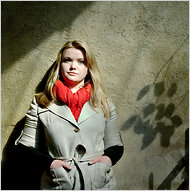
Téa Obreht is just 25, and “The Tiger’s Wife” is her first book. It is also the first book ever sold by her agent, Seth Fishman, who is 30, and the second book bought by her editor, Noah Eaker, who was 26 when he acquired it and, strictly speaking, still an editorial assistant.

“We were all very new,” Ms. Obreht said recently, “and we were excited to find each other.” They might want to consider retirement, quitting while they’re ahead, because the kind of good fortune they are enjoying right now may never come their way again.

Ms. Obreht was included in The New Yorker’s “20 Under 40” list of young fiction authors last summer and “The Tiger’s Wife” was subsequently excerpted in the magazine. On Sunday, the book made the cover of The New York Times Book Review. Just about everywhere, it has received the sort of reviews that many writers wait an entire career for. In The Times on Friday, Michiko Kakutani called it ‘“hugely ambitious, audaciously written.”

Set in an unnamed Balkan country in the aftermath of a civil war, “The Tiger’s Wife” is narrated by a young physician named Natalia Stefanovic, whose beloved grandfather, also a doctor, has recently died. The story links her efforts in the present to deliver vaccines to children in an orphanage with elaborate folk tales her grandfather used to tell: one involves a deaf and mute woman, abused by her husband, who befriends an escaped tiger in the woods, and another is about a vampirelike character known as the Deathless Man, himself immortal, who brings death to others.

Richard B Freeman on Labour Unions

Interview Over at The Browser:

You wrote (with James Medoff) what remains the most-cited book on U.S. unions, What Do Unions Do? Please tell us about your seminal work.

Prior to our work, there was a shortage of evidence available on union effects. Newly available computerised data changed that. In conjunction with other social scientists, we were able to provide a more complete picture of how unions impact society.

The book looked at unions from two perspectives: first, what we called the monopoly face of union – unions acting as raisers of benefits for their members – and second, the voice face of unions, or how unions represented labour in the workplace and in the body politic, giving voice to people who otherwise wouldn’t have had much say. I think, in the long run, this is the stronger and more important face of unions.

So what do unions do?

The first thing unions do is to raise wages for working people, and that obviously benefits the working people. They also increase the kind of benefits that workers want. So, if workers want pensions, the unions negotiate for that. If workers want maternity leave, that’s what they bargain for. If workers want to have better insurance and are willing to give up some wages to get it, unions help them. Unions change the pattern of compensation towards greater benefits.

Because unions make working life better for workers, they lower turnover in unionised workplaces. Employers with unions traditionally have workers who stay longer and contribute to raising the productivity of the enterprise. Employers also get more credible information about what workers really want in the workplace, because the union representatives are democratically elected and they really speak for the workers. So a good, functioning union is a real positive. Of course, not all unions function well. But our evidence, and the evidence people generated twenty years later, demonstrated that, on net, unions are a positive force in the economy.

Queen Victoria and Abdul: Diaries reveal secrets

Alastair Lawson at the BBC:

ScreenHunter_05 Mar. 15 17.23 Previously undiscovered diaries have been found by an author based in the UK which show the intense relationship between Queen Victoria and the Indian man employed to be her teacher.

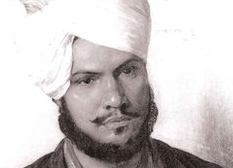
The diaries have been used by London-based author Shrabani Basu to update her book Victoria and Abdul – which tells the story of the queen's close relationship with a tall and handsome Indian Muslim called Abdul Karim.

The diaries add weight to suggestions that the queen was arguably far closer to Mr Karim than she was to John Brown – the Scottish servant who befriended her after the death of her beloved husband Prince Albert in 1861.

They show that when the young Muslim was contemplating throwing in his job, soon after his employment started, because it was too “menial”, the queen successfully begged him not to go.

More here.

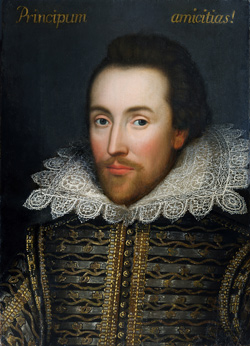
The original portrait of William Shakespeare

Our own Morgan Meis in The Smart Set:

ID_NC_MEIS_SHAKE_AP_001 I, for one, find myself both angry at Shakespeare and frightened by Shakespeare. The anger is perhaps easier to explain. He took too much. He took too much literature for himself and that's not fair. He broke some sort of unwritten rule about how much literature goes to each man. I couldn't tell you exactly how much that is, but I can say that Shakespeare took too much, and that it angers me sometimes.

The fear comes from a hazier place. I suppose I simply fear a person who was able to view the human beast so truly. Is there something infernal about the wisdom of Shakespeare, something uncanny that has the taint of the dark arts upon it? Strangely, I am much less afraid of the genius of the scientists, partly because their abstract insights into the nature of reality often go hand-in-hand with an intense befuddlement in the face of human-sized things. That seems a fair trade. To glimpse truths about the nature of the material world, it is required that you renounce any great understanding of the creatures who live within it. But to have the huge insights of Shakespeare, to look so deeply into the human soul, to know its every nook and hidden corner, seems, somehow, to contravene the limits that are given to all men.

Adding to the mystery of Shakespeare is that we’ve never known what he looks like. There are a few paintings and prints and drawings that could be him. But we could never look into Shakespeare’s face and know it was Shakespeare. About two years ago, a portrait that had long been owned by the Cobbe family was firmly identified as the original portrait of Shakespeare, made around 1610, upon which many of the later and less-reliable paintings and prints were based. With reasonable assurance, then, we can say that this is him, the man, William Shakespeare. You can go to the Morgan Library and Museum on 36th Street in New York City right now and stare into the face of William Shakespeare.

I just did so. But I must warn you. It doesn’t help. It only increased my unease.

More here.

Fast Facts about the Japan Earthquake and Tsunami

From Scientific American:

Fast-facts-japan_1 Why was Japan's March 11 earthquake so big? One answer is the large size of the fault rupture as well as the speed at which the Pacific Plate is continuously thrusting beneath Japan, U.S. Geological Survey (U.S.G.S.) scientist Tom Brocher told KQED News. People felt shaking in cities all over Honshu, Japan's main island. Below are some more facts and figures relating to the causes and consequences of the world's fifth-largest earthquake since 1900.

Magnitude, according to USGS
: 9.0

Speed at which the Pacific Plate is smashing into the Japanese island arc
: 6 centimeters (3.5 inches) per year

Speed at which the San Andreas Fault in California is slipping: about 4 centimeters per year

Size of the rupture along the boundary between the Pacific and North America plates: 290 kilometers ( 180 miles) long, 80 kilometers (50 miles) across

Approximate length of Honshu island: 1,300 kilometers

Years since an earthquake of this magnitude has hit the plate boundary of Japan: 1,200

Duration of strong shaking reported from Japan: 3 to 5 minutes

Greatest distance from epicenter that visitors to the USGS Web site reported feeling the quake: About 2,000 kilometers

Distance that the island of Honshu appears to have moved after the quake: 2.4 meters

Change in length of a day caused by the earthquake's redistribution of Earth's mass: 1.8 microseconds shorter

Normal seasonal variation in a day's length: 1,000 microseconds

Depth of the quake: 24.4 kilometers

Range of depths at which earthquakes occur in Earth's crust: 0 – 700 kilometers

Top speed of tsunami waves over the open ocean: About 800 kilometers per hour
Normal cruising speed of a jetliner: 800 kilometers per hour

More here.

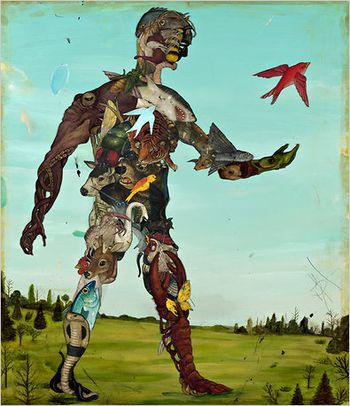
The Creature Connection

Natalie Angier in The New York Times:

Animalscover-sfSpan Bashert is a gentle, scone-colored, 60-pound poodle, a kind of Ginger Rogers Chia Pet, and she’s clearly convinced there is no human problem so big she can’t lick it. Lost your job, or bedridden for days? Lick. Feeling depressed, incompetent, in an existential malaise? Lick. “She draws the whole family together,” said Pamela Fields, 52, a government specialist in United States-Japan relations. “Even when we hate each other, we all agree that we love the dog.” Her husband, Michael Richards, also 52 and a media lawyer, explained that the name Bashert comes from the Yiddish word for soul mate or destiny. “We didn’t choose her,” he said. “She chose us.” Their 12-year-old daughter, Alana, said, “When I go to camp, I miss the dog a lot more than I miss my parents,” and their 14-year-old son, Aaron, said, “Life was so boring before we got Bashert.” Yet Bashert wasn’t always adored. The Washington Animal Rescue League had retrieved her from a notoriously abusive puppy mill — the pet industry’s equivalent of a factory farm — where she had spent years encaged as a breeder, a nonstop poodle-making machine. By the time of her adoption, the dog was weak, malnourished, diseased, and caninically illiterate. “She didn’t know how to be a dog,” said Ms. Fields. “We had to teach her how to run, to play, even to bark.”

Stories like Bashert’s encapsulate the complexity and capriciousness of our longstanding love affair with animals, now our best friends and soul mates, now our laboratory Play-Doh and featured on our dinner plates. We love animals, yet we euthanize five million abandoned cats and dogs each year. We lavish some $48 billion annually on our pets and another $2 billion on animal protection and conservation causes; but that index of affection pales like so much well-cooked pork against the $300 billion we spend on meat and hunting, and the tens of billions devoted to removing or eradicating animals we consider pests.

More here.

The Birth of the Animal Kingdom

Carl Zimmer in the New York Times:

15animals-popup Lurking in the blood of tropical snails is a single-celled creature called Capsaspora owczarzaki. This tentacled, amoebalike species is so obscure that no one even noticed it until 2002. And yet, in just a few years it has moved from anonymity to the scientific spotlight. It turns out to be one of the closest relatives to animals. As improbable as it might seem, our ancestors a billion years ago probably were a lot like Capsaspora.

The origin of animals was one of the most astonishing and important transformations in the history of life. From single-celled ancestors, they evolved into a riot of complexity and diversity. An estimated seven million species of animals live on earth today, ranging from tubeworms at the bottom of the ocean to elephants lumbering across the African savanna. Their bodies can total trillions of cells, which can develop into muscles, bones and hundreds of other kinds of tissues and cell types.

The dawn of the animal kingdom about 800 million years ago was also an ecological revolution.

Animals devoured the microbial mats that had dominated the oceans for more than two billion years and created their own habitats, like coral reefs.

More here.

Monday, March 14, 2011

Sunday, March 13, 2011

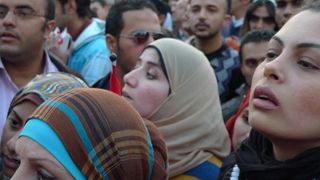
Egypt’s Revolution and the New Feminism

5429456386_94aa3d4f46 This was depressing news. On the larger question of gender equality in Egypt, Margot Badran in Immanent Frame:

With the dismantling of the three-decade-old autocracy of Mubarak—itself a continuation of the previous autocracy—and the hierarchies that spawned spirals of injustice as people’s basic rights were hijacked, the people of Egypt, led by its youth, grabbed for themselves the chance to rebuild.

The builders of the new Egypt want nothing less than full equality in law and practice, justice, and dignity for all. As we speak, a special committee is drafting a new constitution (to supplant the previous one that was arbitrarily altered by Mubarak). Laws that undermine the equality, justice, and dignity of the citizens of Egypt must either go or be drastically overhauled. The Muslim Personal Status Code (also referred to as family law) structures a model of the family based on a patriarchal understanding of Islamic jurisprudence (fiqh). This law, by formalizing male authority and power, shores up a system of gender inequality. The husband is cast as the head of family, with the attendant privileges and prerogatives, along with obligations of protection and support, while the wife, as subordinate, owes obedience to her husband and must render services in return for his support and protection, whether she wants it or not.

Feminists, as well as other reformers, have tried since the early twentieth century to reform the Muslim Personal Status Code. Over the years, they obtained only minor adjustments in the law, which did not disturb the patriarchal family model. A common excuse for this failure to reform the Muslim Personal Status Code is that it is religious law, part of the shar ‘iah, and therefore sacred and immutable. The confusion of fiqh, or Islamic jurisprudence, which is man-made, with the shar ‘iah, which is the path to a virtuous life, ascertained from the Qur’an, has been a potent deterrent of change. However, it is possible to enact an egalitarian family law based in Islamic jurisprudence, as Morocco did in 2004, with the overhaul of the Mudawanna that recast husband and wife as equal heads of the family. It is also theoretically possible, if politically difficult, to enact into law a secular egalitarian model of the family that would reflect the spirit of religion and its ideals of equality, justice, and dignity, the ulemah, or religious scholars, in Turkey say their country’s secular family law does.

Gabrielle Hamilton, Cooking With Words

BRUNI-articleInline Frank Bruni reviews Gabrielle Hamilton's Blood, Bones and Butter: The Inadvertent Education of a Reluctant Chef, in the NYT:

It’s hard to think of another American chef who has outdone Gabrielle Hamilton in converting the humblest of stages into the heftiest of reputations. The restaurant she opened in downtown Manhattan in 1999, Prune, has barely enough room for the 30 diners it squeezes in at brunch, lunch and dinner, and despite the reliable presence of dozens of additional customers waiting on the sidewalk, she has either escaped or resisted the itch for expansion that so many of her contemporaries scratch and scratch. Prune has no annex or uptown sibling; there is no Prune Dubai. Just this one cramped, irresistible nook with its scuffed floors, nicked tables and servers in pink.

And yet Hamilton’s renown among, and even beyond, the food cognoscenti is huge. That’s principally because what she has championed at Prune — hearty comfort food prepared to a gourmet’s standards and served in a manner so unceremonious that the utensils don’t always match — foreshadowed some of the most prominent dining trends of the day. It owes something as well to her success as a woman in a field still dominated by men. But there’s another explanation: Hamilton can write. For many years now, she has popped up in prominent publications as the author of eloquent, spirited glimpses into the heart, mind and sweaty labor of a chef. So the growing ranks of the restaurant-obsessed have been able to feast not only on her deviled eggs but also on her prose.

After much anticipation, the inevitable memoir has arrived. “Blood, Bones and Butter” traces nearly all of Hamilton’s life and career, from an unmoored childhood through her triumph at Prune, which didn’t end the search for a sense of place and peace that is the overarching theme of this autobiography, as of so many others. It’s a story of hungers specific and vague, conquered and unappeasable, and what it lacks in urgency (and even, on occasion, forthrightness) it makes up for in the shimmer of Hamilton’s best writing.

Imperial Hubris: A German Tale

Fritz Stern in Lapham's Quarterly:

The great French historian and resistance martyr, Marc Bloch, is supposed to have said that history was like a knife: You can cut bread with it, but you could also kill. This is even more true of historical derivatives like analogies; they can provide either illumination or poisonous polemic. The first requirement for an acceptable historical analogy is plausibility; the two situations compared must have striking similarities, and the image of the historic antecedent must be as clearly understood as possible. This becomes an unlikely presupposition when the analogy is proposed by partisans working in an age of stunning historical ignorance. Nowadays, politicians and partisans use analogies instead of arguments, convenient shorthand for their defenses of dubious policies.

It was beneficial that President Kennedy was conscious of historical analogies. During the Cuban Missile Crisis of 1962, he remembered how easily nations had slipped into World War I in 1914, and how important it was to give an adversary a chance to back down while saving face. When the invasion of Cuba was being considered, he noted to Robert McNamara, “It seems to me we could end up bogged down. I think we should keep constantly in mind the British in the Boer War, the Russians in the last war with the Finnish, and our own experience with the North Koreans.” But it was dangerously misleading in 2003 to brandish comparison of the Allied occupations of Germany and Japan in 1945 with the American occupation of Iraq solely in order to suggest the ease of establishing democracy by force of arms.

The Devil and the good man may cite Scripture—for opposite purposes. This is true for analogies as well. Some historic moments or persons may be unique—try to find another Abraham Lincoln, for example. Even Iagos are hard to come by. It may be proper to recall Jacob Burckhardt’s warning-cum-aspiration: Our study of history will not make us clever for the next time but should make us wise forever.

Nuclear Experts Explain Worst-Case Scenario at Fukushima Power Plant

Fukushima-core_1 Steve Mirsky in Scientific American:

First came the earthquake, centered just off the east coast of Japan, near Honshu. The horror of the tsunami quickly followed. Now the world waits as emergency crews attempt to stop a core meltdown from occurring at the Fukushima Daichi nuclear reactor, already the site of an explosion of the reactor's housing structure.

At 1:30pm EST on March 12, American nuclear experts gathered for a call-in media briefing. While various participants discussed the policy ramifications of the crisis, physicist Ken Bergeron provided most of the information regarding the actual damage to the reactor.

“Reactor analysts like to categorize potential reactor accidents into groups,” said Bergeron, who did research on nuclear reactor accident simulation at Sandia National Laboratory in New Mexico. “And the type of accident that is occurring in Japan is known as a station blackout. It means loss of offsite AC power—power lines are down—and then a subsequent failure of emergency power on site—the diesel generators. It is considered to be extremely unlikely, but the station blackout has been one of the great concerns for decades.

“The probability of this occurring is hard to calculate primarily because of the possibility of what are called common-cause accidents, where the loss of offsite power and of onsite power are caused by the same thing. In this case, it was the earthquake and tsunami. So we're in uncharted territory, we're in a land where probability says we shouldn't be. And we're hoping that all of the barriers to release of radioactivity will not fail.”

Bergeron explained the basics of overheating at a nuclear fission plant.

Animal Intelligence: An Exchange with Abraham Stone and Frans de Waal

Justin E. H. Smith in his own blog:

ScreenHunter_03 Mar. 13 14.27 I recently had a long-distance exchange with two very interesting thinkers –the eminent primatologist Frans de Waal, and the philosopher Abraham Stone, himself approaching eminence– concerning the scientific study of animal intelligence; the epistemological problem of the interpretation of data on animal intelligence; the inadequacy of most 'science writers' to the task of communicating what is at stake in the study of animal intelligence; and other no less interesting matters.

The exchange initially began from what I took to be a typically disappointing science writer's article at Discovery, by Jennifer Viegas, concerning some purportedly new signs of elephant intelligence. Have a look at that article before reading on, so that you might better understand how this exchange got rolling.

I took issue with the author's observation that “[o]ther animals clearly engage in teamwork,” while by contrast one of the scientists involved in the study, Joshua Plotnik, “thinks they are 'pre-programmed for it', unlike elephants that seem to understand the full process.” I wanted to know, in response, what kind of empirical evidence could ever ground such a distinction. Moreover, I wanted to know whether understanding is really incompatible with pre-programming. Those were my deep concerns about animal-intelligence research. I also expressed a concern about Viegas's style of science writing, namely that the condescension and cutesiness of it (using words like 'yummy' and easy alliterations) did not inevitably transform any intelligence animals might display into the same old familiar circus performance, if now in print or on screen, rather than in the three rings of old.

More here.

Pride and prejudices

From The Independent:

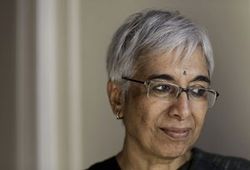
Manju Kapur, the Jane Austen of modern Anglo-Indian literature, tells James Kidd about the best and worst of India's traditions

Manju It is almost de rigueur for Western critics to compare Kapur's previous novels, Difficult Daughters, Home and the bestselling The Immigrant, to Jane Austen. Custody is about the lives, loves and losses of wealthy, urban, middle-class Indians, and she excels at excavating unsettling secrets and exploring dysfunctional relationships. Her starting point, however, is not plot or character, but grand contemporary narratives: “At the risk of sounding like a political scientist, Custody was inspired by globalisation and economic liberalisation. Who owns you? As far as most Indian women and children are concerned, a man does. But that's changing.” Kapur's laugh bursts free again. “But the book isn't only about those things. It's about child custody and the legal system. You can't live in India and not be extremely furious about the legal system.” Like so many challenges facing the nation's politicians, the fundamental problem is one of scale: the legal, education and health systems are simply overloaded. Kapur's fiction examines the effect that these almost impossibly vast issues have on the most intimate areas of people's lives: love, sex, work, money, and above all family. “The family is where I see the impact of what is happening in Indian society. In my earlier novels, it was women who negotiated this relationship. Here, it is everybody – the children, the father, the wives. If you live free, you pay the emotional price,” Kapur says of a story in which no one ever quite gets what they want, and no single character is solely to blame. Set just before the millennium, Custody depicts what appears to be an enviably happy and prosperous married couple, Raman and Shagun, who are torn apart by adultery and then by a bitter legal battle for their children. In a story carrying echoes of Ibsen, Shagun chooses love with a westernised Indian businessman over family duty; Raman's desperate bid to gain custody of his son and daughter is an act born of love, revenge and humiliation.

In many respects, Kapur is ideally placed to comment on the seismic shifts shaping the Indian nation. Born in the Punjabi city of Amritsar shortly after independence in 1948, she has spent a lifetime balancing her country's traditions with the demands of its ever-changing present. She is happy to write in English, but admits that the choice remains fraught. “Writing in English is still a charged issue! My goodness!” she exclaims. “I am a total post-colonial. I studied in English. I read in English. My Hindi is quite bad.”

More here.

Sunday Poem

The Stolen Child

Where dips the rocky highland
Of Sleuth Wood in the lake,
There lies a leafy island
Where flapping herons wake
The drowsy water-rats;
There we've hid our faery vats
Full of berries
And the reddest stolen cherries.
Come away, O human child!
To the waters and the wild
With a faery, hand in hand,
For the world's more full of weeping than you
can understand.

Where the wave of moonlight glosses
The dim grey sands with light,
Far off by furthest Rosses
We foot it all the night,
Weaving olden dances,
Mingling hands and mingling glances
Till the moon has taken flight;
To and fro we leap
And chase the frothy bubbles,
While the world is full of troubles
And is anxious in its sleep.
Come away, O human child!
To the waters of the wild
With a faery, hand in hand,
For the world's more full of weeping than you
can understand.

Where the wandering water gushes
From the hills above Glen-Car,
In pools among the rushes
That scarce could bathe a star,
We seek for slumbering trout
And whispering in their ears
Give them unquiet dreams;
Leaning softly out
From ferns that drop their tears
Over the young streams.
Come away, O human child!
To the waters and the wild
With a faery, hand in hand,
For the world's more full of weeping than you
can understand.

Away with us he's going,
The solemn-eyed:
He'll hear no more the lowing
Of the calves on the warm hillside
Or the kettle on the hob
Sing peace into his breast,
Or see the brown mice bob
Round and round the oatmeal-chest.
For he comes, the human child,
To the waters and the wild
With a faery, hand in hand,
From a world more full of weeping than he
can understand.

by W.B. Yeats

First lupus drug in half a century approved

From Nature:

Lupus For more than 50 years, the autoimmune disease lupus has confounded drug developers. But a new therapy finally broke through that barrier yesterday when the US Food and Drug Administration (FDA) announced the approval of Benlysta (belimumab) for the treatment of systemic lupus erythematosus. The greatly anticipated move heralded a step forward not only for belimumab's developers, but also for the many other experimental lupus therapies hot on the trail. “It's a very exciting time in lupus,” says Richard Furie, a rheumatologist at the North Shore-Long Island Jewish Health System in New York, who has conducted clinical trials of belimumab. “There's an awful lot of activity right now.”

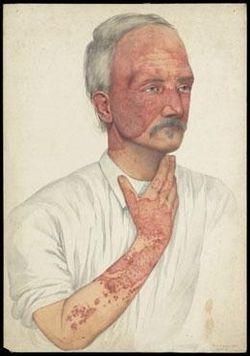
Lupus is a mysterious disease in which the immune system attacks healthy tissues. Nearly all lupus patients experience some degree of joint pain, and some will face life-threatening complications including kidney failure, heart problems and difficulty in breathing. Belimumab is an antibody that interferes with the immune system's assault by binding to and inhibiting a protein called the 'B-lymphocyte stimulator' (BLyS). Blocking BLyS is thought to cause the immune system's antibody-producing B cells to self-destruct, thereby reducing the body's ability to attack its own tissues.

More here.