Death and Drugs in Colombia

Wilkinson_1-062311web_jpg_470x433_q85

In February 2003, the mayor of a small town on Colombia’s Caribbean coast stood up at a nationally televised meeting with then President Álvaro Uribe and announced his own murder. “Señor Presidente, I am the mayor of El Roble,” Tito Díaz said as he walked toward the stage where Uribe sat with several cabinet ministers and officials from the state of Sucre, where the meeting was held. Pacing back and forth before the President, Díaz delivered what was probably the first public denunciation of a web of violence and corruption involving politicians and paramilitary groups—what he called a “macabre alliance”—that would eventually become an explosive national scandal. Singling out several local officials, including the governor, Salvador Arana, seated at the President’s side, Díaz declared: “And now they’re going to kill me.” President Uribe listened impassively for several minutes, then cut the mayor off midsentence: “Mr. Mayor, we have allowed this disorder because of the gravity of the matter, but we also ask that you be considerate of our time.” Uribe is a small, tidy man, with a bland face that is boyish yet stern. When he addresses the public, it is with the commanding tone of the wealthy cattle rancher and the intensity of a man on a mission. “With utmost pleasure,” Uribe then assured Díaz that he would order an investigation, “for transparency cannot have exceptions, and security is for all Colombians.” Within weeks, the national police stripped Díaz of his bodyguards. On April 5, 2003, he disappeared. On April 10 his corpse appeared on the edge of Sucre’s main highway.

more from Daniel Wilkinson at the NYRB here.

lit and life coaching

Cover00

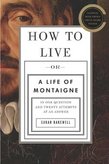
No sooner had essays and novels emerged as popular literary forms in seventeenth-century Europe than readers came to seek in them the kinds of spiritual and practical guidance they had always found in more overtly philosophical works like Ecclesiastes and the Meditations of Marcus Aurelius. The eighteenth-century novelist Samuel Richardson was certainly aware of this when he extracted what he called “moral and instructive sentiments, maxims, cautions, and reflexions” from his own novels and published them as a separate volume. The desire to distill wisdom from literature is still with us, albeit with a contemporary self-help bent. Consider William Deresiewicz’s A Jane Austen Education and Sarah Bakewell’s How to Live: Both books take well-known literary texts and use them to show how the reader might learn to lead a better life, though the authors’ tactics—and degrees of success—differ as profoundly as their destinations. A Columbia Ph.D. and former Yale faculty member, Deresiewicz has positioned himself as a polemicist bent on exposing (to borrow the title of his widely discussed 2008 essay in the American Scholar) “the disadvantages of an elite education.” There he insists that Yale and its peers “forgot that the true purpose of education is to make minds, not careers,” observing that there’s now no place at such schools for the searchers and inquiring minds that educational institutions might once have welcomed. Deresiewicz confidently embraces, in other words, the narrative of decline that structures so many accounts of contemporary—well, fill in the blank: education, literacy, morality, youth itself.

more from Jenny Davidson at Bookforum here.

James Joyce: A deft biography of one of the greatest voices of 20th-century literature

From The Telegraph:

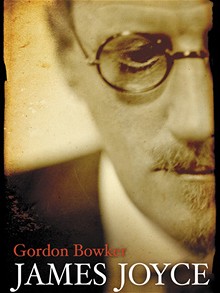
Joyce-cover_1916618f “Sunny Jim” was James Joyce’s boyhood nickname in Victorian Dublin, and “Herr Satan” was the epithet by which he was known in Zurich during the final phase of his life. It is Gordon Bowker’s task, in this deft, accomplished biography, to explain how Sunny Jim became Herr Satan.

…Bowker begins with a vivid, elegant prologue focusing on three epiphanies in Joyce’s life: the evening in 1898 when the 16 year old was seduced on a towpath by a woman he had never met; the Dublin street scene in 1904 when he met Nora Barnacle, the muse who helped to change 20th-century literature; and a Sunday in 1932 when his daughter burst into madness on a Paris railway platform. Bowker ends with an equally stylish recapitulation of Joyce’s life story: a pious schoolboy who became an apostate and was persecuted by his fellow Catholics; an Irish nationalist who never revisited Ireland after the age of 30; a Modernist who drew his insurrectionary ideas from the past; a medical student, operatic tenor manqué, bank clerk, Berlitz language teacher, and the ill-starred pioneer of the first cinema in Ireland. Joyce was a shatteringly frank man who could be shockingly devious; a clown who was prone to livid indignation; an encyclopedist who lived in chaos; a man of staid habits who was condemned as a pornographer. Like many Irish when they were ruled by Englishmen, he could be sly and ingratiating with those with authority over him before suddenly turning angry, ungrateful and destructive. These jarring contradictions made Joyce’s “literary genius”, Bowker argues.

More here.

A Feat of Engineering That Doubles as a Home

From The New York Times:

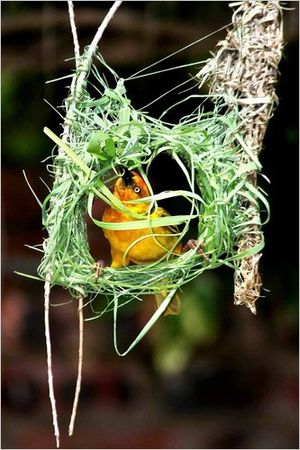
REFE-popup I live in a nice clapboard house and work in a gleaming steel-and-glass skyscraper, but after reading “Avian Architecture: How Birds Design, Engineer and Build” I feel cheated. I’ll never get to enjoy the comforts of the nest of a long-tailed tit. As Peter Goodfellow, the book’s author, points out, the dome-shaped nest is one of the most beautiful and skillful constructions in the animal kingdom. The average one contains a couple of hundred sprigs of moss and several thousand lichen flakes, woven together with purloined spider silk and lined with feathers. A nice place for a nap, if you are six inches long.

“It’s an amazing creation,” Mr. Goodfellow, who has had the pleasure of watching long-tailed tits nest in his garden in Plymouth, England, said in a telephone interview. “What’s doubly astonishing is that they use it just once.” Mr. Goodfellow is a retired teacher of English language and literature and a lifelong bird-watcher, although he takes his bird-watching only so far. “I’ve never actually gotten into the work of the scientist, who might well watch for a whole day or week while a bird makes a nest,” he said. “I’ve never had that deep science bent that’s made me sit down to do that sort of thing. I enjoy the reading and the writing.” He first had the idea to write about nests 35 years ago, and the result was a book called “Birds as Builders.” This time, Mr. Goodfellow adds “designer” and “engineer” to the job description, and that does not seem at all like a stretch.

More here.

Monday, June 20, 2011

The Winners of the 3 Quarks Daily 2011 Science Prize

TopWinner2011 With_Q_Science_2011 Winner_2011_Charm

Lisa Randall has picked the winners:

1. Top Quark, $1000: SciCurious, Serotonin and Sexual Preference: Is It Really That Simple?
2. Strange Quark, $300: Anne Jefferson, Levees and the Illusion of Flood Control
3. Charm Quark, $100: Sean Carroll, The Fine Structure Constant is Probably Constant
3. Charm Quark, $100: Ethan Siegel, Where Is Everybody?

As you can see, for the first time, there is a tie for third place and the money for the charm quark has accordingly been split between the two 3rd place winners.

Here is what Professor Randall had to say about them:

I have a confession to make. I’m relatively new to the social media science world. I’ve joined Twitter (@lirarandall) but use it for many purposes, only some of which involve disseminating science (in 140 characters or less). Bloggers on the other hand, have an online presence that can take on issues in depth. I aim for that in books where I try to present an entire story. Blogs do this in pieces, primarily reporting on issues of current interest and giving a nugget of information that can help enlighten the reader about a particular subject, but also about a way of thinking.

All the finalists to this year’s competition were really good– so good in fact that judging was a challenge. So I tried to focus my judging on one of the major purposes of blogs—to give the news that more traditional sources are not necessarily providing. Yes blogging might get to some issues faster, but one of the real values of blogging is that there can be slightly longer and more in-depth reporting by people who are more knowledgeable and won't shy away from actual science.

My first choice is Scientific American’s guest blog, Serotonin and Sexual Preference: Is It Really That Simple? SciCurious took on the issue of why scientific studies can be technically well-designed yet demonstrate something entirely different from what the authors claim. This piece was actually good science in itself—science that the authors themselves, not to mention some of the media, failed to properly understand. From the perspective of considering all possible theories that would account for the results and recognizing the complexity of the brain, which can be only addressed in small pieces by such simple mouse studies, this piece was excellent. My hope is that such blogs will temper the overblown claims that biological studies often report based on limited evidence.

I very much liked Anne Jefferson's piece in Highly Allochthonous, Levees and the Illusion of Flood Control, which is my second choice. I was a little hesitant in that there is less science per se than some of the other blogs, but I have to say that I learned a lot. It was interesting hearing about both someone’s personal experience and more in-depth investigations into the subject. Differentiating the vantage points of people in a well-developed community, people more spread out along a river, and those of us nowhere nearby who just want things to be stabilized was good and thoughtful reporting. Also the recognition that levees are only one part of the issue—but one worth understanding.

For third place I am going to defer a little. Physics is my field—particle physics and some cosmology in particular—and I am wary about letting that color my view. But both Starts With A Bang’s Where Is Everybody? and Cosmic Variance’s The Fine Structure Constant is Probably Constant did a good job of explaining slightly more esoteric phenomena. My colleague Sean Carroll took on the challenge of elucidating the nature of a field and minimizing potential energy for such a field. Explaining the unintuitive notion of a field in understandable terms was something he did admirably. Ethan Siegel took on the challenge of simplifying probability estimates without sacrificing the nature of the enterprise or suppressing the uncertainties involved. What was so great about the latter exercise was that it allowed you to see how science can yield valuable insights, even when there are uncertainties, and how good predictions often require more than a single input piece of information. And he didn’t shy away from numbers—albeit nice round ones that most people will understand. In both these respects I’m also going to give a shout-out to the non-nominated blog, The Reference Frame. I don’t always agree with everything he says but Luboš Motl does a tremendous job of bringing a wide variety of physics topics to the public.

The above blogs are well-deserving of their prizes. But as I said earlier, all the blogs were a pleasure to read. Keep up the good work and we might eventually get a scientifically literate populace.

Congratulations also from 3QD to the winners (I will send the prize money later today or tomorrow–and remember, you must claim the money within one month from today–just send me an email). And feel free to leave your acceptance speech as a comment here! And thanks to everyone who participated. Thanks also, of course, to Lisa Randall for doing the final judging.

The three prize logos at the top of this post were designed, respectively, by me, Sughra Raza, and Carla Goller. I hope the winners will display them with pride on their own blogs!

Details about the prize here.

perceptions

The Commemoration 2010
Anton Kusters. The Commemoration – Socho. January 13, 2010.

Photograph from the Yakuza Project: “893-Yakuza is a personal visual account of the life inside an inaccessible subculture: a traditional Japanese crime family that controls the streets of Kabukicho, in the heart of Tokyo, Japan. Through many months of delicate preparations and negotiations by my brother Malik, our fixer Taka-san, and myself, we became the only westerners ever to be granted this kind of access to that closed world.”

More here, here, and here.

Thanks to Paul Gibson for the introduction!

Sunday, June 19, 2011

Growing a better NIH: A radical way to fix the nation’s medical-research establishment

From The Boston Globe:

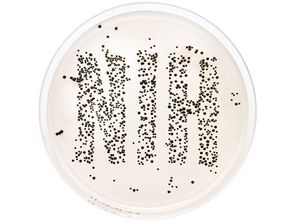
Growingabetternih3__1308338873_2486 The United States spends around $30 billion a year on the National Institutes of Health, an agency that has been called the “jewel in the crown of the federal government.” The NIH is by far the nation’s most important single funder of medical research — the scientific work that drives our university labs, our drug companies, and our major hospitals — and its budget amounts to an enormous bet that by advancing basic medical science, we can reap improvements in national health care. In one arena, at least, that bet is paying off: America has become the unquestioned global leader in biomedical science. As it has, the NIH has also become critically important to states like Massachusetts, which reaped more than $2 billion in funding last year, fueling a high-tech economy of high-paying jobs.

But biomedical science is not the same thing as health, and in a very important sense, our investment in the NIH is not fully paying off. The agency’s own mission statement holds that its ultimate goal is applying knowledge to “enhance health, lengthen life, and reduce the burdens of illness and disability.” And on that count, America is doing less impressively.

More here.

Are the world’s women disappearing?

From Salon:

Women What would our world be like if it contained far fewer women? It may seem like the stuff of post-apocalyptic fiction, but according to journalist Mara Hvistendahl, the author of “Unnatural Selection: Choosing Boys Over Girls, and the Consequences of a World Full of Men,” truth is coming closer to fiction. According to Hvistendahl, a science writer and correspondent for Science magazine, the world is currently experiencing a demographic shift that is tilting our population in favor of men. The main source of her concern is the fact that a growing number of parents in various parts of the world have been using ultrasound technology to determine the sex of their fetus and, in a disturbing number of cases, terminating females. Based on personal anecdotes and research from fields as disparate as demography, sociology, economics and genetics, Hvistendahl speculates about what this means for everything from bride buying and sex trafficking to male violence, and why it might be causing global unrest. Salon spoke with Hvistendahl about our overpopulation fears, what this trend means for abortion and America's own curious sex selection trend.

The international sex ratio is nearly equal, with 101 males for 100 females. So why is the sex imbalance at birth in some countries, like China and India, a problem?

The sex ratio imbalance in Asia is such that it has skewed the sex ratio at birth of the whole world. We are talking about 160 million women and girls who are missing from the population. This is reshaping whole societies. There are many men who are growing up and can't find wives, so they're going to poorer countries to buy them. Sex trafficking is on the rise as well. Prostitution and crime have increased, and these are all huge problems.

More here.

Saturday, June 18, 2011

Sir Patrick Leigh Fermor

From The Telegraph:

Fermor-fag_1917810f Leigh Fermor was the architect of one of the most daring feats of the Second World War, the kidnapping of the commander of the German garrison on Crete, and also the author of some of the finest works in the canon of English travel writing.

His most celebrated book told the story of his year-long walk across Europe from Rotterdam to Istanbul in 1934, when he was 18 and the Continent was on the verge of cataclysmic change. His account of his adventures was projected as a trilogy, of which only the first two parts have so far been published, A Time of Gifts in 1977 and Between the Woods and the Water nine years later.

The journey was a cultural awakening for Leigh Fermor that bred in him a love of language and of remote places and set the pattern for his future life. The exuberant personality revealed in his writing won him many admirers, who also revelled in the remarkable range of his learning and the irresistible flow of his descriptive prose, rivalled for luxuriousness only by that of one of his principal influences, Norman Douglas.

Others were not so taken with his tales, suspecting him at best of a faulty memory and at worst of private myth-making, and dismissing his parade of arcane erudition as more intellectual snobbery than dilettante scholarship. Yet such criticism misread the essential modesty of the man, insisted too narrowly on accuracy in a genre founded by storytelling, and failed to realise that Leigh Fermor was above all a comic writer. It was for comic, often self-mocking, effect that he loosed his great streams of words, their tumbling onrush of sound designed to intoxicate and above all to entertain.

More here.

The Romance of Birthright Israel

Kiera Feldman in The Nation:

ScreenHunter_04 Jun. 18 17.21 The seekers are young, just beginning to face the disappointments of adulthood. Their journey is often marked by tears. They may weep while praying at the Western Wall, their heads pressed against the weathered stone, or at the Holocaust Museum, as they pass the piles of shoes of the dead. Others tear up in Jerusalem’s Mount Herzl military cemetery, while embracing a handsome IDF soldier in the late afternoon light. But at some point during their all-expenses-paid ten-day trip to a land where, as they are constantly reminded, every mountain and valley is inscribed with 5,000 years of their people’s history, the moment almost always comes.

When Julie Feldman (no relation), then 26 and a Reform Jew from New York City, arrived at Ben Gurion Airport in December 2008, she called herself “a blank slate.” She returned as the attack on Gaza was under way, armed with a new “pro-Israel” outlook. “Israel really changed me,” she said. “I truly felt when I came back that I was a different person.”

It was mission accomplished for Birthright Israel, the American Zionist organization that has, since its founding in 1999, spent almost $600 million to send more than 260,000 young diaspora Jews on free vacations to the Holy Land.

More here.

Why you can’t ever “know” anything exactly?

Ethan Siegel in Starts With A Bang:

Double-slit-fringes-realistic-thumb-500x161-66198 Looking down at the fundamental nature of matter, down past our cells and organelles, deep into the individual molecules and inside of the atoms that make them up, at long last, you get to things like the fundamental particles that make up all the known matter in the Universe.

Things like electrons, photons, and the quarks that make up protons and neutrons, are all, as best as we can tell, fundamental particles. That means we can't break them up into anything smaller; they're not “made” of anything else.

And that's where things get weird.

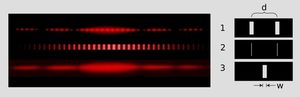
Let's say I take some light — what particle physicists call photons — and I shine it through some slits. Two slits of finite width, two infinitely-thin slits, and one slit of a finite width. What type of pattern would I see?

Well, you'd see the classic patterns that come about because of two well-known and well-understood phenomena: interference and diffraction. Now it might seem weird to you, because these are properties of waves, but we can treat light like a wave without too much difficulty.

On the other hand, if we used something like electrons, you might expect a different result.

This is the result you'd get if you threw a bunch of tiny grains of sand at these two slits. Some grains go through one slit, some grains go through the other, and you wind up with two separate piles of sand on the other side.

So what happens when you send the electrons through? They make the interference pattern!

But we're clever, so what we do, to avoid the electrons from interfering with one another, is to send them through one-at-a-time. And over time, we count up what they're doing. Here are the results.

More here.

hitch on mamet

Bkr-Hitchens-t_CA0-articleInline

Propagandistic writing of this kind can be even more boring than it is irritating. For example, Mamet writes in “The Secret Knowledge” that “the Israelis would like to live in peace within their borders; the Arabs would like to kill them all.” Whatever one’s opinion of that conflict may be, this (twice-made) claim of his abolishes any need to analyze or even discuss it. It has a long way to go before it can even be called simplistic. By now, perhaps, you will not be surprised to know that Mamet regards global warming as a false alarm, and demands to be told “by what magical process” bumper stickers can “save whales, and free Tibet.” This again is not uncharacteristic of his pointlessly aggressive style: who on earth maintains that they can? If I were as prone to sloganizing as Mamet, I’d keep clear of bumper-sticker comparisons altogether. On the epigraph page, and again on the closing one, Mamet purports to explain the title of his book. He cites the anthropologist Anna Simons on rites of initiation, to the effect that the big secret is very often that there is no big secret. In his own voice, he states: “There is no secret knowledge. The federal government is merely the zoning board writ large.” Again, it is hard to know with whom he is contending. Believers in arcane or esoteric or occult power are distributed all across the spectrum and would, I think, include Glenn Beck. Mr. Beck is among those thanked in Mamet’s acknowledgments for helping free him from “the bemused and sad paternalism” of the liberal airwaves. Would that this were the only sign of the deep confusion that is all that alleviates Mamet’s commitment to the one-dimensional or the flat-out partisan.

more from Christopher Hitchens at the NYT here.

the father

4cd253f4-9896-11e0-94d7-00144feab49a

I didn’t know my father. I didn’t know him, and I never had. Not only that, but all the rich and textured memories I had once possessed were lost, buried under the horrors of his last few years. All I had were a few painful memories from childhood – ones I didn’t know that I wanted to share, and the image of a frail, wizened husk of a man, drowning in despair. I couldn’t and wouldn’t make a book out of that. I considered giving the money back. But in the end, I pulled myself together and did what everyone does when they want to know more about a person. I Googled him. Then I went to the library. To say I found my father at the Duke University library would not be an overstatement. There, among more than 20,000 documents that comprise the William Styron Papers, I met the man I never knew and became reacquainted with the father I thought I’d lost. The archive had first been established in the early 1950s with a series of donations from my grandfather, who had kept every scrap of paper ever written by and about his only son. Between 1943 and 1953, Daddy wrote 104 letters to his father, chronicling everything from his boarding school travails to college life, his two stints in the Marines, his apprenticeship as a young writer, and the precocious triumph of his first novel, Lie Down in Darkness (1951). My father, I learned, had been a terrible student, just like me. And he also had a father who tacitly encouraged his son’s far-fetched dreams. Over the years Grandpop, and eventually Daddy, contributed ever more Styronalia to Duke. Scrapbooks, manuscripts, monographs, magazine articles, speeches, and thousands of pieces of correspondence, all of which have been exquisitely preserved and curated. My father didn’t edit his contributions much. He seemed to realise his finest legacy, like the literature he created, relied on the diamond-like beauty of hard truths. The William Styron Papers is an unparalleled resource for scholars, biographers, and students interested in 20th-century literature. But for me it is something of incomparable personal value: a key to my greatest mystery.

more from Alexandra Styron at the FT here.

fiasco

62339595-13161225

In 1944, a 14-year-old boy, future novelist Imre Kertész, was rounded up while on an excursion in the countryside near Budapest and sent to Auschwitz. And then to Buchenwald. Surviving the camps and returning to Budapest, he was asked, simply, by his surviving family and friends, “Where have you been?” In his work, Kertész reflects on how quickly he discovered that no one really wanted to know what he had experienced. And yet, Kertész’s entire literary life has been an attempt at answering that simple question in the trilogy of novels, “Fatelessness,” “Fiasco” and “Kaddish for an Unborn Child” — an attempt that earned him the Nobel Prize in Literature in 2002. His other books describe in particular detail his dreary survival under the communism in Hungary. Finally published in an English translation, “Fiasco” is actually the middle book of the trilogy and describes, in the opening third, the fictionalized experiences Kertész must have had in writing “Fatelessness” — having it rejected by a publisher as being unsuitable for publication. “As I now see clearly, to write a novel means to write for others — among others, for those who reject one,” he muses. The later parts of “Fiasco” follow a writer very much like Kertész who is going about his life in the tediously circumscribed environment of communist Hungary.

more from Thomas McGonigle at the LA Times here.

The best holiday reads: Writers recall their most memorable holiday reads

From Guardian:

Man-reading-on-a-beach-007 AS Byatt

I was married (for the first time) in the summer of 1959. I was working on a D Phil in Oxford on 17th-century religious allegory. My supervisor was the great Helen Gardner. I went to see her at the end of the academic year. She said, not for the first time, that the academic life required a nun-like devotion and chastity. She said that when I married my state research grant would be withdrawn as I would be a married woman – a married man had his grant increased. After these blows she made gracious conversation. She was, she said, reading Proust. She gave a little laugh. In English, of course – she wasn't up to reading him in French. In a state of pure rage I walked into Blackwell's, purchased the whole of A La Recherche du Temps Perdu in French, and began reading. I read all summer, across Europe, back in England. That was when I knew I was a writer, not an academic. Every sentence was a new revelation of what language could do. At first I needed a dictionary, and then I didn't, mostly. I had never met so finely woven a tapestry of writing. I began to plan a novel that would be as long as my life, that would make life and novel one. That didn't exactly work out. But that was my very best summer of reading.

Jonathan Franzen

In 1997, when my mother knew she didn't have long to live, she spent a good part of her life savings and took her three kids and their families on a cruise to Alaska. I'd been working on a piece of fiction about cruises, and I'd rushed to finish it before getting on the ship, because I didn't want to be influenced by a real cruise experience. But I was ready for a real vacation – unlimited food and drink and coastal scenery – and the book I brought along was Halldôr Laxness's novel Independent People. It's a story about an Icelandic sheep farmer, but it's also a story about everything: modernity, history, freedom, love. Its excellence was almost a problem for me, because once I was hooked I just wanted to stay in my stateroom and read it. Fortunately the northern summer days were endless, and I could read all afternoon and still have hours after dinner to soak up the Iceland-like light and air. The best reading experiences partake of eternity, because we forget time for a while and thereby escape it. When I came to the end of Independent People, I cried like I've never cried over a novel, before or since.

More here.