
Category: Recommended Reading
Enduring unwelcome awkward flirting at CERN and elsewhere
Jennifer Oulette in Scientific American:

She was careful to say that she has not encountered blatant sexism of the most egregious sort, although she has endured unwelcome awkward flirting: a wink and a hand on the knee, lame attempts at playing “footsie” with her under the table during meetings, and of course, tacky double entendres. Even then, she cut the guys a lot of slack; it’s just social awkwardness, she rationalized, not a malicious attempt to make her feel uncomfortable — and yet, she does feel uncomfortable. (There may also be cultural factors at play, given the international diversity at CERN.)
What she found equally bothersome is that because she’s a woman in education, not physics research, she simply isn’t taken seriously by her male colleagues at CERN, who apparently treat her with amiable condescension. Henneberg holds an undergraduate degree is in physics and a graduate degree in science communication, yet “[P]eople here, men especially, treat me like some sort of novelty item. Like because I am not a physicist, I have nothing substantive to contribute to CERN, but it’s cute that I try.”
More here.
This is Not the End of the Book
From National Post:
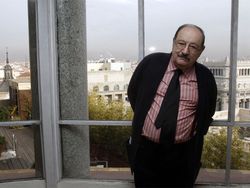
Eco lays out his argument very early in this “conversation.” (Don’t ask me what “curated” means.) “There is actually very little to say on the subject,” Eco states. “The Internet has returned us to the alphabet … From now on, everyone has to read. In order to read, you need a medium. This medium cannot simply be a computer screen.” The implication of Eco’s logic is clear. E-books have their place in the world of letters, but not necessarily one of total dominance. “One of two things will happen,” Eco continues in his march of logic. “Either the book will continue to be the medium for reading, or its replacement will resemble what the book has always been, even before the invention of the printing press. Alterations to the book-as-object have modified neither its function nor its grammar for more than 500 years. The book is like the spoon, scissors, the hammer, the wheel. Once invented, it cannot be improved.”
More here.
The Break: Italian bribery and billiards
From The Independent:

As in Fists, style beats content in being spare without being sparse, taut without seeming tight. Both novels are about duels to the death, and each ends in surprising reversals and redefinitions of winning and losing. The Break sees the world through the eyes of Dino, who generally keeps those eyes down to ground level, laying roads. In the detail of using first paving slabs and then tarmac, working alongside the immigrants Saeed and Blondie for an increasingly corrupt chain of municipal officials, Dino gradually apprehends the backhanded way things are done in his provincial town.
More here.
Wednesday, July 27, 2011
a New Film Criticism?
It’s news to no one that film production has changed radically since 1954, when François Truffaut and the writers at Cahiers du Cinéma created auteur theory. Yet film criticism, both academic and popular, usually maintains that the director is the paramount force behind the production of cinematic meaning. Though auteurs exist (e.g. Werner Herzog, Catherine Breillat, Wong Kar-Wai), for the vast majority of entertainment cinema, meaning is determined by a different force: a manufactured zeitgeist, a false urgency sustained by the barrage of advertisement, conversation, and criticism about a movie that creates a sense that films reflect their cultural moment. I call this the “film current.” What makes so many mediocre, repressive, boring, or stupid films seem worth discussing? Why are movies like Crash, Juno, or Slumdog Millionaire treated as relevant, new, even subversive? The film current. For most major film releases, marketing costs a quarter to a third of the production budget; this money goes to establishing a film’s ubiquity and “cultural relevance” while masking its inadequacies, inviting critics to regard it as a window to the psychological state of the American people, and regard themselves as insightful for doing so.
more from Willie Osterweil at The New Inquiry here.
just say no to Müdigkeitsgesellschaft

Byung-Chul Han has written no less than fourteen very different books that defy attempt to pigeonhole them into a single concept. From monographs on Heidegger and Hegel to books on globalisation, death, power and the Western passion story. “Duft der Zeit. Ein philosophischer Essay zur Kunst des Verweilens” [The scent of time. A philosophical essay on the art of lingering] is the title of one publication from 2009 – but woe betide any bookseller who places it among gift books, despite its flowery title! It was namely here that Han so brilliantly formulated his criticism of the restlessness of the animal laborans. In his later essay on the “Müdigkeitsgesellschaft” or tiredness society, Han went on to explain how the never-ending pressure of the active life can destroy us. The realisation that the perseverance slogan of positive thinking, as prompted by the dictates of increased efficiency, makes people sick has long since trickled down to the foundations of self-help literature. Han argues pathogenetically. It stands to reason that a culture which coined “Yes we can” as the self-confident slogan of the eternal “can-do” suffers from sicknesses like depression, borderline personality disorder and burnout syndrome. The cause of this internally rooted set of problems is the positively viewed constant potency of an incessant readiness to perform. The scourge of our time is called voluntariness. No longer is it an external repressive power that even leads to the deformation of society, as even in the previous century. “The disciplinary society,” writes Han “is still ruled by the no. Its negativity creates madmen and criminals. The performance society on the other hand creates depressives and failures.” In short, the problem today is not the other but the self (which constantly and emphatically says “Yes!”).
more from at Sign and Sight here.
a new kind of crazy

We have our little boxes for people. “Christian fundamentalist” – although Breivik insists in his own screed that he’s not religious (“Although I am not a religious person myself, I am usually in favor of a revitalization of Christianity in Europe” p. 676) . “Psychopath,” though he has no criminal record, and his former stepmother describes him as a nice guy. Perhaps we are dealing with a new psychology, a new class of criminal – aided and abetted by technology and mass communication – and none of our usual boxes fit. Perhaps psychology itself doesn’t fit. As Apostolidès said, some in this growing class of murderers are more than willing to kill brutally to promote their ideas. A scary thought, and apparently a contagious one. Each atrocity attempts to outdo the other in scope and depravity. It seems like we are trapped, globally, in an irreversible spiral of imitated violence. Violence, as René Girard notes, spreads mimetically like a fever over the planet.
more from Cynthia Haven at The Book Haven here.
China’s European Shopping Spree?

Last week's EU agreement to refinance Greece's debt seems to have calmed markets concerned with the possible default of Greece and subsequent contagion in the eurozone. But EU refinancing was not the only solution on offer: in June, an entirely different solution was hinted at from an unlikely source.
When Chinese Premier Wen Jiabao was on a tour of European capitals last month, he stressed two things at each stop: that a stable eurozone is vital to China and that China is Europe's friend. Indeed, from Beijing's perspective, when it comes to Europe, self-interest and altruism neatly coincide. If China were to buy only half of all outstanding Greek sovereign debt (a bargain at around $220 billion, a fraction of China's dollar assets), it would not only resolve the eurozone crisis and add to Chinese prestige but it would help give Beijing the sort of reserve asset that it needs to diversify its holdings out of dollars. Currently, 70 percent of China's reserves are in dollars, and China does not even make the list of the top 40 holders of Greek debt. But why would China not take such an opportunity?
For one, China probably has as little faith in the EU's ability to solve its debt crisis over the long run as do the rest of the world's financial markets, more bailouts notwithstanding. But another answer is possible — one that links the 2008 financial crisis and the 2011 European bond market crisis to a possible Chinese end run around the 2007 Foreign Investment and National Security Act. This U.S. law makes it hard for China to diversify out of its $3 trillion-plus holdings of U.S. dollars and buy sensitive U.S. assets such as aerospace, technology, and defense-related companies.
As a result of the unintended consequences of U.S. and European actions in financial markets, there is now the possibility that, even with this latest bailout, China could buy such sensitive assets from Europe, at fire-sale prices.
Neocons’ Iraq Criticism Rings Hollow

While Washington gets ready to default, another deadline looms on the horizon: December 31, 2011, when all American forces are due to be out of Iraq. The dysfunction of Iraqi politics has made it impossible for Baghdad to do what most people think is the rational thing—to request that some American forces remain to assist the Iraqi government in strengthening both its internal and external security capabilities. The Obama administration has signaled repeatedly that it is willing to do so, but that has not stopped neoconservative critics and former Bush administration officials from blaming Obama for Iraq’s failure to get its act together. The irony, of course, is that the democracy they were so proud to give Iraq (at such great cost to both Americans and Iraqis) is the reason that their preferred policy of continued American military presence in the country is not working out.
The neocon criticism of the Obama administration for not doing enough to bring the Iraqis to their senses is shot through with internal contradictions. Frederick and Kimberly Kagan wrote in the Weekly Standard in April that “[t]he ball is not in Maliki’s court. It is in Obama’s court,” contending that a lack of serious American commitment to Iraq was forcing Maliki into Iran’s arms. They called on the president to “stand by Iraq’s leaders as long as those leaders stand by the democratic processes now tenuously in place.”
But it is those very democratic processes that are blocking Maliki from renegotiating the Status of Forces Agreement (sofa) that sets the December 31 deadline. The Sadrist bloc in the Iraqi Parliament, an important part of Maliki’s governing majority, is dead set against a continued American military presence. Other Iraqi politicians, who whisper to visiting American journalists and pundits how much they want U.S. forces to stay, will not argue that position in public or try to put together a parliamentary majority in favor of an extension of the sofa. Maliki himself is unwilling to take this case directly to the parliament or the Iraqi people. Presumably they, as democratic politicians, know their own public opinion and their own political landscape better than the Kagans do. It is hard to escape the conclusion that the desire of committed ideological minorities like the Sadrists to get the Americans out is not counterbalanced by any mobilized Arab Iraqi constituency that wants them to stay, and that the median Arab Iraqi voter (Kurds would hold different opinions) would be just as happy to see the U.S. troops go. That might be the wrong decision, but it seems to be the democratic one.
On Discovering Life

CERN’s Large Hadron Collider has begun refining our understanding of the fabric of space and time, and NASA’s Kepler mission is sharpening our estimates of how common Earth-like planets are in our galaxy. Yet as these cosmic-scale projects open the second decade of the new millennium they are returning science to a frontier that seems oddly 19th century. Science is going back to the scale of life—that middle ground of minute energies and high complexities that lies between the immense galaxies and the infinitesimal particles.
My statement that life is science’s new focus sounds naive and out-of-touch—after all, just open the newspapers or see the research budgets for biology and medicine, and you’ll notice an overwhelming amount of interest and funding for the life sciences. But that all has to do with us humans: first and foremost, with our health and bodies, and second, with our environment, the ecosystems of planet Earth. There is an aspect of life sciences that has been largely absent: the confrontation of fundamental questions of biology much as particle accelerators grapple with fundamental questions of physics. The roll call of early pioneers and prospectors is notable, but short. Fortunately, increasing numbers of researchers are now re-entering this fertile frontier.
The open secret of this emerging frontier is that we do not have a fundamental definition or understanding of life. Similarly, we do not understand life’s origins, how life emerges from chemistry. We do know that the chemistry of life on Earth, or “Terran” biochemistry for short, is rather restrictive in its molecular permutations. Unnecessarily so, it seems, given the enormous choice of good options provided by chemistry for building biological bodies and functions. However, we do not know whether nature or nurture is the reason. The bio-chemistry we see (and are!) could be universal, like gravity, where the same basic rules apply anywhere. Or our biochemistry could instead be one of many options, one that just happened to fit Earth’s environmental conditions.
Hell on Utøya

I'm awake. I can't sleep anymore. I'm sitting in the living room. Feel grief, anger, happiness, God I don't know what. There are too many emotions. There are too many thoughts. I am afraid. I react to every noise. I will now write about what happened at Utøya. What my eyes saw, what I felt, what I did. The words come straight from the gut, but I will still withhold many names out of respect for my friends.
We'd had an emergency meeting in the main building after the bombings in Oslo. Then there was a separate meeting for the members from Akershus and Oslo. After the meetings, many were still in and around the main building. We took comfort in being in safety on an island. No one knew that hell was about to explode around us too.
I was in the main hallway when panic struck. I heard shots. I saw him shoot. Everybody started to run. The first thought was: “Why is the police shooting at us? What the f***?” I ran into the small assembly hall. People ran. Screamed. I was scared. I managed to get into one of the rooms towards the back of the building. We were many in there. We were all lying on the floor. We heard more shots. Got more scared. I cried. I didn't understand. I saw my best friend through the window and wondered if I should go out to get him. I didn't have time. I saw the fear in his eyes. I remained lying on the floor in the room for a few minutes. We agreed not to let anyone else in in case the killer came. We heard more shots and decided to jump out of the window. Panic broke out among us. Everybody in the room rushed to the window and tried to jump out. I was the last and thought: “I am the last one to jump out of the window. Now I will die. I'm sure, but perhaps it is ok, then I know that the others are safe.” I threw my bag out the window. Tried to climb down but lost my grip. I landed hard on the left side of my body. A boy helped me up. We ran into the woods. I looked around. “Is he here? Is he shooting at me? Can he see me?” A girl had broken her ankle. Another was badly injured. I tried to help a little before continuing down to the water. I took shelter behind some sort of cement wall. We were many. I prayed, prayed, prayed. I was hoping that God could se me. I rang mum and said it was not certain we would meet again but that I would do everything I could to make it through. I told her several times that I loved her. I heard the fear in her voice. She cried. It hurt. I sent an SMS to my dad, said I loved him. I sent an SMS to someone else I love very, very much. We kept in contact for a while. I sent an SMS to my best friend. He did not reply.
He didn’t want to fight, but Ifti Nasim could provoke
From Chicago Tribune:

“According to every convention, my friend Ifti was all wrong,” blogged Azra Raza, a prominent oncologist. “He was born in the wrong country. He should have been born in Hollywood. … He was born in the wrong body. He should have been Marilyn Monroe.” Being born “wrong” was what made Nasim the remarkable person he was, though. The son of a newspaper owner in Faisalabad, an industrial city built on cotton, he was the fifth of seven kids of his father's first marriage. His mother died when he was young. “As one of a large family,” he once said, “I was the invisible child.”
More here.
Think healthy, eat healthy: Scientists show link between attention, self-control
From PhysOrg:
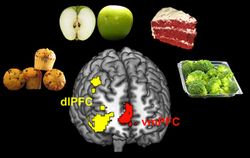
When you decide what to eat, not only does your brain need to figure out how it feels about a food's taste versus its health benefits versus its size or even its packaging, but it needs to decide the importance of each of those attributes relative to the others. And it needs to do all of this more-or-less instantaneously. When the dorsolateral prefrontal cortex (dlPFC) is active, it allows the ventral medial prefrontal cortex (vmPFC) to take into account health benefits as well as taste when it assigns a value to a particular food.
More here.
Wednesday Poem
Where I Live
is vertical:
garden, pond, uphill
pasture, run-in shed.
Through pines, Pumpkin Ridge.
Two switchbacks down
church spire, spit of town.
Where I climb I inspect
the peas, cadets erect
in lime-capped rows,
hear hammer blows
as pileateds peck
the rot of shagbark hickories
enlarging last
year's pterodactyl nests.
Granite erratics
humped like bears
dot the outermost pasture
where in tall grass
clots of ovoid scat
butternut-size, milky brown
announce our halfgrown
moose padded past
into the forest
to nibble beech tree sprouts.
Wake-robin trillium
in dapple-shade. Violets,
landlocked seas I swim in.
I used to pick bouquets
for her, framed them
with leaves. Schmutzige
she said, holding me close
to scrub my streaky face.
Almost from here I touch
my mother's death
by Maxine Kumin
from Where I Live: New & Select Poems 1990-2010
W.W. Norton
Tuesday, July 26, 2011
Rebellion Against Pluralism
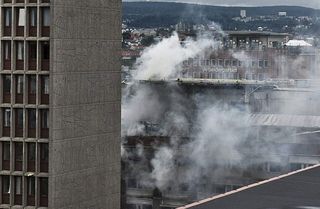
If we are to make sense of the horrific terror attack that shook Norway this past Friday, we must try to place it in the context of recent European politics. That context, in turn, points to one fact more than any other: over the last decade, Europeans have grown increasingly obsessed with the threat supposedly posed by foreigners, immigrants, and Muslims.
All over the continent, far-right parties have been celebrating remarkable successes. Establishment politicians, once keen to display their enlightened attitudes towards outsiders, have honed their populist rhetoric against foreigners. Books about the doom that would ensue if ethnic Europeans should become minorities in their own countries—like Germany Does Away with Itself, Thilo Sarrazin’s runaway success last year—have topped bestseller lists week in and week out.
Naturally, some commentators have expressed concern about these developments. But both in newsrooms and on the streets they mostly have been decried as fools whose obsession with multiculturalism is a naïve remnant of a more innocent era. Nothing wrong with their good intentions, Europeans of all nationalities and social strata intone, but they are sadly inapplicable to the 21st century, when islamofascism in general, and hordes of unwashed Muslims in particular, are threatening the European way of life.
Anders Behring Breivik, who has admitted responsibility for the death of seventy six innocents, is undoubtedly a madman. But madmen can be spurred on by anything in their environment they are able to construe as legitimation or encouragement—and, in recent years, there was plenty of that to go around in Europe.
The Radical Loser
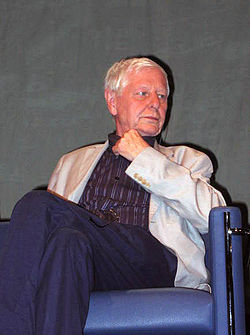
Those who content themselves with the objective, material criteria, the indices of the economists and the devastating findings of the empiricists, will understand nothing of the true drama of the radical loser. What others think of him – be they rivals or brothers, experts or neighbours, schoolmates, bosses, friends or foes – is not sufficient motivation. The radical loser himself must take an active part, he must tell himself: I am a loser and nothing but a loser. As long as he is not convinced of this, life may treat him badly, he may be poor and powerless, he may know misery and defeat, but he will not become a radical loser until he adopts the judgement of those who consider themselves winners as his own.
Since before the attack on the World Trade Center, political scientists, sociologists and psychologists have been searching in vain for a reliable pattern. Neither poverty nor the experience of political repression alone seem to provide a satisfactory explanation for why young people actively seek out death in a grand bloody finale and aim to take as many people with them as possible. Is there a phenotype that displays the same characteristics down the ages and across all classes and cultures?
No one pays any mind to the radical loser if they do not have to. And the feeling is mutual. As long as he is alone – and he is very much alone – he does not strike out. He appears unobtrusive, silent: a sleeper. But when he does draw attention to himself and enter the statistics, then he sparks consternation bordering on shock. For his very existence reminds the others of how little it would take to put them in his position. One might even assist the loser if only he would just give up. But he has no intention of doing so, and it does not look as if he would be partial to any assistance.
Ostalgia
Our own Morgan Meis in The Smart Set:
But that is not what drove the curators at the New Museum to put up a show called “Ostalgia.” No one is interested in a show that condemns the politics of a civilization that no longer exists. In fact, the core impulse of “Ostalgia” is to explore a feeling that has nothing directly to do with politics at all. What art can show us about the society of the former Soviet Bloc is something that discussions of politics and society don't have immediate access to. Art can show us the immediacy of life as it was felt and experienced in that time, in that place.
What we find in “Ostalgia” is surprising. We find a great deal of ease. I'm not talking about material comfort or an “easy life.” I am talking about human ease, to coin a term.
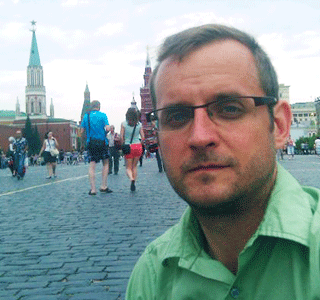
More here. [Photo shows Morgan in Moscow last week.]
Breivik and His Enablers
Roger Cohen in the New York Times:
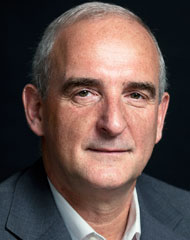
No doubt, that is how Islamophobic right-wingers in Europe and the United States who share his views but not his methods will seek to portray Breivik.
We’ve seen the movie. When Jared Loughner shot Representative Gabrielle Giffords this year in Tuscon, Arizona — after Sarah Palin placed rifle sights over Giffords’ constituency and Giffords herself predicted that “there are consequences to that” — the right went into overdrive to portray Loughner as a schizophrenic loner whose crazed universe owed nothing to those fanning hatred under the slogan of “Take America Back.” (That non-specific taking-back would of course be from Muslims and the likes of the liberal and Jewish Giffords.)
Breivik is no loner. His violence was brewed in a specific European environment that shares characteristics with the specific American environment of Loughner: relative economic decline, a jobless recovery, middle-class anxiety and high levels of immigration serving as the backdrop for racist Islamophobia and use of the spurious specter of a “Muslim takeover” as a wedge political issue to channel frustrations rightward.
More here.
With friends like these
Feisal H. Naqvi in the Express Tribune:
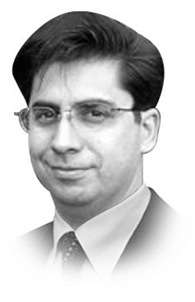
Since Mr Tharoor’s column was but the latest in a series of cross-boundary literary salvos, some background is necessary. This latest border incident began with an examination by Aatish Taseer of Pakistan’s so-called ‘obsession’ with India and, more specifically, the fact that even ‘liberals’ like his late father took much pleasure in any travails which happened to come India’s way. In terms of content, what Taseer Jr had to say was not entirely incorrect, though grossly overstated. However, the references to his father were entirely gratuitous as seen by some Pakistanis, which combined with the tenuous nature of his conclusions, inspired one Ejaz Haider to pen a response (titled “Aatish’s personal fire” and published on these pages on July 19).
Ejaz’s reply to Aatish Taseer made, in essence, two points. The first was that the article was massively simplistic. The second was that our apparent obsession with India was partly justified given the Pakistan-specific nature of India’s military preparations.
Tharoor sahib’s response to Ejaz, in turn, also had two things to say. The first was that Ejaz had missed the apparently evident point that India is a peace-loving nation whose military capabilities are all non-violent and defensive in nature. The second was that, like other Pakistani liberals, Ejaz’s commitment to critical thinking was liable to be overwhelmed by atavistic nationalistic impulses.
More here.