Friday Poem

The Door on Princeton Avenue

In through that door walked Uncle Teddy.
In through that door danced Aunt Edna.
My mother left through that door
and my father, drunk, tottered through it.
Mornings that door was the first I touched
and the last I touched in the evening.
All my relatives entered that door.
Every friend too, can you believe it?
We lived on the second of three floors.
We had no chimney, the windows were high.
If Santa came, then he came through that door.
Easter Bunny too. When Jesus returned
to whisk us to heaven, he’d hover
with miracle sandals through that door.
News back then didn’t come over the phone,
or the internet, when someone died
kin crashed through that door to tell us.
One day when I was five I walked in that door
and one day I was fourteen and walked out.
We moved. We moved and left that door behind.
Yet I remember running through the apartment
to answer a knock, my hand on the cool knob,
feeling like I need only twist open that door
and the whole mystery of the world
would reveal itself and be mine forever.
That was a long time ago. Ages and ages.
Uncle Teddy dead. Aunt Edna dead. Dad too.
Mom barely holds on in a small trailer in Florida.
I haven’t seen that door now in almost thirty years.
Now some stranger is closing that door.
Now someone I never met is locking it.

by James Valvis
from Anderbo
The invasive species war

From The Boston Globe:

Theinvasivespecieswar__1311967093_3503 EARLIER THIS MONTH, a troop of volunteers in Newton piled into canoes and went to war in the name of the Charles River. They wore gloves to protect themselves from their enemy: a thorny aquatic plant called the European water chestnut, believed to have invaded the Charles a century ago after escaping from the Harvard botanical garden. The plant spread swiftly, growing so thick in some areas that it overwhelmed the waterway entirely. For the past four years, the Charles River Watershed Association has led the effort to get rid of the pest, recruiting concerned citizens to pull the unwanted plants out by their roots and collect them in plastic laundry baskets.

The European water chestnut is considered an invasive species, one of the 1,500 or so plants and animals across the United States that have ended up settling in places where they don’t belong because of human activity. It’s a dubious distinction – one that most of us associate with evil carp overpowering local fish populations in the Mississippi River Basin, stubborn zebra mussels clogging pipes and killing birds in the Great Lakes, and the Asian longhorned beetle wiping out trees here in Massachusetts. Controlling the spread of such creatures has been a priority among ecologists and conservationists since roughly the 1980s. In that time, projects like the one on the Charles have proliferated around the world, forming a movement to patrol the natural environment and protect its fragile native ecosystems from intruders. The reasons to fight invasive species may be economic, or conservationist, or just practical, but underneath all these efforts is a potent and galvanizing idea: that if we work hard enough to keep foreign species from infiltrating habitats where they might do harm, we can help nature heal from the damage we humans have done to it as a civilization.

More here.

The Mystery of the Missing Fingerprints

From Science:

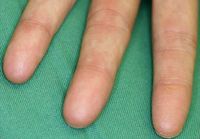
Fingers In 2007, a Swiss woman in her late 20s had an unusually hard time crossing the U.S. border. Customs agents could not confirm her identity. The woman's passport picture matched her face just fine, but when the agents scanned her hands, they discovered something shocking: she had no fingerprints. The woman, it turns out, had an extremely rare condition known as adermatoglyphia. Eli Sprecher, a dermatologist at the Tel Aviv Sourasky Medical Center in Israel, has dubbed it the “immigration delay disease” because sufferers have such a hard time entering foreign countries. In addition to smooth fingertips, they also produce less hand sweat than the average person. Yet scientists know very little about what causes the condition. Since nine members of the woman's extended family also lacked fingerprints, Sprecher and his colleagues suspected that the cause might be genetic. So they collected DNA from the family—one of only four ever documented with ADG—and compared the genomes of family members with ADG with those of members who had normal fingerprints. The researchers found differences in 17 regions that were close to genes. Then they sequenced these genes, expecting to identify the culprit.

But the researchers didn't find anything. At first, Sprecher suspected that either they had performed the genetic analysis incorrectly or the missing mutation was hiding in a noncoding or “junk” region of the genome. “Then came the trick,” he says. When graduate student Janna Nousbeck sifted through online databases of rare DNA transcripts that came from the suspect regions, she noticed one very short sequence that overlapped with part of a gene called SMARCAD1. This gene seemed like a likely candidate for the mutation since it was only expressed in the skin. When the researchers sequenced SMARCAD1, their suspicions were confirmed: The gene was mutated in the fingerprintless family members, but not in the other family members.

More here. (Note: For Abbas who will sympathize with those who have “Immigration Delay Disease”)

Thursday, August 4, 2011

Does Philosophy Matter?

Stanley Fish in the New York Times:

ScreenHunter_09 Aug. 02 18.18 In a recent essay about moral relativism in The Times’s philosophy series The Stone, Paul Boghossian cites a 2001 op-ed of mine as an example of the contradictions relativists fall into. At one moment, he says, I declare the unavailability of “independent standards” for deciding between rival accounts of a matter, and in the next moment I am offering counsel that is “perfectly consistent with the endorsement of moral absolutes.” I don’t regard that as a contradiction, and I would say that to think of it as one is to fail to distinguish between relativism as a philosophical position — respectable, if controversial — and relativism as a way of life, something no one recommends and no one practices.

Boghossian defines relativism (and I’ll go along with his definition for the purposes of this column) as the denial of moral absolutes. But the definition is insufficiently nuanced because there are (at least) two ways of denying moral absolutes. You can say “I don’t believe there are any” or you can say “I believe there are moral absolutes, but (a) there are too many candidates for membership in that category and (b) there is no device, mechanical test, algorithm or knock-down argument for determining which candidates are the true ones.”

More here.

As atheists know, you can be good without God

Jerry A. Coyne in USA Today:

ScreenHunter_08 Aug. 02 18.14 One cold Chicago day last February, I watched a Federal Express delivery man carry an armful of boxes to his truck. In the middle of the icy street, he slipped, scattering the boxes and exposing himself to traffic. Without thinking, I ran into the street, stopped cars, hoisted the man up and helped him recover his load. Pondering this afterward, I realized that my tiny act of altruism had been completely instinctive; there was no time for calculation.

We see the instinctive nature of moral acts and judgments in many ways: in the automatic repugnance we feel when someone such as Bernie Madoff bilks the gullible and trusting, in our disapproval of the person who steals food from the office refrigerator, in our admiration for someone who risks his life to save a drowning child. And although some morality comes from reason and persuasion — we must learn, for example, to share our toys — much of it seems intuitive and inborn.

Many Americans, including Francis Collins, director of the National Institutes of Health and an evangelical Christian, see instinctive morality as both a gift from God and strong evidence for His existence.

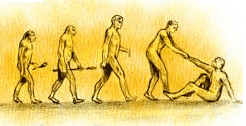
As a biologist, I see belief in God-given morality as American's biggest impediment to accepting the fact of evolution. “Evolution,” many argue, “could never have given us feelings of kindness, altruism and morality. For if we were merely evolved beasts, we would act like beasts. Surely our good behavior, and the moral sentiments that promote it, reflect impulses that God instilled in our soul.”

So while morality supposedly comes from God, immorality is laid at the door of Charles Darwin, who has been blamed for everything from Nazism to the shootings in Columbine.

More here.

A Syrian Activist Continues the Fight From Lebanon

Josh Wood in the Boston Review:

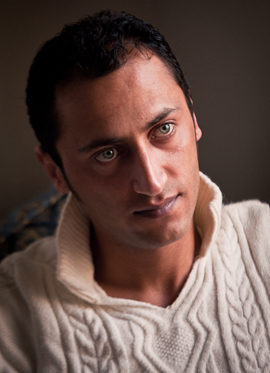
Wood_36_4_portrait One night last January, Rami Nakhle bounced toward the Lebanese border on the back of a motorcycle. A gang of smugglers—the kind who usually transport guns, drugs, fuel, and more mundane commodities—had agreed to take him from Homs, Syria, to Beirut, less than one hundred miles away.

To get out of Syria, Rami had promised to pay $1,500—six months’ salary for the average Syrian—cash to be paid on arrival, by a friend. The smugglers ordered him to ditch his small bag by the side of the road and proceed with only the clothes on his back, though this may have been a trick to cheat him out of his belongings. Smugglers can be dangerous people to deal with, but it was a risk worth taking. Rami had just been discovered by the Syrian security services. He had few options but to leave.

On a dirt track leading to the border, Rami waited with one of the smugglers until after dark. When the lights of the nearby Syrian military outpost finally flickered off, the pair inched toward the border. Everything was going according to plan.

More here.

Thursday Poem

Gratitude to Old Teachers

When we stride or stroll across the frozen lake,
We place our feet where they have never been.
We walk upon the unwalked. But we are uneasy.
Who is down there but our old teachers?

Water that once could take no human weight-
We were students then-holds up our feet,
And goes on ahead of us for a mile.
Beneath us the teachers, and around us the stillness.

by Robert Bly
from Eating the Honey of Words, 1999

HarperCollins Publishers, New York, NY

Breaking the Spell of Money

Scott Russell Sanders in Orion Magazine:

Money_tree021 Why are those of us in the richest countries acting in such a way as to undermine the conditions on which our own lives, the lives of other species, and the lives of future generations depend? And why are we so intent on coaxing or coercing the poorer countries to follow our example? There are many possible answers, of course, from human shortsightedness to selfish genes to otherworldly religions to consumerism to global corporations. I would like to focus on a different one—our confusion of financial wealth with real wealth. To grasp the impact of that confusion, think of someone you love. Then recall that if you were to reduce a human body to its elements—oxygen, carbon, phosphorus, copper, sulfur, potassium, magnesium, iodine, and so on—you would end up with a few dollars’ worth of raw materials. But even with inflation, and allowing for the obesity epidemic, this person you cherish still would not fetch as much as ten dollars on the commodities market. A child would fetch less, roughly in proportion to body weight.

Such calculations seem absurd, of course, because none of us would consider dismantling a human being for any amount of money, least of all someone we love. Nor would we entertain the milder suggestion of lopping off someone’s arm or leg and putting it up for sale, even if the limb belonged to our worst enemy. Our objection would not be overcome by the assurance that the person still has another arm, another leg, and seems to be getting along just fine. We’d be likely to say that it’s not acceptable under any circumstances to treat a person as a commodity, worth so much per pound. And yet this is how our economy treats every portion of the natural world—as a commodity for sale, subject to damage or destruction if enough money can be made from the transaction.

More here.

King Tut and half of European men share DNA

From PhysOrg:

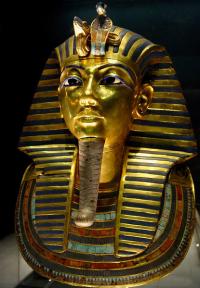
Tuthankamen According to a group of geneticists in Switzerland from iGENEA, the DNA genealogy center, as many as half of all European men and 70 percent of British men share the same DNA as the Egyptian Pharaoh Tutankhamun, or King Tut. For a film created for the Discovery Channel, scientists worked to reconstruct the DNA of the young male King, his father Akhenaten and his grandfather Amenhotep III. They discovered that King Tut had a DNA profile that belongs to a group called haplogroup R1b1a2. This group can be found in over 50 percent of European men and shows the researchers that there is a common ancestor. This genetic profile group is also found in 70 percent of Spanish males and 60 percent of French males however, it is only present in less than one percent of men in modern-day Egyptian men.

The R1b1a2 DNA haplogroup is believed to have originated in the Black Sea region some 9500 years ago and spread to Europe with the spread of agriculture in 7000BC. Researchers are unsure as to how and when the group first came to Egypt. They believe the reasoning the R1b1a2 haplogroup is rarely found in modern-day Egypt is due partially to European immigration throughout the last 2000 years.

More here.

Wednesday, August 3, 2011

Turkish Women, West German Feminists, and the Gendered Discourse on Muslim Cultural Difference

Chin-200x200 Rita Chin in Eurozine:

Since the 1950s, a massive influx of labour migrants has dramatically transformed the demographic makeup of Europe. Whether they came as guest workers or former colonial subjects, migrants from North Africa, South Asia and Turkey produced the first significant Muslim communities within Europe. During the half century that these groups have resided in Europe, the national debates about their presence have changed radically. Broadly speaking, public discussions initially focused on the economic manpower and the impact of employing migrants on the native working class. As Europeans began to acknowledge that temporary labourers had become permanent residents, political discourse shifted to migrants' cultural differences based on their nationality. Since the 1990s, the emphasis has been on religion (especially Islam) as the primary characteristic that separates these migrants from the societies in which they reside. “Islamophobia”, in short, has emerged as “the defining condition of the new Europe”.[1]

A striking aspect of contemporary European debates about immigrants is the focus on the Muslim woman as a key figure through which objections to Islamic difference have been articulated. This gendered framing of difference is not a new phenomenon. Indeed, the distinctive gender norms of postwar migrants became a major theme once significant numbers of family reunions had taken place in the early 1970s. But recent pronouncements by figures such as the Somali-Dutch politician Ayaan Hirsi Ali and the Turkish-German sociologist Necla Kelek about the place of women in Islam have inflamed the debate.[2] Their highly sensational testimonials of female oppression under Islam have fuelled the tendency to characterize tensions between Muslim immigrants and Europeans as irresolvable. Muslim gender relations now serve as the most telling symptom of the supposedly intractable clash between European civilization and Islam.

Precisely because sexual politics plays such a critical role in defining the terms of the current pessimism about Muslims in Europe, it is important to trace when and how this process began, especially in relation to the shifting national public discourses on labour migrants over the past fifty years.

The Traitor

MalaparteCurzio Malaparte translated by Walter Murch in the LRB (photo from wikipedia):

In February 1942 during the Siege of Leningrad I found myself attached to General Edqvist, the commander of a division of Finnish troops stationed near Lake Ladoga. One morning he asked me to pay him a visit.

We have just taken 18 Spanish prisoners, he said.

Spanish? I said. Now you’re at war with Spain?

I don’t know anything about that, he said. But I have 18 prisoners who speak Spanish and claim they are Spanish, not Russian.

Very strange.

We have to interrogate them. Of course, you speak Spanish.

No, actually I don’t.

Well, you’re Italian, so you’re more Spanish than I am. Go interrogate them.

I did as I was told. I found the prisoners under guard in barracks. I asked whether they were Russian or Spanish. I spoke in Italian, slowly, and they answered in Spanish, slowly, and we understood each other perfectly.

We are soldiers in the Soviet army, but we are Spanish.

One of them went on to say that they were orphans of the Spanish Civil War; their parents had been killed in the bombardments and reprisals. One day they were all put on board a Soviet ship in Barcelona and sent to Russia, where they were fed and clothed, where they learned a trade, and where they eventually became soldiers in the Red Army.

But we are Spanish.

In fact, I remembered reading at the time that the Russians had evacuated thousands of Red Republican children to the USSR to save them from the bombardments and famine of the Spanish Civil War.

Hawking and God on the Discovery Channel

Sean Carroll over at Cosmic Variance:

Last week I got to spend time in the NBC studio where they record Meet The Press — re-decorated for this occasion in a cosmic theme, with beautiful images of galaxies and large-scale-structure simulations in the background. The occasion was a special panel discussion to follow a Stephen Hawking special that will air on the Discovery Channel this Sunday, August 7. David Gregory, who usually hosts MTP, was the moderator. I played the role of the hard-boiled atheist; Paul Davies played the physicist who was willing to entertain the possibility of “God” if defined with sufficient abstraction, while John Haught played the Catholic theologian who is sympathetic to science.

The Hawking special is the kick-off episode to a major new Discovery program, called simply Curiosity. I predict it will make something of a splash. The reason is simple: although most of the episode is about science, Hawking clearly goes all-in with “God does not exist.” It’s not a message we often hear on American TV.

treme and authenticity

Treme7-thumb-572xauto-117809

So, as to Treme the drama, Simon bought the framework of touristic mystification hook, line and sinker. He was not helped by his dependence on local writers like Elie and others who are embedded in the touristically reinvented discourse of New Orleans’s distinctiveness that is no longer capable of recognizing and reflecting critically on itself and can do no more than celebrate its black inflection. Simon was also undone by not having a clear critical perspective on neoliberal capitalism – as either free-market utopian ideology or pragmatic program for relentless upward redistribution – and its logic of systemic reproduction. He has a brilliant feel for the social and institutional impact of deindustrialization on cities and the urban working class at both individual and group levels. He portrayed that impact with truly rare grace and intelligence in The Wire. But he lacks a coherent view of the larger forces that drive deindustrialization, which he is inclined instead to characterize in moralistic terms. In The Wire this tendency extends to reifying the moment of postwar working-class economic mobility as a Golden Age, a natural moral order which greedy, self-centered or insensitive corporate elites and their minions have violated. Simon was thus primed to lap up the touristic narrative of cultural authenticity. Since Katrina, that narrative has swirled together with the powerful imagery of an impoverished and abandoned black New Orleans, victimized by racialized inequality and injustice. Despite its symbolic power, that imagery was in some ways more apparent than real. For example, blacks were displaced by the flood at only a slightly higher rate than whites.11 And it was poor people of every race who were disproportionately stranded on overpasses and at the Superdome or convention center and who have had greatest difficulty in returning to the city, restoring losses and reconstructing a normal life. Although news footage of stranded black New Orleanians immediately called forth a familiar narrative of racial injustice, the immediacy and certainty with which perception of those images linked to this narrative contrasted with an utter vagueness concerning causal processes through which the inequalities are reproduced and why, therefore, they are most accurately or effectively characterized as specifically racial.

more from Adolf Reed, Jr. at nonsite here.

they’re crazy!

Images

Opposing sides in political debates often characterize one another as crazy, or a bit more politely, “irrational.” John McCain, for example, recently said that the view of opponents of the debt-limit increase was “worse than foolish” and “bizzaro.” Paul Krugman suggested that President Obama’s desire to compromise on the debt-limit might be “obsessive and compulsive.” Even Elizabeth Drew, reporting on the debt-limit process, writes, “Were they all insane? That’s not a far-fetched question.” In less vivid terms, the claim is typically that a rival group’s thinking is dominated by a mind-muddling ideology that cannot be supported by rational argument. People are, of course, frequently irrational; they ignore obvious facts or make silly mistakes in reasoning. But the mere failure to support some of your basic claims with good logical arguments does not show that you are irrational. Any argument requires premises that it assumes and does not prove. We may construct a further argument for an unproven premise, but that argument will itself have unproven premises. That’s why even mathematics, the most thoroughly rational enterprise we have, begins with unproven axioms.

more from Gary Gutting at The Opinionater here.

brief and heart-breaking glimpses into someone’s existence

Oranges_postcard_jpg_470x397_q85

Here it is already August and I have received only one postcard this summer. It was sent to me by a European friend who was traveling in Mongolia (as far as I could deduce from the postage stamp) and who simply sent me his greetings and signed his name. The picture in color on the other side was of a desert broken up by some parched hills without any hint of vegetation or sign of life, the name of the place in characters I could not read. Even receiving such an enigmatic card pleased me immensely. This piece of snail mail, I thought, left at the reception desk of a hotel, dropped in a mailbox, or taken to the local post office, made its unknown and most likely arduous journey by truck, train, camel, donkey—or whatever it was— and finally by plane to where I live. Until a few years ago, hardly a day would go by in the summer without the mailman bringing a postcard from a vacationing friend or acquaintance. Nowadays, you’re bound to get an email enclosing a photograph, or, if your grandchildren are the ones doing the traveling, a brief message telling you that their flight has been delayed or that they have arrived. The terrific thing about postcards was their immense variety.

more from Charles Simic at the NYRB here.

The Angel of Forgetfulness: On the Fiftieth Anniversary of Catch-22

From The Paris Review:

BLOG_Heller In the early 1970s, during the period he was writing his second novel, Something Happened, Joseph Heller, approaching his fifties, fretted about his health. He was shocked by how bloated he looked in mirrors. The double chins in his publicity photos bothered him. He began working out regularly at a YMCA in the sixties on Broadway in Manhattan, running four miles a day on a small track there. “The Angel of Death is in the gym today,” said the Y’s patrons every so often. Not infrequently, ambulance crews showed up to cart away, on a stretcher, an elderly man in a T-shirt and shorts who had collapsed while running or doing chin-ups. While exercising, Heller avoided meeting anyone’s eyes. He pursued his laps with grim seriousness. He worried about the slightest ache or twinge—in his lower back, bladder, calves, the tendons of his ankles, or bottoms of his feet. Sometimes, faint vertical pains shot through his chest and up through his collarbone. This was a hell of a way to try to feel better. In this melancholy spirit (stretching, rolling his arms to ease the needling pains), he squirreled away portions of Something Happened in a locker at the Y, in case fire ran through his apartment or his writing studio, or he keeled over one day. In the spring of 1974—a fit fifty-one-year-old—he completed the manuscript to his satisfaction and decided to copy it for his agent. He took his teenage daughter, Erica, with him to the copy shop. “I figured if a car hit me, if I got mugged, or if I dropped dead of a heart attack, the manuscript might still be saved,” he later told Erica.

“I asked him what would happen if he had a heart attack and I got run over,” she recalls.

“Then we’re both in trouble,” Heller told her.

More here.

As We Seek Nature, We Wall It Out

Diane Ackerman in The New York Times:

Ackerman_img-popup Graced by beautiful rings and ridges on their shells, diamondbacks look like a field of galaxies on the move. They inhabit neither freshwater nor sea, but the brackish slurry of coastal marshes. Mating in the spring, they need to lay their eggs on land, so in June and July they migrate to the sandy dunes of Jamaica Bay. The shortest route leads straight across the tarmac at Kennedy International Airport. Never mess with a female ready to give birth. On June 29, more than 150 diamondback terrapins scuttled across Runway No. 4, delaying landings, halting takeoffs, foiling air traffic controllers, crippling timetables and snarling traffic for hours. Cold-blooded reptiles they may be, but they are also ardent and single-minded. Don’t the plucky turtles notice the jets? Probably not as monsters. Even with polka-dot necks stretched out, diamondbacks don’t peer up very high. And unlike, say, lions, they don’t have eyes that dart after fast-moving prey. So the jets probably blur into background — more of a blowy weather system than a threat. But planes generate a lot of heat, and the turtles surely find the crossing stressful.

Mounted on the shoreline of Jamaica Bay and a federally protected park, indeed almost surrounded by water, J.F.K. occupies land where wildlife abounds, and it’s no surprise that planes have collided with gulls, hawks, swans, geese, and osprey. Or that every summer there’s another turtle stampede, sometimes creating two-hour delays. People around the world became obsessed with the plight of the quixotic turtles, a drama biblical in its proportions (slow, sweater-necked Samsons vs. steely Goliaths). It defied reason that small reptiles would take on whirring leviathans whose gentlest tap may crush them and whose breath can blow them to kingdom come. Many people also felt a quiver of disquiet, of something elemental out of place. Supposedly, in our snug, walled-in cities, we’re keeping nature in check, growing docile plants, adopting pets and erecting a buffer of steel and cement. If wild turtles can find their way into suburbia, can larger animals be far behind, ones with fangs and teeth, whose red eyes pierce the night? The answer is yes; it happens more often than one supposes.

More here.