A Palestinian Peacemaker Gives Up on Politics

Avner Inbar and Assaf Sharon in the Boston Review:
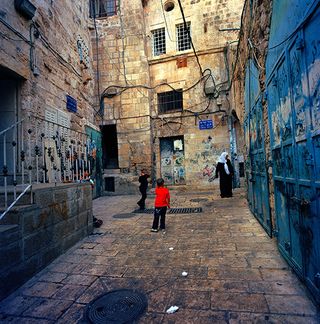
Inbar_36_4_palestine In the summer of 1988 Israeli authorities arrested Faisal Husseini, the Palestinian leader of East Jerusalem. The arrest came after the Israelis discovered in Husseini’s office a draft proposal for a unilateral declaration of Palestinian statehood. The document was part of an effort by the West Bank leadership to chart a political path following the eruption of the popular uprising, the intifada. Asked for his opinion of the Husseini document, the distinguished Palestinian philosopher and peace activist Sari Nusseibeh said, “The idea of declaring independence is becoming more necessary by the day. Our state will not arrive by registered mail to the main post office on Salah-al-Din street. It has to be created in stages.”

Almost a quarter century and many such stages later, the Palestinian leadership is better prepared than ever for independence. The Palestinians have been steadily building political and economic institutions in the West Bank, and just a few weeks ago Hamas and Fatah agreed to end a five-year feud and unify control of the West Bank and Gaza. Recent statements by the United Nations, World Bank, and International Monetary Fund declaring that the Palestinians are ready for statehood verify the success of these efforts. Given his past positions, Nusseibeh—now President of Al-Quds University in Jerusalem—could be expected to support these developments and the declaration of Palestinian independence scheduled for September. Yet his new book, What Is a Palestinian State Worth?, defies such expectations.

More here.
Is Islam Compatible with Capitalism?

From City Journal:

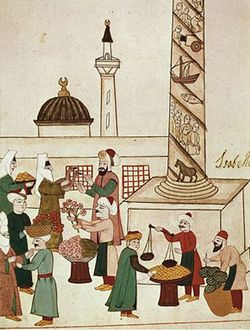
Arab Muslim economies haven’t always been low achievers. In his seminal work The World Economy, economist Angus Maddison showed that until the twelfth century, per-capita income was much higher in the Muslim Middle East than in Europe. Beginning in the twelfth century, though, what Duke University economist Timur Kuran calls the Long Divergence began, upending this economic hierarchy, so that by Rifaa’s time, Europe had grown far more powerful and prosperous than the Arab Muslim world. A key factor in the divergence was Italian city-states’ invention of capitalism—a development that rested on certain cultural prerequisites, Stanford University’s Avner Greif observes. In the early twelfth century, two groups of merchants dominated Mediterranean sea trade: the European Genoans and the Cairo-based Maghrebis, who were Jewish but, coming originally from Baghdad, shared the cultural norms of the Arab Middle East. The Genoans outpaced the Maghrebis and eventually won the competition, Greif argues, because they invented various corporate institutions that formed the core of capitalism, including banks, bills of exchange, and joint-stock companies, which allowed them to accumulate enough capital to launch riskier but more profitable ventures. These institutions, in Greif’s account, were an outgrowth of the Genoans’ Western culture, in which people were bound not just by blood but also by contracts, including the fundamental contract of marriage. The Maghrebis’ Arab values, by contrast, meant undertaking nothing outside the family and tribe, which limited commercial expeditions’ resources and hence their reach. The bonds of blood couldn’t compete with fair, reliable institutions (see “Economics Does Not Lie,” Summer 2008).

Greif’s theory suggests that cultural differences explain economic development better than religious beliefs do. Indeed, from a strictly religious perspective, one could view Muslims as having an advantage at creating wealth. After all, Islam is the only religion founded by a trader—one who also, by the way, married a wealthy merchant.The Koran has only good words for successful businessmen. Entrepreneurs must pay a 2.5 percent tax, the zakat, to the community to support the general welfare, but otherwise can make money guilt-free. Private property is sacred, according to the Koran. All this, needless to say, contrasts with the traditional Christian attitude toward wealth, which puts the poor on the fast track to heaven and looks down in particular on merchants (recall Jesus’s driving them from the Temple).

More here.

The Golden Years, Polished With Surgery

From The New York Times:

Cos At age 83, Marie Kolstad has a rich life. She works full time as a property manager and keeps an active social calendar, busying herself with 12 grandchildren and 13 great-grandchildren. But one thing needed improvement, she decided: her figure. At her age, she said, “your breasts go in one direction and your brain goes in another.” So on July 22, Ms. Kolstad, a widow who lives in Orange County, Calif., underwent a three-hour breast lift with implants, which costs about $8,000. “Physically, I’m in good health, and I just feel like, why not take advantage of it?” said Ms. Kolstad. “My mother lived a long time, and I’m just taking it for granted that that will happen to me. And I want my children to be proud of what I look like.”

Ms. Kolstad is one of many septuagenarians, octogenarians and even nonagenarians who are burnishing their golden years with help from the plastic surgeon. According to the American Society for Aesthetic Plastic Surgery, in 2010 there were 84,685 surgical procedures among patients age 65 and older. They included 26,635 face-lifts; 24,783 cosmetic eyelid operations; 6,469 liposuctions; 5,874 breast reductions; 3,875 forehead lifts; 3,339 breast lifts and 2,414 breast augmentations. Except for a brief turndown during the recession, those numbers have been rising for years now, and experts say the trend seems likely to accelerate as baby boomers begin to pass age 65. But the increase also has raised concerns about safety and the propriety of performing invasive elective surgery on older patients, who may suffer unintended physical and psychological consequences.

More here.

Tuesday Poem

Epilogue

We all live in darkness, kept apart from each other
by walls easily crossed but full of fake doors;
money drawn for light spending on friends or love
our arguments
about the inexhaustible don't even graze it
just when it's time to start talking again, and take
a different road to get to the same place.
We have to get used to knowing how
to live from day to day, each one on his own
as in the best of all possible worlds.
Our dreams prove it: we're cut off.
We can feel for each other,
and thats more than enough: that's all, and it's hard
to bring our stories closer together
trimming off from the excess we are,
to get our minds off the impossible and on the things
we have in common,
and not to insist, not to insist too much:
to be a good storyteller who plays his role
between clown and preacher.

by Enrique Lihn
from The Dark Room and Other Poems
New Directions Books 1978
translation: Jonathan Cohen, John Felstiner and David Unger

Monday, August 8, 2011

Sunday, August 7, 2011

Getting Bin Laden

From The New Yorker:

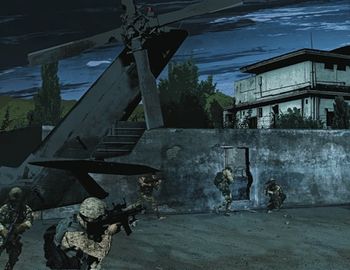
Bin l Shortly after eleven o’clock on the night of May 1st, two MH-60 Black Hawk helicopters lifted off from Jalalabad Air Field, in eastern Afghanistan, and embarked on a covert mission into Pakistan to kill Osama bin Laden. Inside the aircraft were twenty-three Navy SEALs from Team Six, which is officially known as the Naval Special Warfare Development Group, or DEVGRU. A Pakistani-American translator, whom I will call Ahmed, and a dog named Cairo—a Belgian Malinois—were also aboard. It was a moonless evening, and the helicopters’ pilots, wearing night-vision goggles, flew without lights over mountains that straddle the border with Pakistan. Radio communications were kept to a minimum, and an eerie calm settled inside the aircraft.

Fifteen minutes later, the helicopters ducked into an alpine valley and slipped, undetected, into Pakistani airspace. For more than sixty years, Pakistan’s military has maintained a state of high alert against its eastern neighbor, India. Because of this obsession, Pakistan’s “principal air defenses are all pointing east,” Shuja Nawaz, an expert on the Pakistani Army and the author of “Crossed Swords: Pakistan, Its Army, and the Wars Within,” told me. Senior defense and Administration officials concur with this assessment, but a Pakistani senior military official, whom I reached at his office, in Rawalpindi, disagreed. “No one leaves their borders unattended,” he said. Though he declined to elaborate on the location or orientation of Pakistan’s radars—“It’s not where the radars are or aren’t”—he said that the American infiltration was the result of “technological gaps we have vis-à-vis the U.S.” The Black Hawks, each of which had two pilots and a crewman from the 160th Special Operations Aviation Regiment, or the Night Stalkers, had been modified to mask heat, noise, and movement; the copters’ exteriors had sharp, flat angles and were covered with radar-dampening “skin.”

The SEALs’ destination was a house in the small city of Abbottabad, which is about a hundred and twenty miles across the Pakistan border.

More here.

Traces of humanity: What aliens could learn from the stuff we’ve left in space

From The Boston Globe:

Moon If you were to visit the moon today, in the neighborhood of the Apennine mountain range, you would find a small figurine, about the same size and shape as a Lego minifigure, lying facedown in the lunar dust. Unauthorized by NASA, this “Fallen Astronaut” sculpture was placed there exactly 40 years ago this past week by astronauts David Scott and James Irwin of Apollo 15, and sits alongside a tiny plaque listing the names of 14 astronauts and cosmonauts who had died during their time in their respective space programs. This haunting miniature memorial is only one of the many artifacts and messages that human beings have deliberately sent into space, or left there, as a symbol of our presence. On Earth, most of human history has involved unconsciously leaving traces of our existence, from garbage to aqueduct ruins. But when we go into space, we can begin to make choices about what we leave to posterity.

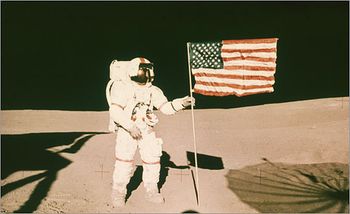
Even in space, where none of us live, some of what we’ve left is space junk: stuff orbiting the earth that nobody particularly intended to leave anywhere. But much of what we’ve left in space is intentional. Some of it is symbolic artifacts intended for an audience of people here on Earth – the fallen astronaut, the American flag on the moon, a CD containing a list of over half a million people who wanted to send their names to a comet, courtesy of a NASA probe. In some cases, however, we are also sending a deliberate signal out beyond Earth, to be received by forces unknown. Rather than just listening for radio signals, which has been a staple of the Search for Extraterrestrial Intelligence, some earthlings have become interested in actively reaching out – broadcasting radio messages to anyone, or anything, out there that might be able to hear them.

More here.

Sunday Poem

Funk Lore

We are the blues
ourselves
our favorite
color
Where we been, half here

half gone

We are the blues
our selves
the actual
Guineas
the original
Jews
the 1st
Caucasians

That's why we are the blues
ourselves
that's why we
are the
actual
song

So dark & tragic
So old &
Magic

that's why we are
the Blues
our Selves
In tribes of 12
bars
like the stripes
of slavery
on
our flag
of skin

We are the blues
the past the gone
the energy the
cold the saw teeth
hotness
the smell above
draining the wind
through trees
the blue
leaves us
black
the earth
the sun
the slowly disappearing
the fire pushing to become
our hearts

& now black again we are the
whole of night
with sparkling eyes staring
down
like jets
to push
evenings
ascension
that's why we are the blues
the train whistle
the rumble across
the invisible coming
drumming and screaming
that's why we are the
blues
& work & sing & leave
tales & is with spirit
that's why we are
the blues
black & alive
& so we show our motion
our breathing
we moon
reflected soul

that's why our spirit
make us

the blues

we is ourselves

the blues

by Amiri Baraka
from Funk Lore, Littoral Books, 1996

The General Leaves His Labyrinth

by Hasan AltafMinotaur

There is, I imagine, no one on earth whose understanding of the past is completely without bias, but this problem must be particularly acute when it comes to those who, once upon a time, were responsible for creating that past: those who could change, in ways however small, the course of events, who could, or imagined they could, control whatever forces were in play, who could and did shape history. Maybe it would be best to take their versions of events with not just a grain of salt but also a pinch of pity, because for them, the stakes of this game must be higher than they are for the rest of us. They made the world we have today; all we have to do is live in it.

Evidence of this phenomenon has been ample of late (everyone writes a memoir, everyone gets the chance to plead their case before the cameras), but it became especially clear to me when former President Pervez Musharraf – the “enlightened moderate” of Pakistan’s early aughts, the dictator who dressed as a democrat only to find that he had no clothes at all – came to Washington. (World tours are a favorite pastime of both Pakistani politicians and ex-leaders, and Washington is one of the top destinations.)

Read more »

Saturday, August 6, 2011

the vanguard of a world with no history

Tumblr_lp9v2qMPlE1qhwx0o

Rock ‘n’ roll books have their own special set of challenges, the most important being: try not to reduce the wily, ridiculous, vibrant music of rejects and losers into a dry, studied word paste. But on the other hand, don’t try to mimic its high-energy squall with language either. Best not to engage with the music on that level at all; instead, point the tape recorder or pen in the direction of its makers and artists (but not its drummers … just kidding!), and let them tell stories about “what it was like.” Granted, Kids of the Black Hole: Punk Rock in Postsuburban California is a sociology book, published by a university press, and the subjects that lend themselves best to study within this framework are the followers, the scenesters, the kids at the shows, the fanzine scribes, and the promoters, who sometimes made stupid rules and liked to squabble about what punk was and wasn’t. When the attention turns, however briefly and sporadically, toward the musicians themselves, a different punk history emerges — one that’s more eccentric and contradictory and endlessly weird, and one that starts to answer the question of why people started these bands anyway. What “made” the Screamers happen? In the face of universal apathy or scorn, when there was no place to play and when no one cared, what made them make the unusual sounds that so enthralled some people and so baffled others?

more from Grace Krilanovich at the LA Review of Books here.

bayes’s theorem

Paulos-articleInline

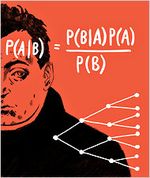
Sharon Bertsch McGrayne introduces Bayes’s theorem in her new book with a remark by John Maynard Keynes: “When the facts change, I change my opinion. What do you do, sir?” Bayes’s theorem, named after the 18th-century Presbyterian minister Thomas Bayes, addresses this selfsame essential task: How should we modify our beliefs in the light of additional information? Do we cling to old assumptions long after they’ve become untenable, or abandon them too readily at the first whisper of doubt? Bayesian reasoning promises to bring our views gradually into line with reality and so has become an invaluable tool for scientists of all sorts and, indeed, for anyone who wants, putting it grandiloquently, to sync up with the universe. If you are not thinking like a Bayesian, perhaps you should be. At its core, Bayes’s theorem depends upon an ingenious turnabout: If you want to assess the strength of your hypothesis given the evidence, you must also assess the strength of the evidence given your hypothesis.

more from John Allen Paulos at the NYT here.

no single true morality?

C5460202-bee0-11e0-b69f-00144feabdc0

So is this, as it has been described, the most significant contribution to moral philosophy for well over a century? Or is it a monument to a misdirected programme? Like most work on moral philosophy, On What Matters is divided between two distinct areas. There are theories within ethics, telling us what our values should be or what the contours of our rights and duties are. These are theories in what is known as first-order moral philosophy. Its aim has often been to reduce the teeming plurality of rights and duties, obligations and benefits to some kind of order. At the limit there might be either a small number of principles or even one unique principle, from which everything else could be derived. Hence we find suggestions such as the Golden Rule, John Stuart Mill’s principle of maximising utility, or Kant’s categorical imperative. But we also find writers such as Isaiah Berlin or Bernard Williams, who mistrust all this tidiness and insist, instead, on the irreducible plurality of virtues or the inevitability of insoluble dilemmas as different obligations conflict and jar against each other. Classical tragedy is especially concerned with such conflicts and their insoluble nature. The other branch of the subject consists of second-order theories, telling us something about the status of first-order pronouncements. In this area, often called meta-ethics, notions such as objectivity, knowledge, truth, proof, and reason are used to debate the nature of first-order claims. If I pronounce, for example, that vanity is a sin, could my remark count as objective and perhaps true, or even known to be true, by the light of reason? This is Parfit’s view, rationalism. Or am I more in the business of expressing an attitude or encouraging a sentiment of disapprobation of vanity, voicing a stance rather than describing a fact?

more from Simon Blackburn at the FT here. here

.

The Great Partnership: God, Science and the Search for Meaning

Ziauddin Sardar in The Independent:

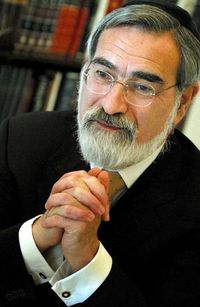
Sacks We need all of our brain to understand and appreciate the world around us. The left-brain, associated largely with scientific activity, and the right hemisphere concerned with religious matters, must work in unison. But they also have to be kept apart. The logic of one does not apply to the other. The challenge of our time is to keep the two separate but integrated and in balance. This, in essence, is the main message of The Great Partnership.

The learned and humane Jonathan Sacks normally speaks from within the Jewish tradition. But here he is much more inclusive, drawing from Judaism, Christianity and, he claims, Islam. He emphasises that the foundations of all three faiths rests on a personal God who created the universe in love and endowed all of us with the dignity of His image. His erudition is extensive. We are leisurely taken on a tour of sacred and poetic texts of Judaism and Christianity, as well as the thoughts of noted atheists and old-fashioned and postmodern philosophers. Sacks is not interested in proving the existence of God. He engages in a conversation, “a sustained argument for the sake of heaven”, to demonstrate that it is quite possible for a rational person to hold religious beliefs. Writing in the tradition of 18th-century religious philosophers, such as William Paley, Sacks hopes to promote tolerance and civility. The real urgent conflict, he suggests, is not between different kinds of belief and non-belief, but between militant dogmas, and their champions, of all varieties.

More here.

Vita and Violet: The Greatest Bloomsbury Love Story

From The New York Times:

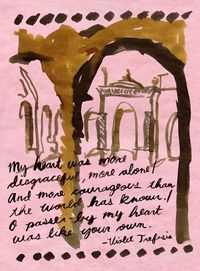
BENTLEY-popup-v2 “Heaven preserve us from all the sleek and dowdy virtues, such as punctuality, conscientiousness, fidelity and smugness!” So wrote Violet Keppel in her unruly call to arms to the great ruling passion of her life, Vita Sackville-West. “What great man was ever constant? What great queen was ever faithful? Novelty is the very essence of genius and always will be. If I were to die tomorrow, think how I should have lived!” And indeed, how this woman, this “unexploded bomb,” as Vita called her, “lived!”

Sir Michael De Courcy Fraser Holroyd, biographer supreme of Lytton Strachey, George Bernard Shaw and the painter Augustus John, among others, tells the much-told tale of Violet and Vita yet again, in “A Book of Secrets: Illegitimate Daughters, Absent Fathers,” but with more depth and context than anyone has before. And he tells us oh so much more besides the fascinating story of “the three V’s” of Bloomsbury — for wherever go the glamorous and flamboyant Violet and Vita, Virginia, in her blue stockings, ambles nearby, pen at hand.

More here.

Saturday Poem

A Green Crab's Shell

Not, exactly, green:
closer to bronze
preserved in kind brine,

something retrieved
from a Greco-Roman wreck,
patinated and oddly

muscular. We cannot
know what his fantastic
legs were like –

though evidence
suggests eight
complexly folded

scuttling works
of armament, crowned
by the foreclaws'

gesture of menace
and power. A gull's
gobbled the center,

leaving this chamber
–size of a demitasse-
open to reveal

a shocking, Giotto blue,
Though it smells
of seaweed and ruin,

this little traveling case
comes with such lavish lining!
Imagine breathing

surrounded by
the brilliant rinse
of summer's firmament.

What color is
the underside of skin?
Not so bad, to die,

if we could be opened
into this–
if the smallest chambers

of ourselves,
similarly,
revealed some sky.

by Mark Doty
from Atlantis
Harper Perennial, 1995

Friday, August 5, 2011

animulae vagulae

TLS_Fraser_739413a

A short tally might be taken of English poets who witnessed with their own eyes a hanging, drawing and quartering. Among them would certainly be John Donne, a Roman Catholic by upbringing, closely related to some of the leading Catholic families in England. In his Pseudo-Martyr of 1610, Donne remarks that he has observed devout bystanders at the execution of a certain foreign Jesuit priest: “pray to him whose body lay there dead; as if hee had more respect, and better accession to heaven because he was a stranger, than those which were familiar had”. Five years after the book’s publication, Donne was ordained priest of the Church of England and almost immediately made a Royal Chaplain, rising in 1621 to the Deanship of St Paul’s Cathedral, in which capacities he delivered some of the most eloquent sermons ever to grace an Anglican pulpit. The most quoted is the Lenten address of 1630/31 known as “Deaths Duell”, preached before Charles I at Whitehall. In it he waxes amorous about the worm, through whose ecumenical digestion one is incestuously joined with one’s mother, sister or brother. London vermin had already feasted on Donne’s brother Henry, who in 1593 had expired in Newgate gaol after harbouring a Jesuit priest; they had just got to work on his mother – an industrious go-between for the Jesuits in her time – who had recently died in the deanery, a recusant to the very end. Her brothers Ellis and Jasper, Jesuits and exiles, fattened Continental worms.

more from Robert Fraser at the TLS here.