
Catherine Nicholson at the NY Times:
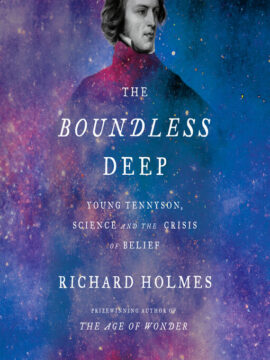 “My dear Fitz, Ain’t I a beast for not answering you before? Not that I am going to write to you now,” the 1847 letter begins. “My Book is out and I hate it and so no doubt will you.” It’s signed, “A. Tennyson.”
“Fitz” was Edward FitzGerald. His correspondent was his hapless friend Alfred. Both men were nearing 40. FitzGerald had family money, but Alfred was a semi-vagrant social misfit, prone to depression, awkward with women, addicted to his malodorous pipe and seemingly bent on squandering every particle of his abundant natural talent. Two early collections of verse had been largely well received by critics, but mostly Alfred wrote poems he didn’t publish, preferring to revise them obsessively and recite them — unrequested, and at great length — at parties.
Now, at long last, one of them had appeared in print. “The Princess: A Medley” is a blank-verse romance in seven books on the theme of higher education for women, its tone veering, in the author’s words, from “mock-heroic gigantesque” to “true-sublime.” Reviewers were baffled. “Eminently he is worthy to be the poet of our time,” wrote one. “Why does he not assume his mission?”
more here.
Enjoying the content on 3QD? Help keep us going by donating now.