Oh, the Places We Could Go

From The New York Times:

EarthThe high point was when I got to bomb Mars. In science fiction, wars between the Earth and her interplanetary colonies are a staple of the far future, but this was not that. Before we go to war with Mars, there has to be somebody living there to fight. Toward the end of the exhibition “Beyond Planet Earth: The Future of Space Exploration,” which opens at the American Museum of Natural History on Saturday, a visitor is confronted with a chance to help make the red planet, currently a frozen desert, livable.

Using an interactive screen the size and shape of a Ping-Pong table, you can play God and direct the future evolution of Mars. The first task is to thicken its atmosphere and warm it up by liberating carbon dioxide, a greenhouse gas, from its frozen soil and ice caps. You can bomb the planet — although, to my disappointment, you can’t aim the bombs — or you can spray black dust on the ice caps to make them absorb sunlight and melt faster. Both of these made me feel like a delightfully naughty 6-year-old boy. You can even build factories with tall smokestacks billowing exhaust. “I’m polluting Mars,” I exclaimed, eliciting sage chuckles from the museum staff members nearby. After all, we’ve been practicing that for 500 years on Earth. The idea of the space program as a museum show seemed wildly and gloomily appropriate when I first heard about it. We think of museums as being for old dead things, and the space program, at least the American space program, seems ready for its own diorama as the space shuttle shuts down, the Moon landings recede into ancient history, and space science is slowly dismantled by a prairie fire of budget cutting and wild cost overruns in the few programs that are left.

More here.
Monday, November 14, 2011

Sunday, November 13, 2011

Reclaiming the Republic: An Interview with Lawrence Lessig

Lawrence Lessig’s latest book, , represents both a departure from his previous work on intellectual property and an entrance into the world of political activism. He argues that Congress has become so corrupted by moneyed interests and has so undermined the public trust that our very republic is at risk. He seeks nothing less than a complete overhaul of our campaign-finance system.

David V. Johnson in the Boston Review:

Lessig_36_6_lobbyistDavid Johnson: Republic, Lost is about institutional corruption in Congress. In reading it, one impression I had is that it’s about so much more than just Congress. It’s really about our society. There are so many institutions that are suffering from the same corruption from moneyed interests.

Lawrence Lessig: Yes, and that’s not an accident. I run the Edmond J. Safra Center for Ethics at Harvard; we have launched a five-year research project focusing on institutional corruption generally. So this problem I describe in the context of Congress is just a particular instance of a more general dynamic in accounting, financial services, healthcare, academics, the media—you can pick your field—and we can describe a similar dynamic of corrupting influences that we’ve allowed to seep into the institution that distract it from what we think the institution is for.

DJ: If this is such a broad-based phenomenon, why isn’t it more obvious to people?

LL: Well, I actually think that outside of the academy it is obvious, but it’s not so obvious that it triggers people to react. I think of a metaphor to certain diseases like sleeping sickness, which the body just can never muster a sufficient immune response, and therefore it slowly brings the body down; that might be the case here.

More here.

Sunday Poem

A Rainy Morning

A young woman in a wheelchair,
wearing a black nylon poncho spattered with rain,
is pushing herself through the morning.
You have seen how pianists
sometimes bend forward to strike the keys,
then lift their hands, draw back to rest,
then lean again to strike just as the chord fades.
Such is the way this woman
strikes at the wheels, then lifts her long white fingers,
letting them float, then bends again to strike
just as the chair slows, as if into a silence.
So expertly she plays the chords
of this difficult music she has mastered,
her wet face beautiful in its concentration,
while the wind turns the pages of rain.

by Ted Kooser
from Delights and Shadows
Copper Canyon Press, 2004

Stephen Fry, Martin Amis, Salman Rushdie, Sean Penn and others unite to celebrate Hitchens

George Eaton in The New Statesman:

ScreenHunter_13 Nov. 13 11.13Richard Dawkins, Hitchens's fellow anti-theist, appeared on stage with Fry in London, and Martin Amis, his dearest friend, appeared via video link from New York, as did James Fenton and Salman Rushdie. The line-up also included actor Sean Penn (who Hitchens enjoys pool games with), former Harper's editor Lewis Lapham and novelist Christopher Buckley, son of the late conservative intellectual (whether there can be such a thing is a subject for another occasion) William F. Buckley, whom Hitchens often debated on US TV show Firing Line. It felt like a hyper-intelligent version of Question Time.

Wreathed in smoke clouds and looking as if he had just climbed out of bed, Penn (beamed in from LA) opened proceedings, discussing the political significance of The Trial of Henry Kissinger – Hitchens's account of the former US Secretary of State's “one-man rolling crime wave” – until the satellite link failed (“God damn you Google!” cried Fry). Regaining his composure, Fry welcomed Dawkins on stage. Dawkins and Hitchens are often spoken of as one entity (Terry Eagleton christened them “Ditchkins” in his 2009 polemic Reason, Faith and Revolution) but the former made an important distinction between their approaches. While Dawkins's hostility to religion is born of his commitment to science and free inquiry, Hitchens's reflects his moral outrage at what Dawkins called “a tyrannical God figure” and what Hitchens has described as a “celestial dictatorship”. In this regard, Hitchens's anti-theism is merely an extension of his anti-totalitarianism.

It was Buckley, who spoke recently of how Hitchens composed a Slate column in 20 minutes in his presence (as the late Anthony Howard, a former editor of the NS, told me last year, Hitchens can write at a speed that most people talk), who appeared next, recalling the moment Barbra Streisand “caught fire” at the Vanity Fair party hosted by Hitchens following the White House Correspondents' Dinner.

More here. You can buy and watch a video of the entire evening here.

Salman Rushdie’s dad’s humiliation in London

Danish Khan in the Pune Mirror:

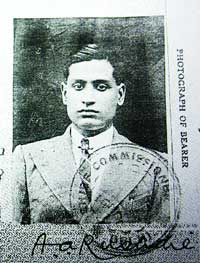
Cov012The eyes have the same intensity as his famously broody-eyed writer son but Salman Rushdie’s father Anis Ahmed Rushdie had an almost diametrically opposite reception in the United Kingdom from his illustrious son.

An investigation by this reporter reveals that unlike Sir Salman, knighted by Queen Elizabeth in 2007, his father Anis Ahmed Rushdie was shamed and nearly prosecuted in the UK in 1935 after it was revealed that his birth record details had been fudged to allow him to appear for the elite Indian Civil Service.

Despite his protestations of innocence and cultural misunderstanding Rushdie senior was dismissed from the ICS on this ground.

After graduating from Cambridge University, like his son did later, Anis Rushdie appeared for the ICS in 1932 and cleared the exam. But following inexplicable reasons he was not selected in 1932. He reappeared the next year and was ranked 4th overall. His troubles began when he was sent to England on the customary two-year probation and the British began scrutinising his records.

More here.

What next: A Sunni bomb?

Pervez Hoodbhoy in Bulletin of the Atomic Scientists:

HoodbhoyThe Islamic Republic of Iran stands at the threshold to the bomb. In 2010 it had more than enough low-enriched uranium (some 2,152 kilograms) to make its first bomb's worth of weapons-grade uranium. The LEU would have become highly enriched uranium in roughly 10 weeks had it been fed into the 4,186 centrifuges then operating. Thousands of other centrifuges are also known to be operating at the Natanz secret nuclear facility. Even if Iran had not received a bomb design from the so-called father of Pakistan's nuclear weapons program, A. Q. Khan, the six-decade-old physics of implosion devices would be no mystery to Tehran's sophisticated nuclear scientists. Iran now awaits only a political decision to make the bomb.

What if Iran chooses to cross the threshold? Among other likely consequences, an Iranian bomb would be a powerful stimulus pushing the Kingdom of Saudi Arabia to follow and seek the first Sunni bomb. The first, yes. Though also a Sunni-majority state, Pakistan built its bomb not for Islamic reasons, but to counter India's nuclear arsenal. In fact, Shiite-majority Iran enthusiastically hailed Pakistan's 1998 test of an atomic device. Clearly, the Iranian leadership did not see Pakistan's bomb as a threat.

But Sunni Saudi Arabia sees Shia Iran as its primary enemy. The two are bitter rivals that, post-Iranian revolution, have vied for influence in the Muslim world. Saudi Arabia has the world's largest petroleum reserves, Iran the second. Saudi Arabia is the biggest buyer of advanced US weapons and is run by expatriates. It is America's golden goose, protected by US military might. But fiercely nationalist Iran expelled US oil companies after the revolution and is building its own scientific base.

More here.

The Brontë sisters are always our contemporaries

From The Telegraph:

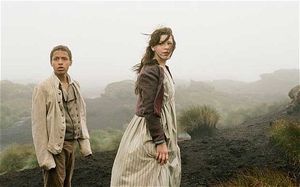
Wuthering-Heights_2053966cAs Ezra Pound said, literature is news that stays news. The great classics mutate to fit our preoccupations, revealing aspects of themselves that previous generations never suspected. Writers long dead come in and out of favour; reputations rise and fall. Who would have thought, in 1815, that the novelist now read and adored across the world would be, not Sir Walter Scott, but Jane Austen? And who, among the first readers of those astonishing books Jane Eyre and Wuthering Heights, would even begin to recognise the versions of them that 21st-century readers hold dear? The Brontës have transformed themselves over a century and a half, even if the ongoing fascination perhaps says more about us than it does about them. A tiny teenage manuscript of Charlotte’s is about to be sold, its value estimated at between £200,000 and £300,000, which is as good a measure of enthusiasm as any. And the release of new film versions of her and her sister Emily’s best-known books – Cary Fukanaga’s Jane Eyre and Andrea Arnold’s Wuthering Heights – offers an opportunity to think about how we have remade these books in our own image.

They were not always equally popular. Jane Eyre was an immediate bestseller, its vivid theatrical style making it a favourite to be turned into stage melodrama – as happened within a year of its publication in 1847. It has been filmed 20 times, from the very earliest days of the cinema. Wuthering Heights was slower to make its way. Although it, too, made a tremendous impact on publication, it was always regarded as very strong meat, one for the intelligentsia that would be resistant to dramatisation. Probably only after the two marvellous screen adaptations of the late 1930s – the Jane Eyre with Orson Welles as Rochester, and Laurence Olivier’s splendid turn as Heathcliff in Wuthering Heights – did the two attain popular parity.

But what do we think of them now?

More here.

Gloria Steinem: ‘I think we need to get much angrier’

Rachel Cooke in Guardian:

Gloria-steinem-007The last person to interview Gloria Steinem for the Observer was Martin Amis, in 1984. He waited for her at the offices of Ms, the magazine that she co-founded in 1972 – “Pleasant though I found it, I was also aware of my otherness, my testosterone, among all this female calm” – and then they headed out together to Suffolk County Community College, Long Island, where Gloria was, as ever, to address a group of students. To read this piece now is excruciatingly embarrassing, especially given Amis's more recent conversion to what he likes to call the “gynocracy”. Feminism? From the male point of view, he said back then, the reparations look to be alarmingly steep. As for Steinem herself, she is “the least frightening” kind of feminist, being possessed of – prepare to be amazed! – both a sense of humour and good looks. She was, he wrote, relief slowly blooming, “nice, and friendly, and feminine… the long hair is expertly layered, the long fingers expertly manicured. Fifty this year, Ms Steinem is unashamedly glamorous.”

A quarter of a century later, and Steinem is still glamorous: wildly so. But the point is surely that this glamour derives, just as it always did, as much from her extraordinary career – in other words, from her brain – as from her appearance (Mart unaccountably failed to spot this). At 77, she remains tiny of waist and big of hair – and, yes, the nails are as smooth and as shiny as a credit card – but what strikes you most, at least at first, is how preoccupied she seems. She is so busy. It has taken me the best part of two years to bag this slot with her, and even now I'm here, I'm uncertain how much time, in the end, she will have to spare. Does she remember who I work for? I can't tell. I have the impression that she believes I live in New York – and sure enough, when I eventually tell her that I've flown in from London, she looks first amazed, and then, quickly, solicitous. (She might be distracted, but Steinem is also famously nice.)

More here.

Saturday, November 12, 2011

Daniel Kahneman: The King of Human Error

Michael Lewis in Vanity Fair:

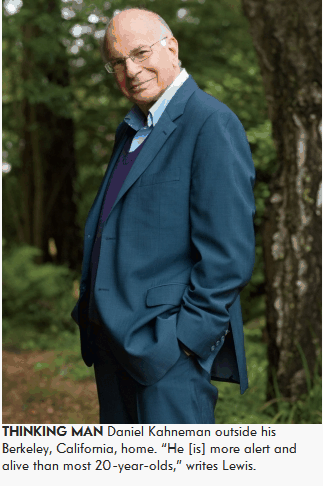
ScreenHunter_12 Nov. 12 17.36We’re obviously all at the mercy of forces we only dimly perceive and events over which we have no control, but it’s still unsettling to discover that there are people out there—human beings of whose existence you are totally oblivious—who have effectively toyed with your life. I had that feeling soon after I published Moneyball. The book was ostensibly about a cash-strapped major-league baseball team, the Oakland A’s, whose general manager, Billy Beane, had realized that baseball players were sometimes misunderstood by baseball professionals, and found new and better ways to value them. The book attracted the attention of a pair of Chicago scholars, an economist named Richard Thaler and a law professor named Cass Sunstein (now a senior official in the Obama White House). “Why do professional baseball executives, many of whom have spent their lives in the game, make so many colossal mistakes?” they asked in their review in The New Republic. “They are paid well, and they are specialists. They have every incentive to evaluate talent correctly. So why do they blunder?” My book clearly lacked a satisfying answer to that question. It pointed out that when baseball experts evaluated baseball players their judgment could be clouded by their prejudices and preconceptions—but why? I’d stumbled upon a mystery, the book reviewers noted, and I’d failed not merely to solve it but also to see that others already had done so.

More here.

Werner Herzog Goes ‘Into The Abyss’ of Capital Punishment

Ari Berman in The Nation:

ScreenHunter_11 Nov. 12 17.14Werner Herzog’s new film, Into The Abyss, opens with a shot of the Reverend Fred Lopez, chaplain of the “death house,” in Huntsville, Texas, standing in front of a field of crosses in a cemetery. There are no names on the concrete crosses, just numbers, signifying those who have been executed by the state of Texas. Herzog interviews Lopez an hour before he’s set to preside over yet another execution. “Why does god allow capital punishment?” Herzog asks Lopez. “I don’t know the answer,” Lopez responds.

Into The Abyss tells the story of a triple homicide that occurred ten years ago in Conroe, Texas, when a plan by two teenagers—Michael James Perry and Jason Burkett—to steal a red Chevy Camaro went horribly awry. Perry and Burkett were both convicted, and Perry was executed eight days after Herzog interviewed him. Though Herzog never says whether they committed the crimes, the evidence presented strongly points to their guilt. Innocence and guilt, however, is a secondary issue for Herzog when considering the morality of capital punishment. “A State should not be allowed – under any circumstance – to execute anyone for any reason,” he says. “End of story.”

Yet Herzog’s film is not a polemic, nor what he disparagingly refers to as an “issue film.” It’s about the impact of violent crime—whether carried out by Perry and Burkett or the state—on the perpetrators, the victims’ families, the broader community and the criminal justice system.

More here.

Taking a Walk to Remember

Sameer Reddy in the Wall Street Journal:

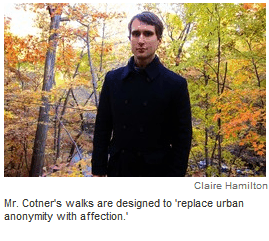
ScreenHunter_10 Nov. 12 16.38Nature and poetry share a long and loving history, as Walt Whitman's “Leaves of Grass” and Ralph Waldo Emerson's seminal essay “Nature,” can attest. So when the New York Botanical Garden was planning the dedication program for its Thain Family Forest, a lush swath of newly restored old-growth forest in the garden's northwest corner, it found a natural partner in the Poetry Society of America.

The Poetry Society, in turn, commissioned Jon Cotner, the author, with Andy Fitch, of “Ten Walks/Two Talks” and the creator of various urban walking initiatives, to design an experience for Garden visitors. He devised “Poem Forest,” the goal being to re-introduce them to one of the area's few remaining pockets of 17th-century woodland.

Beginning last weekend and concluding this Saturday and Sunday, the public has the chance to walk the Sweetgum Trail, stopping at 15 spots along the path where they can enunciate a selection of poetic fragments that resonate with the landscape and focus the senses. The lines have been sourced from a diverse group of poets who share an attunement to the wonders of the natural world.

More here.

O. and I

Adam Wilson in The Paris Review:

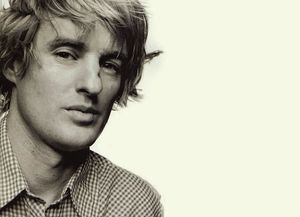
WilsonA shared Anglo-Saxon surname, however, is merely the first parallel between our lives. To wit: Like O., I was born into an artistic family (our mothers are visual artists, our siblings work in film); I too was a self-proclaimed “troublemaker” in my youth; I too once wore blond hair that hung to my shoulders; I too have a large and distinctive nose; I too have a younger brunette brother; I too have struggled with depression; and I, too, consider myself primarily a writer, though like O., I would happily accept any acting job offered regardless of script quality, assuming the pay is substantial. Did I mention we have the same taste in women? He has been romantically linked to Kate Hudson, Demi Moore, and Sheryl Crow; I have not. But I have often imagined those three in erotic concert, Crow’s “All I Wanna Do” winnowing from my iPod dock as their cougar paws explore my body’s nooks.

But, though we’re both Wilsons, only one of us (O.) is of true Anglo-Saxon origin. I come from a small clan of Jewish Wilsons née Wilsick née Wilczyk, and my true self is apparent under even the dimmest bulb of scrutiny. Unlike the majestic bump that separates the slim halves of O.’s phallic schnoz, my own mid-face protrusion is broad and bony, an ugly hinge that deviates my septum, leaving me looking less like a battered prizefighter than a genetic unfortunate, too poor for plastic surgery. Though the members of my family have enjoyed modest success in their chosen fields, the members of O.’s are stars. It’s true that we once wore twin hairstyles, but my hair thinned and began to fall out by the age of eighteen. O.’s writing has earned him critical acclaim for films like Rushmore and The Royal Tennenbaums, while mine has earned mostly negative reviews from megalomaniacal blog commenters. And one surely can’t miss the fact that though we both like actresses of a certain age, O. has actually had sex with these women, whereas I have merely used them as fodder for my fantasies.

More here.

In conversation: Kiran Desai meets Anita Desai

From Guardian:

Anita-Desai-and-her-daugh-007When I visit my mother, I catch the train from the Harlem stop and travel north along the Hudson river, named Muhheakantuck by the Indians, “the river that flows both ways”. Her 170-year-old house has a silvery stone for a front step, horsehair insulation in the attic, wide floorboards of pine; they glow a fox colour in the light that is always luminous in this house, and is twinned to silence. It is a writer's house, an exile's refuge. Magazines and papers pile up, bookcases spill over. When we are together, I feel we are alone on a raft. Family is scattered, India is far. All that has truly persisted in my life is here. I sometimes used to buy India Abroad for my mother on the way, or mangoes from Haiti or Brazil, or typewriter ribbon. This time I dared a recorder from Radio Shack of which we were both scared, worried we would proceed to play out her novel In Custody, where Deven visits the poet Nur to record Nur's words. He fails, his tape recorder fails. But this one works, and I ask her to talk about her past. Her work has, over the years, centred on forgotten, vanishing worlds, art and language that exist on the margins. The epigraphs to her novels (TS Eliot, Emily Dickinson, Borges …) often make reference to the persistence of memory. She writes: “The ancient Chinese believed time is not a ladder one ascends into the future but a ladder one descends into the past.” Her new book, The Artist of Disappearance, is made of three delicate stories about the frailty as well as the transforming power of art.

Kiran Desai In Custody was set in the Old Delhi of your childhood, but what did you know of the Germany of your mother, the East Bengal of your father? Did you know your grandparents?

Anita Desai No, so it was always a fusion of the known facts and imagination, because the known facts were so few.

More here.

Saturday Poem

Onset

Always the same, when on a fated night
At last the gathered snow lets down as white
As may be in dark woods, and with a song
It shall not make again all winter long
Of hissing on the yet uncovered ground,
I almost stumble looking up and round,
As one who overtaken by the end
Gives up his errand, and lets death descend
Upon him where he is, with nothing done
To evil, no important triumph won,
More than if life had never been begun.

Yet all the precedent is on my side:
I know that winter death has never tried
The earth but it has failed: the snow may heap
In long storms an undrifted four feet deep
As measured again maple, birch, and oak,
It cannot check the peeper's silver croak;
And I shall see the snow all go down hill
In water of a slender April rill
That flashes tail through last year's withered brake
And dead weeds, like a disappearing snake.
Nothing will be left white but here a birch,
And there a clump of houses with a church

by Robert Frost

blue nights

Schine_1-112411_jpg_470x424_q85

When you think about Joan Didion, you think about place. It is in her reporting on subjects like California’s water or California’s murders that Didion has mused on her own Sacramento childhood, a somewhat delirious combination of the rambling joy of Huckleberry Finn and the arid, upright strength of a Willa Cather character. “Goodbye to All That” is one of her best-loved pieces, passed down from mother to daughter to granddaughter, a still-resonant ode to New York City. Back in Los Angeles in the Sixties, there is music and mayhem, a baby, a house, and always the city itself, the state, the state of the state. She tells the story of a difficult moment in her marriage as a report about waiting in Hawaii for a tsunami that never came. Didion’s work has always been an evocation of the specificity of place, the climate, the geography, the feel of the air, the slang, the heat, the architecture or lack of it. In Blue Nights, however, all her landmarks are suddenly, terrifyingly, gone. A curtain in the emergency room of St. John’s hospital in Santa Monica is identical to an emergency room curtain in a New York hospital. The view of the East River, crowded with chunks of ice, from Beth Israel North hospital, is the same as the view of the Hudson River, crowded with chunks of ice, from Columbia Presbyterian hospital.

more from Cathleen Schine at the NYRB here.