How the U.S. Is Reengineering Homeland Security on the Borders

Patrolled by Predator drones, radar blimps, dogs, and scanners, the U.S./Mexico border is now a state unto itself: Borderworld.

Roger D. Hodge in Popular Science:

ScreenHunter_17 Dec. 23 11.54As a lone male in a rented minivan headed south on a remote stretch of border highway, I almost certainly fit some kind of profile. I passed several white pickups bearing the distinctive green stripe of the U.S. Border Patrol, but my first direct encounter with the authorities did not come until I pulled off the road to study with my binoculars a white speck that I had spotted high in the cloudless sky. It was not a Predator or any other UAV that I had ever seen or read about. It looked like a blimp. I put down my binoculars just as another of the green-and-white trucks pulled up. We both lowered our windows and I asked, in my best Texan, what that thing was floating up there in the sky. “It’s a weather balloon,” the officer said with a smile. I thanked him, and we both waved as I drove off, still headed south.

In El Indio, I stopped to buy a Dr Pepper and asked the old lady behind the counter, in my best Spanish, whether she knew anything about that white thing up in the sky. She did not. I decided to inquire at the post office, but it was closed. I was wondering what to do next when a minivan pulled up. I asked the driver if she knew what that white thing was up in the sky. “It’s a satellite for the drugs,” she said. “My brother-in-law works for it.” A boy chimed in from the backseat that if I kept driving south I’d see “the building that controls it.” I thanked the woman and her boy and continued on my way. Border Patrol vehicles continued to pass me coming and going, and, as I neared the base of what I could now see was in fact a tethered blimp, one of those trucks quickly pulled up right behind me and showed no sign of passing. Although I was doing nothing illegal, I began to sweat. Soon I drove by a couple of white buildings, in front of which was a sign: United States Air Force Tethered Aerostat Radar Site.

More here.
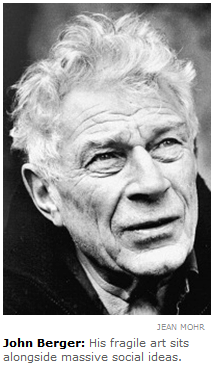
John Berger Writes on Art, Politics and Philosophy

Ezra Glinter in Forward:

ScreenHunter_16 Dec. 23 11.41What if, in the face of entrenched financial, political and military power, progressive change brought about by ordinary citizens is not possible? What then can be done?

It’s a question that has been on the mind of the British novelist, essayist and art critic John Berger, not just for the past year, but for decades. In his latest book, “Bento’s Sketchbook,” he reflects: “What one is warning and protesting against continues unchecked and remorselessly. Continues irresistibly. Continues as if in a permissive unbroken silence. Continues as if nobody had written a single word. So one asks oneself: Do words count?”

In “Bento’s Sketchbook” Berger turns to an unexpected source for insight: the 17th-century philosopher Baruch, or Benedict, or “Bento,” Spinoza. The premise of the book is based on a sketchbook Spinoza is supposed to have kept, but which was lost or destroyed. Berger, who is an artist as well as an art critic, sets out to reimagine the lost works.

More here.

Saving medical practice from the tyranny of health

From Spiked:

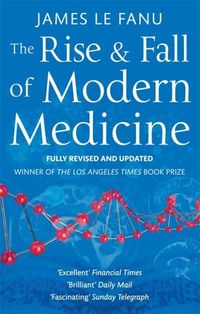
Dr Michael Fitzpatrick talks to James Le Fanu, the one-time scourge of those medical practitioners who blamed lifestyle or pollution for ill health, to find out if he really has made peace with the medical establishment.

MedTurning to the fall of modern medicine, Le Fanu diagnoses the onset of the current malaise of the world of medicine in the 1970s, when ‘the revolution faltered’ and ‘the age of optimism’ came to an end. Clinical science went into decline, the flow of new drugs slowed and technological innovation stalled. The resulting ‘intellectual vacuum’ has been filled by what Le Fanu regards as the specious notions of the ‘New Genetics’ and the ‘Social Theory’ (blaming lifestyle, pollution and poverty for much current ill health). He blames the twin influences of genetics and epidemiology for leading modern doctors (and their patients) down ‘blind alleys’.

Le Fanu’s exposure of the pretensions of the ‘genetic revolution’ and the hype surrounding the human genome project and all the claims for imminent dramatic developments in genetic engineering and gene therapy will strike a chord with many doctors. As he observes, we have witnessed ‘a relentless catalogue of failed aspirations’; despite a vast investment of energy, resources and hopes, the practical benefits of the ‘New Genetics’ in our surgeries are ‘scarcely detectable’. In his new edition Le Fanu brings the critique of the New Genetics up to date with an appraisal of the ‘wishful thinking’ of ‘personalised genomics’ and a discussion of the ways in which ‘genome-wide association studies’ have thrown up more new problems than potential solutions, particularly in relation to chronic diseases. Though he acknowledges the emergence of new cancer drugs such as Herceptin and Avastin, he neglects wider developments in cancer genetics where advances in molecular biology have led directly to therapeutic innovations. For example, the introduction of Imatinib (Gleevec) for the treatment of chronic myeloid leukaemia in 1998 has been followed by the development of more than 20 new drugs for the treatment of cancer, including myeloma (which until recently had a grim prognosis). ‘I accept that these drugs mark a major conceptual advance’, says Le Fanu, ‘but the problem here is that we have a handful of very expensive drugs which provide modest benefits to small numbers of people with relatively rare conditions. We were promised personalised treatments for common chronic conditions and these are still over the horizon.’

More here.

Why Walking through a Doorway Makes You Forget

Charles B. Brenner and Jeffrey M. Zacks in Scientific American:

ScreenHunter_15 Dec. 23 11.19The French poet Paul Valéry once said, “The purpose of psychology is to give us a completely different idea of the things we know best.” In that spirit, consider a situation many of us will find we know too well: You're sitting at your desk in your office at home. Digging for something under a stack of papers, you find a dirty coffee mug that’s been there so long it’s eligible for carbon dating. Better wash it. You pick up the mug, walk out the door of your office, and head toward the kitchen. By the time you get to the kitchen, though, you've forgotten why you stood up in the first place, and you wander back to your office, feeling a little confused—until you look down and see the cup.

So there's the thing we know best: The common and annoying experience of arriving somewhere only to realize you've forgotten what you went there to do. We all know why such forgetting happens: we didn’t pay enough attention, or too much time passed, or it just wasn’t important enough. But a “completely different” idea comes from a team of researchers at the University of Notre Dame. The first part of their paper’s title sums it up: “Walking through doorways causes forgetting.

More here.

Nature’s 10

From Nature:

Ten people who mattered this year:

Essam Sharaf: Science revolutionary

Sharraf300As academics joined the millions protesting in Egypt's streets this spring, the voice of one engineer soon began leading chants. Essam Sharaf was in the thick of demonstrations in January, and he became the first prime minister of a post-revolution cabinet in March — promoting science as a solution to the country's woes. But by November, he had resigned amid a second surge of popular protest. The 59-year-old Sharaf was born in Egypt and earned degrees in engineering from Cairo University and Purdue University in West Lafayette, Indiana. By 2010, he was an academic engineer at Cairo University and a fierce critic of Egyptian President Hosni Mubarak's regime. Sharaf's stance during the uprising made him popular with the young revolutionaries. He was high on their list of candidates to lead the new transition government, along with Nobel laureate Ahmed Zewail, a chemist from the California Institute of Technology in Pasadena. When Sharaf was chosen, hundreds of thousands of revolutionaries gathered to greet him in Tahrir Square. “If I can't bring the change you want, then I will return to the lines with you,” he told them.

More here.

Thursday, December 22, 2011

Why do Women Menstruate?

Menstrual_phylogeny-500x494P.Z. Myers over at Pharyngula (via Pandagon):

I suppose we could blame The Curse on The Fall, but then this phylogeny would suggest that Adam and Eve were part of a population of squirrel-like proto-primates living in the early Paleocene. That’s rather unbiblical, though, and what did the bats and elephant shrews do to deserve this?

There are many explanations floating around. One is that it’s a way to flush out nasty pathogens injected into the reproductive tract by ejaculating males — but that phenomenon is ubiquitous, so you have to wonder why only a few species bother. Another explanation is that it’s more efficient to get rid of the endometrium when not using it, than to maintain it indefinitely; but this is a false distinction, because other mammals don’t maintain the endometrium, they just build it up in response to fertilization. And finally, another reason is that humans have rather agressive embryos that implant deeply and intimately with the mother’s tissues, and menstruation “preconditions” the uterine lining to cope with the stress. There is, unfortunately, no evidence that menstruation provides any boost to the ‘toughness’ of the uterus at all.

A new paper by Emera, Romero, and Wagner suggests an interesting new idea. They turn the question around: menstruation isn’t the phenomenon to be explained, decidualization, the production of a thickened endometrial lining, is the key process.

All mammals prepare a specialized membrane for embryo implantation, the difference is that most mammals exhibit triggered decidualization, where the fertilized embryo itself instigates the thickening, while most primates have spontaneous decidualization (SD), which occurs even in the absence of a fertilized embryo. You can, for instance, induce menstruation in mice. By scratching the mouse endometrium, they will go through a pseudopregnancy and build up a thickened endometrial lining that will be shed when progesterone levels drop. So the reason mice don’t menstruate isn’t that they lack a mechanism for shedding the endometrial lining…it’s that they don’t build it up in the first place unless they’re actually going to use it.

So the question is, why do humans have spontaneous decidualization?

Amanda Marcotte considers what this means for some nature-based political arguments.

the new Rosicrucians

ID_PI_GOLBE_SHELL_AP_001

As the indispensable historian Frances Yates writes in The Rosicrucian Enlightenment, the words “Rosicrucian” and “Enlightenment” seem mortally opposed, the first tending toward “strange forms of superstition” while the latter toward a “critical and rational opposition to superstition.” She defines the Rosicrucian movement as being “concerned with a striving for illumination, in the sense of vision, as well as for enlightenment in the sense of advancement in intellectual and scientific knowledge.” For Rosicrucians, illumination and understanding were one. Enlightenment meant exploding the boundaries of natural human capacity, and transcending them. It makes perfect sense, then, that they would head straight into the realm of the supernatural to do so. The first real Rosicrucian novel is thought to be St. Leon, written by Shelley’s idol and would-be father-in-law William Godwin. At the center of St. Leon — like St. Irvyne, Frankenstein, and the many Rosicrucian romances it inspired — is the outcast, the discontent wanderer searching for meaning. Generally, the malcontent is so because he is spiritually bereft and feels that the limits of human existence are an impediment to greatness — great knowledge mostly, but the wanderer is also usually looking for great wealth and/or power. The Romantics were disgusted by these rationalist pursuits. Becoming immortal in a Romantic tale is, thus, always a curse. In St. Leon, the eponymous protagonist’s house is burnt down, his son abandons him, his servant and his favorite dog are killed, his depressed wife dies, and he is imprisoned in the dungeons of the Inquisition until, at last, the marriage of his son makes him realize that “there is something in this world worth living for.”

more from Stefany Anne Golberg at The Smart Set here.

youthful war hero to bully

Campbell_233194k

The Letters of Ernest Hemingway, Volume One: 1907–1922 covers the years of the future writer’s childhood, his schooldays, beginnings as a journalist first on the Kansas City Star and then the Toronto Star, and of course his adventure on the Italian front. Hemingway arrived in Europe to work with the American Red Cross Service in June 1918, and was posted to Fossalta, on the Piave river just north of Venice, the scene of intense fighting. On the night of July 8, having volunteered for the “rolling canteen” which delivered provisions to Italian soldiers holding off the Austro-Hungarian offensive, he was blown up by a trench mortar shell. He sustained more than 200 wounds to his legs and spent the next five months either in hospital or in recovery. He fell in love with his nurse, seven years his senior, who affected to be in love with him, while being attached to an older man at home, whom she called “Daddy” (Hemingway was “Kid”), at the same time welcoming the overtures of an aristocratic Italian officer closer to base. The shell-shocked happy patient wrote in fits of rapture to his sisters and friends about Agnes von Kurowsky, who has become a central figure in the legend. But it seems as though his love for her was as flimsy as hers for him. In December 1918 he was planning marriage; in March 1919 he received her “Dear Ernie” letter and was broken-hearted; by the middle of April he was “now a free man”, having “burnt it out with a course of booze and other women and now it’s gone”. She was, however, to aid his recovery in another way. Nurse von Kurowsky – who in spite of her name was American, and was soon to be jilted in turn by her Italian heir – was transposed to the “dream” world of fiction, as Catherine Barkley in Hemingway’s second novel, A Farewell to Arms, which ends with her death in childbirth.

more from James Campbell at the TLS here.

2011 In Review: Four Hard Truths

Ob_spring-2011-weo2Olivier Blanchard over at the IMF's blog (via Paul Krugman):

Third, financial investors are schizophrenic about fiscal consolidation and growth.

They react positively to news of fiscal consolidation, but then react negatively later, when consolidation leads to lower growth—which it often does. Some preliminary estimates that the IMF is working on suggest that it does not take large multipliers for the joint effects of fiscal consolidation and the implied lower growth to lead in the end to an increase, not a decrease, in risk spreads on government bonds. To the extent that governments feel they have to respond to markets, they may be induced to consolidate too fast, even from the narrow point of view of debt sustainability.

I should be clear here. Substantial fiscal consolidation is needed, and debt levels must decrease. But it should be, in the words of Angela Merkel, a marathon rather than a sprint. It will take more than two decades to return to prudent levels of debt. There is a proverb that actually applies here too: “slow and steady wins the race.”

10 of the more memorable quotes from Christopher Hitchens

From The Christian Science Monitor:

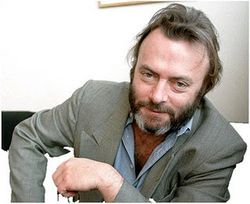
HitchbeardleanHitchens on George W. Bush:

“He is lucky to be governor of Texas,” Hitchens said. “He is unusually incurious, abnormally unintelligent, amazingly inarticulate, fantastically uncultured, extraordinarily uneducated, and apparently quite proud of all these things.”

Hitchens on Israel

“I am an anti-Zionist,” Hitchens, who often spoke and wrote of his stance against Israel, said. “I'm one of those people of Jewish descent who believes that Zionism would be a mistake even if there were no Palestinians.”

Hitchens on North Korea

North Korea is a country that still might give us a lot of trouble and it is, believe me, it is exactly like a '1984' state,” he said. “It is as if it was modeled on '1984,' rather than '1984' on it. It is extraordinary, the leader worship, the terror, the uniformity, the misery, the squalor.”

More here.

Maggots may clean wounds faster than surgery

From Medical Xpress:

MaggotsFor thousands of years, people have used maggots to clean out wounds, particularly in battlefield situations when there were few other options. Use of maggots (fly larvae) virtually disappeared in the modern world though once antibiotics arrived on the scene, but that may change as a new study conducted by a team in France has shown that at least for some types of wounds, maggots may be the preferential form of treatment. The team, made up of doctors and researchers from various facilities in France, conducted a study with elderly male volunteers who had lower leg wounds or skin ulcers that weren’t healing well, and as they describe in their study published in Archives of Dermatology, the patients that were treated with maggots, fared better, at least in the first week, than did those treated with conventional surgical procedures.

In order to reproduce, flies lay their eggs in the carcasses of dead animals. The eggs develop into maggots which eventually grow into adults by eating the meat in which they exist. To accomplish this feat they secrete a substance into the dead tissue that helps to break it down first. The maggots then simply eat the result. When introduced into injured human flesh, the maggots perform the same trick, eating dead flesh while leaving healthy flesh alone, though not necessarily in the same fashion. In the wild, as anyone that has stumbled upon the carcass of a dead animal and found it literally crawling with the small rice looking larvae knows, it’s a truly stomach retching sight. In a medical environment, on the other hand it can be a truly innocuous experience.

More here.

Fifty things I’ve learned about the literary life

Robert McCrum in The Guardian:

ScreenHunter_14 Dec. 22 12.501. Less is more. Or, “the only art is to omit” (Robert Louis Stevenson).

2. The Man Booker, our premier literary prize, is not “posh bingo” (Julian Barnes), it's a national sporting trophy.

3. Whatever works, works.

4. There are seven basic stories in world literature.

5. Writers who get divorced usually sack their agents.

6. Christopher Marlowe did not write Shakespeare. Nor did Francis Bacon or the Earl of Oxford. Shakespeare wrote Shakespeare. It's a no-brainer. Just read the First Folio.

7. Poets are either the lions or the termites of the literary jungle.

8. Put a body on page one.

9. Literature is theft.

10. Everyone is writing a book. A few will publish it; but most of them will not be satisfied.

More here.

Scaling Caste Walls With Capitalism’s Ladders in India

Lydia Polgreen in the New York Times:

ScreenHunter_13 Dec. 22 12.43Bollywood may love a rags-to-riches story, but historically India is not a nation of Horatio Alger stories. Social and economic mobility are limited, a product of India’s layers of cultural legacies: the Hindu caste system, the feudal hierarchies established by its many invaders and the imperial bureaucracy imposed by Britain. The idea that with hard work and determination, anyone could succeed found scant purchase here.

Independence changed that somewhat. India’s Constitution, which was largely drafted by a Dalit, Bhimrao Ambedkar, outlawed the practice of physical untouchability, which relegated Dalits to the bottom of the social ladder and condemned them to low-status jobs, like leather work and barbering.

It established affirmative action for Dalits and tribal people in politics and government jobs and education. The practice of physical untouchability, which prevented Dalits from walking on the same streets as upper-caste people, drinking from the same wells or even looking such people in the eye, has virtually disappeared, though it remains in practice in some remote areas.

Dalits still lag behind the rest of India, but they have experienced gains as the country’s economy has expanded. A recent analysis of government survey data by economists at the University of British Columbia found that the wage gap between other castes and Dalits has decreased to 21 percent, down from 36 percent in 1983, less than the gap between white male and black male workers in the United States. The education gap has been halved.

More here.

Regarding Christopher

Katha Pollitt in The Nation:

ScreenHunter_12 Dec. 22 12.17Christopher Hitchens, my colleague for twenty years, was clever, hilarious, generous to his friends, combative, prodigiously energetic and fantastically productive. He could write with equal ease about Philip Larkin, capital punishment, Henry Kissinger and having his balls waxed. I used to wonder, enviously, how he could write so much, especially given his drinking, his travels, his public appearances and his demanding social life. He told me once that a writer should be able to write with no difficulty, anytime, anywhere—but actually, not many writers can do that. I think part of the reason why he was so prolific—and the reason he had such an outsize career and such an outsize effect on his readers—is that he was possibly the least troubled with self-doubt of all the writers on earth. For a man who started out as an International Socialist and ended up banging the drum for the war in Iraq and accusing Michelle Obama of fealty to African dictators on the basis of a stray remark in her undergraduate thesis, he seems to have spent little time wondering how he got from one place to another, much less if he’d lost anything on the way. After he left The Nation he said he had a “libertarian gene.” It’s a rum sort of libertarianism, and a rum sort of gene, that expresses itself first as membership in a Trotskyist sect, and then as support for the signal deed of an administration that stood for everything he had spent his life fighting, from economic inequality to government promotion of religion.

More here.

Thursday Poem

If You Forget Me

I want you to know
one thing.

You know how this is:
if I look
at the crystal moon, at the red branch
of the slow autumn at my window,
if I touch
near the fire
the impalpable ash
or the wrinkled body of the log,
everything carries me to you,
as if everything that exists,
aromas, light, metals,
were little boats
that sail
toward those isles of yours that wait for me.

Well, now,
if little by little you stop loving me
I shall stop loving you little by little.

If suddenly
you forget me
do not look for me,
for I shall already have forgotten you.

If you think it long and mad,
the wind of banners
that passes through my life,
and you decide
to leave me at the shore
of the heart where I have roots,
remember
that on that day,
at that hour,
I shall lift my arms
and my roots will set off
to seek another land.

But
if each day,
each hour,
you feel that you are destined for me
with implacable sweetness,
if each day a flower
climbs up to your lips to seek me,
ah my love, ah my own,
in me all that fire is repeated,
in me nothing is extinguished or forgotten,
my love feeds on your love, beloved,
and as long as you live it will be in your arms
without leaving mine

by Pablo Neruda

For original Spanish:

Read more »

Wednesday, December 21, 2011

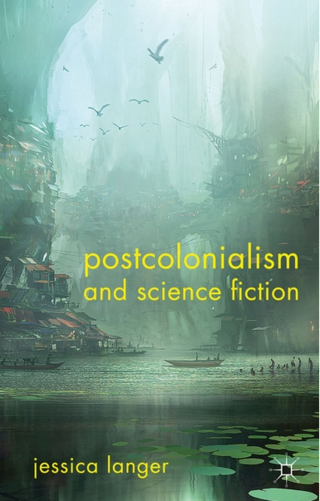
Postcolonialism and Science Fiction: An Excerpt

4210c3cabd31943ec3abeb7120c488f3Over at io9, an excerpt from Jessica Langer's new book:

Most readers will be familiar with the classic oppositional science fiction tropes of the grotesque bug-eyed alien bent on Earthly domination and the beautiful but empty planet, ripe for colonization – or, of course, the dangerous planet whose inhabitants dare to fight back against the lantern-jawed colonial hero. Several studies have addressed the parallelism between historical and science-fictional “alien” encounters, the most comprehensive and recent being John Rieder's exploration of this period in science fiction and history, Colonialism and the Emergence of Science Fiction (2008). The figure of the alien – extraterrestrial, technological, human-hybrid or otherwise – and the figure of the far-away planet ripe for the taking are deep and abiding twin signifiers in science fiction, are perhaps even the central myths of the genre. They are, to riff on the most famous work of Robert A. Heinlein, one of science fiction's most famous writers, the Stranger in a Strange Land. Aliens, including humans – who are, of course, alien to those aliens – and strange, foreign, other planets – which includes, of course, our own Earth, from the perspective of the alien. What the alien signifies, of course, varies greatly, as does the signification of the similarly central intergalactic terra nullius.

These two signifiers are, in fact, the very same twin myths of colonialism. The Stranger, or the Other, and the Strange Land – whether actually empty or filled with those Others, savages whose lives are considered forfeit and whose culture is seen as abbreviated and misshapen but who are nevertheless compelling in their very strangeness – are at the very heart of the colonial project, and their dispelling is at the heart of the postcolonial one.

How, then, can a genre so steeped in, so built upon, the Stranger and the Strange Land in its diegetic reality work to undo them in our consensus reality, what Darko Suvin calls our “zero world”?

libya and the left

Benghazi

It is still too soon to tell what may come of the French Revolution, so it is a fortiori far too soon to tell what may come of the revolutions in North Africa. I hope nothing I have written here will be taken as jejune triumphalism about the fall of Qaddafi—or that of Hosni Mubarak, or Zine El Abidine Ben Ali. It is not inconceivable that a popular uprising against a brutal dictator, some elements of which are supported by Western liberals, could produce an Islamist state whose policies are abhorrent to Western liberals. What is now called the Arab Spring might eventually become known as “the year 1979 went viral.” But one thing does seem clear even now: when the Arab Spring began, American liberals and leftists generally cheered it on; American conservatives were torn, holding fast to Kissingerian realism or the desires of the Likudnik bloc or the firm conviction that whatever Obama was or was not or might be doing, it was wrong. (This last principle, infinitely elastic, is what allowed senior Republican statesmen and Deeply Serious People like John McCain and Newt Gingrich to take three or four positions on Libya in the course of a week; when Qaddafi was finally killed, the same statesmen graciously congratulated the French while chastising Obama for delaying the necessary regime change through his dithering.) When, however, the American military joined NATO forces in an armed defense of the Libyan rebellion and a counterattack on Qaddafi, suddenly thousands of leftists had second thoughts. With astonishing rapidity, the “Arab Spring” signs disappeared, and thousands of “Power to the People” signs were replaced with newly minted slogans about stopping the imperialist war machine and its wanton rape of Libya.

more from Michael Berube at The Point here.

egypt’s long shadow

Egypt-news-curfew-riots-situation-31-january-2011-1

The awakening is not over, but the heady days of the Arab Spring have come to an end. The counter-revolution, Régis Debray once observed, is revolutionised by the revolution. And so it has been. In Syria, protests have degenerated into sectarian warfare, fomented by a thuggish ruling clique that seems ready to bring the entire country down with it. In Yemen, President Saleh has agreed to stand down after nearly three decades in power, but on the northern border with Saudi Arabia, the dirty war between Shia Houthi rebels and Salafists is getting nastier. In Libya, the oil companies are doing business again, but the country’s new rulers, swept to power by Nato, are talking about restoring Sharia law, perhaps even polygamy. In Bahrain, a peaceful uprising by the Shia majority has been crushed by the al-Khalifa monarchy, with help from troops dispatched by Saudi Arabia. (Tehran, the Saudis claimed, was behind the protests, an assertion rejected by the Bahrain Independent Commission of Inquiry in November.) Never keen on popular politics, and furious with the Americans for ‘deserting’ their mutual friend Mubarak, the Saudis have been assiduously fighting the revolutionary wave, mostly with petrodollars, sometimes with guns. The Obama administration was not pleased with the Saudi intervention in Bahrain, but it barely uttered a word of criticism: the Fifth Fleet is stationed there, and preserving the special relationship with the House of Saud is paramount.

more from Adam Shatz at the LRB here.