Emily Cataneo in Undark:
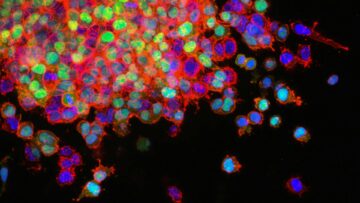 When the Godwin sisters would visit their grandmother Jeanne in Carson City, Nevada when they were growing up in the 1970s, Jeanne would pull out the dreaded juicer. She’d pulverize a mixture of carrot, celery, and spinach juice for the girls, then coax them to drink it. The sisters hated the concoction, but choked it down anyway, because they didn’t want to upset their grandmother: Jeanne had lost her husband and two of her three daughters to cancer, and she hoped that this healthy mixture would save her granddaughters from the rest of her family’s fate.
Jeanne didn’t know it at the time, but diet hadn’t caused her husband’s and children’s deaths. Her family were the unlucky carriers of a mutation on the p53 gene. When it’s working, p53 acts as a tumor suppressor, stamping out malignancies before they can grow and spread. This gene is so important that one scientist called it the “guardian of the genome.” People with the mutation, which causes an extremely rare disorder called Li-Fraumeni Syndrome, have a defective p53 gene, which means no brakes on tumors flourishing in their bodies. Families with this syndrome often lose a cascade of loved ones to breast cancer, lung cancer, pancreatic cancer, and more.
More here.
Enjoying the content on 3QD? Help keep us going by donating now.
 B
B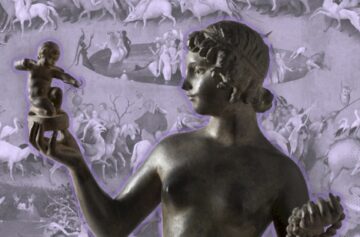 It must be dismal to come of age in an era so drenched in utility as ours. What was once called soul hunger is now relentlessly thwacked aside by engines of ever greater efficiency, from effective altruism to generative AI. Even the animating realms of art and sex appear to have contracted to the merely serviceable, functional, and fair-minded.
 Being rational necessarily involves engagement with probability. Given two possible courses of action, it can be rational to prefer the one that could possibly result in a worse outcome, if there’s also a substantial probability for an even better outcome. But one’s attitude toward risk — averse, tolerant, or even seeking — also matters. Do we work to avoid the worse possible outcome, even if there is potential for enormous reward? Nate Silver has long thought about probability and prediction, from sports to politics to professional poker. In his his new book
  Central to the Cold War between the United States and the Soviet Union was a rivalry to develop the technologies of the future. First came the race to deploy nuclear weapons on intercontinental missiles. Then came the space race. Then came US President Ronald Reagan’s “Star Wars” program, which seemed to launch a new race to build missile-defense systems. But it soon became clear that the Soviet economy had fallen decisively behind.
 OVER THREE DAYS
 Ever since Thomas Carlyle first launched his Letters and Speeches of Oliver Cromwell on the world in 1845, the Lord Protector’s published words have exercised an almost mesmeric hold on posterity. Overnight, they transformed a figure who had hitherto been a byword for villainy – was he not the killer of King Charles I? – into a hero for the new Victorian age: a God-fearing, class-transcending champion of ‘russet-coated captains’ who became Britain’s first non-royal head of state. His words resonated with a newly politically ascendant and morally earnest middle class. And in Hamo Thornycroft’s vast sculpture installed outside Westminster Hall in 1899, the Carlylean transformation of Oliver begun by the Letters and Speeches found its embodiment in bronze.
 An age ‘clock’ based on some 200 proteins found in the blood can predict a person’s risk of developing 18 chronic illnesses, including

 Three times a day my phone pings with a notification telling me that I have a new happiness survey to take. The survey, from
  How could gaining knowledge amount to anything other than discovering what was already there? How could the truth of a statement or a theory be anything but its correspondence to facts that were fixed before we started investigating them?