Category: Recommended Reading
indian summer

Gradually, the term Indian summer has spread beyond its American origins. First to England, replacing a bevy of poetic names—All Halloween Summer, in Shakespeare’s day; St. Luke’s little summer, St. Martin’s Summer—with that single term. Then to France, capturing the popular imagination with the success of Joe Dassin’s classic homage, “L’été indien.” (Now that I think about it, I likely heard the name in French before I ever did in English; Joe Dassin—himself American born—was always popular in Russia, and I’d hummed the tune many a time before its meaning actually sunk in.) And the Indians and old women aren’t alone. Over the years, many others have laid claim to those days of waning heat. In the southern Slavic countries, it’s known as gypsy summer. I’d like to think that has something to do with the colorful vibrancy of the gypsy music and the sound of guitar strings by the open fire. In Italy, it’s a time of year owned by San Martino, or St. Martin.
more from Maria Konnikova at Paris Review here.
slave castle

Of the dozens of trade castles and forts dotting Ghana’s three-hundred-mile coastline, I’d chosen to visit the one in Elmina because it was the most notorious. Being the first permanent European settlement in Africa, it was also the oldest. The Portuguese began construction on São Jorge da Mina in 1482 with stones imported from Portugal. It was designed to defend against attacks from the local people and from other Europeans, but in the seventeenth century it was captured by the Dutch. In the nineteenth century it was purchased by the British. Now it is a World Heritage monument. In the castle’s early days, Europeans didn’t think of themselves as European any more than Africans thought of themselves as African. The Dutch weren’t betraying a European bond when they captured the Portuguese castle, just as the Mandinke weren’t betraying an African bond when they captured Ayuba. Nor, in the castle’s early days, was the castle a slave castle.
more from Emily Raboteau at The Believer here.
Eric Hobsbawm (1917-2012)
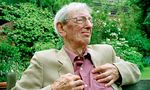
In the foothills of Hampstead Heath, where Karl Marx and Friedrich Engels used to take their afternoon strolls, stands the home of Eric and Marlene Hobsbawm. To enter the Nassington Road drawing room for a conversation with Hobsbawm was to be transported back to the great ideological struggles of the extreme 20th century. Here was where ideas mattered, history had a purpose, and politics was important. And one could have no more generous, humane, rigorous, and involved a guide than the late Eric Hobsbawm. The breadth of his work and the reach of his intellect was always startling. Right to the end of his days, he stayed up to date with scholarship, never failed to flay an opponent, and continued to write. Afternoon tea with Hobsbawm could range from the achievements of President Lula of Brazil to the limitations of Isaiah Berlin as an historian, the unfortunate collapse of the Communist party in West Bengal to what Ralph Miliband would have made of his boys, David and Ed.
more from Tristram Hunt at The Guardian here.
Tuesday Poem
34. Not What Makes Tao Tick
The Tao flows everywhere
so everything is of it
uncreated
Every thing receives Tao’s work
but it claims nothing for itself
It feeds all worlds
but never enslaves them
The Tao and each thing are merged
—the heart of all things
are filled with Tao’s humility
Each thing comes and goes
from it and to it but
Tao endures
Call it great
But being great is not what makes
Tao tick
……………..…..……which
…………………….. makes it
…………………….. great
from the Tao Te Ching by Lao Tzu
Adaptations by R.Bob
Cinema has changed us all: The birth of alienation
David Thomson in The Independent:
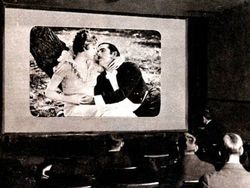
At first, the magic was overwhelming: in 1895, the first audiences for the Lumière brothers' films feared that an approaching steam engine was going to come out of the screen and hit them. That gullibility passed off like morning mist, though observing the shower in Psycho (1960) we still seem to feel the impact of the knife. That scene is very frightening, but we know we're not supposed to get up and rescue Janet Leigh. In a similar way, we can watch the surreal imagery of the devastation at Fukushima, or wherever, and whisper to ourselves that it's terrible and tragic, but not happening to us.
More here.
High Stress Can Make Insulin Cells Regress
From The New York Times:
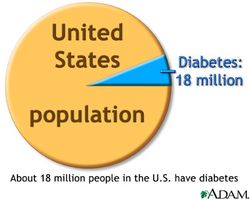
…A range of physiological stresses, including obesity, pregnancy and aging, all tend to increase demand on beta cells to produce more insulin, Dr. Accili said. It may be that they are “taking a little rest,” he said, in returning to a less active state. Although it’s not yet clear why this might happen, the finding may lend support to the view that doctors should focus on relieving stress on the beta cells rather than pushing them to produce more insulin, which may speed the progression of diabetes, Dr. Accili said.
More here.
Monday, October 1, 2012
Perceptions
Sunday, September 30, 2012
Judith Goldman Reads “Austerity Measures”
The Golden Age: Keynesian Utopianism

I first became an economist in the early 1970s, at a time when revolutionary change still seemed like an imminent possibility and when utopian ideas were everywhere, exemplified by the Situationist slogan of 1968: ‘Be realistic. Demand the impossible.’ Preferring to think in terms of the possible I was much influenced by an essay called ‘Economic Possibilities for our Grandchildren,’ written in 1930 by John Maynard Keynes, the great economist whose ideas still dominated economic policymaking at the time.
Like the rest of Keynes’s work, the essay ceased to be discussed very much during the decades of free-market liberalism that led up to the global financial crisis of 2007 and the ensuing depression, through which most of the developed world is still struggling. And, also like the rest of Keynes's work, this essay has enjoyed a revival of interest in recent years, promoted most notably by the Keynes biographer Robert Skidelsky and his son Edward.
The Skidelskys have revived Keynes’s case for leisure, in the sense of time free to use as we please, as opposed to idleness. As they point out, their argument draws on a tradition that goes back to the ancients. But Keynes offered something quite new: the idea that leisure could be an option for all, not merely for an aristocratic minority.
Writing at a time of deep economic depression, Keynes argued that technological progress offered the path to a bright future. In the long run, he said, humanity could solve the economic problem of scarcity and do away with the need to work in order to live. That in turn implied that we would be free to discard ‘all kinds of social customs and economic practices, affecting the distribution of wealth and of economic rewards and penalties, which we now maintain at all costs, however distasteful and unjust they may be in themselves, because they are tremendously useful in promoting the accumulation of capital’.
Poll Averages Have No History of Consistent Partisan Bias
Nate Silver in the NYT's Five Thirty Eight:
The analysis that follows is quite simple. I’ll be taking a simple average of polls conducted each year in the final 21 days of the campaign and comparing it against the actual results. There are just two restrictions.
First, I will be looking only at polls of likely voters. Polls of registered voters, or of all adults, typically will overstate the standing of Democratic candidates, since demographic groups like Hispanics that lean Democratic also tend to be less likely to turn out in most elections. (The FiveThirtyEight forecast model shifts polls of registered voters by 2.5 percentage points toward Mr. Romney for this reason.)
Second, the averages are based on a maximum of one poll per polling firm in each election. Specifically, I use the last poll that each conducted before the election. (Essentially, this replicates the methodology of the Real Clear Politics polling average.)
Let’s begin by looking at the results of national polls for the presidential race.
In the 10 presidential elections since 1972, there have been five years (1976, 1980, 1992, 1996 and 2004) in which the national presidential polls overestimated the standing of the Democratic candidate. However, there were also four years (1972, 1984, 1988 and 2000) in which they overestimated the standing of the Republican. Finally, there was 2008, when the average of likely voter polls showed Mr. Obama winning by 7.3 percentage points, his exact margin of victory over John McCain, to the decimal place.

Arthur Ochs Sulzberger, 1926-2012
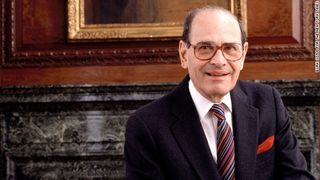
Arthur Ochs Sulzberger, who guided The New York Times and its parent company through a long, sometimes turbulent period of expansion and change on a scale not seen since the newspaper’s founding in 1851, died early Saturday at his home in Southampton, N.Y. He was 86.
His death, after a long illness, was announced by his family.
Mr. Sulzberger’s tenure, as publisher of the newspaper and as chairman and chief executive of The New York Times Company, reached across 34 years, from the heyday of postwar America to the twilight of the 20th century, from the era of hot lead and Linotype machines to the birth of the digital world.
The paper he took over as publisher in 1963 was the paper it had been for decades: respected and influential, often setting the national agenda. But it was also in precarious financial condition and somewhat insular, having been a tightly held family operation since 1896, when it was bought by his grandfather Adolph S. Ochs.
By the 1990s, when Mr. Sulzberger passed the reins to his son, Arthur Sulzberger Jr., first as publisher in 1992 and then as chairman in 1997, the enterprise had been transformed. The Times was now national in scope, distributed from coast to coast, and it had become the heart of a diversified, multibillion-dollar media operation that came to encompass newspapers, magazines, television and radio stations and online ventures.
The expansion reflected Mr. Sulzberger’s belief that a news organization, above all, had to be profitable if it hoped to maintain a vibrant, independent voice.
I’m Sorry, Steve Jobs: We Could Have Saved You
Siddhartha Mukherjee in Newsweek:
Jobs’s death—like a generational Rorschach test—had provoked complex reactions within each of us. There was grief in abundance, of course, admixed with a sense of loss, with desolation and nostalgia. Outside the Apple store in SoHo, New York, that evening, there were bouquets of white gerberas and red roses. Someone had left a bushel of apples by the doorstep and a sign that read “I-miss …” I missed Jobs, too—but I also felt a personal embarrassment in his death. I am an oncologist and a cancer researcher. I felt as if my profession, my discipline, and my generation had let him down. Steve Jobs had promised—and then delivered—life-altering technologies. Had we, in all honesty, given him any such life-altering technologies back? I ask the question in all earnestness. Jobs’s life ended because of a form of pancreatic cancer called pancreatic neuroendocrine tumor, or PNET. These tumors are fleetingly rare: about five in every million men and women are diagnosed with PNETs each year. Deciphering the biology of rare cancers is often challenging. But the past five years have revealed extraordinary insights into the biology of some rare cancers—and PNETs, coincidentally enough, have led part of that charge. By comparing several such tumors, scientists are beginning to understand the biology of these peculiar tumors.
More here.
The Art of Stem Cells
From Harvard Magazine:
Jennifer Quick, a Ph.D. candidate in the department of the history of art and architecture, stood before her audience in the main gallery of the Carpenter Center for the Visual Arts. Behind her, on a free-standing wall running down the middle of the gallery, hung more than a dozen works by Michael Wang ’03, a visual artist who creates micrograph images of artificially produced stem cells.
But as Quick began to lecture on Wang’s works, another voice could be heard from behind the wall. It belonged to cellular biologist Gabriella Boulting, Ph.D. ’12, who was speaking to her own audience about pieces Wang had created that hung on her side of the wall. Dueling gallery tours? Wang, an artist who aims to bring together art and science in interesting and thought-provoking ways, prefers to think of two lecturers working as one. “I wanted to literally stage an encounter between two disciplines, the artistic community on one hand and the scientific on the other,” Wang says. “I don’t think of artworks as ending with the individual artistic object. There is an expanded field that includes context and discourse around [that object] so I really wanted to make sure that could be an expanded part of the work. I wanted people from within the University to provide two very different insights at the exact same time.” His latest work, Differentiation Series, is a sequence of micrograph images of artificially produced stem cells that have been hand-tinted using a system that matches a unique color to every specific cell type that can potentially be produced from these initially undifferentiated cells.
More here.
The Britishisation of American English
Cordelia Hebblethwaite at the BBC:

“Spot on – it's just ludicrous!” snaps Geoffrey Nunberg, a linguist at the University of California at Berkeley.
“You are just impersonating an Englishman when you say spot on.”
“Will do – I hear that from Americans. That should be put into quarantine,” he adds.
And don't get him started on the chattering classes – its overtones of a distinctly British class system make him quiver.
But not everyone shares his revulsion at the drip, drip, drip of Britishisms – to use an American term – crossing the Atlantic.
“I enjoy seeing them,” says Ben Yagoda, professor of English at the University of Delaware, and author of the forthcoming book, How to Not Write Bad.
“It's like a birdwatcher. If I find an American saying one, it makes my day!”
Last year Yagoda set up a blog dedicated to spotting the use of British terms in American English.
So far he has found more than 150 – fromcheeky to chat-up via sell-by date, and the long game – an expression which appears to date back to 1856, and comes not from golf or chess, but the card game whist. President Barack Obama has used it in at least one speech.
More here.
Behind the drones debate
Cyril Almeida in Dawn:

There. Now that that’s out of the way, there’s another obvious truth about drone strikes: they won’t end.
Because drones kill militants. Because there isn’t a good alternative to drones for killing militants in parts of Fata. And because the US security establishment likes them and the Pakistani security establishment doesn’t loathe them.
And, given what 140,000 troops in Fata can and have done, drones are — in terms of casualties and damage caused to civilian populations — on the periphery of the ‘what are we doing to our people’ debate.
If drones are here to stay, why this endless back and forth, sometimes acerbic, at other times restrained, between Pakistan and the US?
More here.
A Trans-Atlantic Trip Turns Kafkaesque
Gary Shteyngart in the New York Times:
Flight 121 from Paris to New York began on a clear autumn afternoon. It ended over 30 hours later. For those of us without miles, it is probably still going.
The initial delay was a mere hour or two. Some were told that our aircraft possessed faulty tires and brakes. Others were told that the crew could not find their way in from Paris. Neither scenario was particularly encouraging.
The aircraft was indeed an interesting one. One of the overhead baggage compartments was held together with masking tape. Halfway across the Atlantic you decided to turn Flight 121 back because your altimeter wasn’t working. Some of us were worried for our safety, but your employees mostly shrugged as if to say, Ah, there goes that altimeter again.
More here.
To get the most out of life, you’ve got to live like a bird
Our own Morgan Meis in The Smart Set:
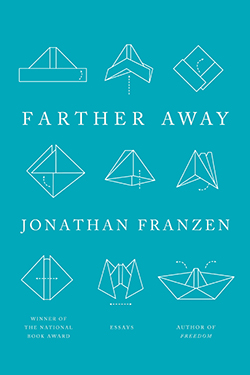
Franzen became a bird watcher many years ago. He is almost apologetic about that fact, realizing that — in the opinion of most normal human beings — the birdwatcher is a slightly pathetic if otherwise harmless individual. In his commencement address at Kenyon College, “Pain Won't Kill You,” Franzen writes:
It's a long story, but basically I fell in love with birds. I did this not without significant resistance, because it is very uncool to be a birdwatcher, because anything that betrays real passion is by definition uncool. But little by little, in spite of myself, I developed this passion, and although one half of a passion is obsession, the other half is love.
From his usage of words like “passion,” “obsession,” and “love,” it's obvious Jonathan Franzen thinks birdwatching is neither pathetic, nor, more importantly, is it harmless. For Franzen, birdwatching is a big deal. Paying attention to birds can change you. It can transform your sense of self and the world. Franzen knows this because it happened to him.
Many of the essays in Franzen's book therefore touch on the subject of watching birds. A couple of essays are explicitly about birdwatching, which Franzen has done in Cyprus, on an island in the South Pacific known as Masafuera, and in China, among other places. Franzen has become a defender of the birds. He is appalled by the killing of birds and by the destruction of their natural habitat. He laments with great pathos the lusty shooting of migrant birds that is a favorite pastime of the people of Malta. But what does it mean, this birdwatching, and why does Franzen keep coming back to the theme of birds over and over in his essays?
More here.
Saturday, September 29, 2012
Geller’s ‘savage’ ad displays the racism inherent in Israeli colonization
Shireen Tawil in Mondoweiss:

Geller’s vulgar and hateful ad campaign has rightfully received much resistance and heat from local populations, as well as the public transportation authorities whose vehicles it smuts. Local anti-hate activists’ creative and artistic responses have branded these ads as racist and hate speech. Her violent and distasteful language has been slammed for reeking of colonial racism and white supremacy. The San Francisco MTA refused to run the ad as it contradicts their stance against defamatory language, until Geller went to court and, winning the case, protected the ad under the First Amendment (much to their credit, in a refreshing reaction to being forced to post the ad, the SFMTA donated its proceeds from the ad to the San Francisco Human Rights Commission).
The language Geller employs in her ad is shocking, hurtful, divisive, violent, hateful, racist, and vulgar. But it is out there, and potentially spreading. The question now remains: what to do with it?
More here.