Wednesday Poem

Sabbaths 1985 V

How long does it take to make the woods?
As long as it takes to make the world.
The woods is present as the world is, the presence
of all its past and of all its time to come.
It is always finished, it is always being made, the act
of its making forever greater than the act of its destruction.
It is a part of eternity for its end and beginning
belong to the end and beginning of all things,
the beginning lost in the end, the end in the beginning.

What is the way to the woods, how do you go there?
By climbing up through the six days’ field,
kept in all the body’s years, the body’s
sorrow, weariness, and joy. By passing through
the narrow gate on the far side of that field
where the pasture grass of the body’s life gives way
to the high, original standing of the trees.
By coming into the shadow, the shadow
of the grace of the strait way’s ending,
the shadow of the mercy of light.


Why must the gate be narrow?

Because you cannot pass beyond it burdened.
To come into the woods you must leave behind
the six days’ world, all of it, all of its plans and hopes.
You must come without weapon or tool, alone,
expecting nothing, remembering nothing,
into the ease of sight, the brotherhood of eye and leaf.
.

by Wendell Berry
from A Timbered Choir

chopstick theory

1205273-gf

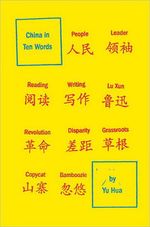
When the young Mao Tse-tung agitated for revolution, he found a vivid way to get his point across to an uneducated audience: He picked up a single chopstick and snapped it in two. Then he picked up a handful of chopsticks: They would not break. Thus he showed that so long as everyone stood side by side, no force could withstand the tide of revolution. By gathering together China’s scattered, indignant chopsticks, Mao finally was able to ascend Tiananmen—the Gate of Heavenly Peace — on Oct. 1, 1949, and announce the establishment of his republic. Whether chopsticks come singly or in a handful is now an issue in China again. Mao’s successors, however, do the opposite of what he advocated, mobilizing immense resources to keep chopsticks from gathering together. The government knows that angry chopsticks are everywhere, but as long as they stay scattered, it believes it can break them in two, whatever their numbers. Thus it is that “stability maintenance” has become a key term in contemporary China. The government does not make public what it spends to maintain stability, but popular estimates go as high as 600 billion yuan. As mass protests become more frequent, that figure can only increase.

more from Yu Hua at NPQ here.

There is a devil haunts thee

Edwin_Booth_Hamlet-1

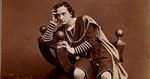
Abraham Lincoln’s courtship of Mary Todd was anything but smooth. At one point it helped bring on a bout of severe depression that left the future president nearly dysfunctional for a brief period and caused him to avoid Springfield’s social world for several months. In a letter to an absent friend, the future Mrs. Lincoln lamented this state of affairs and wished “that he would once more resume his Station in Society, that ‘Richard should be himself again.’ ” The expression she used is clear enough in meaning, but Lincoln’s biographers have been less certain about its source. In fact, the expression “Richard’s himself again” was in vogue in antebellum America, deriving from one of the best-known speeches in the most performed of all Shakespeare plays, Richard III. But that speech, as Lincoln himself would later point out, was not written by Shakespeare. This curious state of affairs is surprisingly emblematic of the undernourished state of our knowledge of Lincoln’s famous affinity for Shakespeare. We have so many well-attested stories of Lincoln extolling Shakespeare as a young man in New Salem, of his carrying a volume of Shakespeare’s works around with him on the judicial circuit, of his ability (and willingness) to recite from memory long passages from Shakespeare at the drop of a hat, and of his reading from the plays by the hour to his secretaries and guests as president, that there can be little doubt of his longstanding attachment to the writings of the Bard.

more from Douglas L. Wilson at The American Scholar here.

our own survival is greatly over-valued

Byrne_37.1_gates

Let us recap. You don’t have to go where your immaterial soul goes—not at least if it doesn’t take your mind with it. You don’t have to go where your body goes—not at least if it doesn’t take your mind with it. What does this suggest? That you go where your mind goes or, as Locke puts it, “personal identity consists . . . in the identity of consciousness.” Let us not pause to examine what exactly Locke means by “identity of consciousness” and instead turn to the development of his view by the philosopher Derek Parfit, whose 1984 book Reasons and Persons is partly devoted to defending a “neo-Lockean” theory of personal identity and to extracting some astonishing implications from it. The basic neo-Lockean idea is that you survive just in case your psychology continues on in roughly the manner it does in ordinary life. Our psychological lives are not a series of unrelated mental events, but form a complex structure. A simple example: you go to the beach and enjoy the experience of basking on the hot sand. At noon you decide to return home at sunset, and this explains why at dusk you gather up your towel. In the evening at home you recall being at the beach, the feeling of the sand on your feet, and so forth. This illustrates what Parfit calls “psychological connectedness,” the sort of relation that holds between your decision to leave and subsequent towel gathering, and between your beach experience and subsequent recollection. We can think of your psychological life from childhood to old age as overlapping stretches of psychological connectedness, like strips of paper glued together to form a much longer strip. Parfit calls this “psychological continuity.” Parfit’s view is that personal identity—our survival or persistence over time—consists in psychological continuity and connectedness.

more from Alex Byrne at Boston Review here.

Tuesday, February 28, 2012

The Nominees for the 2012 3QD Prize for Arts & Literature are:

Alphabetical list of blog names followed by the blog post title:

(Please report any problems with links in the comments section below.)

For prize details, click here.

And after looking around, click here to vote.

  1. 3 Quarks Daily: Adagio in Blues
  2. 3 Quarks Daily: Imagining an Expat Aesthetic
  3. 3 Quarks Daily: Islands for Introverts
  4. 3 Quarks Daily: Love is What You Want
  5. 3 Quarks Daily: Marco Polo in Boulder, Colorado
  6. 3 Quarks Daily: PINA — a 3D Documentary Film by Wim Wenders
  7. 3 Quarks Daily: The Last Novel
  8. American Stories NOW: Waiting for the Bat
  9. Big Think: Will Neuroscience Kill the Novel?
  10. Brian Thill: POST #5 : Rescuing Books
  11. Chapati Mystery: At Sea
  12. Chapati Mystery: Funny Face
  13. Dan Souder’s Literary Journal: The Tempest
  14. Eyewear: Harlow on Four Zimbabwean Poets
  15. Guernica: Rape, Revisited
  16. Imprint: The Consequences of Writing Without Reading
  17. Kristine Ong Muslim: Bonsai-keeping and the rate of crystal growth
  18. Los Angeles Review of Books: At Home and Abroad
  19. More Quasar: Graham Harman and the Queen of the Blues
  20. Need to Know on PBS: Excuse me, I’m having a Macbeth moment
  21. Nite Rote: Learning
  22. Numéro Cinq: Chiaroscuro: A Memoir
  23. Numéro Cinq: Egypt After the Revolution
  24. Numéro Cinq: My First Job
  25. Numéro Cinq: On Courage
  26. Numéro Cinq: The Formalist Reformation, A Review of Viktor Shklovsky’s Bowstring: On the Dissimilarity of the Similar
  27. Occasional Planet: Navigating the waters of our biased culture
  28. Open Letters Monthly: A Novelist in Tahrir Square
  29. Pandaemonium: Antigone Across the Ages
  30. Pan Web-eye: Hortus Judeorum
  31. Patagonian Road: The Hippy Trail
  32. Philip Graham: Nanobots, Water Walls and Dying Flies
  33. Philip Graham: What Casablanca Can Teach A Writer
  34. Privilege: Professor C. Discusses The Age of Innocence: Wharton and Scorsese
  35. Rebecca Nemser: Hans Wegner / The Bear Chair
  36. Salon: Whole Foods Was Around the Corner
  37. Sanchari Sur: Scheherazade’s One Thousand and One Arabian Night(mare)s
  38. Sarah Wrote That: Sea Poem for Occupy
  39. Shelf Actualization: Brave New World vs. Nineteen Eighty-Four
  40. Steven Hart Site: The Sociopathic Swordsman
  41. Tang Dynasty Times: Leonardo in the Gilded Age
  42. The Awl: Inside David Foster Wallace’s Private Self-Help Library
  43. The Best American Poetry: Spend It All
  44. The Blog: Waiting for Guddo
  45. The Epicurean Dealmaker: Sovereign Triviality
  46. The GetHigh Files: The Importance of Being Brazen
  47. The Millions: Embracing The Other I Am; or, How Walt Whitman Saved My Life
  48. The Millions: Every Day I Open a Book
  49. The Millions: Irène Némirovsky, Suite Française, and The Mirador
  50. The Millions: Living Out the Day: The Moviegoer Turns Fifty
  51. The Millions: Sailing on the Open Sea: John Updike’s Higher Gossip: Essays and Criticism
  52. The Millions: Scared Straight: Writers and The New Happiness
  53. The Millions: Sister Carrie
  54. The Millions: The Great Read Shark: Fear and Loathing at 40
  55. The Millions: The Stockholm Syndrome Theory of Long Novels
  56. The Nervous Breakdown: Secret Theatres
  57. The Philistine at Bar: My Cousin Roscoe Has An Advice Column In The Possum Hollar Penny Saver And I Agreed to Post This
  58. The Philosopher’s Beard: Reading Jane Austen as a moral philosopher
  59. Twombly: Antidotical Blue
  60. Uncanny Valley: Why (When) Subtlety Doesn’t Matter
  61. Writing Here at Nottingham Contemporary: Jack Goldstein’s Two Boxers: A Re-Performance
  62. Yabot the Robot: Lansing, MI

On the cult of Sherlock Holmes

Leslie S. Klinger in the Los Angeles Review of Books:

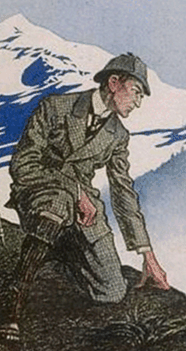
ScreenHunter_27 Feb. 28 14.29On a recent short plane flight, I read Michael Dirda’s On Conan Doyle: Or, The Whole Art of Storytelling in one sitting. The effect was like having a voluble but very interesting seatmate, one whom you interrupt only rarely with exclamations of agreement and perhaps a short recital of a similar anecdote from your life. I knew that I was expected to review the book, and so I sat back as the plane descended and contemplated my comments.

Best to begin with a disclaimer. I first met Dirda at the “Millennium Dinner” of the Baker Street Irregulars in January 2000. Subsequently, Dirda and I became friends, sharing meals, many conversations, and rambles around Washington and Los Angeles. Dirda has slept in my house and shared my table, and I have never left his company feeling less than a little inebriated, regardless of whether any alcohol was actually consumed. Not only does Dirda love to read and write, he loves to talk; and his talk is mostly about books, reading, and so many things that I cherish. Michael is the quintessential “bookman,” in an age when so few remain. So a chance to listen to him talk about Conan Doyle seemed likely to be an extremely pleasant way to spend my travel time.

I was mightily impressed that Dirda was speaking to the Irregulars. He was, after all, a Pulitzer-winning critic and the book editor of the Washington Post. It quickly became clear that he loved Sherlock Holmes and the entire Holmes canon as much as I did, though for different reasons.

More here.

Upper class people more likely to cheat: study

From Physorg.com:

16-Signs-That-The-Rich-Are-Getting-Richer-And-The-Poor-Are-Getting-Poorer-300x300In two field studies on driving behavior, upper-class motorists were found to be four times more likely than the other drivers to cut off other vehicles at a busy four-way intersection and three times more likely to cut off a pedestrian waiting to enter a crosswalk. Another study found that upper-class participants presented with scenarios of unscrupulous behavior were more likely than the individuals in the other socio-economic classes to report replicating this type of behavior themselves.

Participants in the fourth study were assigned tasks in a laboratory where a jar of candy, reserved for visiting children, was on hand, and were invited to take a candy or two. Upper-class participants helped themselves to twice as much candy as did their counterparts in other classes.

In the fifth study, participants each were assigned the role of an employer negotiating a salary with a job candidate seeking long-term employment. Among other things, they were told that the job would soon be eliminated, and that they were free to convey that information to the candidate. Upper-class participants were more likely to deceive job candidates by withholding this information, the study found.

In the sixth study, participants played a computerized dice game, with each player getting five rolls of the dice and then reporting his or her scores. The player with the highest score would receive a cash prize. The players did not know that the game was rigged so that each player would receive no more than 12 points for the five rolls. Upper-class participants were more likely to report higher scores than would be possible, indicating a higher rate of cheating, according to the study.

More here.

African American History: Major Speeches

From BlackPast.Org:

BlackHistoryMonth“If I had a thousand tongues and each tongue were a thousand thunderbolts and each thunderbolt had a thousand voices, I would use them all today to help you understand a loyal and misrepresented and misjudged people.” These were the words of Joseph C. Price, founder and President of Livingston College in North Carolina, who in 1890 delivered an address to the National Education Association annual convention held in Minneapolis. Price’s words reflect on the long tradition of African American oratory. Listed below are some of the most significant orations by African Americans with links to the actual speeches.

(1832) Maria W. Stewart, “Why Sit Ye Here and Die?”

Maria W. Stewart (1803-1879) was one of the first American women to leave copies of her speeches. The address below is her second public lecture. It was given on September 21, 1832 in Franklin Hall in Boston, the meeting site of the new England Anti-Slavery Society. Although as an abolitionist, she usually attacked slavery, in this address she condemns the attitude that denied black women education and prohibited their occupational advancement. In fact she argues that Northern African American women, in term of treatment, were only slightly better off than slaves.

Why sit ye here and die? If we say we will go to a foreign land, the famine and the pestilence are there, and there we shall die. If we sit here, we shall die. Come let us plead our cause before the whites: if they save us alive, we shall live—and if they kill us, we shall but die. Methinks I heard a spiritual interrogation—'Who shall go forward, and take off the reproach that is cast upon the people of color? Shall it be a woman? And my heart made this reply —'If it is thy will, be it even so, Lord Jesus!' I have heard much respecting the horrors of slavery; but may Heaven forbid that the generality of my color throughout these United States should experience any more of its horrors than to be a servant of servants, or hewers of wood and drawers of water! Tell us no more of southern slavery; for with few exceptions, although I may be very erroneous in my opinion, yet I consider our condition but little better than that. Yet, after all, methinks there are no chains so galling as the chains of ignorance—no fetters so binding as those that bind the soul, and exclude it from the vast field of useful and scientific knowledge. O, had I received the advantages of early education, my ideas would, ere now, have expanded far and wide; but, alas! I possess nothing but moral capability—no teachings but the teachings of the Holy spirit.

I have asked several individuals of my sex, who transact business for themselves, if providing our girls were to give them the most satisfactory references, they would not be willing to grant them an equal opportunity with others? Their reply has been—for their own part, they had no objection; but as it was not the custom, were they to take them into their employ, they would be in danger of losing the public patronage.

And such is the powerful force of prejudice.

More here. (Note: In honor of African American History Month, we have been linking to at least one related post throughout February. The 2012 theme is Black Women in American Culture and History).

Genomics as a Final Frontier, or Just a Way Station

Abigail Zuger in The New York Times:

GenesThe medical world is holding its breath, waiting for the revolution. It will be here any minute. Definitely by the end of the decade. Or perhaps it will take a little longer than that, but seriously, it’s right around the corner. More or less. That’s the genomics revolution, with its promise of treatment focused on the individual rather than the group. At last, patients will be more than the product of their age, sex, ethnicity, illnesses and bad habits; treatments will be aimed like a laser at their personal genetic particulars, and if those genes are not quite what they should be, then those genes will be fixed. Over the last few years, various breathless visions of this therapeutic future have been written out for public admiration. A particularly readable and comprehensive version can be found in Dr. Eric J. Topol’s new book, “The Creative Destruction of Medicine.”

Dr. Topol, a cardiologist and researcher at the Scripps Research Institute with the energy of 10 (if his prose style and his honor-laden biography are any indication), dispenses in short order with our current population-based medical strategies. They are wasteful and inexact, he points out, often marginally beneficial to the group and downright harmful to the individual. He presents an array of far better ideas, a few now actually being practiced in rudimentary form. These include pharmacogenomics, in which specific genes that govern responses to medications are routinely assayed, and cancer treatments that probe tumors for specific genetic targets rather than relying on standard chemotherapy. But that’s not all: Dr. Topol also points out that soon a person’s precise genetic data will be augmented by an extraordinary wealth of other digital data (provided by, say, the continuous monitoring of blood pressure, pulse and mood, and a variety of ultra-precise scans). The outcome will be nothing short of a new “science of individuality,” one that defines individuals “at a more granular and molecular level than ever imaginable.”

More here.

Tuesday Poem

My Mother

My mother writes from Trenton,
a comedian to the bone
but underneath serious
and all heart. “Honey,” she says,
“be a mensch and Mary too,
its no good, to worry, you
are doing the best you can
your Dad and everyone
thinks you turned out very well
as long as you pay your bills
nobody can say a word
you can tell them, to drop dead
so save a dollar it can’t
hurt—remember Frank you went
to highschool with? he still lives
with his wife’s mother, his wife
works while he writes his books and
did he ever sell a one
the four kids run around naked
36, and he’s never had,
you’ll forgive my expression
even a pot to piss in
or a window to throw it,
such a smart boy he couldn't
read the footprints on the wall
honey you think you know all
the answers you dont, please, try
to put some money away
believe me it wouldn’t hurt
artist schmartist life’s too short
for that kind of, forgive me,
horseshit, I know what you want
better than you, all that counts
is to make a good living
and the best of everything,
as Sholem Aleichem said,
he was a great writer did
you ever read his books dear,
you should make what he makes a year
anyway he says some place
Poverty is no disgrace
but its no honor either
that’s what I say,
……………….. love,
……………………… Mother”

by Robert Mezey
from Strong Measures
Harper Collins,1986

Monday, February 27, 2012

perceptions

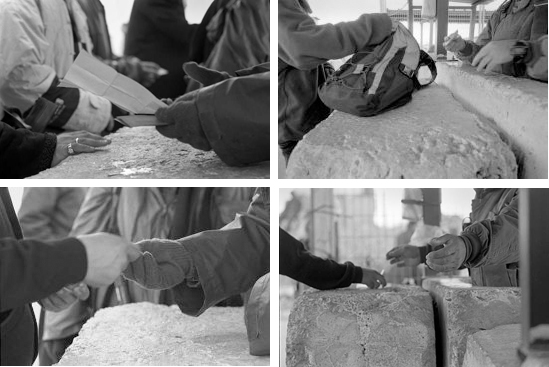
Hands
Rula Halawani. Intimacy. 2006.

“These series of photographs were taken at the Qalandia checkpoint. This body of work examines and captures the experience of the checkpoint which has become a hallmark of the current Israeli occupation. There are very few faces among the collection of images; rather we are invited to view a multitude of close-ups of encounters between soldiers and Palestinians wanting to cross the border.”

More here and here.

Sunday, February 26, 2012

Vienna and The Modern World

Snowy-benches-along-a-bou-007William Boyd in The Guardian (Photograph: Irene Lamprakou/Getty Images/Flickr RM):

Why do certain cities haunt the imagination? Not just the city itself but the city in a particular historical period. In my own case I can identify four such cities – Los Angeles in the 1970s, Lisbon in the 1930s, Berlin in the 1920s and Vienna in the years just before the first world war. Thus captivated, I wrote fiction – short stories, chapters of novels – set in each of these cities long before I ever visited them. This is the mark and measure, I suppose, of their allure – it's vicarious, it works at a great distance – but it must be some conveyed sense of atmosphere, the spirit of place, that prompts the fascination. Perhaps the most telling factor is a powerful feeling that you would like to have lived there yourself.

One of the amazing aspects of Vienna – or certainly the central city, the Inner Stadt bounded by the great circling boulevard of the Ring, is how easy it is to imagine living there – not just in the early years of the 20th century but in the 19th or even 18th century as well. It's so beautifully preserved and maintained that you can turn a corner and draw up with a shock, imagining that Mozart or Brahms could have seen the identical view. But Vienna in its fading pomp, in the last years of the Austro-Hungarian empire (1867-1918), is present before you in almost every street scene or vista. Freud's Vienna, Wittgenstein's Vienna, Egon Schiele's Vienna.

It was Egon Schiele who started my Vienna obsession. Schiele and Klimt. Up until the 1970s – when Rudolf Leopold's catalogue raisonné of Schiele's paintings and drawings appeared – Schiele was a virtual unknown. I can remember while I was at university in the 70s the sudden outpouring of postcards and posters, books or reproductions that occurred. Suddenly everyone loved Schiele and was enthralled by his short, tormented life. Schiele's angular, mannered, brilliant draughtsmanship, the blatant near-pornography of his nudes, male and female, were a thrilling revelation. I went to Vienna for the first time to write a piece about Schiele, or to be more precise to write a piece about the Leopold Museum that contains the world's biggest collection of his work. Even after decades of familiarity the actual canvases and drawings retain their power to shock and disturb. In some ways, Schiele is the perfect symbol of the Viennese antithesis – namely that this small, safe, solid, beautiful, bourgeois capital city should have housed in the early years of the 20th century such a contrapuntal, boiling ferment of modernism in every art form.

Race Finished: The Debunking of a Scientific Myth

Jan Sapp in American Scientist:

ScreenHunter_18 Feb. 26 19.36Few concepts are as emotionally charged as that of race. The word conjures up a mixture of associations—culture, ethnicity, genetics, subjugation, exclusion and persecution. But is the tragic history of efforts to define groups of people by race really a matter of the misuse of science, the abuse of a valid biological concept? Is race nevertheless a fundamental reality of human nature? Or is the notion of human “races” in fact a folkloric myth? Although biologists and cultural anthropologists long supposed that human races—genetically distinct populations within the same species—have a true existence in nature, many social scientists and geneticists maintain today that there simply is no valid biological basis for the concept.

The consensus among Western researchers today is that human races are sociocultural constructs. Still, the concept of human race as an objective biological reality persists in science and in society. It is high time that policy makers, educators and those in the medical-industrial complex rid themselves of the misconception of race as type or as genetic population. This is the message of two recent books: Race?: Debunking a Scientific Myth, by Ian Tattersall and Rob DeSalle, and Race and the Genetic Revolution: Science, Myth, and Culture, edited by Sheldon Krimsky and Kathleen Sloan. Both volumes are important and timely. Both put race in the context of the history of science and society, relating how the ill-defined word has been given different meanings by different people to refer to groups they deem to be inferior or superior in some way.

Before we turn to the books themselves, a little background is necessary. A turning point in debates on race was marked in 1972 when, in a paper titled “The Apportionment of Human Diversity,” Harvard geneticist Richard Lewontin showed that human populations, then held to be races, were far more genetically diverse than anyone had imagined.

More here.

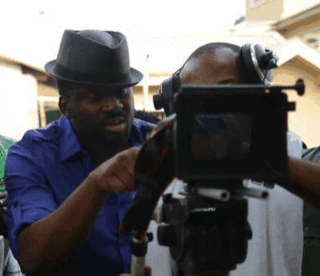
A Scorsese in Lagos: The Making of Nigeria’s Film Industry

Andrew Rice in the New York Times Magazine:

ScreenHunter_17 Feb. 26 19.26Kunle Afolayan wants to scare you, he wants thrill you, he wants to make you laugh, but most of all, he would like you to suspend your disbelief — in his plots, yes, which tend to be over the top, but also about what is possible in Africa. He bristles if you call him an “African filmmaker” — a phrase redolent of art-house cinema, which his work assuredly is not. He wants to make huge, explosive, American-style blockbusters, and he wants to make them where he lives — in Nigeria. His ambitions may sound implausible. Nigeria lacks even a reliable supply of electricity. But it does contain a chaotic creative energy that has made it the world’s most prolific producer of films.

Twenty years after bursting from the grungy street markets of Lagos, the $500 million Nigerian movie business churns out more than a thousand titles a year on average, and trails only Hollywood and Bollywood in terms of revenues. The films are hastily shot and then burned onto video CDs, a cheap alternative to DVDs. They are seldom seen in the developed world, but all over Africa consumers snap up the latest releases from video peddlers for a dollar or two. And so while Afolayan’s name is unknown outside Africa, at home, the actor-director is one of the most famous faces in the exploding entertainment scene known — inevitably — as “Nollywood.”

More here.

“The candy was seized by the FBI” — Daisy Rockwell’s Little Book of Terror

Richard Booth in his blog:

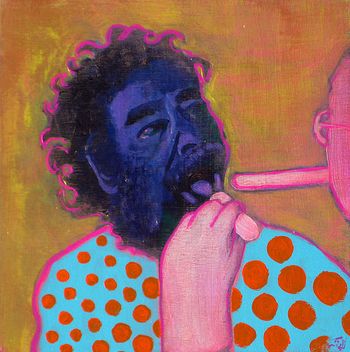
6074351550_23485aacf0First, go pick up Daisy Rockwell‘s Little Book of Terror. Here. Or at least spend an inordinate amount of time getting lost in her Flickr photos.

Daisy is the granddaughter of Norman Rockwell, and although that’s largely an irrelevant fact, I find something satisfying in the inter-generational dialectic occurring here: my Mormon, Midwestern family adored Norman Rockwell, and had hosts of folksy, wholesome prints of his work adorning the walls of their homes…

…not that Norman Rockwell’s work is bad; in fact, I don’t have any well-formed opinion on the stuff. But in my life it has represented a strange fantasy of pre-1960s American folk, “simpler times,” the kind of “real America” Republican politicians are always going on about, America before The Fall.

So I find great pleasure in thinking that my generation has a Rockwell too, but ours is ironic and twisted, exhibiting simultaneously a kind of melancholy wisdom and carefree cartoon wonder.

More here.

Why are Pakistanis so vulnerable to conspiracy theories?

Omar Ali in Viewpoint:

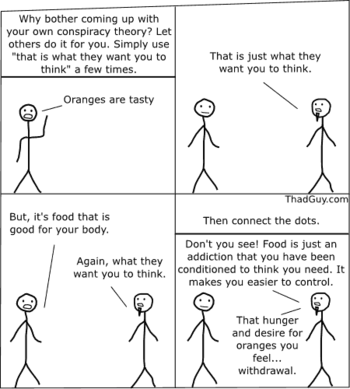
LazyconspiracytheoristI am saying that people in Pakistan do not just believe in wild conspiracy theories because they are un-informed or illiterate (in fact, that last chestnut is clearly false, the biggest believers are all literate). Neither do they do so just because they are powerless or because their traditional worldview is collapsing in front of their eyes or because they already believe in an all-powerful deity. All those may be factors, but let us not forget one more reason they believe in wild conspiracy theories: because their leaders of public opinion tell them it is so. In other words, the widespread belief in conspiracy theories is itself a conspiracy; a small group of men (it is always men) pick up the juiciest theories from some idiot American website (usually a White supremacist or paranoid brain-dead Leftie website) and spread them far and wide in the land of the pure. They plant them as stories on their websites. Then they get their own “news” outlets to pick up these stories, quoting their own websites as sources. Then they get their opinion leaders to repeat these conspiracies, using the media and the websites as sources if needed. There is, in short, a conspiracy to spread these conspiracy theories.

So it is that we find that large sections of the Pakistani middle class believe that everything that is wrong with Pakistan is due to a Hinjew conspiracy against Pakistan.

More here.

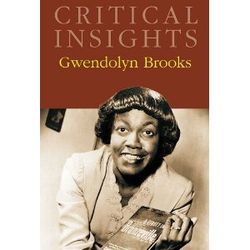
Gwendolyn Brooks: 1917-2000

From Poetry Foundation:

BrooksGwendolyn Brooks was a highly regarded, much-honored poet, with the distinction of being the first black author to win the Pulitzer Prize. She also was poetry consultant to the Library of Congress—the first black woman to hold that position—and poet laureate of the State of Illinois. Many of Brooks's works display a political consciousness, especially those from the 1960s and later, with several of her poems reflecting the civil rights activism of that period. Her body of work gave her, according to Dictionary of Literary Biography contributor George E. Kent, “a unique position in American letters. Not only has she combined a strong commitment to racial identity and equality with a mastery of poetic techniques, but she has also managed to bridge the gap between the academic poets of her generation in the 1940s and the young black militant writers of the 1960s.”

Brooks was born in Topeka, Kansas, but her family moved to Chicago when she was young. Her father was a janitor who had hoped to become a doctor; her mother was a schoolteacher and classically trained pianist. They were supportive of their daughter's passion for reading and writing. Brooks was thirteen when her first published poem, “Eventide,” appeared in American Childhood; by the time she was seventeen she was publishing poems frequently in the Chicago Defender, a newspaper serving Chicago's black population. After such formative experiences as attending junior college and working for the National Association for the Advancement of Colored People, she developed her craft in poetry workshops and began writing the poems, focusing on urban blacks, that would be published in her first collection, A Street in Bronzeville.

“An Interview with Gwendolyn Brooks” in Contemporary Literature 11:1 (Winter 1970).

Q. How about the seven pool players in the poem “We Real Cool”?

A. They have no pretensions to any glamor. They are supposedly dropouts, or at least they're in the poolroom when they should possibly be in school, since they're probably young enough, or at least those I saw were when I looked in a poolroom, and they. . . . First of all, let me tell you how that's supposed to be said, because there's a reason why I set it out as I did. These are people who are essentially saying, “Kilroy is here. We are.” But they're a little uncertain of the strength of their identity. [Reads:]

We real cool. We
Left school. We

Lurk late. We
Strike straight. We

Sing sin. We
Thin gin. We

Jazz June. We
Die soon.

The “We”—you're supposed to stop after the “We” and think about their validity, and of course there's no way for you to tell whether it should be said softly or not, I suppose, but I say it rather softly because I want to represent their basic uncertainty, which they don't bother to question every day, of course.

Q. Are you saying that the form of this poem, then, was determined by the colloquial rhythm you were trying to catch?

A. No, determined by my feeling about these boys, these young men.

Q. These short lines, then, are your own invention at this point? You don't have any literary model in mind; you're not thinking of Eliot or Pound or anybody in particular . . . ?

A. My gosh, no! I don't even admire Pound, but I do like, for instance, Eliot's “Prufrock” and The Waste Land, “Portrait of a Lady,” and some others of those earlier poems. But nothing of the sort ever entered my mind. When I start writing a poem, I don't think about models or about what anybody else in the world has done.

More here. (Note: In honor of African American History Month, we will be linking to at least one related post throughout February. The 2012 theme is Black Women in American Culture and History).

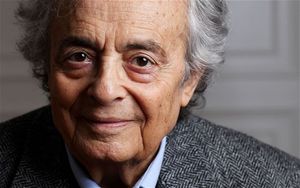
A Page in the Life: Adonis

From The Telegraph:

Rahim_main_2141044bWe are in the Mosaic Rooms in Kensington, where Adonis – who is annually suggested as a favourite to win the Nobel Prize for Literature – has been reading his poems and exhibiting his paintings. Born near the Syrian coastal city of Latakia in 1930, Adonis learnt both the Koran and classical Arab poetry as a child before studying philosophy at Damascus University. He was jailed for supporting a socialist party and in 1956 left for Beirut, where he founded an influential poetry magazine and wrote his own experimental verse. For the past 30 years he has lived in Paris from where he has continued to write poetry and prose (now more than 50 books altogether) and often makes forceful comments on the state of the Middle East. In person he is small and dapper, with a playful sense of humour. I tell him that in 2006 I spent six months studying Arabic at Damascus University. When I heard him reading at the Mosaic Rooms, I missed a lot but some phrases rang out clearly. Although his work avoids rhyme and logical narrative progression, he still writes in the classical language I studied rather than the Syrian colloquial.

Some have suggested that one reason the Arab world remains so rigidly hierarchical is the huge gap between the formal language used in literature and politics, and ordinary speech. “The colloquial language is still poor by comparison,” he says, adding that using the classical gives the entire Arab world a universal language. Is it relevant that the Koran is the founding text of classical Arabic? Mention of Islam’s holy book brings a glint to his eye. “People talk a lot about the Koran but I doubt very much whether many Muslims read the book at all. I mean the fundamentalists but also most Muslims. In fact, Muslims are now throttling Arabic because of censorship – both social and political.”

More here.