Chamber of Corporatism

US-COCRyan McMaken over at the Ludwig von Mises Institute [h/t: Dough Henwood]:

If the US Chamber of Commerce were some kind of rogue player in the chamber-of-commerce game, that would be one thing, but unfortunately, chambers of commerce across America, and other lobbying arms of the so-called business community are in the business of lobbying ceaselessly for more government spending, for more subsidies, and for more state power in the name of “business-friendly” policies that often amount to little more than subsidy programs.

At the local level as well, chambers have become major advocates of tax increases and more government spending.

In 2005 in Colorado, for example, the Denver Chamber of Commerce was the largest single supporter of Referendum C, a state referendum that would increase government spending by more than $3.5 billion. The referendum would eliminate refunds that would have gone to the taxpayers in favor of more state spending on nonspecific projects.Download PDF The effect was a net increase of the tax burden on the state's citizens and more spending. The referendum had to be approved by a statewide vote, and the proponents spent $8 million to convince the taxpayers to approve the spending scheme, with the Chamber of Commerce footing more than $700,000 of the total bill.

In 2010, numerous chambers of commerce in Kansas came out against what they described as “drastic” and “devastating” spending cuts in the state. Bernie Koch, executive of the state's association of local chambers, opined in the Kansas City Star that supporting “new revenue” is the correct solution, and he quoted a statement from a group of chambers of commerce stating that “if revenues must be enhanced for basic government services our chambers can support rational state revenue enhancements.”

In other words, the chambers wanted tax increases.

There's nothing shocking here, of course. From time immemorial, business interests have attempted to use the power of government to enhance their own profitability and to limit the freedom of competitors. In modern times we call this rent seeking, and the chambers of commerce excel at it.

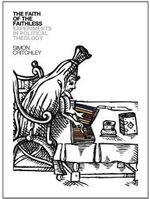
Counterfactual Faith and Modern Politics: An Interview with Simon Critchley

FaithoffaithlessJonny Gordon-Farleigh interviews Critchley in Stir [h/t: Ajay Chaudhary]:

STIR: It has been reasoned that the recent theological revival is because of a “theoretical deficit, not a theological need” (Alberto Toscano). Are there more reasons for this unexpected if not unusual upturn in interest in political theology than the catastrophic failure of the communist projects of the previous century?

Simon Critchley: The interest in political theology comes out of a dissatisfaction with liberalism. The notion of political theology as a category or term actually originates in Bakunin. So, it originates in Italian thought in the mid-nineteenth century and is also first used as an abusive term. And when Carl Schmitt picks it up in the 1920s he gives it a different valence but the object of attack for both Bakunin and Schmitt, on the left and on the right, is the same liberalism.

Periodising that, you have the aftermath of the collapse of the Warsaw pact and the Soviet Union, and the period in the early 90s when there is a lot of optimism about the potential within democracy for emancipatory energies that then quickly exhausts itself. Then, there is a return to the theological concerns at that moment, which isn’t so much a return to communist ideas as an attempt to find something at the level of the deep motivational structure of what it means to be a human self and what selves might be together. If you are interested in that question then the history of religious thought is really a place to look — maybe the place to look.

For me, I’ve never been a particularly secularist thinker and I’ve never had a strong faith in the ideas of secular modernity. I’ve had a huge interest, as long as I’ve been aware of such things, in religious thinkers like Paul, Pascal, Augustine and many others. It seems to me that if you start from some idea that philosophy or theory has to do without religion then you are cutting yourself off from that incredibly useful archive of possibilities. So, I think that philosophy is inconceivable without religion, or shouldn’t be done without religion as it shouldn’t be done only with religion. I am not a theist in that sense. It means using the best and most powerful ideas in that tradition for other ends. Of the people who have gone back to using religious sources to think about politics, then I would say that Alain Badiou’s Saint Paul is the most powerful.

The question for me is two-fold. Firstly, it is diagnostic: to understand the nature of political forms is to think of them as different forms of sacralisation. In my view, I have this idea that the history of political forms — fascism, liberal democracy, Stalinism — is different forms of the sacral. There is always some sacred object: the nation, the people, the race, or whatever it might be. So, rather than seeing the history of politics as the movement from the religious to the secular, I see politics as a shift in the meaning of the sacred.

Dreaming in Chinese

Richard Wolin in the Los Angeles Review of Books:

Tumblr_m06lodxUyO1qhwx0o“Sustain harmony!” This is a CCP (Chinese Communist Party) mantra that is omnipresent in Shanghai and other major Chinese cities. Chinese society is and has always been haunted by the paralyzing fear of luan: chaos or anarchy. The so-called “century of humiliation” from 1850 to 1950 — first at the hands of Western imperialism, then at the hands of Japanese militarism — remains keenly engraved in the Chinese cultural psyche. Of course, it is in the government’s interest to stress the communitarian values of collective belonging over the perils of Western-style possessive individualism.

The communitarian dimension of Chinese life has its distinctly attractive side. Wherever one goes, one senses the importance of group belonging: that it behooves individuals to maintain loyalties and commitments that transcend the self qua isolated ego or monad. But the sinister political use to which this slogan can be, and often is, put manifested itself in the vigorous crackdown on dissidents that occurred prior to the 2008 Olympics — a major feather in the regime’s cap — and again the following year, with the 20th anniversary of the 1989 Tiananmen Square pro-democracy demonstrations.

Since the Arab Spring, the repression has become even more severe. The words “Egypt” and “Tahrir Square” have been banned from internet searches. Since “jasmine” has become a code word for collective dissent or resistance (the Tunisian revolt was originally labeled the “Jasmine Revolution”), today — in a scenario worthy of George Orwell — the flower stands under a semi-official government ban. Florists cannot peddle them to prospective buyers. To use the word in text messages is to risk an interrogation by state security services.

More here.

Following double Nobel winner Linus Pauling’s advice on Vitamin C

Steve Marble in the Los Angeles Times:

68246718“This,” my dad would tell us, “will keep you from ever getting a cold.”

And so it went for years, the breakfast orange juice nothing more than a mere vehicle for delivering a massive shot of vitamin C.

My father was an early disciple of Dr. Linus Pauling, who was one of his Caltech colleagues. Pauling was a chemist; my dad a physicist. I don't know that their paths crossed regularly, but it is a small campus and a place where big ideas and extreme theories are discussed freely.

Pauling was convinced that vitamin C, taken in mega doses, would prevent the common cold. And for my dad, usually not one to go on blind faith, that was all the proof he needed.

I somehow imagined that this guy Pauling worked amid a battlefield of test tubes and beakers in some dank basement laboratory, cooking up this miracle drug and that folks like my dad would swoop by every so often to check out the progress and pick up a batch.

Pauling was already a deeply respected and widely known man of science, but vitamin C made him a bit of a rock star. He gave rise to a generation that embraced vitamin C as a mighty shield that would deflect a good many of the bad things in life, the common cold being at the top of the list.

More here.

Kony: What Jason did not tell the Invisible Children

The Lord's Resistance Army is a Ugandan problem calling for a Ugandan political solution.

Mahmood Mamdani in Al Jazeera:

ScreenHunter_04 Mar. 15 11.48Only two weeks ago, Ugandan papers carried front-page reports from the highly respected Social Science Research Council of New York, accusing the Ugandan army of atrocities against civilians in the Central African Republic while on a mission to fight Joseph Kony and the Lord's Resistance Army (LRA). The army denied the allegations. Many in the civilian population however, especially in the north, were sceptical of the denial. Like all victims, they have long and enduring memories.

The adult population recalls the brutal government-directed counterinsurgency campaign, beginning in 1986, which evolved into Operation North, the first big operation in the country that people talk about as massively destructive for civilians, and which created the conditions that gave rise to the LRA of Joseph Kony and, before it, the Holy Spirit Movement of Alice Lakwena.

Young adults recall the time from the mid-1990s when most rural residents of the three Acholi districts were forcibly interned in camps. The Ugandan government claimed it was to “protect” them from the LRA. But there were allegations of murder, bombings, and the burnings of entire villages: first to force people into the camps, and then to force them to stay put. By 2005, the camp population grew from a few hundred thousand to over 1.8 million in the entire region – which included Teso and Lango – of which over a million were from the three Acholi districts. Comprising practically the entire rural population of the three Acholi districts, they were expected to live on handouts from relief agencies. According to the government's own Ministry of Health, the excess mortality rate in these camps was approximately 1,000 persons per week – inviting comparisons with the numbers killed by the LRA even in the worst year.

More here. Also see: Ugandans react with anger to Kony video.

And also this: “The Road to Hell Is Paved with Viral Videos” by David Rieff in Foreign Policy.

And one more (this time in favor of the video-makers): Nicholas Kristof in the NYT on Kony video.

America the Possible: A Manifesto

From Orion Magazine:

AmLIKE YOU AND OTHER AMERICANS, I love my country, its wonderful people, its boundless energy, its creativity in so many fields, its natural beauty, its many gifts to the world, and the freedom it has given us to express ourselves. So we should all be angry, profoundly angry, when we consider what has happened to our country and what that neglect could mean for our children and grandchildren. How can we gauge what has happened to America in the past few decades and where we stand today? One way is to look at how America now compares with other countries in key areas. The group of twenty advanced democracies—the major countries of the Organisation for Economic Co-operation and Development (OECD), including the United Kingdom, France, Germany, Japan, the Nordic countries, Canada, and others—can be thought of as our peer nations. Here’s what we see when we look at these countries. To our great shame, America now has

• the highest poverty rate, both generally and for children;
• the greatest inequality of incomes;
• the lowest social mobility;
• the lowest score on the UN’s index of “material well-being of children”;
• the worst score on the UN’s Gender Inequality Index;
• the highest expenditure on health care as a percentage of GDP, yet all this money accompanied by the highest infant mortality rate, the highest prevalence of mental health problems, the highest obesity rate, the highest percentage of people going without health care due to cost, the highest consumption of antidepressants per capita, and the shortest life expectancy at birth;
• the next-to-lowest score for student performance in math and middling performance in science and reading;
• the highest homicide rate;
• the largest prison population in absolute terms and per capita;
• the highest carbon dioxide emissions and the highest water consumption per capita;
• the lowest score on Yale’s Environmental Performance Index (except for Belgium) and the largest ecological footprint per capita (except for Denmark);
• the lowest spending on international development and humanitarian assistance as a percentage of national income (except for Japan and Italy);
• the highest military spending both in total and as a percentage of GDP; and
• the largest international arms sales.

Our politicians are constantly invoking America’s superiority and exceptionalism. True, the data is piling up to confirm that we’re Number One, but in exactly the way we don’t want to be—at the bottom.

More here.

In a brainless marine worm, researchers find the developmental ‘scaffold’ for the vertebrate brain

From PhysOrg:

InabrainlessThe origin of the exquisitely complex vertebrate brain is somewhat mysterious. “In terms of evolution, it basically pops up out of nowhere. You don't see anything anatomically like it in other animals,” says Ariel Pani, an investigator at the Marine Biological Laboratory (MBL) in Woods Hole and a graduate student at the University of Chicago. But this week in the journal Nature, Pani and colleagues report finding some of the genetic processes that regulate vertebrate brain development in (of all places) the acorn worm, a brainless, burrowing marine invertebrate that they collected from Waquoit Bay in Falmouth, Mass.

The scientists were searching for ancestral evidence of three “signaling centers” in the vertebrate embryo that are major components of an “invisible scaffold that sets up the foundation of how the brain develops,” Pani says. Diagnostic molecular features of these signaling centers are mostly missing in the sea squirts and the lancelets, the invertebrate chordates that are the closest evolutionary relatives of the vertebrates. This had suggested that these signaling centers are key innovations that arose de novo in the vertebrate lineage. Yet, surprisingly, the scientists found highly similar signaling centers in the more distantly related acorn worm (Saccoglossus kowalevskii), a hemichordate. Acorn worm embryos lack nervous system structures comparable to vertebrate brains, and their lineages diverged from vertebrates more than 500 million years ago. Pani and colleagues found that, in the acorn worm, the signaling centers direct the formation of the embryonic body plan.

More here.

That’s Balzac!

Robb_254396k

What does a novelist need? Balzac’s letters suggest the following: a peaceful place to work; a home full of beautiful, expensive objects to create “happiness and a sense of intellectual freedom”; coffee strong enough to maintain the flow of inspiration for two months; debts and publishers’ contracts with draconian penalty clauses to reinforce self-discipline with compulsion; several aliases and hiding places to prevent the creditors’ bailiffs from confiscating the expensive objects; and a constant state of romantic excitation without the time-consuming consequences of love. This is the second of three volumes of Balzac’s Correspondance in the Bibliothèque de la Pléiade, painstakingly edited by Roger Pierrot (who produced the first scholarly edition of Balzac’s letters fifty years ago) and Hervé Yon. It contains 311 letters and documents that did not appear in the earlier edition, and a further 202 that have been completed or corrected. Despite this, there is nothing to alter the accepted view of Balzac. There are still very few letters to members of his family, whom he tended to see as a drain on time and money, and the more revealing and expansive correspondence with the Polish countess who became his wife is published separately as Lettres à Madame Hanska.

more from Graham Robb at the TLS here.

Which is a worse fate, to have a bad family or to have no family at all?

Misfits490x300-thumb-490x300-2774

The title of Arthur Miller’s first book, Situation Normal (1944), alluded to a well-known saying in the army—Situation Normal: All Fucked Up (SNAFU)—but it might be applied more widely to Miller’s view of American life in general and American family life in particular. It’s true that Philip Larkin [Hull, page 24] used the same vocabulary to describe English families—“They fuck you up, your mum and dad”—but Miller saw tragedy, not just humor, in the postwar American scene. Perhaps no major writer understood better than Miller why America could not be one happy family. In his plays of the late 1940s and early 1950s, Miller depicts the postwar nuclear family in a state of fission. His characters in All My Sons, Death of a Salesman, and A View from the Bridge suffer from a kind of psychological radiation sickness, invisible but deadly. War profiteers, failed businessmen, and dockworkers kill themselves or get killed over secrets they cannot bear to admit to their families or themselves. Foul deeds rise in the collective consciousness of a nation that erases and repeats its history—another way of saying that the sins of the fathers and mothers will be visited on the sons and daughters and unto the generations.

more from J.M. Tyree at Lapham’s Quarterly here.

the faith of the faithless

Faithoffaithless

The interest in political theology comes out of a dissatisfaction with liberalism. The notion of political theology as a category or term actually originates in Bakunin. So, it originates in Italian thought in the mid-nineteenth century and is also first used as an abusive term. And when Carl Schmitt picks it up in the 1920s he gives it a different valence but the object of attack for both Bakunin and Schmitt, on the left and on the right, is the same liberalism. Periodising that, you have the aftermath of the collapse of the Warsaw pact and the Soviet Union, and the period in the early 90s when there is a lot of optimism about the potential within democracy for emancipatory energies that then quickly exhausts itself. Then, there is a return to the theological concerns at that moment, which isn’t so much a return to communist ideas as an attempt to find something at the level of the deep motivational structure of what it means to be a human self and what selves might be together. If you are interested in that question then the history of religious thought is really a place to look — maybe the place to look. For me, I’ve never been a particularly secularist thinker and I’ve never had a strong faith in the ideas of secular modernity.

more from Simon Critchley’s interview at STIR here.

Wednesday, March 14, 2012

Edgar Allan Poe: The great bad writer

Kevin Jackson in Prospect:

ScreenHunter_02 Mar. 14 14.55American literature came of age in the 19th century, and quite soon produced a remarkable crop of masters. Hawthorne and Melville; Emerson and Thoreau; Longfellow and Whitman; Twain… and very much the odd man out, Poe. Though many of them met with neglect and incomprehension in their lifetimes (Melville’s almost complete lapse into obscurity throughout his later life is the most notorious tale), their posthumous reputations have proved pretty sturdy. Yet one could reasonably argue that none of them has had such a far-reaching and protean influence as Poe—and not just the murky waters of mass culture, but also amid the loftier, more rarefied heights of elite culture.

This dual triumph is all the more improbable when you reflect that, by most standards, Poe was not a very good writer. The historian and critic Owen Dudley Edwards once drew up a list of routine accusations. Poe, he noted, was guilty of “endless self-indulgence, wallowing in atmosphere, incessant lecturing, ruthless discourse on whatever took the writer’s fancy, longueurs, trivialisations, telegraphing of punch-lines, loss of plot in effect, loss of effect in plot… In sum, what Poe lacked above all was a sense of his reader.”

Aldous Huxley pronounced Poe “vulgar,” with a show-off manner he likened to wearing a gaudy ring on every finger. Kingsley Amis admitted to enjoying some of the screen adaptations from the short stories, but thought Poe an execrable stylist. George Orwell acknowledged Poe’s acuity in the depiction of deranged characters but summed him up as “at worst… not far from being insane in the literal clinical sense.” So: a poseur, a poetaster, a borderline lunatic? There is surely some justice in these dismissals. One might go so far as to say that Poe is the worst writer ever to have had any claim to greatness.

More here. Bonus Poe-rtrait. 🙂

Experimental evidence that men are stupider when they’re around women

Daisy Grewal in Scientific American:

Why-interacting-with-woman-leave-man-cognitively-impaired_1Movies and television shows are full of scenes where a man tries unsuccessfully to interact with a pretty woman. In many cases, the potential suitor ends up acting foolishly despite his best attempts to impress. It seems like his brain isn’t working quite properly and according to new findings, it may not be.

Researchers have begun to explore the cognitive impairment that men experience before and after interacting with women. A 2009 study demonstrated that after a short interaction with an attractive woman, men experienced a decline in mental performance. A more recent study suggests that this cognitive impairment takes hold even w hen men simply anticipate interacting with a woman who they know very little about.

More here.

How to make ethical robots

From PhysOrg:

RobotethicsIn the future according to robotics researchers, robots will likely fight our wars, care for our elderly, babysit our children, and serve and entertain us in a wide variety of situations. But as robotic development continues to grow, one subfield of robotics research is lagging behind other areas: roboethics, or ensuring that robot behavior adheres to certain moral standards. In a new paper that provides a broad overview of ethical behavior in robots, researchers emphasize the importance of being proactive rather than reactive in this area.

The big question, according to the researchers, is how we can ensure that future robotic technology preserves our humanity and our societies’ values. They explain that, while there is no simple answer, a few techniques could be useful for enforcing ethical behavior in robots. One method involves an “ethical governor,” a name inspired by the mechanical governor for the steam engine, which ensured that the powerful engines behaved safely and within predefined bounds of performance. Similarly, an ethical governor would ensure that robot behavior would stay within predefined ethical bounds. For example, for autonomous military robots, these bounds would include principles derived from the Geneva Conventions and other rules of engagement that humans use. Civilian robots would have different sets of bounds specific to their purposes.

More here.

Palestinians prepare to lose the solar panels that provide a lifeline

Phoebe Greenwood in The Guardian:

ScreenHunter_01 Mar. 14 13.44The problem for Palestinian communities here is that permission to build any infrastructure is very hard to come by. According to figures from the civil administration quoted by the pressure group Peace Now, 91 permits were issued for Palestinian construction in Area C between 2001 and 2007. In the same period, more than 10,000 Israeli settlement units were built and1,663 Palestinian structures demolished.

The Jewish settlements in Area C are connected to the national water and electricity grids. But most Palestinian villages are cut off from basic infrastructure, including water and sewage services. Imneizil, which borders the ultra-religious settlement of Beit Yatir, currently has nine demolition orders on various structures, including a toilet block and water cistern for the school.

Comet ME is an Israeli NGO trying to circumvent these crippling restrictions on Palestinian development by harnessing Hebron's abundant natural energy sources – wind and sun.

Funded largely by the German government, the organisation has already provided tens of Palestinian villages with electricity through solar panels and wind turbines. Its goal is to reach all villages in the southern Hebron area by the end of 2013.

More here.

Food and Video Games

From Smithsonian:

Pac-man-smallHave you ever considered video games to be works of art? A show called The Art of Video Games, opening Friday at the American Art Museum, moves beyond looking at games simply as a form of entertainment and draws our attention to how games are a design and storytelling medium—perhaps the art medium of the 21st century. By the same token, have you ever stopped to think about how food figures into video games? Pac Man chows down on power pellets, Mario is a hardcore mushroom-monger, Donkey Kong a banana connoisseur. There have been games devoted to food fights or hamburger chefs being chased by manic pickles and sausages. Furthermore, ever since the video game boom of the late 1970s, games have been used as a means to advertise products—including edibles. While “advergaming” may be a recent piece of Internet age jargon to describe web-based games created to market a branded product, the concept has been kicking around since the dawn of video games. Here are a five notable games that were created to promote familiar foodstuffs.

Tapper (1983): Let’s start with arcade-era gaming. The premise of this one was simple: You are a bartender whose goal is to keep sliding beers down the bar to quench your customers’ thirst. This cabinet is noteworthy for its clever physical design: Bar-style beer taps are used to control your character and places to rest your drink. Players will also notice that the Budweiser logo is shown front-and-center and on the bar’s back wall. Although the game was initially meant to be installed in bars, it was re-tooled and re-christened Root Beer Tapper as a kid-appropriate game for arcades and home video gaming platforms.

More here.

Wednesday Poem

Terror (The Making of a Pole Vaulter)

he was
….. a big
fucking guy
& we danced
around
his
rage
careful
not to set
him off
& it kept
us crazy
like cats
in a t-storm

& one day
i got
. loose
…. running
in my forest

.. a kind bird
of circumstance
handed me
a shaft
of pink
. white
light

to reach for
…. the angels
out there
who imagined
me flying

north beach

by Jim Bell
from Landing Amazed
Lily Pool Press 2010

against cindy

CindySherman-Untitled225

In our topsy-turvy art world it is holy writ that Cindy Sherman’s photographs are not self-portraits. What else they are, I cannot imagine. No matter. Let the theorists proceed with their theories, undisturbed. What is without doubt is that Cindy Sherman’s work adds up to the biggest artistic ego trip of our time. I have the impression she has enjoyed herself. And—hell—she’s gotten rich in the process. What I wonder about are her facilitators—the curators, critics, dealers, collectors, gallerygoers, and museumgoers who have encouraged Cindy Sherman to camp it up like this for more than thirty years. That the world may ever so slowly be wearying of Sherman’s act is no surprise. Which does not mean her reputation is going to be eclipsed anytime soon. Far too much money is riding on her continued success. In the global art world, yesterday’s sensations are left to rot in public.

more from Jed Perl at The New Republic here.

bad ben

Lowenstein-wide

The visceral criticism of Bernanke is hard to fathom, but it is in part the flip side of the enormous trust that we are asked to place in the modern Federal Reserve. At least in the time of Nicholas Biddle, and even during the formative years of the Fed, banknotes, being liabilities, could be redeemed for something of value, usually gold. Now our dollars are exchangeable only for more dollars. This is what alarms the originalists. As the publisher, Bernanke critic, and gold bug par excellence James Grant eloquently put it, “We have exchanged the gold standard for the Ph.D. standard, for soft central planning.” Originalists who are unhappy with quantitative easing are unhappy with elastic currency and with fiat money itself; nothing but gold will do. This has been true, of course, for 40 years—since the U.S. went off the gold standard—but only Bernanke has had to implement with such vigor the Fed’s original missions of “lender of last resort” and “coiner of an elastic currency.” And he is up there now, in the helicopter, showering us with money, as the Fed didn’t do but should have done in 1933. Yet even as this comforts, it elicits in most of us a spasm of wonder, or anxiety, that a single Ph.D. or a building full of them could calibrate such a mystery as the proper quantity of money, particularly in an economy as dynamic as ours is today. Bernanke does not use gold as a measuring stick; he does not count the money in circulation as a basis for determining interest rates, as Volcker did, or tried to do. His mentor, Milton Friedman, thought the business of adjusting interest rates was so tricky, it would be better to yield the job to a computer. But Bernanke thinks a human can do it. He sticks to his notion of what inflation should be, and his prediction of where it is headed, trusting that his judgment will tell him when to add more liquidity, when to subtract. And, to a greater extent than he is credited with now, history may marvel that Bernanke has been a success.

more from Roger Lowenstein at The Atlantic here.