congratulations on reinventing the city

Tmp4CEC.tmp_tcm20-1112939

There’s no foreclosure crisis in Manhattan. Or, for that matter, in the vibrant hearts of Chicago, San Francisco, or Portland, Ore. But head outward from these cities, into the suburban and exurban tracts in which America grew up, and the economic devastation stretches out for mile upon desolate mile of strip malls and abandoned developments. The housing boom that ended in 2006 saw home prices rise, making the economics of home building much more attractive. The arbitrage was easy, and developers across the country bought into it: buy up cheap suburban and exurban land, build as many huge houses on that land as possible, as quickly as possible, and then sell them at enormous prices to buyers with property-bubble fever. Never mind whether those buyers could actually afford that much house: so long as a bank would lend them the money, profit was assured. And of course the banks would lend anybody money, since they in turn could bundle and sell off their mortgages in the capital markets. But then the capital markets stopped buying (and offering) mortgages, leaving banks with huge amounts of bad debt and home builders with millions of unsold homes. The message of “Foreclosed: Rehousing the American Dream,” a new exhibition at the Museum of Modern Art, is that it didn’t need to be this way—and that economic crises can have architectural solutions. But from the start, MoMA pulls its punches…

more from Felix Salmon at Architect here.
Tuesday, March 13, 2012

Gandhi as Philosopher

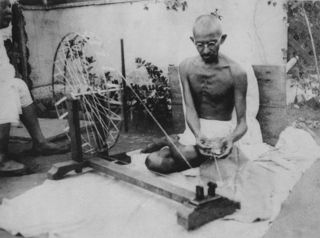
800px-Gandhi_spinningAkeel Bilgrami over at his homepage (image from wikipedia commons):

In reading Gandhi recently I have been struck by the integrity of his ideas. I don't mean simply that he was a man of integrity in the sense that he tried to make his actions live up to his ideals, though perhaps in fact he tried more than most to do so. I mean something more abstract: that his thought itself was highly integrated, his ideas about very specific political strategies in specific contexts flowed (and in his mind necessarily flowed) from ideas that were very remote from politics. They flowed from the most abstract epistemological and methodological commitments. This quality of his thought sometimes gets lost because, on the one hand, the popular interest in him has been keen to find a man of great spirituality and uniqueness and, on the other, the social scientist’s and historian’s interest in him has sought out a nationalist leader with a strikingly effective method of non-violent political action. It has been common for some decades now to swing from a sentimental perception of him as a “Mahatma” to a cooler assessment of Gandhi as “the shrewd politician”. I will steer past this oscillation because it hides the very qualities of his thought I want to uncover. The essay is not so much (in fact hardly at all) inspired by the plausibility of the philosophy that emerges as by the stunning intellectual ambition and originality that this 'integrity' displays.

2. Non-violence is a good place to get a first glimpse of what I have in mind. Violence has many sides. It can be spontaneous or planned, it can be individual or institutional, it can be physical or psychological, it can be delinquent or adult, it can be revolutionary or authoritarian. A great deal has been written on violence: on its psychology, on its possible philosophical justifications under certain circumstances, and of course on its long career in military history. Non-violence has no sides at all. Being negatively defined, it is indivisible. It began to be a subject of study much more recently and there is much less written on it, not merely because it is defined in negative terms but because until it became a self-conscious instrument in politics in this century, it was really constituted as or in something else.

Why Finish Books?

Tim Parks in the New York Review of Books:

GlinnCSLewis_jpeg_230x940_q85“Sir—” remarked Samuel Johnson with droll incredulity to someone too eager to know whether he had finished a certain book—“Sir, do you read books through?” Well, do we? Right through to the end? And if we do, are we the suckers Johnson supposed one must be to make a habit of finishing books?

Schopenhauer, who thought and wrote a great deal about reading, is on Johnson’s side. Life is “too short for bad books” and “a few pages” should be quite enough, he claims, for “a provisional estimate of an author’s productions.” After which it is perfectly okay to bail out if you’re not convinced.

But I’m not really interested in how we deal with bad books. It seems obvious that any serious reader will have learned long ago how much time to give a book before choosing to shut it. It’s only the young, still attached to that sense of achievement inculcated by anxious parents, who hang on doggedly when there is no enjoyment. “I’m a teenager,” remarks one sad contributor to a book review website. “I read this whole book [it would be unfair to say which] from first page to last hoping it would be as good as the reviews said. It wasn’t. I enjoy reading and finish nearly all the novels I start and it was my determination never to give up that made me finish this one, but I really wish I hadn’t.” One can only encourage a reader like this to learn not to attach self esteem to the mere finishing of a book, if only because the more bad books you finish, the fewer good ones you’ll have time to start.

But what about those good books?

More here.

Taking Control: What’s Behind the Conservative Attack on Women?

120319_talkcmmntillus_p233Margaret Talbot in The New Yorker:

It would be hard to imagine a more unlikely historical moment than this one for birth control to become a matter of outraged political controversy. For starters, there is the statistic that ninety-nine per cent of all American women who have had sex have used contraception at some point in their lives. For Catholic women, the percentage is almost the same—ninety-eight per cent, according to an analysis released last spring by the Guttmacher Institute. Then, there’s the fact that we live in a society that has become remarkably dependent on the unfettered ambition of women. As the Washington Post reporter Liza Mundy writes in a new book, “The Richer Sex,” forty per cent of working wives now earn more than their husbands, and, by 2030, that number will probably rise to fifty per cent. Women already make up more than half of college and university students. By 2019, if current trends continue, they will make up fifty-nine per cent of total undergraduate enrollment, and sixty-one per cent of those enrolled in graduate programs. This is an economic and educational order predicated on the freedom of women, married and unmarried, to protect their own health and to decide when they’re going to have children.

As long as the debate stirred up by the Blunt Amendment—which would have allowed employers to refuse coverage for health services they felt compromised their religious beliefs—stayed focussed on freedom of religion, it was possible to forget that putting birth control back in political play meant ignoring reality. You could, after all, make a coherent argument about Catholic employers and the calls of conscience, without insisting on the moral turpitude of people who use birth control or talk about it in public. You could also argue that the Catholic hierarchy was basically asking the federal government to do what its own teachings apparently could not: to remind Catholic women of the evils of contraceptives in such a way that they would actually stop using them. But at least we were still in the realm of a legitimate policy debate.

Then Rush Limbaugh opened his mouth and showed us more than we wanted to know about the dank interior of his mind.

Units and Unities

Wiley-breadJustin E. H. Smith in Berfrois:

I dreamt last night that weight was bread. More precisely, I dreamt that a kilogram was a loaf of dark, rye-like, round bread, about the diameter of a steering wheel. I do not mean that the loaf represented the kilogram, or stood in for it conceptually, in the way that, say, an anatomical foot originally stood in for a unit of length. I mean that such a loaf is just what a kilogram was.

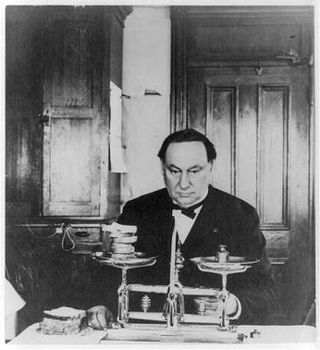
I was in some sort of shop, and the shopkeeper was trying to weigh something out for me on an old-fashioned scale. He kept having to remove whatever it was we were trying to weigh, and replace it with the loaves of bread. Since the loaves just were weight, only they could give any reading at all on a scale.

Plot-wise the dream was a bit thin, but it raised an important conceptual problem. It is as if the creation of a unit of measurement initiates a process of reification that, in its final stage, has us thinking about the unit as a definite, property-rich entity. I recall reading somewhere that some embarrassingly high number of Americans believe that calories exist in the same way marbles or eggs do: like little invisible pellets scattered in the food that makes people fat. And in turn the holy grail of the diet industry –a calorie-free fat substitute– is conceptualized as fat with the little pellets removed.

This neo-corpuscularianism can perhaps be seen more charitably if we recall that thing-hood is already contained within the concept of unit, a word which in many languages is identical to unity (e.g., Einheit, unité, единство). As Leibniz for one well understood, being and unity are practically the same. A Leibnizian corollary would also have it that whatever is not a thing is not really a unit(y) either, and further anything that is arbitrarily constituted cannot qualify as a thing. Nothing is more arbitrarily constituted than a so-called unit of measurement: there is absolutely no reason why a foot should not be three inches longer or shorter, and moreover nothing at all prevents us from conceptualizing fractions of these units.

So in effect we are being asked to conceptualize an impossible thing –units without unity– when we are asked to think about kilograms and feet and calories, and it may be that I, in my dream of the loaves, or the ignorant Americans polled on their dietetical knowledge, are in our mistake simply correcting something that was conceptually garbled to begin with.

Not Just the Higgs Boson

Tom Feilden over at the BBC:

Physicists at CERN are powering up the Large Hadron Collider (LHC) again, ready for a final push to confirm the discovery of the Higgs boson – the final piece of the jigsaw known as the Standard Model of Particle Physics.

So what then? Such a fuss has been made about finally nailing down the Higgs you could be forgiven for thinking that – once the champagne had been quaffed and the Nobel Prizes handed out – we could all pack up and go home.

Not a bit of it. Only two of the four main experimental detectors straddling the 27km ring of the LHC are even looking for the Higgs and both are interested in much, much more.

The mission statement for the Atlas experiment – titled Mapping the Secrets of the Universe – makes no mention of the Higgs, preferring to focus on the forces that have shaped our universe, extra dimensions of space, the unification of fundamental forces and evidence for dark matter candidates.

“We're all very excited about finally sorting out the Higgs hypothesis one way or the other,” says Professor Andy Parker, head of high energy physics at the Cavendish Laboratory in Cambridge and a senior member of the Atlas team.

“But that is just one part of a great process, and we have a huge number of other things we're also looking for. There's no pause in the march of science in this case.”

And now for the compulsory opposing view: “Dangerous ignorance: The hysteria of Kony 2012”

Adam Branch in Al Jazeera:

ScreenHunter_09 Mar. 13 16.44From Kampala, the Kony 2012 hysteria was easy to miss. I'm not on Facebook or Twitter. I don't watch YouTube and the Ugandan papers didn't pick up the story for several days. But what I could not avoid were the hundreds of emails from friends, colleagues, and students in the US about the video by Invisible Children and the massive online response to it.

I have not watched the video. As someone who has worked in northern Uganda and researched the war there for more than a decade, much of it with a local human rights organisation based in Gulu, the Invisible Children organisation and their videos have often left me infuriated – I remember the sleepless nights after I watched their “Rough Cut” film for the first time with a group of students, after which I tried to explain to the audience what was wrong with the film while on stage with one of the filmmakers.

My frustration with the group has largely reflected the concerns expressed so convincingly by those online critics who have been willing to bring the fury of Invisible Children's true believers down upon themselves in order to point out what is wrong with this group's approach: the warmongering, the narcissism, the commercialisation, the reductive and one-sided story they tell, their portrayal of Africans as helpless children in need of rescue by white Americans.

More here.

Double Fault: David Foster Wallace, Tennis, and Learning Not to Care

A-J Aronstein in The Paris Review:

CourtsGlenn cultivated the persona of a tennis intellectual—something more than the average tennis pro. He smoked Benson and Hedges, ate an alarming number of Kit-Kat Bars, and lived in Brooklyn. He collected art and quoted Fitzgerald. On the occasion of my sixth-grade graduation, he gave me an inscribed copy of Bulfinch’s Mythology. He commuted to the club every day wearing blazers over black T-shirts and pleated khaki slacks, making for an odd juxtaposition with my father, whom I never saw wearing anything but tennis whites in the months between May and November.

For Glenn, tennis was a purely mental game, its problems solvable through a personal variation on psychoanalysis. He broke down my own palsied serve into three movements, suggesting that I mouth the words “I. DON’T. CARE!” in rhythm with them. He added that I should shout CARE! as I smacked the ball toward the earth. By getting me to renounce my emotional attachment, I guess he thought that I could free up mental energies to enjoy myself. There was something intoxicating about the idea that the mind could exert too much control over the body and that there could be freedom from the mind’s tyranny in the ability to let the body take the helm. But I never thought it was actually possible. It wasn’t until years later, when I found David Foster Wallace’s essays on tennis, that I encountered what seemed like a written version of Glenn’s approach. Wallace scrupulously details the sport’s Euclidian logic, its between-the-ears acrobatics, its mid-August sweatiness, its production of near-divine feats of athletic perfection. He obsesses over the labor and dedication necessary to become a world-class anything, and though he’s writing about tennis, he’s also writing about writing. The essays mattered to me precisely because of this connection, and I read them just as I was beginning to take my first stabs at translating childhood material into short fiction. Yet for Wallace, tennis entails intense aloneness, standing seventy-eight feet away from one’s opponent, warring within and against one’s own brain. Tennis represents an entirely individual struggle to wrest control from the mind: to be at once fully conscious of oneself and yet able to stop thinking. For me, tennis represented something else. Maybe history, inheritance. Maybe just trying to figure out what to pass on (a service motion, a slice backhand, a tennis club, a philosophy). I’m still figuring it out. Glenn died the same summer I started reading Wallace. My father scattered his ashes in the Har-Tru on court three, where Glenn tried to teach me not to care and seems to have taught me the opposite.

More here.

New Worries About Sleeping Pills

From The New York Times:

SleepTalk about sleepless nights. Patients taking prescription sleep aids on a regular basis were nearly five times as likely as non-users to die over a period of two and a half years, according to a recent study. Even those prescribed fewer than 20 pills a year were at risk, the researchers found; heavy users also were more likely to develop cancer. Unsurprisingly, the findings, published online in the journal BMJ, have caused a quite a stir. Americans filled some 60 million prescriptions for sleeping pills last year, up from 47 million in 2006, according to IMS Health, a health care services company. Panicked patients have been calling doctors’ offices seeking reassurance; some others simply quit the pills cold turkey.

Some experts were quick to point out the study’s shortcomings. The analysis did not prove that sleeping pills cause death, critics noted, only that there may be a correlation between the two. And while the authors suggested the sleeping pills were a factor in the deaths, those who use sleep aids tend as a group to be sicker than those who don’t use them. The deaths may simply be a reflection of poorer health. Still, the findings underscore concern about the exploding use of sleeping pills. Experts say that many patients, especially the elderly, should exercise more caution when using sleep medications, including the non-benzodiazepine hypnotics so popular today, like zolpidem (brand name Ambien), eszopiclone (Lunesta) and zaleplon (Sonata).

More here.

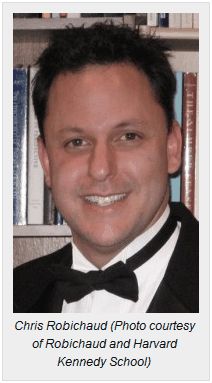
Philosopher Christopher Robichaud on Truth and Knowledge in the American Political Context

Matt Bieber in The Wheat and Chaff:

ScreenHunter_08 Mar. 13 12.09MATT BIEBER: My sense is that you believe that our contemporary political discourse doesn’t place much value on getting at the truth. Is that right?

CHRISTOPHER ROBICHAUD: I think that’s true. I’m open to someone with more of a historical eye informing me that it’s always been bad. But I also think that there’s a certain zeitgeist going on right now of the form: How can we live in an age so rich in information, with so many educated people across the world, and still seem to be susceptible to such embarrassing and deep ignorance? You would have hoped at this point that a civil society would agree on the basic facts and could get about disagreeing about the interesting things – what to do about them. That’s where disagreements are supposed to happen.

But no, we don’t even agree on the basic facts. You look at the climate science debate. [Makes air quotes.] There’s a lot to disagree with about what the way forward is, about how bad it’s going to get and how soon – there’s a lot of things we don’t know. But there’s a lot of things we do know, and those are the things that are still being contested – it’s an embarrassment.

More here.

the sri lankan buddhist from new jersey

ID_PI_GOLBE_OLCOT_FT_001

Saddhu! Saddhu! they cried as they waved a thousand white flags in welcome. He was a stout man with a fluffy white beard that sat atop his vest like a platter of cotton balls. Often he would doff his three-piece suit and exchange it for a set of white pajamas and bare feet, looking part Sufi, part Santa. He traveled around from village to village in a homemade bullock cart cobbled from self-described Yankee ingenuity, a wonder cabinet of books and projecting drawers that was a kitchen and a bathing room, and could host a dinner party of eight. He pedaled freedom and enlightenment with the enthusiasm of a ringmaster. But Olcott never promised to save Sri Lanka on his own; he only wanted to help bring the Sinhalese back to themselves. The ignorance of the Sinhalese about Buddhism is shocking, Olcott wrote in his diary, though they were less ignorant than Olcott believed. But it was true that the Sinhalese relationship to Buddhism had become estranged. Buddhist practices and education had largely been outlawed by the British, and the education system was dominated by the Christian church. Missionaries had convinced the Sinhalese that Buddhism was nihilistic because it denied the existence of a personal God, Olcott wrote in The Life of the Buddha, and Sinhalese Buddhism had become corrupted by decadent, Western materialism.

more from Stefany Anne Golberg at The Smart Set here.

his rage is for the world, not against it

William_Gass_ftr

Deep inside his new collection of essays Life Sentences, in a discussion of mimesis, in the middle of a paragraph about the Pythagorean world of numbers and the differences between perfect Forms and imperfect appearances, William Gass throws down a challenge: “Put yourself in their place.” He’s referring to the place of the Forms—those poor, elusive abstractions that, according to Gass’s concise rendering of Plato’s theory, are damned to have reality but no animation, Being but no life. To understand them, we can’t do less than consider their predicament from their perspective. And once we’ve come this far, we have to pity them. Think about it: how utterly wretched it must be to exist as a Form, stuck for all eternity as a law of motion that does not move, or as an object of knowledge that “will never know what knowing is.” It might be tempting to strive for the symmetry of something as impeccable as an equilateral triangle, but it would be grim never to experience, or even to conceive as a delicious fantasy, “what it is like to be seen, longed for, touched, loved.” Existence as a law of motion? As a triangle that’s impossible to draw? Only William Gass would propose that the best way to appreciate the misery of an abstraction is to put yourself in its place. And only Gass could craft a paragraph that begins with a discussion of the conceptual relationship between Forms and appearances and ends with the terrifying prospect of living a life devoid of love.

more from Joanna Scott at The Nation here.

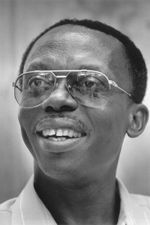
aristide at home

Aristide

Last May I went to see Jean-Bertrand Aristide at his big white house in the suburbs of Port-au-Prince. I’d been there in March, when the former president had been back home only a week, and the place had the feel of a set under construction: workmen in overalls among the mango trees, the smell of new paint, a sputtering tap in the office bathroom. Now the Aristides’ boxes had arrived from Pretoria, where the family spent most of their seven-year exile, and Aristide’s office was dominated by a piece of scientific equipment, positioned – conspicuously, I thought – near the visitors’ couch. Its gleaming monitor was set to ‘on’ and displayed several jagged graphs. A thicket of bright-coloured electrodes dangled from a rack. Aristide explained that it was an electroencephalogram (EEG) machine and that he used it for his research. He had a PhD in African languages from the University of South Africa – his dissertation posited a ‘psycho-theological’ kinship between Zulu and Haitian Creole – and he was continuing his linguistics research, he said, though now from a biological perspective.

more from Pooja Bhatia at the LRB here.

Monday, March 12, 2012

Sunday, March 11, 2012

Is this how to start a new chapter in your love life?

From The Independent:

BookdatesYou are sitting on a train, and across the aisle someone is reading one of your favourite books. This person (clearly of taste) happens to be a tall, handsome man. As you stare he looks up, catches your eye and smiles – he asks for your number… Browsing in a bookshop you reach out to pick up a book; so does the person standing next to you. The person happens to be a tall, handsome man. He catches your eye and smiles – he asks if you would like to go for coffee… So run the fantasies of many a book-lover.

Which is why Literary speed-dating is such an exciting prospect for a bookish single. The conceit is that, rather than talk about yourself, you talk about a book you have brought along. It's run of the mill speed-dating made intellectual – more Granta than Hello!. The idea has already taken off across America and Canada, with speed-dating events held at such cultish venues as the Rare Book Room in New York's famous Strand bookstore (which holds an immensely popular literary speed-date every Valentine's Day). Inexplicably, though, literary speed-dating has yet to become commonplace here.

More here.

New type of extra-chromosomal DNA discovered

From PhysOrg:

DnaA team of scientists from the University of Virginia and University of North Carolina in the US have discovered a previously unidentified type of small circular DNA molecule occurring outside the chromosomes in mouse and human cells. The circular DNA is 200-400 base pairs in length and consists of non-repeating sequences. The new type of extra-chromosomal circular DNA (eccDNA) has been dubbed microDNA. Unlike other forms of eccDNA, in microDNA the sequences of base pairs are non-repetitive and are usually found associated with particular genes. This suggests they may be produced by micro-deletions of small sections of the chromosomal DNA.

Professor Anindya Dutta and colleagues pruified DNA taken from samples of mouse brain tissue and then digested away the linear DNA (which consists of millions of base pairs) to leave only circular DNA pieces, which they then sequenced using ultra-high-throughput sequencing. Circles were identified by a new bioinformatics program. They found the size of the circles was around the same length as the DNA on a nucleosome (a sub-unit of a chromosome). The small size of the circular DNA surprised them since extra-chromosomal DNA circles are larger. Their circular DNA was also dissimilar to the previously-known circles known as polydispersed DNA because the latter usually consist of repeating sequences of base pairs. Another interesting finding was that the circles are rich in the base pair GC (guanine-cytosine) with relatively little AT (adenine-thymine. The researchers repeated their experiments on other mouse tissues and on human cells.

More here.

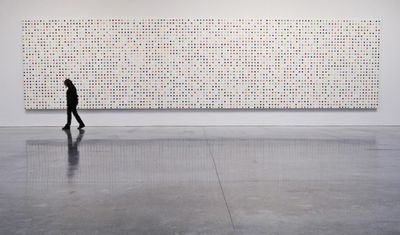
Damien Hirst at the Gagosian

Jacob Mikanowski in The Point:

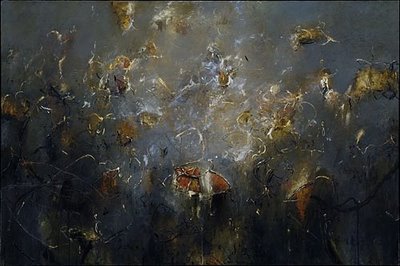
Hirstspot-690x406In its material expenditure and visual profligacy, Hirst’s work is a return to the Baroque. Looking at a survey of Hirst’s work is like strolling through collections of the Schloss Ambras, the castle in Innsbruck where the Habsburgs stored all their weird treasures: coral crucifixes and golden salt cellars, paintings of freaks, cripples and madmen, sculptures of skeletons wearing their rotting skin. This kind of collection was called a wunderkammer, or wonder-room. Two kinds of objects predominated: the memento mori or reminder of mortality, and the lusus naturae or joke of nature. The purpose of these collections was ostensibly pedagogical, but what they really did was exalt their owners’ fearlessness and mastery. This is the tradition Hirst’s practice comes out of, as distant from the strictures of high modernism as it is from the pieties of postmodernism. Perhaps by honoring power and reveling in cruelty it comes closer than either to the mood of our times.

Hirst has always benefited from the presumption that everything he did was ironic, but his work is really rooted in a kind of guileless belief disguised as cynicism. He was a rocker, not a mod. The Spot show is disappointing not because it is disingenuous, but because it’s tame. A few years ago, in a conversation with Hans Ulrich Olbrist, Hirst said he wanted to create a work of art that would kill you (think plutonium sculpture) or at the very least would punch you in the face. Now it looks like he’d settle for a kiss on the cheek.

More here.

Scientists Claim Brain Memory Code Cracked

From Science Daily:

ScreenHunter_07 Mar. 11 21.09Despite a century of research, memory encoding in the brain has remained mysterious. Neuronal synaptic connection strengths are involved, but synaptic components are short-lived while memories last lifetimes. This suggests synaptic information is encoded and hard-wired at a deeper, finer-grained molecular scale.

In an article in the March 8 issue of the journal PLoS Computational Biology, physicists Travis Craddock and Jack Tuszynski of the University of Alberta, and anesthesiologist Stuart Hameroff of the University of Arizona demonstrate a plausible mechanism for encoding synaptic memory in microtubules, major components of the structural cytoskeleton within neurons.

Microtubules are cylindrical hexagonal lattice polymers of the protein tubulin, comprising 15 percent of total brain protein. Microtubules define neuronal architecture, regulate synapses, and are suggested to process information via interactive bit-like states of tubulin. But any semblance of a common code connecting microtubules to synaptic activity has been missing. Until now.

More here.

Back to His Roots

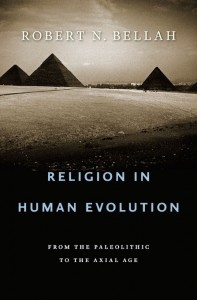
Religion-in-Human-Evolution-197x300Matteo Bortolini on Robert N. Bellah’s Religion in Human Evolution, over at The Immanent Frame [h/t: Jonathan VanAntwerpen]:

As the readers of Religion in Human Evolution know, for example, the book unexpectedly starts…from the start, that is, from the Big Bang and the origin of the universe. Even if the strictly non-sociological stuff fills barely 40 pages within a 700-page book, some critics have paid it a disproportionate degree of attention, often without trying to understand its place within the wider line of reasoning; one such critic is, regrettably enough, Alan Wolfe, who in his New York Times book review wrote: “I never thought I would read a work in the sociology of religion that contained a discussion of prokaryotes and eukaryotes. I now have.” In the book, Bellah vindicates his comprehensive and deep narrative out of a more general sense of universal connection, according to which “we, as modern humans trying to understand this human practice we call religion, need to situate ourselves in the broadest context we can, and it is with scientific cosmology that we must start.”

From the point of view of the sociology of ideas, this strategy might be seen as both a homage to a venerable sociological tradition—going all the way back to Auguste Comte and Herbert Spencer and the incredibly vast array of interests of 19th-century sociology—and as an attempt to bring Talcott Parsons’s work to a higher level of complexity and explicative power. Many may not know, but Parsons was a biology major and remained a voracious reader all his life, eager to make almost everything fit inside his signature “theory of social action.” Given Parsons’s charismatic personality and influence, these interests repeatedly impacted the members of his inner circle. Edward Tiryakian, who was a graduate student at Harvard in the mid-1950s together with Bellah, told me an anecdote about Parsons’s interest in decidedly non-sociological themes that I would like to share: “In one of his discussions… [Parsons] was talking about the evolution of species. So he looked at people and he said: ‘Do you realize the evolutionary significance of the worm having a hole from mouth to anus?’ And he looked at people. Now what do you do when Parsons looks at you? People just went,‘Wow!’” Twenty years later, when Bellah had found his own scholarly voice and only tangentially participated in the development of Parsonian theory, Parsons tried to make sense of the whole human condition devising a comprehensive AGIL (Adaptation, Goal Attainment, Integration, Latency) scheme covering almost everything from the ultimate ground of the “telic system” to the material (i.e. chemical and physical) bases of all living systems. This time the audience’s reaction was much different from Tiryakian’s “wow,” as Parsons had irreparably gone out of fashion and his more mature efforts went almost unnoticed outside the circle of his disciples and connoisseurs.

Parsons, however, was saying something of the utmost importance: reality is an almost endless succession of levels and layers, each one emerging from simpler ones—whatever “simpler” means in this context—and giving rise to more complex ones, which possess new, emerging properties. Likewise, Bellah’s point is that biological, psychological, social, and cultural structures combine without any clear causal primacy in creating new capacities upon which further changes build endlessly.