Martha Nussbaum and the new religious intolerance

From The Guardian:

Martha-Nussbaum-008There's a popular student story about Martha Nussbaum giving a talk in a small living room of the Episcopal Church's chaplaincy centre on the leafy campus of the University of Chicago. As she was holding forth, a bird flew down the chimney and started to flutter around the room, bashing into the walls and generally panicking, as trapped birds do. The students were immediately busy opening windows and trying to shoo the poor creature to freedom. All their attention was taken up with the bird. But in the midst of all the excitement, Nussbaum didn't break her intellectual stride. She just carried on delivering the lecture as if nothing whatsoever was going on. She emanates detached academic cool – fully in command of herself and her material. From someone who has spent a distinguished academic career emphasising the riskiness and vulnerability of the human condition, all this slightly frosty control comes as something of a surprise.

Why, she once asked in a brilliant essay entitled “Love's Knowledge”, do the gods of the ancient world often fall in love with human beings? Why would they prefer mortals to immortals? It is precisely because human beings are able to fail, she argues, that they are able to manifest so many attractive qualities. Take courage. What place can courage have in the world of immortal gods? How could an immortal god risk everything for another if their own welfare were always guaranteed in advance? And what sort of parent would an immortal parent be to an immortal child? Certainly not one that is up half the night worrying. Risk and vulnerability are intrinsic to being human. And that is what makes us attractive, sometimes heroic.

More here.

The Best of All Possible Worlds

From The New York Times:

Gottlieb-articleLargeRomano was a literary critic with The Philadelphia Inquirer for a quarter of a century and has also been a professor of philosophy. He presumably enjoyed this latter job, because he writes that today’s America is the best place to do philosophy that there has ever been, surpassing even the Athens of those ingenious and polite men Socrates, Plato and Aristotle. In one fit of enthusiastic chauvinism he goes yet further, and announces that it is the “perfectly designed environment” to ply his trade, as if no greater intellectual paradise could be imagined. This news will not provide much comfort to declinists who feel the political and economic hegemony of the United States to be fading fast. But perhaps it will help a little. Let deficits grow, good jobs disappear and China loom — hang it all, America will always have world-beating epistemology and metaphysics up its sleeve. Well, maybe that isn’t quite fair to Romano, because his claim depends on redefining the term “philosophy,” giving it a nebulous meaning that embraces far more than is taught under that name in universities. (More later about this revisionist wordplay.) Also, one part of his case is convincing, and oddly still worth making: America is not nearly so ­dumbed down as its detractors at home like to say.

“Idiot America: How Stupidity Became a Virtue in the Land of the Free,” “Unscientific America: How Scientific Illiteracy Threatens Our Future” and “The Age of American Unreason” are just three of the books from American writers in the past five years that belabor religious fundamentalism, conservative talk shows, scientific illiteracy or the many available flavors of junk food for thought. The fallacy of such books, as Romano argues, is that they take some rotten parts for the largely nutritious whole. It’s not so much that they compare American apples with foreign oranges, but that they fail to acknowledge that the United States is an enormous fruit bowl. Everything is to be found in it, usually in abundance, including a vibrant intellectual life. Rather like that of India — which has over a third of the planet’s illiterate adults but also one of the largest university systems in the world — the intellectual stature of America eludes simple generalizations.

More here.

Friday, June 29, 2012

‘Having It All’? How About: ‘Doing The Best I Can’?

Andrew Cohen weighing in as part of The Atlantic's continuing debate on work-life balance:

Having it allAnne-Marie Slaughter's remarkable article Why Women Still Can't Have It All clearly has meant different things to different people since it was published and posted. To me, first, it is further evidence of what I have come to believe after 46 years on this planet: most women are not just smarter than most men but braver and more aspirational, too. There is the noble, ancient striving to “have it all.” And then there is the earnest and thought-provoking debate, largely between and among women if I am not mistaken, over exactly what that phrase means and whether the quest to achieve it is even worth it.

Men? Please. Such an earnest public conversation on this topic between and among men is impossible to imagine (no matter how hard The Atlantic tries). That's why so many of us diplomatically stayed on the sideline last week. And haven't men as a group largely given up hope of “having it all” anyway? Did we ever have such hope to begin with? I don't remember ever getting a memo on that. Without any statistics to back me up — how typical of a man, right? — I humbly suggest that a great many of us long ago decided in any event to focus upon lesser, more obtainable mottoes, like “doing the best I can” or “hanging in there,” as we try to juggle work, family, and a life.

Read the rest here.

Jean-Jacques Rousseau, On his 300th

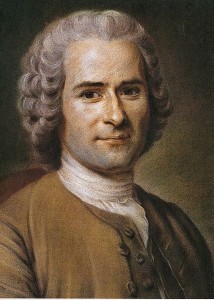
Rousseau-214x300I was traveling yesterday, Rousseau's 300th, and did not get a chance to post this piece by Laurie Fendrich in The Chronicle of Higher Ed:

Today, June 28, is Jean-Jacques Rousseau’s 300th birthday. Although it’s hard to imagine philosophers as squalling newborns, in Rousseau’s case, it makes sense. His whole philosophy hinges on the idea that we humans are born good but, along the way of making civilization, we manage to destroy what’s good in ourselves. From the moment the umbilical cord is cut, Rousseau essentially says, we systematically obliterate our real nature, which is one of benevolent beings happily living a simple existence.

But for someone living in any complex society since the Industrial Revolution, Rousseau’s philosophy is not only difficult to believe (aren’t education, exposure to the arts, technological progress inarguably good things?), but inconvenient to practice—even in small instances, such as bringing up his ideas for discussion in a 21st-century college class. None of this has prevented me from loving Rousseau’s complex, contradictory, and exhilaratingly exasperating philosophy ever since first encountering it as a sophomore, in a college course in political philosophy.

Why would a young college student who was just discovering the solitary joys of painting pictures become obsessed with the one and only Enlightenment thinker who ferociously attacked the very value of art (and science as well)? And why would that young college student never manage to break with the almost ubiquitously maligned Rousseau, never manage to put him to the side and forget him? Or, if she was going to stay with him, why couldn’t she have found a way to concentrate on his sweeter side—the side expressed in, for example, his Reveries, where he walks in a “lonely meditation on nature”?

Addicted to Health Care

From Psychology Today:

PyschologyHealthCareWhat is missing from our health care debate—even as conducted by our most insightful and radical critics of the dysfunctional American health care system—is a recognition of what, underneath it all, drives the system. It is Americans' insatiable lust for health care. What Americans possess in overwhelming abundance is the urge to be treated for their maladies. Witness our massive formal addiction and mental health disease treatment and support system (as opposed to the informal community supports offered more readily around the world). And our most forward-thinking health care advocates can only imagine expanding this system exponentially (e.g., parity in health care coverage between physical and emotional illness).

American health care costs are driving America into the ground. These costs stand at from 2-3:1 compared with other nations (like the UK), and the chasm is widening since virtually all other nations have stablizied these costs, while we are only beginning to tackle the rate at which they increase. But Republicans can still run on simply resuming lock, stock and barrel the same old private care system, Americans in general dislike Obamacare, and Obamacare itself is built primarily around expanding coverage without controlling costs. This is because any effort to rein in such costs is met by accusations like “death panels” or “rationing,” which immediately kills them like glassy-eyed dead fish floating on the surface of the stagnant pond that is our care system.

More from Stanton Peele here.

Soldiers Without Generals

Egyptdomino

WE CAN reasonably conclude that the verdict is not yet in on Egypt’s future. Popular empowerment has so far been a thorn in the side of those trying to destroy the revolution. And it is hard to imagine that the millions who have thrust themselves so decisively onto the center stage of their own history could be dismissed so easily. Romanticism aside, however, one must realize that revolution is an ugly business. Those with vested interests in authoritarian rule will not simply step aside under social pressure, nor will they wither away over time. Their total suppression and defeat is of essence to any true revolution. As long as Egyptians find this course distasteful—preferring instead conciliatory solutions and wishing that sporadic pressure from below along with clustering around the Muslim Brothers (as a revolutionary movement by proxy) can somehow convince the military and security elite to “do the right thing”—little can be done. And as long as revolutionaries cannot organize their ranks and encourage their fellow citizens to make difficult choices, take risks, and accept short-term instability, then there is little hope that the people themselves will be able to turn their gallant uprising into a complete revolution. Reflecting back on the Iranian case in The Making of the Islamic Revolution, Mohsen M. Milani rightly noted, “Theorizing about revolution sounds romantic, but winning it is no romantic enterprise. The verdict on those who refuse to treat revolution as a furious war has been unequivocally clear: oblivion or death… Revolutions are like wars.” And the key to winning wars is organization.

more from Hazem Kandil at Dissent here.

barthes in china

1340406305

LATELY THE POSTHUMOUS CORPUS of Roland Barthes has been growing at a rate that rivals Tupac Shakur’s. (Can a hologram Barthes be far behind?) Recent years have witnessed the publication of lecture notes from his last seminars at the Collège de France (Preparation of the Novel) as well as the journals he kept following the death of his mother (Mourning Diary). The latest addition to his English catalogue is Travels in China, a translation of his notebooks from a three-week trip there in 1974 with a delegation from the French literary review Tel Quel. In France, the publication of Barthes’s private notebooks and journals (Carnets du voyage en Chine and Journal de deuil both appeared in 2009) spurred a round of contentious debate about the ethics of looting a dead writer’s archives. (Somewhere, no doubt, Max Brod is sighing with sympathy.) It’s not hard to attribute the spate of posthumous publications to the mercenary incentive to squeeze every last drop out of an author with any degree of fame. If we’re feeling a little more charitable, we might also see them as testaments to the desire for more of a distinctive voice and a singular intelligence. Each death of a major intellectual figure seems to prompt a flurry of new publications of old material, much of it scraps, all of it suggesting an inability to accept that no more words will issue from that pen, a kind of disbelief that the author is, at last, really and truly dead.

more from Dora Zhang at the LA Review of Books here.

early Calvino

Luzzi__1__276860m

Calvino professed to be fascinated by the world of adolescence – that in-between time, McLaughlin writes, where “a sense of failed initiation hangs over everything, a sense of thresholds not crossed”. The author regarded Into the War as a “polemic against the habitual image of adolescence in literature”, and all three stories attest to the potentially magical, transformative space of adolescence, however thwarted by the environment of war and Fascism. Calvino’s note to the trilogy points out that his “entry into life” and the Italian “entry into war” coincided. Throughout the book, the hyper-aware narrator senses the incoming storm, but he is too preoccupied with girls and peer pressure, too distracted by the circus atmosphere of Fascist politics, to confront this reality directly. After all, Calvino was no D’Annunzio, the Italian poet who led a group of Legionnaires in laying siege to the city of Fiume in the First World War; he was more the heir of Baudelaire, a flâneur thrust into a Fascist Youth uniform.

more from Joseph Luzzi at the TLS here.

The Manifest Destiny of Artificial Intelligence

Brian Hayes in American Scientist:

ScreenHunter_07 Jun. 29 14.11Artificial intelligence began with an ambitious research agenda: To endow machines with some of the traits we value most highly in ourselves—the faculty of reason, skill in solving problems, creativity, the capacity to learn from experience. Early results were promising. Computers were programmed to play checkers and chess, to prove theorems in geometry, to solve analogy puzzles from IQ tests, to recognize letters of the alphabet. Marvin Minsky, one of the pioneers, declared in 1961: “We are on the threshold of an era that will be strongly influenced, and quite possibly dominated, by intelligent problem-solving machines.”

Fifty years later, problem-solving machines are a familiar presence in daily life. Computer programs suggest the best route through cross-town traffic, recommend movies you might like to see, recognize faces in photographs, transcribe your voicemail messages and translate documents from one language to another. As for checkers and chess, computers are not merely good players; they are unbeatable. Even on the television quiz showJeopardy, the best human contestants were trounced by a computer.

In spite of these achievements, the status of artificial intelligence remains unsettled. We have many clever gadgets, but it’s not at all clear they add up to a “thinking machine.” Their methods and inner mechanisms seem nothing like human mental processes. Perhaps we should not be bragging about how smart our machines have become; rather, we should marvel at how much those machines accomplish without any genuine intelligence.

More here. [Photo shows IBM's chess-playing computer Deep Blue.]

Obamacare Upheld: How and Why Did Justice Roberts Do It?

David Cole in The Nation:

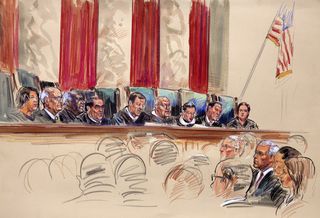
Scotus_drawing_ap_imgWhat led Roberts to cast his lot with the law’s supporters? The argument that the taxing power supported the individual mandate was a strong one. The mandate provides that those who can afford to buy healthcare insurance must do so, but the only consequence of not doing so is the payment of a tax penalty. The Constitution gives Congress broad power to raise taxes “for the general welfare,” which means Congress need not point to some other enumerated power to justify a tax. (By contrast, if Congress seeks to regulate conduct by imposing criminal or civil sanctions, it must point to one of the Constitution’s affirmative grants of power—such as the Commerce Clause, the immigration power, or the power to raise and regulate the military.)

The law’s challengers—and the Court’s dissenters—rejected the characterization of the law as a tax. They noted that it was labeled a “penalty,” not a tax; that it was designed to encourage people to buy health insurance, not to raise revenue; and that Obama himself had rejected claims that the law was a tax when it was being considered by Congress. But Roberts said the question is a functional one, not a matter of labels. Because the law in fact would raise revenue, imposed no sanction other than a tax and was calculated and collected by the IRS as part of the income tax, the Court treated it as a tax and upheld the law.

More here.

Israel’s New Politics and the Fate of Palestine

Akiva Eldar in The National Interest:

Palestinian-flagIsrael never overtly spurned a two-state solution involving land partition and a Palestinian state. But it never acknowledged that West Bank developments had rendered such a solution impossible. Facing a default reality in which a one-state solution seemed the only option, Israel chose a third way—the continuation of the status quo. This unspoken strategic decision has dictated its polices and tactics for the past decade, simultaneously safeguarding political negotiations as a framework for the future and tightening Israel’s control over the West Bank. In essence, a “peace process” that allegedly is meant to bring the occupation to an end and achieve a two-state solution has become a mechanism to perpetuate the conflict and preserve the status quo.

This reality and its implications are best understood through a brief survey of the history that brought the Israelis and Palestinians to this impasse. The story is one of courage, sincere efforts, internal conflicts on both sides, persistent maneuvering and elements of folly.

More here.

Nora Ephron | 1941-2012: Writer and Filmmaker With a Genius for Humor

From The New York Times:

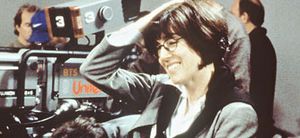
NoraThe producer Scott Rudin recalled that less than two weeks before her death, at Weill Cornell Medical College and New York-Presbyterian Hospital, he had a long phone session with her while she was undergoing treatment, going over notes for a pilot she was writing for a TV series about a bank compliance officer. Afterward she told him, “If I could just get a hairdresser in here, we could have a meeting.”

Ms. Ephron’s collection “I Remember Nothing” concludes with two lists, one of things she says she won’t miss and one of things she will. Among the “won’t miss” items are dry skin, Clarence Thomas, the sound of the vacuum cleaner, and panels on “Women in Film.” The other list, of the things she will miss, begins with “my kids” and “Nick” and ends this way:

“Taking a bath

Coming over the bridge to Manhattan

Pie.”

More here.

Rabbits kept alive by oxygen injections

From Nature:

BloodRabbits with blocked windpipes have been kept alive for up to 15 minutes without a single breath, after researchers injected oxygen-filled microparticles into the animals' blood. Oxygenating the blood by bypassing the lungs in this way could save the lives of people with impaired breathing or obstructed airways, says John Kheir, a cardiologist at the Children’s Hospital Boston in Massachusetts, who led the team. The results are published today in Science Translational Medicine1. The technique has the potential to prevent cardiac arrest and brain injury induced by oxygen deprivation, and to avoid cerebral palsy resulting from a compromised fetal blood supply. In the past, doctors have tried to treat low levels of oxygen in the blood, or hypoxaemia, and related conditions such as cyanosis, by injecting free oxygen gas directly into the bloodstream. They had varying degrees of success, says Kheir.

In the late nineteenth century, for example, US doctor John Harvey Kellogg experimented with oxygen enemas — an idea that has been revived in recent decades in the form of bowel infusers2, says Mervyn Singer, an intensive-care specialist at University College London. But these methods can be dangerous, because the free oxygen gas can accumulate into larger bubbles and form potentially lethal blockages called pulmonary embolisms. Injecting oxygen in liquid form would avoid this, but the procedure would have to be done at dangerously low temperatures. The microcapsules used by Kheir and his team get the best of both worlds: they consist of single-layer spherical shells of biological molecules called lipids, each surrounding a small bubble of oxygen gas. The gaseous oxygen is thus encapsulated and suspended in a liquid emulsion, so can't form larger bubbles. The particles are injected directly into the bloodstream, where they mingle with circulating red blood cells. The oxygen diffuses into the cells within seconds of contact, says Kheir. “By the time the microparticles get to the lungs, the vast majority of the oxygen has been transferred to the red blood cells,” he says. This distinguishes these microcapsules from the various forms of artificial blood currently in use, which can carry oxygen around the body, but must still receive it from the lungs.

More here.

Friday Poem

Gary Snyder Starts Singing

When you suddenly started singing in the middle of your poetry reading
we were caught off guard.
It was as though, when we had crossed the Brooklyn Bridge and turned left,
suddenly we had seen the pampas spread out before us,
when actually we should have seen Wall Street.

The domestic poultry that are supposedly unable to fly in our country,
in the garden of your stanzas, begin ably flying about.
They sail across the planet’s sky in V-formation like wild geese,
as if to say, “We are completely fed up with strolling around
on the Gutenberg runway. From now on we are going to be free,
so please look after yourselves in future.”

When you sang, you yourself became a song.
With your feet rooted in the earth,
your body began to float off into air.
We, left behind, recalled the familiar old maxim,
‘A miracle is reality laid bare.’

But as you sing, you are whispering:
“My tongue which has been up to a lot of vulgar things
is also capable of such elegant things”.
.

by Inuo Taguchi
publisher: Poetry International, 2006
translation: William I. Elliott and Kazuo Kawamura

Thursday, June 28, 2012

Research shows that everyone cheats

Dan Ariely in the Wall Street Journal:

ScreenHunter_05 Jun. 28 13.55We tend to think that people are either honest or dishonest. In the age of Bernie Madoff and Mark McGwire, James Frey and John Edwards, we like to believe that most people are virtuous, but a few bad apples spoil the bunch. If this were true, society might easily remedy its problems with cheating and dishonesty. Human-resources departments could screen for cheaters when hiring. Dishonest financial advisers or building contractors could be flagged quickly and shunned. Cheaters in sports and other arenas would be easy to spot before they rose to the tops of their professions.

But that is not how dishonesty works. Over the past decade or so, my colleagues and I have taken a close look at why people cheat, using a variety of experiments and looking at a panoply of unique data sets—from insurance claims to employment histories to the treatment records of doctors and dentists. What we have found, in a nutshell: Everybody has the capacity to be dishonest, and almost everybody cheats—just by a little. Except for a few outliers at the top and bottom, the behavior of almost everyone is driven by two opposing motivations. On the one hand, we want to benefit from cheating and get as much money and glory as possible; on the other hand, we want to view ourselves as honest, honorable people. Sadly, it is this kind of small-scale mass cheating, not the high-profile cases, that is most corrosive to society.

More here.

Nico Muhly’s many opinions on polygamists, opera and idiocy

David Patrick Stearns in Arts Journal:

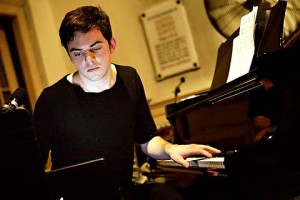
Nico_muhly1-300x200The brash young composer Nico Muhly – much to the surprise of many but probably not to himself – turned out to be right.

When his opera Dark Sisters was premiered in New York City in November, many believed the ever prolific Muhly (yes, even more prolific than his longtime employer Philip Glass) had rushed through the composition of a chamber opera about Church of Latter-Day Saints splinter groups that practice polygamy in remote outposts of the southwestern United States. The disappointment extended beyond the critics and operagoers hearing it for the first time on opening night. There was much grumbling within the industry that problems that were clearly apparent in the workshop preceding the premiere but hadn’t been addressed at all. Some of his fellow composers were secretly scathing.

Oh well. There was always the revival the following June at Philadelphia’s Kimmel Center, where the smallish, congenial Perelman Theater has come to be seen as one of the ideal chamber opera venues in the Northeast. Even then, Muhly, librettist Stephen Karam and director Rebecca Taischman declined to have another workshop. They were all busy and sensed that changes could be made in the few weeks of rehearsal prior to the Opera Company of Philadelphia opening.

And yet … Dark Sisters wasn’t just a hit with critics who were lukewarm first time around. The opera was a considerable popular success with audiences. Word of mouth was uniformly positive. Here was something fresh, challenging and new that wasn’t beyond the grasp of an average operagoer hearing it for the first time. And in Philadelphia – a place known to fear the cutting edge.

What changed?

More here.

the end of the euro

252px-Common_face_of_one_euro_coin

Most of the current policy discussion concerning the euro area is about austerity. Some people – particularly in German government circles – are pushing for tighter fiscal policies in troubled countries (i.e., higher taxes and lower government spending). Others – including in the new French government — are more inclined to push for a more expansive fiscal policy where possible and to resist fiscal contraction elsewhere. The recently concluded G20 summit is being interpreted as shifting the balance away from the “austerity now” group, at least to some extent. But both sides of this debate are missing the important issue. As a result, the euro area continues its slide towards deeper crisis and likely eventual disruptive break-up. The underlying problem in the euro area is the exchange rate system itself – the fact that these European countries locked themselves into an initial exchange rate, i.e., the relative price of their currencies, and promised to never change that exchange rate. This amounted to a very big bet that their economies would converge in productivity – that the Greeks (and others in what we now call the “periphery”) would in effect become more like the Germans.

more from Simon Johnson at The Baseline Scenario here.

The Night Wanderers

Kony-2012

Joseph Kony could never have imagined it. Once an obscure warlord traipsing through the central African bush, he has been catapulted onto the leaderboard of global villains. Schoolchildren have been riveted by an internet video of his atrocities released by Invisible Children, a group of American activists. Their film has garnered more than 89 million hits on YouTube since March. Some viewers rallied behind their Kony2012 campaign to call for the Ugandan rebel’s arrest by the year’s end. Overnight, Kony has become the world’s favourite bogeyman. It is fortuitous then that the English translation of The Night Wanderers by Wojciech Jagielski, a veteran Polish journalist, has arrived at just the moment when ever larger numbers of people are curious to learn more about Kony, his child soldiers, and the conflict they spawned.

more from Matthew Green at Literary Review here.