Syrian war of lies and hypocrisy

Robert Fisk in The Independent:

Has there ever been a Middle Eastern war of such hypocrisy? A war of such cowardice and such mean morality, of such false rhetoric and such public humiliation? I'm not talking about the physical victims of the Syrian tragedy. I'm referring to the utter lies and mendacity of our masters and our own public opinion – eastern as well as western – in response to the slaughter, a vicious pantomime more worthy of Swiftian satire than Tolstoy or Shakespeare.

While Qatar and Saudi Arabia arm and fund the rebels of Syria to overthrow Bashar al-Assad's Alawite/Shia-Baathist dictatorship, Washington mutters not a word of criticism against them. President Barack Obama and his Secretary of State, Hillary Clinton, say they want a democracy in Syria. But Qatar is an autocracy and Saudi Arabia is among the most pernicious of caliphate-kingly-dictatorships in the Arab world. Rulers of both states inherit power from their families – just as Bashar has done – and Saudi Arabia is an ally of the Salafist-Wahabi rebels in Syria, just as it was the most fervent supporter of the medieval Taliban during Afghanistan's dark ages. Indeed, 15 of the 19 hijacker-mass murderers of 11 September, 2001, came from Saudi Arabia – after which, of course, we bombed Afghanistan. The Saudis are repressing their own Shia minority just as they now wish to destroy the Alawite-Shia minority of Syria. And we believe Saudi Arabia wants to set up a democracy in Syria?

More here.

Sunday Poem

The Camel

Don't tell a camel about need and
want.

Look at the big lips
pursed
in perpetual kiss,
the dangerous lashes
of a born coquette.

The camel is an animal
grateful for less.
It keeps to itself
the hidden spring choked with grass,
the sharpest thorn
on the sweetest stalk.

When a voice was heard crying in the
wilderness,

when God spoke
from the burning bush,

the camel was the only animal
to answer back.

Dune on stilts,
it leans into the long horizon,
bloodhounding

the secret caches of watermelon
brought forth like manna
from the sand.

It will bear no false gods
before it:
not the trader
who cinches its hump
with rope,
nor the tourist.

It has a clear sense of its place in
the world:

after water and watermelon,
heat and light,
silence and science,

it is the last great hope.

by Wislawa Szymborska
from Miracle Fair: Selected Poems of Wislawa Szymborska
translated by Joanna Trzeciak

No LOL matter: Tween Texting May Lead to Poor Grammar Skills

From Penn State Live:

TextText messaging may offer tweens a quick way to send notes to friends and family, but it could lead to declining language and grammar skills, according to researchers.

“Overall, there is evidence of a decline in grammar scores based on the number of adaptations in sent text messages, controlling for age and grade,” Cingel said.

Not only did frequent texting negatively predict the test results, but both sending and receiving text adaptations were associated with how poorly they performed on the test, according to Sundar.

“In other words, if you send your kid a lot of texts with word adaptations, then he or she will probably imitate it,” Sundar said. “These adaptations could affect their off-line language skills that are important to language development and grammar skills, as well.”

More here.

Why Do We Hate Seeing Photos Of Ourselves?

From Robert Gonzalez in io9:

OriginalYou know what I'm talking about. There you are, clicking through your friend's Facebook album, when suddenly you happen upon a picture of yourself — or rather, a slightly less attractive version of yourself. The “real” you appears to have been abducted, replaced with some second-rate knock off. What gives? you ask yourself. Is that really what I look like?

Yes. Yes it is. But don't worry, there's a perfectly sound explanation for why the person staring back at you looks so very unfamiliar, even though that person is, well, you. And by the way: that funny-looking, ersatz-you in the photograph? They're actually more attractive than you think.

More here.

Saturday, July 28, 2012

Where Does Nature’s Wisdom Lie?

IMG_2378R. Ford Denison in Berfrois:

Consider wild rice, shown above growing near the headwaters of the Mississippi River. Natural selection has been improving this species, by evolution’s criteria, for millions of years. Better-adapted plants (those best at extracting nutrients from flooded soils, defending themselves against pests and pathogens, and producing seeds in warm and cold years, in deep or shallow water), had more surviving offspring. Their descendants inherited those adaptations. So plant breeders developing new rice varieties (especially for farmers who can’t afford fertilizer or control water depths) might learn something useful from research on how wild rice faces similar challenges.

What about nature’s “lies”? Notice that wild rice grows naturally almost as a monoculture, not mixed with other plant species. Tropical forests, on the other hand, have much greater species diversity. Can we conclude that aquatic plants, like rice or taro, should be grown as monocultures, while tree crops should be grown as diverse mixtures of species? Or maybe cold climate crops should be grown as monocultures (many northern forests aren’t very diverse either), while tropical crops should be grown as mixtures.

These hypotheses implicitly assume that natural selection, or other natural processes, have improved the overall organization of natural plant communities, not just the individual species that live there. Most evolutionary biologists, however, tell us that natural selection is much better at improving trees than forests. This is especially true when the interests of individuals conflict with those of the community as a whole. A more diverse forest might be less susceptible to disease outbreaks, but that won’t stop individual redwood trees from growing taller and shading out competitors of other species. Similarly, the low diversity of wild rice stands doesn’t prove that more diverse plant communities wouldn’t be more productive, more efficient in the use of scarce resources, or more sustainable over decades.

Race, IQ, and Wealth: What the Facts Tell Us About a Taboo Subject

IqRon Unz in The American Conservative (via Brainiac):

[A]n objective review of the Lynn/Vanhanen data almost completely discredits the Lynn/Vanhanen “Strong IQ Hypothesis” [“namely that IQ accurately reflects intelligence, that IQ is overwhelmingly determined by genetics, and that IQ is subject to little or no significant cultural or economic influence”]. If so many genetically-indistinguishable European populations—of roughly similar cultural and historical background and without severe nutritional difficulties—can display such huge variances in tested IQ across different decades and locations, we should be extremely cautious about assuming that other ethnic IQ differences are innate rather than environmental, especially since these may involve populations separated by far wider cultural or nutritional gaps.

We cannot rule out the possibility that different European peoples might have relatively small differences in innate intelligence or IQ—after all, these populations often differ in height and numerous other phenotypic traits. But this residual genetic element would explain merely a small fraction of the huge 10–15 point IQ disparities discussed above. Such a view might be characterized as the “Weak IQ Hypothesis”: huge IQ differences between large populations may be overwhelmingly due to cultural or socio-economic factors, but a residual component might indeed be genetic in origin.

We are now faced with a mystery arguably greater than that of IQ itself. Given the powerful ammunition that Lynn and Vanhanen have provided to those opposing their own “Strong IQ Hypothesis,” we must wonder why this has never attracted the attention of either of the warring camps in the endless, bitter IQ dispute, despite their alleged familiarity with the work of these two prominent scholars. In effect, I would suggest that the heralded 300-page work by Lynn and Vanhanen constituted a game-ending own-goal against their IQ-determinist side, but that neither of the competing ideological teams ever noticed.

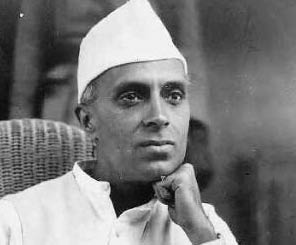
After Nehru

NehruPerry Anderson in the LRB:

All liberal democracies are significantly less liberal, and considerably less democratic, than they fancy themselves to be. That does not cancel them as a category. There is no reason to judge India by a higher standard than is complacently accepted in older and richer versions. The explanation of democratic stability in a society that is so much poorer and more populous is only to a secondary extent to be found in institutional restrictions common enough in the species. It lies in a far larger enabling condition. To see what this might be, a truly distinguishing feature of Indian democracy – one that sets it apart from any other society in the world – needs be considered. In India alone, the poor form not just the overwhelming majority of the electorate, but vote in larger numbers than the better-off. Everywhere else, without exception, the ratio of electoral participation is the reverse – nowhere more so, of course, than in the Land of the Free. Even in Brazil, the other large tropical democracy, where – unlike in India – voting is technically compulsory, the index of ballots cast falls as income and literacy decline.

Why then has the sheer pressure of the famished masses, who apparently hold an electoral whip-hand, not exploded in demands for social reparation incompatible with the capitalist framework of this – as of every other – liberal democracy? Certainly not because Congress ever made much effort to meet even quite modest requirements of social equality or justice. The record of Nehru’s regime, whose priorities were industrial development and military spending, was barren of any such impulse. No land reform worthy of mention was attempted. No income tax was introduced until 1961. Primary education was grossly neglected. As a party, Congress was controlled by a coalition of rich farmers, traders and urban professionals, in which the weight of the agrarian bosses was greatest, and its policies reflected the interests of these groups, unconcerned with the fate of the poor. But they suffered no electoral retribution for this. Why not?

The answer lies, and has always lain, in what also sets India apart from any other country in the world, the historic peculiarities of its system of social stratification. Structurally, by reason of their smaller numbers and greater resources, virtually all ruling classes enjoy an advantage over the ruled in their capacity for collective action. Their internal lines of communication are more compact; their wealth offers an all-purpose medium of power, convertible into any number of forms of domination; their intelligence systems scan the political landscape from a greater height. More numerous and more dispersed, less equipped materially, less armed culturally, subordinate classes always tend, in the sociologist Michael Mann’s phrase, to be ‘organisationally outflanked’ by those above them. Nowhere has this condition been more extreme than in India.

The Beatles Complete On Ukulele

The opening of the London 2012 Olympics means the predestined end to one of the first blogs I ever loved. As its mission statement says, the music project's creators Dave Barratt and Roger Greenawalt released a new recording of a Beatles song featuring a different artist (and always, of course, a ukulele) every Tuesday since Obama's Inauguration along with an original essay about the song. The essays are conversational yet insightful with tons of interesting Beatles stories, so check them out on the righthand column archives. Here's a passage from their essay on “Within You Without You”:

BeatlescompleteDoes a human being contain a unique soul that is controlled by an external creator, or is all matter expressions of one consciousness? We don’t bother ourlves with such trivial questions, but in 1967 George Harrison did. While Paul, and to a lesser extent John, were busting bullets and sweating balls constructing what many consider to be The Greatest Pop Album Ever Made (TM), George was “chilling out” and “getting his head together” and “figuring shit out” etc. And who could blame him? George Harrison was born into a stuffy dull-thinking, Irish Catholic family in boring black and white post-war Liverpool. He had, with very modest talent, stumbled into the middle of the world’s biggest cultural phenomenon since Hitler. By age 21 he was more famous than the Pope but less famous than Ringo. That kind of experience can drive you mad. It drove Harrison to a shop called “India Craft” in London where he bought an inexpensive sitar.

The rest of the essay is here. And the blog's home page is here. The 185th (and final) Beatles cover, “The End” will be released on Tuesday, July 31.

Mother Nature’s Olympians crowned

From MSNBC:

ChhetahThe Olympics is a time to celebrate the world's fastest and strongest humans, but you can rely on the International Union for the Conservation of Nature to put the best of human performance in perspective. They've just come out with their list of Olympians for the natural world — champions that range from the fleet cheetah to the humble fungus. “While celebrating the achievements of talented athletes across the world this summer, we should also take the time to appreciate these incredible species,” the IUCN says in today's Olympian roundup. Here are some of the conservation group's medalists for 2012:

Sprint: Cheetahs (Acinonyx jubatus) can bolt at 70 mph or more for short bursts, making them the world's fastest land animals. In comparison, Jamaican sprinter Usain Bolt is credited as the fastest human, with a top running speed of 27.79 mph. Theoretically, humans could reach velocities of 40 mph — still short of the cheetah's personal best.

High jump: To even things out, cross-species-wise, the IUCN is measuring jumping ability in terms of body length. By that measure, a lowly insect known as the common froghopper (Philaenus spumarius) gets the high-jump crown. It can jump 115 times its body length, while the record for humans is just a little over 8 feet (2.45 meters). That's about 1.25 times the height of the record-holder, Cuba's Javier Sotomayor (6-foot-5 or 195 centimeters).

More here.

50 Shades of Green

From Smithsonian:

Barcelona-vertical-garden-largeOver the next few days you’re going to see a lot of the London Eye, the giant slow-spinning Ferris wheel along the Thames River, particularly since during the Olympics it will be portrayed as a massive mood ring, changing color every night to reflect what people have been tweeting about the Games. If tweeters are feeling good about what’s going on, it will glow yellow. If not, it will turn morosely purple. What you’re less likely to see is the vertical garden covering the corner of the Athenaeum Hotel in Mayfair or the one at the Edgeware Road Underground station or the one climbing 14 stories up the side of an apartment building on Digby Road in Central London. Which is a shame, because while none of these walls are able to change color to reflect the whims of Twitter Nation, they are choice examples of one of the more pleasing architectural innovations trending in cities around the world.

But they’re much more than urban eye candy. Last week a study published in the journal Environmental Science and Technology concluded that green walls planted strategically could help cut pollution in cities by as much as 30 percent, almost 10 times more than previously thought. The key, say the researchers, is that green walls can filter out pollution not just at street level, as trees can, but much higher up in urban canyons. Their computer models suggested that grasses, ivy and flowers attached to the sides of walls and buildings could be even more effective at cleaning the air than plants in parks or on rooftops.

More here.

twenty years dead but his ardor uncooled

Cover00

If David Wojnarowicz were alive today he’d be turning fifty-eight in September. Who knows what his art would look like by now? But there is every reason to think he would have been one of the relative few to have graduated from the hit-or-miss East Village art scene of the 1980s and gone on to greater glory. His stencils, icons, symmetry, hot colors, homoerotic imagery, and street art all remain visible in the work of others now. His ghost is just about discernible around the edges of stuff by Gilbert & George, Banksy, Shepard Fairey, Barry McGee, and I’m sure you can think of more. Of course, maybe if he’d lived he’d have taken several radical turns away from those tropes by now, but in either case he’d surely be getting retrospectives, awards, tributes—the treatment accorded a significant artist in the fullness of maturity. He was that vital, protean, fecund, original, and pioneering in his life and work.

more from Luc Sante at Bookforum here.

From the Ruins of Empire

F879c005-49d7-4632-aa84-d5130e7aaeb3

Oh, East is East and West is West, and never the twain shall meet,” wrote Rudyard Kipling in 1889. This was nothing if not wishful thinking, and no one knew it better than the poet of the imperial Raj himself: indeed, that same year Kipling visited Hong Kong and bemoaned the likely impact of bringing railways and newspapers to China. “What,” he warned, “will happen when China really wakes up?” With the British empire at the zenith of its power, it was hardly an immediate worry. The Chinese might pride themselves on avoiding the fate of a “lost country” such as India, with its viceroys and its foreign empress, but the Qing dynasty was losing its grip and only a few years later the nationalist Boxer rebellion would be brutally crushed by a western expeditionary force, precipitating the crisis from which China did not emerge for half a century.

more from Mark Mazower at the FT here.

how to write

29whitehead-articleInline

Rule No. 1: Show and Tell. Most people say, “Show, don’t tell,” but I stand by Show and Tell, because when writers put their work out into the world, they’re like kids bringing their broken unicorns and chewed-up teddy bears into class in the sad hope that someone else will love them as much as they do. “And what do you have for us today, Marcy?” “A penetrating psychological study of a young med student who receives disturbing news from a former lover.” “How marvelous! Timmy, what are you holding there?” “It’s a Calvinoesque romp through an unnamed metropolis much like New York, narrated by an armadillo.” “Such imagination!” Show and Tell, followed by a good nap.

more from Colson Whitehead at the NY Times here.

Friday, July 27, 2012

Poli-Sci-Fi

Joseph Young via (a cool new blog) Politcal Violence @ A Glance:

PoliscifiInternational politics is a tough thing to study. We can’t necessarily treat the interactions of states like a laboratory: perform a study, tweak, replicate, and then repeat. Yet, we want to explain the world, and sometimes even predict important outcomes.

For example, what should we do if a zombie hoard attacks? Dan Drezner has a plan informed by his experience as an international relations theorist.

Poliscifi, or the application of political science theories to science fiction, is more than just fun (it is fun, try it). Thought experiments have a long tradition in philosophy and allow us to overcome some of the problems associated with the difficulty of experimentation in international relations (field and laboratory experiments are gaining in prominence in the discipline, but that is for another post). After recently watching Falling Skies, Steven Spielberg’s dystopian alien invasion series [Spoiler Alert], I immediately began to poliscifi. What should we do if aliens showed up? What if they proved to be aggressive? What if we were horribly outgunned?

More here.

the sound of unsustainability

7772090

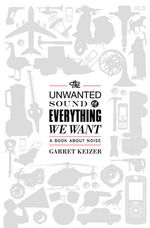
Over the three lengthy chapters that make up The Unwanted Sound of Everything We Want, Garret Keizer argues that life in our post-industrial era is the playground of the economically powerful, who carelessly inflict their refuse on the weak: “marginalized people, small creatures, and simple pursuits.” Noise, or “unwanted sound,” is the vector for this extended case study, and along the way it becomes something more than simply “unwanted.” It becomes an elegant cipher for the abundance of violence our civilization has not yet quelled or fully recognized. He reads a terrible richness in the ecological, social, and economical dynamics of machine noise’s interaction with life: small creatures terrorized by the din of a highway cutting through their habitat, airport workers forced to live under the flight path of the planes they service, and soldiers in the military “exposed to weapons fire and explosive devices that may produce sound levels as high as 185 dB.” Keizer believes an understanding of noise pollution in all its gravity gives the lie to any notion of a cleanly won modern world. “The extent to which we regard noise issues as ‘precious,’ in the pejorative sense of the word,” he writes, “is the extent to which we will squander those things we ought to hold precious in the positive sense of the word: fragile ecosystems, manual skills, local cultures, neighborhoods, children.

more from Sean Higgins at AGNI here.

“Moroni style”

Schwartz_web_12-081612_jpg_470x421_q85

The painter’s best-known work, Portrait of a Man, which is in London’s National Gallery and is informally known as The Tailor—it shows someone with shears in his hand and a bolt of cloth before him—stands out in part because it is the rare Moroni where the sitter is actually doing something. (It doesn’t hurt that the man is good-looking, and the way he leans over a little, and turns to face us, gives the portrait a kind of inner spring.) But this London picture, which has the generally bare appearance of many Moronis—he doesn’t, like Holbein, make something luxuriant out of the space surrounding his sitter—conveys little about what it was like to be a tailor at the time. It presents if anything the idea of being a tailor (or of being a cloth merchant), and Michael Levey, in his 1987 The National Gallery Collection, astutely saw that the sitter, with his appraising look, might as well be taking “the spectator’s measure.” This is Moroni’s tone in his portraits in general: his people scrutinize us. What also feels fresh and modern—and capable of making earlier commentators believe there was something obdurate or lacking in Moroni—is the unusually straightforward, almost anonymous, nature of his realism.

more from Sanford Schwartz at the NYRB here.

Friday Poem

When the Shoe Fits
.
Ch'ui the draftsman
Could draw more perfect circles freehand
Than with a compass.
.
His fingers brought forth
Spontaneous forms from nowhere. His mind
Was meanwhile free and without concern
With what he was doing.
.
No application was needed
His mind was perfectly simple
And knew no obstacle.
.
So, when the shoe fits
The foot is forgotten,
When the belt fits
The belly is forgotten,
When the heart is right
“For” and “against” are forgotten.
.
No drives no compulsions,
No needs, no attractions:
Then your affairs
Are under control.
You are a free man.
.
Easy is right. Begin right
And you are easy.
Continue easy and you are right.
The right way to go easy
Is to forget the right way
And forget that the going is easy.
.
.
by Chuang Tzu
from In the Dark Before Dawn
trans. Thomas Merton

Drone Court Advantage

An incisive piece by Charles Davis in The New Inquiry:

DronesTritely declaring President Obama no different from George W. Bush, these nominally left-wing suppressors of the vote even adopt the same bigoted, “pro-life” language one would expect to find outside an abortion clinic in Kansas, proclaiming our commander-in-chief a “criminal” and “baby killer” all because he has killed a few regrettable babies as part of wars that much of the world considers criminal — a privilege, mind you, never denied any of his white predecessors. They even attack the president because he has had the temerity to protect the lives of American servicemen and women through the record-breaking use of drones, ensuring the greatest threat they face is carpal tunnel, not a bullet from an angry savage.

…Talking about innocent men, women, and children killed by our way of life isn’t going to bring them back, but it will undermine support among President Obama’s left-wing base. Indeed, while some pacifists confuse their personal beliefs with politically viable policy solutions — thinking, as blogger Adam Serwer puts it, that America should stick to “using banana creme pies or wifflebats in its defense” — President Obama is compelled to live in the real world. And there he must confront real threats, like a potential GOP takeover of the Senate, that require an active and politically unassailable foreign policy. Instead of dwelling on dead foreigners and arguing and bickering over which president killed which child, the left would do well to remember the huge advances in progressive rhetoric we’ve made these last four years. Instead of bashing the man who saved us from Sarah Palin, we ought to rededicating ourselves to addressing the most pressing problem the planet faces right now: defeating Mitt Romney.

After all, if you don’t like that Barack Obama possesses the unilateral ability to decide who lives or dies, imagine how insufferable that power would be in the hands of the former Massachusetts governor.

Read the rest here.

Does Quantum Physics Make it Easier to Believe in God?

From BQO:

QuantNot in any direct way. That is, it doesn’t provide an argument for the existence of God. But it does so indirectly, by providing an argument against the philosophy called materialism (or “physicalism”), which is the main intellectual opponent of belief in God in today’s world. Materialism is an atheistic philosophy that says that all of reality is reducible to matter and its interactions. It has gained ground because many people think that it’s supported by science. They think that physics has shown the material world to be a closed system of cause and effect, sealed off from the influence of any non-physical realities — if any there be. Since our minds and thoughts obviously do affect the physical world, it would follow that they are themselves merely physical phenomena. No room for a spiritual soul or free will: for materialists we are just “machines made of meat.”

Quantum mechanics, however, throws a monkey wrench into this simple mechanical view of things. No less a figure than Eugene Wigner, a Nobel Prize winner in physics, claimed that materialism — at least with regard to the human mind — is not “logically consistent with present quantum mechanics.” And on the basis of quantum mechanics, Sir Rudolf Peierls, another great 20th-century physicist, said, “the premise that you can describe in terms of physics the whole function of a human being … including [his] knowledge, and [his] consciousness, is untenable. There is still something missing.”

More here.

Explosive backpacks: Termites explode to defend their colonies

From Nature:

TermitesA species of termite found in the rainforests of French Guiana takes altruism seriously: aged workers grow sacks of toxic blue liquid that they explode onto their enemies in an act of suicidal self-sacrifice to help their colonies (see video).

The “explosive backpacks” of Neocapritermes taracua, described in Science today1, grow throughout the lifetimes of the worker termites, filling with blue crystals secreted by a pair of glands on the insects' abdomens. Older workers carry the largest and most toxic backpacks. Those individuals also, not coincidentally, are the least able to forage and tend for the colony: their mandibles become dull and worn as the termites age, because they cannot be sharpened by moulting. “Older individuals are not as effective at foraging and nest maintenance as younger workers,” says Robert Hanus, who studies termite biology at the Institute of Organic Chemistry and Biochemistry in Prague, and led the study. But when the workers are attacked, he says, “they can provide another service to the colony. It makes perfect sense to me because theories predict that social insects should perform low-risk, laborious tasks such as housekeeping in the first part of their life and risky tasks such as defence as they age.”

More here.