The Revolutionary Cinema of Chris Marker

Patrick Higgins in Counterpunch:

From Cockburn to Vidal, some great thinkers and men have moved on over the past few weeks. Among those ranks is the French documentarian—nay, cine-essayist is more near correct—Chris Marker, whose “brilliance as a thinker and filmmaker has,” in the words of film critic Jonathan Rosenbaum, “largely (and unfairly) eclipsed by Godard’s.”

Both men, Godard and Marker, are responsible for more than a few films of almost upsetting beauty. Both men also contributed greatly to the withering art of film criticism, their best moments as critics achieved through the camera rather than the typewriter. It is true that Godard has made films one could safely call revolutionary (despite the spirited abuse the Situationists leveled at him), just as it is true that Godard possesses a painter’s eye and the deepest of possible understandings of the text and the image, but Marker’s intensity as a narrator and dedication as a wonderer and intelligence as a traveler have not been matched by Godard or anybody else. It is time this artist of the highest caliber, for whose talents 91 years could never suffice, received his due.

On my backpack—the one perpetually hanging from my body—is a rusting button with the image of the Cheshire Cat, its sprawling grin teasing and frightening. The button has been there for years, and will remain there for many years more, because to be put in mind of Marker’s films is to be put in mind of so many other wonderful things. The image is from Marker’s The Case of the Grinning Cat, in which the image of the Cheshire Cat, found as graffiti on walls and in metros throughout Paris, serves as Marker’s springboard for ruminations on nearly everything. As it should be. What better to capture Marker’s syndicalist-ish spirit and sensibility than street art, anonymously created, continually evolving, and publically consumed?

Marker films help me more than most in understanding the clutter and serenity, the noise and peacefulness of the world we inhabit. He was expert at finding “moments.”

How It Felt to Be There

9781844678587 KapuscinskiNeal Ascherson in the LRB:

In a few weeks, all going well, I will get to see my Polish file. Any foreign journalist who visited Poland regularly in the Communist period must assume that the old Security Service built up a dossier on him or her. Mine is now in the Institute of National Remembrance in Warsaw, and I can read it. I don’t know what it contains. Much irrelevant rubbish, no doubt: surveillance teams have to justify their expenses. But one thing I am prepared for: reports to the secret police by people I considered to be friends or at least friendly acquaintances. Some ‘targets’ find the idea of such reports so horrible and distressing they prefer not to see their file at all. My view is different.

‘People’s Poland’ was the land Ryszard Kapuściński lived in, but left as often as he could. Many men and women there who despised the regime made bargains with themselves: if the price of getting a passport to a conference in Paris, or of befriending a Western foreigner, was to visit a certain Major Kowalski now and then and invent some harmless platitudes – cheap at that price. A few of my friends admitted this and joked about it. Others kept it delicately unsaid. They were reluctant informers, not professional spooks out to entrap me, and knowing that, I trusted them.

I thought Kapuściński was in that sort of league. We met quite a few times, mostly in Warsaw, and I felt that we were friends. Perhaps I was wrong. He was charming, intent, always apparently interested in what you had to say. And yet, as Artur Domosławski observes in this biography, that warm, complicit smile was for everyone. I can’t remember much of what he said. This is because he never said much. He was one of those rare journalists whose way of listening makes other people open up and talk. That’s what this elusive man used his smile for. That, and to take attention and curiosity away from himself. Kapuściński was evasive, and it turns out he had plenty to evade.

We Need to Tell the Africa Story Differently

Jina Moore in the Boston Review:

ScreenHunter_08 Aug. 04 17.29In 1906, the readers of The New York Times opened their papers to a story about the Bronx Zoo’s latest attraction: Ota Benga, a 22-year-old Mutwa from today’s Democratic Republic of the Congo.

“Ota Benga let some of the savage nature of the African forest come out yesterday,” began the story, in which Benga is drenched with a hose in the zoo’s monkey cage.

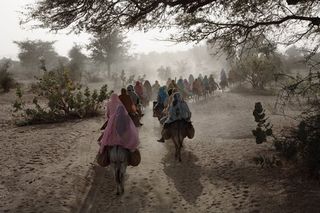
Today, the “savage nature” of Africa is still on display, in American headlines: “Uganda’s rebels in murderous spree,” “Congo a country of rape and ruin” “Africa’s Forever Wars.” Sometimes the savagery doesn’t come from the “savages” themselves. It comes from poverty—“NIGERIA: Focus on the scourge of poverty”—or disease—“AIDS at 30: Killer has been tamed, but not conquered.” Other times, all the savagery blends together: “Starving Babies, Raped Mommies, Famine in Africa—Do you care?

All I can imagine from these headlines is that Africa—all 54 countries, all 11.7 million square miles of it—must be a very deadly place.

But I’ve lived there. It’s not. Or rather, it can be, in certain places, at certain times. Far more often, and across most of the continent, it isn’t. Not even in its most infamous “war-torn” countries, such as the Democratic Republic of Congo. In Goma, part of a region the United Nations’ special representative on sexual violence in conflict Margot Wallström two years ago dubbed “the rape capital of the world,” I went to an impromptu hip-hop show, full of dancing Congolese. In Kinshasa, nearly a thousand miles away on the other side of the country, I met an oboist for the city’s symphony orchestra.

More here.

Finding the Beauty of Atheism During Ramadan

Jalees Rehman in the Huffington Post:

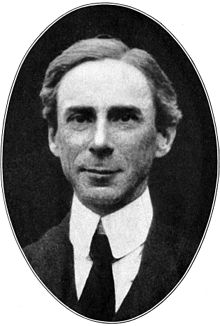
220px-Honourable_Bertrand_RussellIn the course of studying non-Muslim writings and Scriptures during this Ramadan, I came across the excellent essay “What I Believe” by the great atheist philosopher and Nobel laureate Bertrand Russell. This essay can be found in a collection of essays, including the famous or perhaps infamous “Why I Am Not a Christian.” I remember reading this essay collection a number of years ago, but as with many of Bertrand Russell's writings, it does not hurt to continuously re-read them since one is bound to find new facets of wisdom each time. In “What I Believe,” Russell formulates some of the key principles of his humanist and atheist philosophy.

Part of the essay is devoted to critiquing religion, such as when he says: “Religion, since it has its source in terror, has dignified certain kinds of fear and made people think them not disgraceful. In this it has done mankind a great disservice: all fear is bad.”

Russell acknowledges that fear is found not only in religion, but in many aspects of our society.

“Fear is the basis of religious dogma, as of so much else in human life. Fear of human beings, individually or collectively, dominates much of our social life, but it is fear of nature that gives rise to religion.”

More here.

The Perfect Milk Machine: How Big Data Transformed the Dairy Industry

Alexis Madrigal in The Atlantic (article is a few months old but interesting):

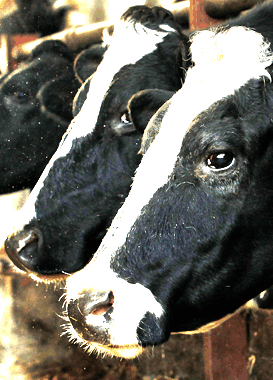
ScreenHunter_07 Aug. 04 17.08While there are more than 8 million Holstein dairy cows in the United States, there is exactly one bull that has been scientifically calculated to be the very best in the land. He goes by the name of Badger-Bluff Fanny Freddie.

Already, Badger-Bluff Fanny Freddie has 346 daughters who are on the books and thousands more that will be added to his progeny count when they start producing milk. This is quite a career for a young animal: He was only born in 2004.

There is a reason, of course, that the semen that Badger-Bluff Fanny Freddie produces has become such a hot commodity in what one artificial-insemination company calls “today's fast paced cattle semen market.” In January of 2009, before he had a single daughter producing milk, the United States Department of Agriculture took a look at his lineage and more than 50,000 markers on his genome and declared him the best bull in the land. And, three years and 346 milk- and data-providing daughters later, it turns out that they were right.

“When Freddie [as he is known] had no daughter records our equations predicted from his DNA that he would be the best bull,” USDA research geneticist Paul VanRaden emailed me with a detectable hint of pride. “Now he is the best progeny tested bull (as predicted).”

Data-driven predictions are responsible for a massive transformation of America's dairy cows. While other industries are just catching on to this whole “big data” thing, the animal sciences — and dairy breeding in particular — have been using large amounts of data since long before VanRaden was calculating the outsized genetic impact of the most sought-after bulls with a pencil and paper in the 1980s.

More here.

Donald Trump destroys Scotland

Mary Elizabeth Williams in Salon:

Director Anthony Baxter’s horrifying, frequently outrage-inspiring “You’ve Been Trumped” chronicles the true saga of what happened when Donald Trump — a man described in the film as “someone who just isn’t used to hearing ‘no’” — decided to build a golf resort in a territory so environmentally unique it’s been called the Amazon rain forest of Scotland. Suffice to say, things got ugly. Ugly like a Trump casino. As Baxter demonstrates with agonizing, unflinching clarity, the result was a community and a land that were literally rolled over in the name of corporate greed — and with the apparent blessing of the local authorities.

The series of unfortunate events that befalls the community when an irascible mogul comes to town can only be described as flat-out surreal. Where to even begin? There’s the way Trump’s application to build in the area – rejected on existing environmental limitations on the special scientific interest site — magically wins approval two years later. There’s the way he repeatedly and sneeringly refers to the put-upon Balmedie locals — in particular Michael Forbes, the feisty farmer who resolutely refused to sell him his property, as “disgusting pigs.” There’s the litany of nightmares the community endures as Trump and company plow their way through their world – having their water and their power cut off, having their property damaged and, for the kicker, then getting billed for the wreckage.

More here.  And here’s the trailer:

Why Women Still Can’t Have It All

From The Atlantic:

It’s time to stop fooling ourselves, says a woman who left a position of power: the women who have managed to be both mothers and top professionals are superhuman, rich, or self-employed. If we truly believe in equal opportunity for all women, here’s what has to change.

Slaughter-wideEighteen months into my job as the first woman director of policy planning at the State Department, a foreign-policy dream job that traces its origins back to George Kennan, I found myself in New York, at the United Nations’ annual assemblage of every foreign minister and head of state in the world. On a Wednesday evening, President and Mrs. Obama hosted a glamorous reception at the American Museum of Natural History. I sipped champagne, greeted foreign dignitaries, and mingled. But I could not stop thinking about my 14-year-old son, who had started eighth grade three weeks earlier and was already resuming what had become his pattern of skipping homework, disrupting classes, failing math, and tuning out any adult who tried to reach him. Over the summer, we had barely spoken to each other—or, more accurately, he had barely spoken to me. And the previous spring I had received several urgent phone calls—invariably on the day of an important meeting—that required me to take the first train from Washington, D.C., where I worked, back to Princeton, New Jersey, where he lived. My husband, who has always done everything possible to support my career, took care of him and his 12-year-old brother during the week; outside of those midweek emergencies, I came home only on weekends.

As the evening wore on, I ran into a colleague who held a senior position in the White House. She has two sons exactly my sons’ ages, but she had chosen to move them from California to D.C. when she got her job, which meant her husband commuted back to California regularly. I told her how difficult I was finding it to be away from my son when he clearly needed me. Then I said, “When this is over, I’m going to write an op-ed titled ‘Women Can’t Have It All.’” She was horrified. “You can’t write that,” she said. “You, of all people.” What she meant was that such a statement, coming from a high-profile career woman—a role model—would be a terrible signal to younger generations of women. By the end of the evening, she had talked me out of it, but for the remainder of my stint in Washington, I was increasingly aware that the feminist beliefs on which I had built my entire career were shifting under my feet. I had always assumed that if I could get a foreign-policy job in the State Department or the White House while my party was in power, I would stay the course as long as I had the opportunity to do work I loved. But in January 2011, when my two-year public-service leave from Princeton University was up, I hurried home as fast as I could.

More here.

The Basic Question: Why Does the World Exist?

From The New York Times:

WorldThere could have been nothing. It might have been easier. Instead there is something. The universe exists, and we are here to ask about it. Why? “Why is there something rather than nothing?” sounds so fundamental a question that it should have perplexed humanity since the dawn of philosophy. Strangely, it hasn’t, or at least it has left no trace on early written literature. Aristotle said that philosophy begins with wonder, and earlier Greek philosophers did wonder what the world was made of. Thales thought its primal substance was water, Anaximenes air, Heraclitus fire. But they didn’t ask why anything was there at all. We find no one haunted by the specter of non-being until Gottfried Wilhelm Leibniz, who wrote in 1714, “The first question which we have a right to ask will be, ‘Why is there something rather than nothing?’ ” For some, the question is not really a question. It is more an expression of philosophical amazement — a way of saying “wow” in the face of existence.

Ludwig Wittgenstein described a feeling of awe that led him to use phrases like “How extraordinary that anything should exist,” but he decided it was better not to say such things. Martin Heidegger decided the other way, and made the Question of Being the foundation for his entire philosophy, becoming, as George Steiner described him, “the great master of astonishment, the man whose amazement before the blank fact that we are instead of not being, has put a radiant obstacle in the path of the obvious.” Other people have treated it as a real question, the kind that might have an answer. And some think they have actually found answers, though these tend to be so different that one can hardly believe they started with the same question. In “Why Does the World Exist?,” Jim Holt, an elegant and witty writer comfortably at home in the problem’s weird interzone between philosophy and scientific cosmology, sets out in search of such answers.

More here.

Saturday Poem

Philosophy is Useless

to Bakhtytzhan Kanapianov

Philosophy is useless. How much nicer it is
to brew some tea, to make it strong, to sip it
with apricot preserves, while going through
your chest of treasures: a collection of
clay dragons from Samarkand, with their tails
chipped off and then repaired with good old glue.
If you get bored with that, there is also a collection
of toy lions. One of them, made of grey metal,
is most amusing, with its fierce head
and mangy mane; originally it embellished
the handle of an ancient sword, then someone
ingeniously used it as a model for the corkscrew
that I, unfortunately, cannot put to use because
the thing was given to me as a farewell memento.

I have no reason not to cherish all these objects:
for over a quarter of a century they’ve been forming
a tight circle around me, and were it not for them
so much would be forgotten. Here is a tarnished
tea-glass holder, a reminder of trains that used to be,
and of a teaspoon that would tinkle against thin glass
in a compartment, on a railroad stretch between
Saratov and Orenburg; here is a silver-plated
cigarette case with the Soviet Kremlin indented
on the lid, with a most touching elastic band inside,
as if from an undergarment. Inside, it houses
a handful of small change in various denominations –
five-, fifteen-, twenty-kopeck coins and, above all,
the two-kopeck coins that now no longer can
convey all of their former magic meaning:
a night in February, a frozen-through phone booth,
in the receiver a barely audible voice of her
who is at the other end of Moscow, and your heart
is pounding, not for the reason of too much caffeine
or alcohol, but because of too much happiness.

Read more »

Friday, August 3, 2012

What Makes Countries Rich or Poor?

Diamond_1-060712_jpg_470x420_q85Jared Diamond's review of Daron Acemoglu and James A. Robinson's Why Nations Fail: The Origins of Power, Prosperity, and Poverty, in the NYRB:

In their narrow focus on inclusive institutions, however, the authors ignore or dismiss other factors. I mentioned earlier the effects of an area’s being landlocked or of environmental damage, factors that they don’t discuss. Even within the focus on institutions, the concentration specifically on inclusive institutions causes the authors to give inadequate accounts of the ways that natural resources can be a curse. True, the book provides anecdotes of the resource curse (Sierra Leone cursed by diamonds), and of how the curse was successfully avoided (in Botswana). But the book doesn’t explain which resources especially lend themselves to the curse (diamonds yes, iron no) and why. Nor does the book show how some big resource producers like the US and Australia avoid the curse (they are democracies whose economies depend on much else besides resource exports), nor which other resource-dependent countries besides Sierra Leone and Botswana respectively succumbed to or overcame the curse. The chapter on reversal of fortune surprisingly doesn’t mention the authors’ own interesting findings about how the degree of reversal depends on prior wealth and on health threats to Europeans.

Acemoglu and Robinson reply (with a response by Diamond):

[C]ontrary to Diamond’s claim, there is nothing that contradicts tropical medicine and agricultural science in claiming that these are not major factors shaping differences in national prosperity. That these geographic factors cannot by themselves account for prosperity is illustrated by an empirical pattern we discuss—the “reversal of fortune.” Among the countries colonized by Europeans, those that were more prosperous before colonization ended up as relatively less prosperous today. This is prima facie evidence that, at least in the sample that makes up almost half of the countries in the world, geographic factors cannot account—while institutional ones can—for differences in prosperity as these factors haven’t changed, while fortunes have. Academic research also shows that once the effect of institutions is properly controlled for, there is no evidence that geographic factors have a significant impact on prosperity today.

Walmart heirs own more wealth than bottom 40 percent of Americans

From PolitiFact.com:

Six members of the Walton family appear on the Forbes 400 list of the wealthiest Americans. Christy Walton, widow of the late John Walton, leads the clan at No. 6 with a net worth of $25.3 billion as of March 2012. She is also the richest woman in the world for the seventh year in a row, according to Forbes. Here are the other five:

No. 9: Jim Walton, $23.7 billion
No. 10: Alice Walton, $23.3 billion
No. 11: S. Robson Walton, oldest son of Sam Walton, $23.1 billion
No. 103: Ann Walton Kroenke, $3.9 billion
No. 139: Nancy Walton Laurie, $3.4 billion

That’s a grand total of $102.7 billion for the whole family.

Sylvia Allegretto, a labor economist at the Center on Wage and Employment Dynamics at the University of California-Berkeley, compared the Waltons’ cumulative net worth with that of the overall population, as cited in the Survey of Consumer Finances. (She used the Waltons’ wealth from 2010, which was valued at $89.5 billion.)

Allegretto found that in 2007, the wealth held by the six Waltons was equal to that of the bottom 30.5 percent of families in the U.S. In 2010, the Waltons’ share equaled the entire bottom 41.5 percent of families.

That 41.5 percent represents nearly 49 million families, notes Josh Bivens at the left-leaning Economic Policy Institute. While median family wealth fell by 38.8 percent, Bivens wrote, the wealth of the Walton family members rose from $73.3 billion in 2007 to $89.5 billion in 2010, or about 22 percent growth.

More here.

The water car fraud

Pervez Hoodbhoy in the Express Tribune:

ScreenHunter_06 Aug. 03 16.41Agha Waqar Ahmad deserves a medal from the people of Pakistan for his great service to the nation. In a few short days, he has exposed just how far Pakistan has fallen into the pit of ignorance and self-delusion. No practical joker could have demonstrated more dramatically the true nature of our country’s political leaders, popular TV anchors and famed scientists.

At first, it sounded like a joke: a self-styled engineer, trained in Khairpur’s polytechnic institute, claims to have invented a ‘water kit’ enabling any car to run on water alone. It didn’t matter that the rest of world couldn’t extract energy from water; he had done it. He promised a new Pakistan with limitless energy, no need for petrol or gas, and no more loadshedding. For an energy starved nation, it is a vision of paradise.

Agha Waqar Ahmad is now a national celebrity thanks to Religious Affairs Minister Khursheed Shah. Federal ministers Mir Hazar Khan Bijarani and Qamar Zaman Kaira have added their commendations. President Asif Ali Zardari has expressed his delight. The cabinet has met three times to discuss the water vehicle, and a fourth meeting is scheduled. Reports suggest millions may be spent on the ‘water fuel kit project’.

The media has rushed in to celebrate the new national hero. For TV anchor Talat Husain, thanks to Agha Waqar Ahmad’s invention, Pakistan’s image can go from a country ravaged by terrorism to one of boundless possibilities. Anchor Hamid Mir and Senator Parvaiz Rasheed drove around Islamabad sitting next to the inventor, wondering how to protect the man’s life from Western oil companies.

More here.

The Inner Voice: Gandhi’s Real Legacy

110502_r20836_p233Pankaj Mishra in The New Yorker:

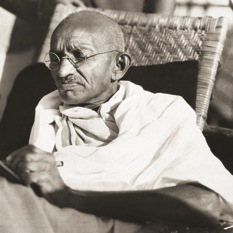
Mohandas Gandhi was the twentieth century’s most famous advocate of nonviolent politics. But was he also its most spectacular political failure? The possibility is usually overshadowed by his immense and immensely elastic appeal. Even Glenn Beck recently claimed to be a follower, and Gandhi’s example has inspired many globally revered figures, such as Martin Luther King, Jr., Nelson Mandela, the Dalai Lama, and Aung San Suu Kyi. Gandhi, rather than Mark Zuckerberg, may have been the presiding deity of the Arab Spring, his techniques of resistance—nonviolent mass demonstrations orchestrated in the full glare of the world’s media—fully absorbed by the demonstrators who prayed unflinchingly on Kasr al-Nil, in Cairo, as they were assaulted by Hosni Mubarak’s water cannons.

And yet the Indian leader failed to achieve his most important aims, and was widely disliked and resented during his lifetime. Gandhi was a “man of many causes,” Joseph Lelyveld writes in “Great Soul: Mahatma Gandhi and His Struggle with India” (Knopf; $28.95). He wanted freedom not only from imperial rule but also from modern industrial society, whose ways Western imperialists had spread to the remotest corners of the globe. But he was “ultimately forced, like Lear, to see the limits of his ambition to remake his world.”

How can one square such quasi-Shakespearean tragedy with Gandhi’s enduring influence over a wide range of political and social movements? Why does his example continue to accumulate moral power?

John Quiggin on Utopia

UtopiaOver at the Browser, a Five Books interview with John Quiggin:

What does John Quiggin’s utopia look like?

The reason I chose this topic is because of the current political situation, particularly on the left. We’ve moved from a situation where the left offered a utopian vision that inspired people, to a situation where the left is primarily trying to stave off the tribalism that dominates politics on the right. That doesn’t really seem to be enough to mobilise and engage people. We need to recapture the kind of vision and language of utopia that used to be part and parcel of left politics. But I suppose I like the idea of utopia more than the work of specifying the details.

You don’t think the whole idea of utopia now has negative connotations because of the spectacular failure of communism?

That’s obviously one of the factors in play. Even when social democrats were in competition with communism, we had much greater comfort with utopian language than we do now. But for me the real problem is the way in which neoliberal (for want of a better word) values have permeated the whole of social discussion and made any kind of thinking beyond very narrow self-interest sound unreasonably utopian.

So is your utopia a social democratic one?

Yes. There’s an important sense in which the social democracy of the postwar era wasn’t merely a compromise between communism and capitalism. It really was something new and different, which seemed to promise and to a significant extent deliver a much better society than either capitalism or communism could offer – one in which people were free of the fear of mass unemployment, of having their lives destroyed by ill health, and yet one in which freedom was a positive value. We’re seeing all that being ripped away and eroded now under the banner of austerity. It’s not sufficient to say, “Austerity is a really bad policy – here is a Keynesian macroeconomic critique showing you won’t be able to reduce debt in this way.” You need to rekindle the notion that there is a better way of life that we could achieve, though without the utopian element of a fundamental transformation of people that was part of the communist project, particularly in places like China.

The New Leveller

Images-115Richard Marshall interviews Elizabeth Anderson in 3:AM Magazine:

3:AM: You are known for your work in feminist epistemology and philosophy of science. So can you first say what the motivations for such an approach were in philosophy and who were the pioneers?

EA: I have argued that feminist epistemology and philosophy of science is a branch of naturalized, social epistemology focusing on the causes and consequences of gendered ideas and practices on the presuppositions, content, methods, concerns, cognitive authority, uses, composition and organization of diverse fields and modes of inquiry. It’s what you get when you join naturalizing trends in epistemology and philosophy of science with feminist concerns, such as the ones that underlie your previous question about the relative paucity of women in philosophy. Pioneers in the field include Linda Alcoff, Louise Antony, Lorraine Code, Patricia Hill Collins, Donna Haraway, Sandra Harding, Nancy Hartsock, Sally Haslanger, Evelyn Fox Keller, Elisabeth Lloyd, Maria Lugones, Helen Longino, Charles Mills, Lynn Nelson, Nancy Tuana, and Alison Wylie. This is far from an exhaustive list; I apologize for errors of omission.

3:AM: So what are the basic components of feminist epistemology and feminist science? Is Harding’s tripartite classification of empiricist, standpoint theory and postmodernism still the menu of frameworks for this approach?

EA: Harding’s classification remains a useful entrée to the field. Very roughly, feminist empiricism advocates the use of empirical methods to analyze, uncover, and avoid sexist and androcentric biases in inquiry. Feminist standpoint theory claims that women, or feminists, have privileged access to certain truths or epistemic authority over certain questions concerning women’s oppression and women’s interests. Feminist postmodernism questions the unity of the category “woman,” stresses the importance of intersecting identities (of race, class, age, nationality, religion, etc. with gender) in analyzing the processes and products of inquiry, and adopts interpretive approaches to scientific theories that highlight the contingencies of their conceptual frameworks and presuppositions.

In practice, these approaches have converged.

Philosopher Bradley Strawser Makes the Moral Case for US Drones

UPDATE August 7, 2012: Bradley Strawser has written to me and strongly protested the way he was portrayed in this article. He is making a formal complaint to the independent ombudsman at the Guardian and has also published an op-ed piece to correct some of what he feels are misrepresentations of his views. –Abbas Raza

Bradley-Strawser-008Rory Carroll profiles Strawser in The Guardian [h/t: Corey Robin]:

At first sight, Bradley Strawser resembles a humanities professor from central casting. He has a beard, wears jeans, quotes Augustine and calls himself, only half in jest, a hippie. He opposes capital punishment and Guantánamo Bay, calls the Iraq invasion unjust and scorns neo-conservative foreign policy hawks. “Whatever a neocon is, I'm the opposite.”

His office overlooks a placid campus in Monterey, an oasis of California sun and Pacific zephyrs, and he lives up the road in Carmel, a forested beauty spot with an arts colony aura. Strawser has published works on metaphysics and Plato and is especially fond of Immanuel Kant.

Strawser is also, it turns out, an outspoken and unique advocate for what is becoming arguably the US's single most controversial policy: drone strikes. Strawser has plunged into the churning, anguished debate by arguing the US is not only entitled but morally obliged to use drones.

“It's all upside. There's no downside. Both ethically and normatively, there's a tremendous value,” he says. “You're not risking the pilot. The pilot is safe. And all the empirical evidence shows that drones tend to be more accurate. We need to shift the burden of the argument to the other side. Why not do this? The positive reasons are overwhelming at this point. This is the future of all air warfare. At least for the US.”

Early relationships, not brainpower, key to adult happiness

From PhysOrg:

The-HappinessPositive social relationships in childhood and adolescence are key to adult well-being, according to Associate Professor Craig Olsson from Deakin University and the Murdoch Children's Research Institute in Australia, and his colleagues. In contrast, academic achievement appears to have little effect on adult well-being. The exploratory work, looking at the child and adolescent origins of well-being in adulthood, is published online in Springer's Journal of Happiness Studies. We know very little about how aspects of childhood and adolescent development, such as academic and social-emotional function, affect adult well-being – defined here as a combination of a sense of coherence, positive coping strategies, social engagement and self-perceived strengths. Olsson and team analysed data for 804 people followed up for 32 years, who participated in the Dunedin Multidisciplinary Health and Development Study (DMHDS) in New Zealand. They explored the relative importance of early academic and social pathways to adult well-being.

In particular, they measured the relationship between level of family disadvantage in childhood, social connectedness in childhood, language development in childhood, social connectedness in adolescence, academic achievement in adolescence and well-being in adulthood. Social connectedness in childhood is defined by the parent and teacher ratings of the child being liked, not being alone, and the child's level of confidence. Social connectedness in adolescence is demonstrated by social attachments (parents, peers, school, confidant) and participation in youth groups and sporting clubs. The researchers found, on the one hand, a strong pathway from child and adolescent social connectedness to adult well-being. This illustrates the enduring significance of positive social relationships over the lifespan to adulthood. On the other hand, the pathway from early language development, through adolescent academic achievement, to adult well-being was weak, which is in line with existing research showing a lack of association between socioeconomic prosperity and happiness. The analyses also suggest that the social and academic pathways are not intimately related to one another, and may be parallel paths.

More here.

Friday Poem

My Back Pages
.
I crossed the sea. Half my address book
blew away and never came back.

It’s one way to weed the cabbage patch.
I never did like them all that much.

I stopped sending Christmas cards and letters.
The other half went. I never felt better.

Which left me and the takeaway man,
except when I got down to one

I wasn’t so sure I made the cut
so mine was the page that I ripped out.

I’d decided I liked me less and less
I’d done my throwing out in reverse.

I was the lack that I’d always lacked.
Get rid of me and you’re all welcome back.

.

by David Wheatley
from Mocker
The Gallery Press, Oldcastle, 2006

Thursday, August 2, 2012

Poetry Changed the World

Elaine Scarry in the Boston Review:

Scarry_37.4_manuscriptWhat is the ethical power of literature? Can it diminish acts of injuring, and if it can, what aspects of literature deserve the credit?

All these questions, at first, hinge on another: can anything diminish injury? In his recent book The Better Angels of Our Nature, Steven Pinker argues that, over 50 centuries, many forms of violence have subsided. Among the epochs he singles out for special scrutiny is a hundred-year period bridging the seventeenth and eighteenth centuries during which an array of brutal acts—executing accused witches, imprisoning debtors, torturing animals, torturing humans, inflicting the death penalty, enslaving fellow human beings—suddenly abated, even if they did not disappear.

Attempting to account for “the sweeping change in everyday sensibilities” toward “the suffering in other living things” and for the protective laws that emerged during the Humanitarian Revolution, Pinker argues that the legal reforms were in some degree a product of increasing literacy. Reforms were immediately preceded by a startling increase in book production (e.g., in England, the number of publications rose from fewer than 500 per decade in 1600 to 2,000 per decade by 1700, and to 7,000 per decade by 1800) and by an equally startling surge in literacy, with the majority of Englishmen literate by the end of the seventeenth century, French by the end of the eighteenth, and Danish, Finnish, German, Icelandic, Scottish, Swedish, and Swiss by the end of the nineteenth century.

Pinker singles out one particular form of reading and one particular kind of book—the novel—though, as we will see, features of poetry that long predate the novels of this period are essential to literature’s capacity to reduce harm.

More here.