Category: Recommended Reading
Anything But Human
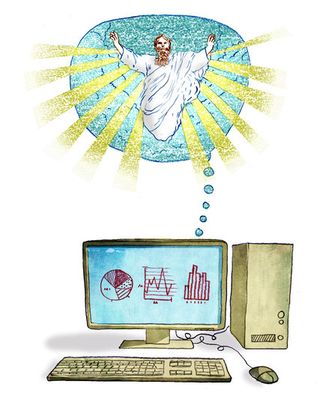
Wherever I turn, the popular media, scientists and even fellow philosophers are telling me that I’m a machine or a beast. My ethics can be illuminated by the behavior of termites. My brain is a sloppy computer with a flicker of consciousness and the illusion of free will. I’m anything but human.
While it would take more time and space than I have here to refute these views, I’d like to suggest why I stubbornly continue to believe that I’m a human being — something more than other animals, and essentially more than any computer.
Let’s begin with ethics. Many organisms carry genes that promote behavior that benefits other organisms. The classic example is ants: every individual insect is ready to sacrifice itself for the colony. As Edward O. Wilson explained in a recent essay for The Stone, some biologists account for self-sacrificing behavior by the theory of kin selection, while Wilson and others favor group selection. Selection also operates between individuals: “within groups selfish individuals beat altruistic individuals, but groups of altruists beat groups of selfish individuals. Or, risking oversimplification, individual selection promoted sin, while group selection promoted virtue.” Wilson is cautious here, but some “evolutionary ethicists” don’t hesitate to claim that all we need in order to understand human virtue is the right explanation — whatever it may be — of how altruistic behavior evolved.
I have no beef with entomology or evolution, but I refuse to admit that they teach me much about ethics. Consider the fact that human action ranges to the extremes. People can perform extraordinary acts of altruism, including kindness toward other species — or they can utterly fail to be altruistic, even toward their own children. So whatever tendencies we may have inherited leave ample room for variation; our choices will determine which end of the spectrum we approach. This is where ethical discourse comes in — not in explaining how we’re “built,” but in deliberating on our own future acts. Should I cheat on this test? Should I give this stranger a ride?
David Mamet, Gilad Atzmon and Identity Politics
Reading Gilad Atzmon's The Wandering Who? immediately after David Mamet's The Secret Knowledge, I was surprised to find the two books, written from vehemently opposed political viewpoints, nonetheless reminded me of each other. Does Mamet's need to see the Israelis only as scapegoats grow from the same root as Atzmon's need to see them only as perpetrators? An underlying emotional argument of Mamet's The Secret Knowledge could be glossed as “I used to be a poster child for liberalism, so all the more reason to believe me now I reject everything about liberalism.” For an underlying emotional argument of Atzmon's The Wandering Who? substitute “Zionism” for “liberalism.” But even if this were a compelling line of argument, each book contains plenty of evidence Mamet and Atzmon were never exactly poster children.
Mamet's plays and other writings celebrate individual courage, discipline, and commitment. While he has only recently started identifying as a conservative, his long-term distrust of academia and high estimation of street smarts, his generally low opinion of human nature and belief that playing the victim card is a more contemptible route to power than is straightforward self-interested chicanery – while arguably bipartisan attitudes — in the contemporary U.S. tend to be more associated with the right. It's not surprising if a man whose plays observe the Aristotelian unities of Time, Place and Action leans conservative, while when it comes to Israel – more likely the driving factor behind Mamet's political conversion – he has for some time been on the right of Israel's foreign policy spectrum. According to The Secret Knowledge, he now desires a Republican victory in the U.S. in 2012 and the repeal of health care reform, Israel's infallibility apparently not extending to its system of socialized medicine. Mamet loves America and Israel for their entrepreneurialism, and tends toward the neocon line that Israel is the front line in the “War Against Terrorism,” and that anyone criticizing the Israeli government's treatment of the Palestinians must be an anti-Semite. Mamet reports he is now ashamed not to have fought in Vietnam, a lack for which his more recent hawkishness could be seen as a bid to compensate.
Atzmon on the other hand is in rebellion against his own experience of the 1980s Israel-Lebanon war, recalling in The Wandering Who? visiting a prison camp in Lebanon where Palestinians were incarcerated by Israelis, and deciding he was on the wrong side.
Neuroscience and Race
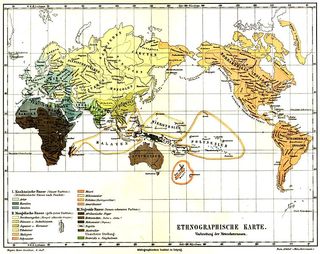
I want to highlight four questions that come up for me in thinking about the neuroanthropology of race.
*How does experience get under the skin?
*How do human judgments, decisions and interactions get instantiated in the brain?
*What role does human variation play in how brains work?
*What role does neuroscience play in reinforcing or questioning the use of race in science and society?
I’ve made all of these questions more general than just about “race.” I do that largely because these sorts of questions come up with all sorts of social phenomena – gender, class, immigrant status, and so forth. But that step back into generality and into dispassioned observation is, ironically enough, a step back into my own white privileged space. I’m protected here – it’s about them, rather than me. And that is a major part of the problem. That is how “race” often works today.
Question #1: How does experience get under the skin?
The first point to make here is that experience, like biology, is varied. It doesn’t match up with our pre-established categories. But we can look for patterns of experience and see if those correspond to changes in human development, biological structure and function, and health and educational outcomes.
So, as a first pass, I’d say this question boils down to three things: (1) characterizing lived experience; (2) examining the interface between experience and development; and (3) looking at outcomes.
Ghosts on the Waterfront
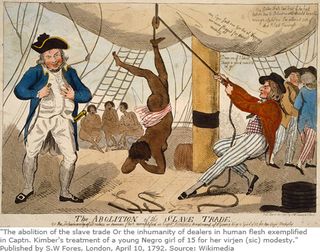
The origins and genesis of the slave ship as a world-changing machine go back to the late fifteenth century, when the Portuguese made their historic voyages to the west coast of Africa, where they bought gold, ivory, and human beings. These early “explorations” marked the beginning of the Atlantic slave trade. They were made possible by a new evolution of the sailing ship, the full-rigged, three-masted carrack, the forerunner of the vessels that would eventually carry Europeans to all parts of the earth, then carry millions of Europeans and Africans to the New World, and finally earn Thomas Gordon's admiration.
As Carlo Cipolla explained in his classic work Guns, Sails, and Empires, the ruling classes of Western European states were able to conquer the world between 1400 and 1700 because of two distinct and soon powerfully combined technological developments.[2] First, English craftsmen forged cast-iron cannon, which were rapidly disseminated to military forces all around Europe. Second, the deep-sea sailing “round ship” of northern Europe slowly eclipsed the oared “long ship,” or galley, of the Mediterranean. European leaders with maritime ambitions had their shipwrights cut ports into the hulls of these rugged, seaworthy ships for huge, heavy cannon. Naval warfare changed as they added sails and guns and replaced oarsmen and warriors with smaller, more efficient crews. They substituted sail power for human energy and thereby created a machine that harnessed unparalleled mobility, speed, and destructive power. Thus when the fullrigged ship equipped with muzzle-loading cannon showed up on the coasts of Africa, Asia, and America, it was by all accounts a marvel if not a terror. The noise of the cannon alone was terrifying. Indeed it was enough, one empire builder explained, to induce non-Europeans to worship Jesus Christ.
European rulers would use this revolutionary technology, this new maritime machine, to sail, explore, and master the high seas in order to trade, to fight, to seize new lands, to plunder, and to build empires.
Chain Medicine: What can hospitals learn about quality from the Cheesecake Factory
Atul Gawande in The New Yorker:

I’d come from the hospital that day. In medicine, too, we are trying to deliver a range of services to millions of people at a reasonable cost and with a consistent level of quality. Unlike the Cheesecake Factory, we haven’t figured out how. Our costs are soaring, the service is typically mediocre, and the quality is unreliable. Every clinician has his or her own way of doing things, and the rates of failure and complication (not to mention the costs) for a given service routinely vary by a factor of two or three, even within the same hospital.
More here.
After Safe Landing, Rover Sends Images From Mars
From The New York Times:

That achievement, in the early hours of Monday morning Eastern time, was indeed dramatic: with the eyes of the world watching, the car-size craft called Curiosity was lowered at the end of 25-foot cables from a hovering rocket stage, successfully touching down on a gravelly Martian plain. For the world of science, it was the second slam-dunk this summer — the first one being the announcement last month that the Higgs boson, a long-sought particle theorized by physicists, had likely been found. But while the focus of high-energy physics world has shifted overseas to CERN, the European laboratory, the United States remains the center of the universe for space, ahead of Russia, Europe and China, and for NASA, it was a chance to parry accusations of being slow, bloated and rudderless. “If anybody has been harboring doubts about the status of U.S. leadership in space,” John P. Holdren, the president’s science adviser, said at the news conference, “well, there’s a one-ton automobile-size piece of American ingenuity. And it’s sitting on the surface of Mars right now.”
More here.
Monday, August 6, 2012
perceptions
Sunday, August 5, 2012
Beyond Recognition and Misrecognition: the Shooting at Oak Creek Gurdwara
Amardeep Singh at his own website:
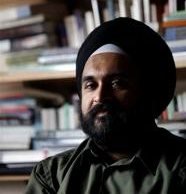
As I have experienced it, the turban that Sikh men wear is the embodiment of a kind of difference or otherness that can provoke some Americans to react quite viscerally. Yes, ignorance plays a part and probably amplifies that hostility. But I increasingly feel that visible marks of religious difference are lightning rods for this hostility in ways that don't depend on accurate recognition.
I am not sure why the reaction can be so visceral — perhaps because wearing a turban is at once so intimate and personal and so public? Walking around waving, say, an Iranian flag probably wouldn't provoke quite the same reaction. A flag is abstract — a turban, as something worn on the body, is much more concrete and it therefore poses a more palpable (more personal?) symbol for angry young men looking for someone to target. Whether or not that target was actually the “right one” was besides the point for the Oak Creek shooter.
More here.
What Happened To Europe?

About fifty years ago, in 1961, Jean-Paul Sartre complained about the state of Europe. “Europe is springing leaks everywhere,” he wrote. He went on to remark that “it simply is that in the past we made history and now history is being made of us.” Sartre was undoubtedly too pessimistic. Many major achievements of great significance have occurred in the last half a century in Europe, since Sartre's lament, including the emergence of the European Union, the reunification of Germany, the extension of democracy to Eastern Europe, the consolidation and improvement of national health services and of the welfare state, and the legalization and enforcement of some human rights. All this went with a rapidly expanding European economy, which comprehensively re-built and massively expanded its industrial base and infrastructure, which had been devastated during World War II.
There is indeed a long-run historical contrast to which Sartre could have pointed. For centuries preceding World War II, a lot of world history was actually made in Europe. And this generated much admiration, mixed with some fear, around the world. But the situation changed rapidly in the second half of the twentieth century. When I first arrived in Cambridge as a student from India in the early 1950s, I remember asking whether there were any lectures given on the economic history of Asia, Africa, and Latin America. I was told that there were indeed such lectures — and that they were given for a paper called “Expansion of Europe.” That view of the non-European world would seem a little archaic now, not merely because the grand European empires have ended, but also because the balance of political prominence and economic strength has radically changed in the world. Europe is no longer larger than life.
Philosophical Shock Tactics
Massimo Pigliucci and Julia Galef over at Rationally Speaking:
Why do philosophers sometimes argue for conclusions that are disturbing, even shocking? Some recent examples include the claim that it's morally acceptable to kill babies; that there's nothing wrong with bestiality; and that having children is unethical. In this episode of Rationally Speaking, Massimo and Julia discuss what we can learn from these “Philosophical shock tactics,” the public reaction to them, and what role emotion should play in philosophy.

A Poet Unwelcome
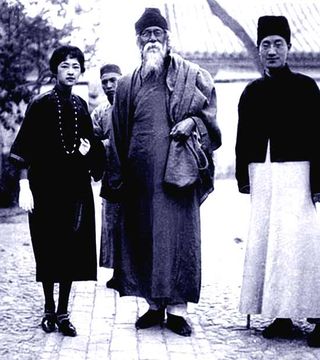
On April 12, 1924, Rabindranath Tagore arrived in Shanghai for a lecture tour of China arranged by Liang Qichao, China’s foremost modern intellectual. Soon after receiving the Nobel prize for literature in 1913, Tagore had become an international literary celebrity; he was also the lone voice from Asia in an intellectual milieu that was almost entirely dominated by Western institutions and individuals. As Lu Xun pointed out in 1927, “Let us see which are the mute nations. Can we hear the voice of Egypt? Can we hear the voice of Annam (modern-day Vietnam) and Korea? Except Tagore, what other voice of India can we hear?”
The Japanese novelist Yasunari Kawabata once recalled
“the features and appearance of this sage-like poet, with his long bushy hair, long moustache and beard, standing tall in loose-flowing Indian garments, and with deep, piercing eyes. His white hair flowed softly down both sides of his forehead; the tufts of hair under the temples also were like two beards and linking up with the hair on his cheeks, continued into his beard, so that he gave an impression, to the boy that I was then, of some ancient Oriental wizard.”
Packed lecture-halls awaited Tagore around the world, from Japan to Argentina. President Herbert Hoover received him at the White House when he visited the United States in 1930, and the New York Times ran twenty-one reports on the Indian poet, including two interviews. This enthusiasm seems especially remarkable considering the sort of prophecy from the East that Tagore would deliver to his Western hosts: that their modern civilisation, built upon the cult of money and power, was inherently destructive and needed to be tempered by the spiritual wisdom of the East.
But when, travelling in China, Tagore expressed his doubts about Western civilisation and exhorted Asians not to abandon their traditional culture, he ran into fierce opposition. “The poet-saint of India has arrived at last,” the novelist Mao Dun wrote in a Shanghai periodical, and “welcomed with ‘thunderous applause’”. Mao Dun had once translated Tagore into Chinese; but in his incarnation as a bitter communist radical he was increasingly worried about the Indian poet’s likely deleterious effect on Chinese youth.
“We are determined”, Mao Dun warned, “not to welcome the Tagore who loudly sings the praises of eastern civilisation. Oppressed as we are by militarists from within the country and by the imperialists from without, this is no time for dreaming.” Within days of his arrival in China, Tagore would face hecklers, shouting such slogans as “Go back, slave from a lost country!”
Bubbles without Markets

[B]efore we conclude that we should now, after the crisis, pursue policies to rein in the markets, we need to consider the alternative. In fact, speculative bubbles are just one example of social epidemics, which can be even worse in the absence of financial markets. In a speculative bubble, the contagion is amplified by people’s reaction to price movements, but social epidemics do not need markets or prices to get public attention and spread quickly.
Some examples of social epidemics unsupported by any speculative markets can be found in Charles MacKay’s 1841 best seller Memoirs of Extraordinary Popular Delusions and the Madness of Crowds.The book made some historical bubbles famous: the Mississippi bubble 1719-20, the South Sea Company Bubble 1711-20, and the tulip mania of the 1630’s. But the book contained other, non-market, examples as well.
MacKay gave examples, over the centuries, of social epidemics involving belief in alchemists, prophets of Judgment Day, fortune tellers, astrologers, physicians employing magnets, witch hunters, and crusaders. Some of these epidemics had profound economic consequences. The Crusades from the eleventh to the thirteenth century, for example, brought forth what MacKay described as “epidemic frenzy” among would-be crusaders in Europe, accompanied by delusions that God would send armies of saints to fight alongside them. Between one and three million people died in the Crusades.
There was no way, of course, for anyone either to invest in or to bet against the success of any of the activities promoted by the social epidemics – no professional opinion or outlet for analysts’ reports on these activities. So there was nothing to stop these social epidemics from attaining ridiculous proportions.
Hacks Britannica: Reviving an Olympic Tradition of Crapness

The world’s foremost English-language newspapers seemed unanimous in finding the opening ceremony a triumph of quirkiness, but within the New York Times’ apparently laudatory account of Boyle’s show as a plucky celebration of postimperial, midrecession British eccentricity was this assessment: “[A] sometimes slightly insane portrait of a country that has changed almost beyond measure since the last time it hosted the Games, in the grim postwar summer of 1948.” This tinge of insanity lay on the surface of a broader, pervasive, and telling incoherence that might have been predicted by anyone familiar with Boyle’s directorial career, which comprises the following feature films: Shallow Grave, a nimble though slightly dated thriller; Trainspotting, one of the best films of its decade; A Life Less Ordinary, a kidnap road-romance typical of the shaggy ensemble-cast Hollywood productions into which enfants terrifiques are seduced for their second acts and that Boyle himself has characterized as cut-rate Coen brothers; The Beach, a lemon of a Leonardo DiCaprio vehicle; 28 Days Later, an excellent postapocalyptic zombie movie; Millions, a twee story about children in possession of stolen millions; Sunshine, a suspense-horror spaceship plot that comprehensively rips off two other films that were already ripping off Kubrick and Tarkovsky; Slumdog Millionaire, a lively, mediocre film that (for mass-psychological reasons I will not bore the reader by describing in detail but that had a lot to do with the financial crisis, terrorism, heavily publicized reverse-verisimilitude, and that year’s presidential election) achieved a terrifying popularity; and 127 Hours, the tense true story of a climber who has to amputate his trapped arm with a dull knife.
If you watch these films, you will begin to perceive, loosely uniting most of Boyle’s generically diverse projects, a sort of claustrophilia: characters’ extended constraint in cabins, apartments, spaceships (a.k.a. submarines), taxis, crawlspaces, crevasses—even on the beach, there obtains a sort of cabin fever; there is, too, usually fairly tight editing and a disciplined tracking of narrative lines.
What Not to Do With Your Physics Education

I came to Wall Street in 1982 as a computer consultant and went for an MBA in finance at night. That is where I first encountered the finance-as-physics mentality of my professors. I bought into it. By the time I graduated in 1986, it seemed likely that the old-timers who understood only markets would not survive because they could not do physics.
By 1987, the hottest innovation to come from finance theory was something marketed as “portfolio insurance.” The idea was that as markets went up, you could increase your exposure, and when they went down, you could decrease it and protect your gains.
In October of 1987, stock markets experienced the worst crash on record. Believers in portfolio insurance discovered that they could not decrease their exposure fast enough, and as they sold, the crash snowballed.
After the crash, I stopped listening to people who understood physics but not markets and went back to doing what I do best: trying to understand things through direct observation and applying my tools to solving the problems at hand.
The theoreticians dusted themselves off and went back to what they do best. They invented exotic financial instruments that nobody can price properly—not even them—and designed complex, misguided risk models that triumphed over common sense. Markets are now so complex and move so fast that humans cannot participate without assistance from supercomputers—programmed, incidentally, to quality standards so low they would shock engineers responsible for things such as airline safety.
Physicists (and most other “quants”) on Wall Street will tell you over a beer that they know that finance is not a science, but they act as if it is. I think the reasons are that: 1) once you are trained to be a scientist it is hard not to act like one, and 2) management and clients want to believe you are one.
There is also something more insidious going on.
7 Rooms
From lensculture:

PICTURE: “Nowadays it’s different from in the Soyuz. I remember how my aunt, who worked at the Soviet Ministry of Culture, used to organize balls in Sverdlovsk. A neckline lower than the seventh vertebra was regarded as pornography, but now even if you ran about the stage with your tits bare, no one would say a word. These days people feel freer. The difference is that once upon a time people knew what they had to say, but they couldn’t say it. Now you can say anything, but no one knows what to say.”
7 Rooms by Rafal Milach. Texts by Svetlana Alexievich.
More here.
Cell coverage: How a convicted murderer found his true calling as a jailhouse reporter
From Columbia Journalism Review:
Paul Wright began his journalism career behind bars. When he was 21, Wright killed a man in Federal Way, WA, during a botched hold-up; the cocaine dealer he went to rob reached for a gun, and Wright fired first. He claimed self-defense, but was convicted of first-degree felony murder in 1987. Rather than languish, Wright began studying the law, and spent most of his time in Washington State’s prison system writing, reporting, and litigating for , a magazine he co-founded with fellow inmate Ed Mead in 1990. (He served 17 years of a 25-year sentence, and was released in 2003.) Some Washington prisons tried to ban Prison Legal NewsPLN, but Wright became an experienced jailhouse lawyer and convinced the courts to overturn those decisions—something he’s since done in nine other states, with three cases pending. What started as a 10-page newsletter is now a 56-page monthly magazine with subscribers in all 50 states and several other countries. PLN has a staff of five, and is the centerpiece of a growing nonprofit—recently renamed the Human Rights Defense Center—with a litigation arm focused on prisoners’ rights, a book-publishing operation, and a budding Web presence. Wright has written three books (two while in prison). CJR’s Alysia Santo spoke with him in PLN’s office in West Brattleboro, VT.
From killer to crusader
The worst phone call I ever made was when I was sitting in jail and called my parents to tell them that I’d been arrested on murder charges. I grew up in Lake Worth, FL. My dad worked for the post office and my mom was a housewife. I liked to read and stay up on what’s happening, but my career goals were always in the law-enforcement arena, not journalism. I graduated high school when I was 16, and then went to Mexico to teach English. I came back to the US when I was 18 and joined the Army. I was stationed in Hanau, Germany, as a military policeman. When I came back to US, I went through a military police investigator course, and I was working as a military police officer in Washington when I was arrested. In retrospect, it was really pathetic.
More here.
Sunday Poem
Dance Me to the End of Love
Dance me to your beauty with a burning violin
Dance me through the panic 'til I'm gathered safely in
Lift me like an olive branch and be my homeward dove
Dance me to the end of love
.
Oh let me see your beauty when the witnesses are gone
Let me feel you moving like they do in Babylon
Show me slowly what I only know the limits of
Dance me to the end of love
Dance me to the wedding now, dance me on and on
Dance me very tenderly and dance me very long
We're both of us beneath our love, we're both of us above
Dance me to the end of love
Dance me to the children who are asking to be born
Dance me through the curtains that our kisses have outworn
Raise a tent of shelter now, though every thread is torn
Dance me to the end of love
Dance me to the end of love
.
by Leonard Cohen
from I'm Your Man, 1988
Saturday, August 4, 2012
Tom Paine and the Ironies of Social Democracy

Critics of every social insurance proposal in the U.S., including recent health care reform, have called them socialist attacks on private property. To be sure, social insurance is a central pillar of social democracy, and social democratic parties originated in a socialist critique of capitalism. Yet the equation of social insurance with socialism is doubly ironic. The first realistic proposal to abolish poverty by means of universal social insurance was Thomas Paine, who explicitly advanced his scheme as a defense of private property against socialist revolutionaries. And the first actual social insurance scheme was introduced by Otto von Bismarck, who advanced it against the German Social Democratic Party, which opposed his plan. This talk will consider how Paine grounded the justification of social insurance in a neo-Lockean theory of private property rights, and explore the implications of the ironic inversion of social insurance from a bulwark of to a perceived assault on capitalism.
Capitalism in Crisis?
Charlie Rose interviews David Harvey and Richard Wolff: