Neuroscientists Discover Cranial Cleansing System

From Scientific American:

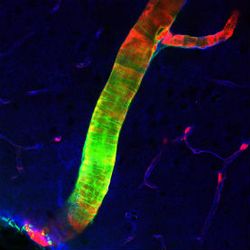
Brain-cleaning-discovery_1The brain can be a messy place. Thankfully, it has good plumbing: Scientists have just discovered a cleansing river inside the brain, a fluid stream that might be enlisted to flush away the buildup of proteins associated with Alzheimer's, Huntington's and other neurodegenerative disorders. The researchers, based at the University of Rochester (U.R.), University of Oslo and Stony Brook University, describe this new system in the journal Science Translational Medicine today. The study adds to the evidence that the star-shaped cells called astrocytes play a leading role in keeping the nervous system in good working order.

In most of the body, a network of vessels carry lymph, a fluid that removes excess plasma, dead blood cells, debris and other waste. But the brain is different. Instead of lymph, the brain is bathed in cerebrospinal fluid. For decades, however, neuroscientists have assumed that this fluid simply carries soluble waste by slowly diffusing through tissues, then shipping its cargo out of the nervous system and eventually into the body's bloodstream. Determining what's really going on has been impossible until recently. In this study, researchers led by U.R. neuroscientist Maiken Nedergaard have identified a second, faster brain-cleansing system.

More here.

Thursday Poem

Mother to Son

Well, son, I'll tell you:
Life for me ain't been no crystal stair.
It's had tacks in it,
And splinters,
And boards torn up,
And places with no carpet on the floor—
Bare.
But all the time
I'se been a-climbin' on,
And reachin' landin's,
And turnin' corners,
And sometimes goin' in the dark
Where there ain't been no light.
So, boy, don't you turn back.
Don't you set down on the steps.
'Cause you finds it's kinder hard.
Don't you fall now—
For I'se still goin', honey,
I'se still climbin',
And life for me ain't been no crystal stair.
.

by Langston Hughes
from The Selected Poems of Langston Hughes
publisher: Vintage Classics

Wednesday, August 15, 2012

The Community of Reason, a Self-Assessment and a Manifesto

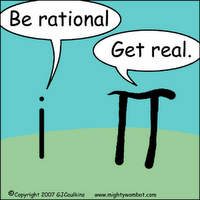
Be-rational-get-realMassimo Pigliucci's critique of the skeptic, atheist, rationalist community, over at Rationally Speaking:

The problem is that my experience (anecdotal, yes, but ample and varied) has been that there is quite a bit of un-reason within the CoR. This takes the form of more or less widespread belief in scientific, philosophical and political notions that don’t make much more sense than the sort of notions we — within the community — are happy to harshly criticize in others. Yes, you might object, but that’s just part of being human, pretty much every group of human beings holds to unreasonable beliefs, why are you so surprised or worried? Well, because we think of ourselves — proudly! — as a community of reason, where reason and evidence are held as the ultimate arbiters of any meaningful dispute. To find out that too often this turns out not to be the case is a little bit like discovering that moral philosophers aren’t more ethical than the average guy (true).

What am I talking about? Here is a (surely incomplete, and I’m even more sure, somewhat debatable) list of bizarre beliefs I have encountered among fellow skeptics-atheists-humanists. No, I will not name names because this is about ideas, not individuals (but heck, you know who you are…). The list, incidentally, features topics in no particular order, and it would surely be nice if a sociology student were to conduct a systematic research on this for a thesis…

* Assorted nonsense about alternative medicine. Despite excellent efforts devoted to debunking “alternative” medicine claims, some atheists especially actually endorse all sorts of nonsense about “non-Western” remedies.

* Religion is not a proper area of application for skepticism, according to some skeptics. Why on earth not? It may not be a suitable area of inquiry for science, but skepticism — in the sense of generally applied critical thinking — draws on more than just science (think philosophy, logic and math).

* Philosophy is useless armchair speculation. So is math. And logic. And all theoretical science.

* The notion of anthropogenic global warming has not been scientifically established, something loudly proclaimed by people who — to the best of my knowledge — are not atmospheric physicists and do not understand anything about the complex data analysis and modeling that goes into climate change research.

* Science can answer moral questions. No, science can inform moral questions, but moral reasoning is a form of philosophical reasoning. The is/ought divide may not be absolute, but it is there nonetheless.

On the Highway of Love, Jack Kerouac Divides Men and Women

570_RoadStephanie Nikolopoulos in The Millions:

“You should sign up for this,” my sister said, showing me an article about a bookstore that doubles as a matchmaking service. At the Brooklyn indie, lovelorn bookworms choose their prospective romantic interests based on their list of favorite authors pinned to a cork board. The article went on to point out that women never wrote down Jack Kerouac as one of their coveted authors.

My decade-long enamor with the poets and writers of the Beat Generation was about to pay off. As the only woman who adored Kerouac, I would be the vixen of the literary matchmaking board.

Now, I’ll be the first to admit I’m a girly girl. My regular weekend activity includes clothes shopping, I feel naked without nail polish on, and my favorite color is pink. In fact, it was while reading the fashion magazine Seventeen my senior year of high school that I stumbled upon a mention of Ann Charters’s The Portable Beat Reader and quickly became obsessed with all things Beat related. After reading Jack Kerouac’s road-trip novel On the Road, it only seemed natural to pack my bags and move across the country for college. As Kerouac wrote, “I was surprised, as always, by how easy the act of leaving was, and how good it felt. The world was suddenly rich with possibility.”

While attending Scripps, a women’s college in Southern California, my interest in Beat literature grew as I went on a San Francisco pilgrimage to poet Lawrence Ferlinghetti’s City Lights Booksellers & Publishers, infamous for its involvement in the obscenity trial over Allen Ginsberg’s Howl. When I returned, diploma in hand, to the East Coast, I attended talks by Beat writers at the Bowery Poetry Club in New York City. I tucked Gregory Corso’s poem “Marriage,” in which he asks “Should I get married? Should I be good?” into my heart. That would be the poem I want read at my wedding, I thought. When I read On the Road, I connected to Kerouac’s alter ego, Sal Paradise, shambling after friends, being nostalgic for events even as they’re happening, seeing beauty in the mundane, and hitting the road in his eternal quest for meaning — topics I thought both men and women could relate to.

Until my sister showed me the matchmaking article, it had never occurred to me that the author of On the Road could be a cement divider on Lover’s Lane.

Religion and the Profane

220px-Ernest_Gellner_2An old piece by Ernest Gellner in Eurozine:

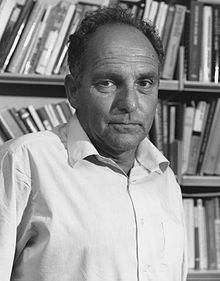
Tonight I will try to explain a few of the major striking events of our century – some very surprising, some a little less surprising. Very surprising is the tremendous success of Islam in maintaining and strengthening itself. Most social scientists accepted the secularization thesis, which argued that in modern or industrial societies the hold of religion over society and over the hearts and minds of men declines. This seems more or less true with one striking exception: the world of Islam, where the hold of religion over society and over men in the past hundred years has certainly not diminished and seems to have increased.

The other equally surprising event of the century is the unexpected and total collapse of Marxism. Marxism is often and correctly compared to religion, sometimes even described as secular religion, as it had many of its features – total vision, the promise of righteousness on earth, etc. It did, however, lack one prominent feature of religion – that is, when religions are established, they retain a hold on the hearts and minds of men, and do not collapse easily. When they do collapse, there is some resistance and struggle; some people remain loyal to them. Marxism succeeded in retaining the loyalty of a remarkably small number (perhaps none at all). In the post-communist world, there is, of course, the frequently noted return of the ex-Communists. But these merely stand for the maintenance of their own position, less radical change, keeping the welfare provisions, and so on – they are basically conservatives. The really interesting thing about them is that none of them have returned under the “banner of Marxism”. In those societies that were under Marxist domination for forty to seventy years, the Bolsheviks utterly failed to emulate the Jesuits and other representatives of the Counter-Reformation in leaving deep marks in the souls and the societies of their adherents. This is also an interesting and important fact that is worth trying to understand.

Then there are some facts that are just slightly less surprising, though they were not properly anticipated: the strength of nationalism in this century (which is no longer surprising). But of course, for a long time the decline of nationalism was confidently predicted.

The Use and Abuse of Religious Freedom

Peter Singer in Project Syndicate:

5457b7fe5096a3c7c2722ed39bcbb4fa.portraitWhat are the proper limits of religious freedom? Marianne Thieme, leader of the Party for the Animals in the Netherlands, offers this answer: “Religious freedom stops where human or animal suffering begins.”

The Party for the Animals, the only animal-rights party to be represented in a national parliament, has proposed a law requiring that all animals be stunned before slaughter. The proposal has united Islamic and Jewish leaders in defense of what they see as a threat to their religious freedom, because their religious doctrines prohibit eating meat from animals that are not conscious when killed.

The Dutch parliament has given the leaders a year to prove that their religions’ prescribed methods of slaughter cause no more pain than slaughter with prior stunning. If they cannot do so, the requirement to stun before slaughtering will be implemented.

Meanwhile, in the United States, Catholic bishops have claimed that President Barack Obama is violating their religious freedom by requiring all big employers, including Catholic hospitals and universities, to offer their employees health insurance that covers contraception. And, in Israel, the ultra-orthodox, who interpret Jewish law as prohibiting men from touching women to whom they are not related or married, want separate seating for men and women on buses, and to halt the government’s plan to end exemption from military service for full-time religious students (63,000 in 2010).

More here.

Why Partition?

Perry Anderson in the London Review of Books:

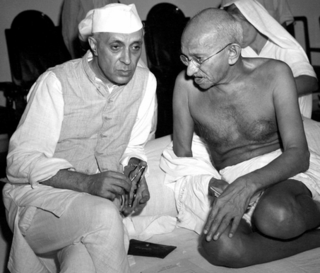
ScreenHunter_25 Aug. 15 17.05By 1945, the era of Gandhi was over, and that of Nehru had begun. It is conventional to dwell on the contrasts between the two, but the bearing of these on the outcome of the struggle for independence has remained by and large in the shadows. Nor are the contrasts themselves always well captured. Nehru was a generation younger; of handsome appearance; came from a much higher social class; had an elite education in the West; lacked religious beliefs; enjoyed many an affair. So much is well known. Politically more relevant was the peculiar nature of his relationship to Gandhi. Inducted into the national movement by his wealthy father, a pillar of Congress since the 1890s, he fell under Gandhi’s spell in his late twenties, at a time when he had few political ideas of his own. A decade later, when he had acquired notions of independence and socialism Gandhi did not share, and was nearly forty, he was still writing to him: ‘Am I not your child in politics, though perhaps a truant and errant child?’ The note of infantilism was not misplaced; the truancy, in practice, little more than coquetry. Like so many others, dismayed by Gandhi’s scuttling of Non-Cooperation in 1922, in despair at his fast against the introduction of Untouchable electorates in 1932, baffled by his reasons for suspending civil disobedience in 1934, he nevertheless each time abased himself before his patron’s judgment.

More here.

THE OBAMA E-MAILS

Nathaniel Stein in The New Yorker:

ScreenHunter_24 Aug. 15 16.22Friend—When I decided to run for president, I had significantly fewer gray hairs than I do today. Michelle says I’ve earned them, which is the nicest possible way to say I’m getting older. In fact, I’m turning 51 in a couple weeks, and to celebrate I’m heading home to Chicago … Donate $3 or whatever you can to support the campaign, and you’ll be automatically entered to join me… Barack”
—Obama fundraising e-mail

Friend—Isn’t it amazing how time flies? It seems like just yesterday I was a spry senator of forty-five. Today, I experience joint and back pain, and my cholesterol is frankly not where it should be. Michelle’s no help: she tells me this is the kind of thing I can expect “now that I’m in my fifties.” Will you help, by donating $3 or more today? —Barack

Friend—Being President is a pretty tough job. And I’ll be honest: it isn’t made any easier by the fact that I have a hernia. I know there’s one thing that will make me feel better, though. That’s right. Just $3—or more. —Barack

Friend—There are two things that I can use the phrase “more than ever” about: 1) how often I now wake up in middle of the night to use the restroom, and 2) how much I need your help in the campaign. Donate today—and thank you. —Barack

Friend—This morning, I had a routine EKG. But I don’t want just anyone interpreting the results. That’s not the way I ran my campaign, and it’s not the way I conduct my Administration, or my personal life. If you’re a doctor: please, donate $3 or more for a chance to be automatically entered to take a look at my EKG. I know you’ll come through for me. —Barack

More here. [Thanks to Batool Raza.]

Happy Independence Day to India

224203_10151095624193048_128747767_n

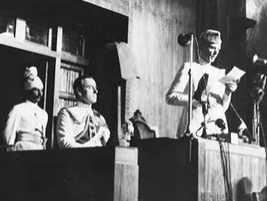
As a Pakistani-American I take special pleasure in wishing my Indian friends and colleagues and family a happy independence day today. Though I do it annually, I never tire of reading Jawaharlal Nehru's moving and poetic speech to the Indian Constituent Assembly which was delivered exactly 65 years ago at midnight. If you have not done so before, do read it.

From Wikipedia:

Long years ago we made a tryst with destiny, and now the time comes when we shall redeem our pledge, not wholly or in full measure, but very substantially. At the stroke of the midnight hour, when the world sleeps, India will awake to life and freedom. A moment comes, which comes but rarely in history, when we step out from the old to the new, when an age ends, and when the soul of a nation, long suppressed, finds utterance. It is fitting that at this solemn moment, we take the pledge of dedication to the service of India and her people and to the still larger cause of humanity.

At the dawn of history, India started on her unending quest, and trackless centuries are filled with her striving and grandeur of her success and failures. Through good and ill fortune alike, she has never lost sight of that quest, forgotten the ideals which gave her strength. We end today a period of misfortunes and India discovers herself again. The achievement we celebrate today is but a step, an opening of opportunity to the greater triumphs and achievements that await us. Are we brave enough and wise enough to grasp this opportunity and accept the challenge of the future?

Freedom and power bring responsibility. The responsibility rests upon this Assembly, a sovereign body representing the sovereign people of India. Before the birth of freedom, we have endured all the pains of labour and our hearts are heavy with the memory of this sorrow. Some of those pains continue even now. Nevertheless, the past is over and it is the future that beckons us now.

Read the rest here. And a short video of the occasion:

The New Science of Memory

From The Telegraph:

Pieces-of-Light11_2306572bMemory: according to one writer, it’s that “crazy woman that hoards coloured rags and throws away food”. To another, it’s “a dog that lies down where it pleases”. Coleridge bemoaned how the flotsam that rises above forgetfulness consists of “worthless straws”. Jane Austen also complained about the capricious quality of memory, “sometimes so retentive, so serviceable, so obedient; at others, so bewildered and so weak; and at others again, so tyrannic, so beyond control!” But she declared in Mansfield Park that “If any one faculty of our nature may be called more wonderful than the rest, I do think it is memory.” The subject is entrancing because we all know how memory makes the past both fascinating and frustrating. While researching a biography of Einstein, I found that my subject gave a different account of a key experiment at different times. As a science reporter, I was often struck by how eyewitnesses differed in their recollections of events, or muddled details of a disaster. Over the years I have had fascinating conversations with memory researchers, from Elizabeth Loftus, whose cunning experiments reveal how easily memory can be warped, to Eleanor Maguire, who has studied taxi drivers and amnesiacs to reveal how the brain’s hippocampus acts as a spatial scaffold for memories.

When it comes to the big questions about the nature of autobiographical memory, Charles Fernyhough is as informed as he is enchanted. But Pieces of Light does not dwell on the molecular mechanics of memory, or take the reader on a didactic trudge through the enchanted loom of connections between cells in a brain. Instead, the Durham University psychologist tells stories to explore the deepest nature of memory, and does it beautifully. His exploration of how our minds are shaped by the past ranges from Andy Warhol’s “scent museum” – the artist switched colognes on a routine basis and kept the part-used bottles, so that one whiff could transport him back to a given time – to flashbulb memories that can be as wrong as they are vivid.

More here.

Prosthetic retina helps to restore sight in mice

From Nature:

RetTwo neuroscientists have created a prosthesis that can partially restore the sight to blind mice. The device could eventually be developed for use in humans. More than 20 million people worldwide become blind owing to the degeneration of their retina, the thin tissue at the back of the eye that turns light into a neural signal. Only one prosthesis has been approved for treatment of the condition — it consists of an array of surgically implanted electrodes that directly stimulate the optic nerve and allow patients to discern edges and letters. Patients cannot, however, recognize faces or perform many everyday tasks.

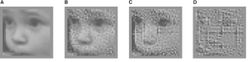
Sheila Nirenberg, a physiologist at the Weill Medical College at Cornell University in New York thinks that the problem is at least partially down to coding. Even though the retina is as thin as tissue paper, it contains several layers of nerves that seem to encode light into neural signals. “The thing is, nobody knew the code,” she says. Without it, Nirenberg believes that visual prostheses will never be able to create images that the brain can easily recognize. Now, she and her student, Chethan Pandarinath, have come up with a code and developed a device that uses it to restore some sight in blind mice. The duo began by injecting nerve cells in the retinas of their mice with a genetically engineered virus. The virus had been designed to insert a gene that causes the cells to produce a light-sensitive protein normally found in algae. When a beam of light was then shown into the eye, the protein triggered the nerve cells to send a signal to the brain, performing a similar function to healthy rod and cone cells.

More here.

Wednesday Poem

In Third Person

a haze a heron in a tide-pool
and for a long time out of time
two children push a giant yellow globe

coyotes come and every June the same
the unrequited loneliness the same
out-of-tune expressions herons dance
the same blue wings
it all made sense
the way he asked me for the Book of Job
to make some pattern make some rhyme
out of his life before he died
the way he scrutinized his patterned robe

when he did die it's simply that he sensed
there was no more to do no other dance
to be composed no present tense

by Maria Gapotchenko
from Clarion 15, 2012

Tuesday, August 14, 2012

Tripoli’s Troubles to Come

Idlib_protestersMaren Milligan in MERIP:

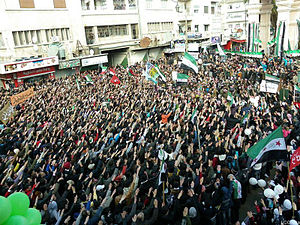
Tripoli is the epicenter of a high-stakes conflict unfolding in Lebanon. In 2012 alone, armed clashes have erupted six times, in mid-February, thrice in May, again in early June and most recently in late July, between Sunnis and ‘Alawis there. The firefights in Lebanon’s second city, a port town of some 500,000 on a head of land jutting from the northern coast, have added to fears stoked by the proximity of the increasingly lethal civil war in Syria. The three days of battles in May left 11 dead; the July skirmishes took two more lives, and have put the population on edge.

The administrative unit of Tripoli consists almost entirely of the eponymous metropolis that links together other regions of Lebanon’s northernmost province: largely Sunni ‘Akkar and Miniyya-Diniyya, largely Greek Orthodox Koura, and largely Maronite Zagharta, Bishara and Batroun. Sunnis are approximately 80 percent of the city’s population, but there are also significant minorities, primarily ‘Alawis, who make up 7.5 percent of the residents, according to the 2009 voter registry. Most of the balance are Christians, either Maronites or Greek Orthodox, the remnants of larger communities that fled by the thousands during the 1975-1991 civil war.

The contention focused in Tripoli is often attributed to “spillover” from Syria, which borders Lebanon’s northern governorate to the north and the east. Thousands of Syrians have taken refuge in the city, particularly over the winter of 2011-2012, during the worst of the fighting in Homs, some 50 miles to the east over the mountains. Media accounts sometimes trace the clashes at the start of the summer to the May 25 massacre of 108 Syrians in Houla, northwest of Homs. [1] The idea behind such explanations — often filed from Beirut or other distant locales — is that the Houla victims were Sunnis and the perpetrators presumed in both Syria and Lebanon to be ‘Alawis. But the link is weak, and in any case, armed confrontations have been occurring in Tripoli for years. Indeed, the distrust between the people of the two quarters where the fighting has centered dates from the civil war and last erupted in hostilities in 2008 during the lead-up to the 2009 parliamentary elections. Although Tripoli has long been connected to Syria — especially to its sister city, Homs — the Lebanese port is not a mere extension of Syria. It is its own battleground.

Wallace Markfield, Contender

Markfield_081012_620pxJ. Hoberman in Tablet:

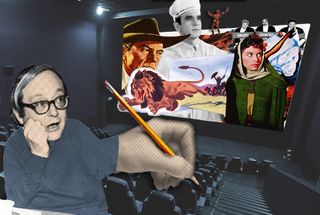
Had he lived, Wallace Markfield would have celebrated his 86th birthday this week. But it’s been 10 years since this word-slinging tummler left the stage, and you have to wonder if he didn’t write his own epitaph decades earlier. In the most famous line of his first and best-remembered novel, To an Early Grave—a book that treated New York Jewish intellectuals as though they were Catskill comedians—Markfield described its deceased prime mover as “a second-rate talent of the highest order.”

Put another way, Markfield was the most gifted also-ran associated with the so-called Jewish-American literary renaissance of 1950s and ’60s: His three Jew-obsessed comic novels were eclipsed by the titanic oeuvre of Philip Roth, his ideas regarding Jews and popular culture were massively elaborated by professor turned new journalist Albert Goldman, and his promising bid to establish himself as a wise-guy, street-smart luftmensh-intellectual Jewish film critic was upended by Manny Farber and trumped by Pauline Kael.

Gave ‘Single Girl’ a Life in Full (Sex, Sex, Sex)

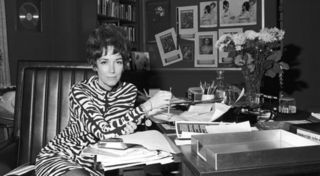
13brown_span-articleLargeThe NYT obituary for Helen Gurley Brown, by Margalit Fox:

Before she arrived at Cosmopolitan, Ms. Brown had already shaken the collective consciousness with her best-selling book “Sex and the Single Girl.” Published in 1962, the year before Betty Friedan ignited the modern women’s movement with “The Feminine Mystique,” it taught unmarried women how to look their best, have delicious affairs and ultimately bag a man for keeps, all in breathless, aphoristic prose. (Ms. Brown was a former advertising copywriter.)

By turns celebrated and castigated, Ms. Brown was for decades a highly visible, though barely visible, public presence. A tiny, fragile-looking woman who favored big jewelry, fishnet stockings and minidresses till she was well into her 80s, she was a regular guest at society soirees and appeared often on television. At 5 feet 4, she remained a wraithlike hundred pounds throughout her adult life. That weight, she often said, was five pounds above her ideal.

Ms. Brown routinely described herself as a feminist, but whether her work helped or hindered the cause of women’s liberation has been publicly debated for decades. It will doubtless be debated long after her death. What is safe to say is that she was a Janus-headed figure in women’s history, simultaneously progressive and retrogressive in her approach to women’s social roles.

vertigo dethrones Kane

RV-AH814_EBERT1_D_20120810175251

In the insular world of cineastes there is no more momentous event than the list of the best films of all time, which is curated every 10 years by the redoubtable Sight & Sound magazine of the British Film Institute. This year’s list, released in the August issue, represents a seismic shift. After occupying the No. 1 position since 1962, Orson Welles’ “Citizen Kane” (1941) was demoted to second place by Alfred Hitchcock’s “Vertigo” (1958). For decades “Citizen Kane” seemed to reign by default. Then a challenger appeared on the horizon. “Vertigo” made the list for the first time in 1982 and kept climbing. Movie critics are constantly asked, “What’s your favorite film?” I found it easy to reply “Citizen Kane,” hoping that my questioner’s eyes would glaze over and I could avoid a debate. Now I can say “Vertigo.” When I am told, “I’ve never seen what’s so great about it,” I can reply: “That’s fascinating from an autobiographical point of view.”

more from Roger Ebert at the WSJ here.

No moral giant, then

Ryszard-Kapuscinski-007

Kapuściński’s ‘empathy’, the talent for which he was admired and, to be frank, about which he was vain, was his habit of going to the back streets or the refugee encampment and ‘listening’ to ordinary people. He liked being well away from press minders, hard to find, roughing it with the locals. It made for fascinating journalism. But he had a weakness for exotic stereotypes which distorted the ‘actually existing’ Africa and Latin America he encountered. John Ryle, an anthropologist and writer who knows as much about eastern Africa as anyone in Britain, has been brutal about him: ‘Despite Kapuściński’s vigorously anti-colonialist stance, his writing about Africa is a variety of latter-day literary colonialism, a kind of gonzo Orientalism … Here facts are no longer sacred; we are at play in the bush of ghosts, free to opine and to generalise about “Africa” and “the African”.’ Domosławski supports Ryle’s verdict with some absurd pronouncements from The Shadow of the Sun: ‘the kind of history known in Europe as scholarly and objective can never arise here, because the African past has no documents or records … history … achieves here its purest, crystalline form – that of myth.’ It’s almost sixty years since the great anthropologist Meyer Fortes told me that ‘Africa has no history!’, and even then, as a student, I knew it was condescending nonsense.

more from Neal Ascherson at the LRB here.

Min Kamp

120813_r22452_p233

Walter Benjamin, in his great essay “The Storyteller,” written in the nineteen-thirties, argues that classic storytelling is structured around death. It is the fire at which listeners warm their hands. But these days, he suggests, that hearth is cold and empty. Benjamin notes that death has disappeared from contemporary life, safely shuffled away to the hospital, the morgue, the undertaker. Instead of the news of death, there is just news—the “information” that we get so easily in newspapers. “If the art of storytelling has become rare, the dissemination of information has had a decisive share in this state of affairs,” Benjamin writes. I sometimes think that the old leather couch Tolstoy kept in his study would be a good symbol of the mortal pulse that Benjamin was talking about. Tolstoy’s mother had given birth to him on this couch. She died when he was nearly two years old. Most of his thirteen children—five of whom died in childhood—were born on it, too. Was it not possible that one day he might lie on that same piece of furniture, and die there? It would be hard to write in such a study while oblivious of death as a life rhythm, of life as a death cycle.

more from James Wood at The New Yorker here.

M. A. Jinnah’s speech to the Constituent Assembly of Pakistan on 11th August, 1947

To commemorate the 65th anniversary of Pakistan's independence day today, I am posting this speech by the founder of the country, the Quaid-e-Azam Mohammad Ali Jinnah:

ScreenHunter_21 Aug. 14 16.58I know there are people who do not quite agree with the division of India and the partition of the Punjab and Bengal. Much has been said against it, but now that it has been accepted, it is the duty of every one of us to loyally abide by it and honorably act according to the agreement which is now final and binding on all. But you must remember, as I have said, that this mighty resolution that has taken place is unprecedented. One can quite understand the feeling that exists between the two communities wherever one community is in majority and the other is in minority. But the question is, whether, it was possible or practicable to act otherwise than what has been done. A division had to take place. On both sides, in Hindustan and Pakistan, there are sections of people who may not agree with it, who may not like it, but in my judgment there was no other solution and I am sure future history will record its verdict in favor of it. And what is more it will be proved by actual experience as we go on that that was the only solution of India's constitutional problem. Any idea ScreenHunter_22 Aug. 14 16.59of a United India could never have worked and in my judgment it would have led us to terrific disaster. Maybe that view is correct; may be it is not; that remains to be seen. All the same, in this division it was impossible to avoid the question of minorities being in one Dominion or the other. Now that was unavoidable. There is no other solution. Now what shall we do? Now, if we want to make this great State of Pakistan happy and prosperous we should wholly and solely concentrate on the well-being of the people and especially of the masses and the poor. If you will work in co-operation, forgetting the past, burying the hatchet you are bound to succeed. If you change your past and work together in a spirit that everyone of you, no matter to what community he belongs, no matter what relations he had with you in the past, no matter what is his color, caste or creed is first, second and last a citizen of this State with equal rights, privileges and obligations, there will be no end to the progress you will make.

More here.