Westernistic civilization

Debeljak

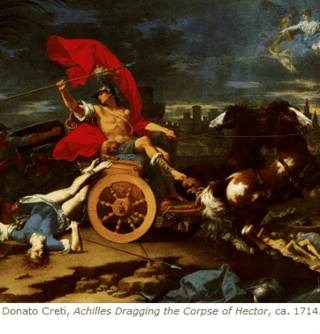
Instead of subscribing to the ideology that views the world through the “hard” lens of conflict between “the West and the Rest”, let us try a theory that looks at the world through the “soft” lens of “westernistic” civilization. An analogy between Hellenistic and westernistic civilization is helpful. In much the same way as classical Greece cannot be equated with Hellenic civilization, the modern West is not the same as westernistic civilization. Until 4 BC and the twilight of city-states, classical Greek civilization remained within the territorial borders of the southern Balkans. Similarly, the civilization of Latin Christianity or the traditional West was firmly rooted in the western countries of Europe until the advent of modernity. The Hellenistic civilization of Alexander the Great emanated from classical Greek heritage, but territorially it stretched across the entire world then known to man, reaching to Egypt and India, Tajikistan and Afghanistan. In the same way, the westernistic civilization that has arisen from modern western heritage comprises the entire known world today.

more from Ales Debeljak at Eurozine here.

Not In My Name: Islam, Pakistan and the Blasphemy Laws

Mehdi Hasan in the Huffington Post:

ScreenHunter_43 Aug. 22 15.35You could not make it up. An 11-year old Christian girl in Pakistan with Down's Syndrome is in police custody, and could face the death penalty, forallegedly burning pages from the Quran.

The girl, who has been identified as Rifta Masih, was arrested on blasphemy charges and is being held in Islamabad pending a court appearance later this month. She was detained by police after an angry mob turned up at her family's single-roomed home in a poor district on the outskirts of the Pakistani capital.

“About 500-600 people had gathered outside her house in Islamabad, and they were very emotional, angry, and they might have harmed her if we had not quickly reacted,” Pakistani police officer Zabi Ullah told reporters.

“Harmed her”? Really? I mean, really? What on Allah's earth is wrong with so many self-professed Muslims in the self-styled Islamic Republic of Pakistan? Have they taken leave of their morals as well as their senses?

More here.

It was a flash movement

Nycgafeature

With the Tea Party and the Obama campaign of 2008 we can see an emergent reality more complex than that of OWS, which eleven months after September 2011 looks like the almost pure type of a flash movement. The Tea Party’s success and Obama’s victory entailed a dense interweaving of longstanding and newer organizational forms and strategies with dynamic flash elements that no one really predicted. These elements helped turn a right-wing sectarian current into a national political force and a long-shot candidate into a president. The Tea Party and of course Obama’s 2008 campaign overshadow OWS in political significance, but for the moment they stand together as three instances of a volatile and exciting politics that we are deep into without understanding very well. If Occupy was mainly a vivid and significant flash movement that had a real effect on public debate, that’s important now and later.

more from David Plotke at Dissent here.

Crime and Pussy Riot

Mark-ames

Mark Ames in Not Safe For Work News [via Doug Henwood]:

Part of the hostility to Pussy Riot is that they’ve become a cause-célèbre in the West. Russians have not had a very good historical experience with things the West think Russia should do, going back a few centuries — the memory of America’s support for that drunken buffoon Yeltsin while he let the country and its people sink into misery is still raw — “a painful memory” like John Turturro's character says in “Miller's Crossing,” a memory woven tightly into the Russian RNA’s spool of historical grievances. And nothing triggers that reactionary Russian live-wire gene like an earful of Westerners moralizing about any topic, even the most obvious topic, even the topic where it’s 100% clear we’re on the right side for once.

So when they hear us finally paying attention again to Russia because a punk band with an English name using Latin script falls under the Kremlin’s gun, they don’t necessarily see “injustice” the way we do from our far-away vantage point — they see another dastardly plot by the West to humiliate Mother Russia and bring her to her knees.

Bill and his band [Faith No More] are still the only Westerners who put something on the line for Pussy Riot — and the only ones who nearly paid for it. And yet in spite of the hostile reaction, and in spite of his support for Pussy Riot, and in spite of being weirded out by the whole thing, when Bill and I talked about the infuriating “Russian soul” over the phone, his reaction was the same as mine: “This is why I fucking love Russians.” You can't take the maximalism and the authenticity only when it's safe for you and not for others.

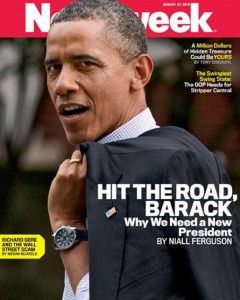
Niall Ferguson trolls everyone in Newsweek

Getting every single fact wrong in a magazine cover story is a great way to get everyone's attention.

Alex Pareene in Salon:

Xif-newsweeks-goal-was-to-spark-controversy-with-its-obama-bashing-cover-article-then-the-error.jpg,q108.pagespeed.ic.GfpCczzOtrNiall Ferguson is an intellectual fraud whose job, for years, has been to impress dumb rich Americans with his accent and flatter them with his writings. It’s a pretty easy con, honestly, if you’re born shameless and British (or French). His main argument is that Western Civilization as embodied by the British Empire is awesome and wonderful even though it traditionally involved quite a bit of killing and enslaving of non-Westerners. Since becoming an insufferable American political commentator he’s decided that America needs to cut Medicare and spend the savings on fighting neo-imperialist wars with an army made up of “the illegal immigrants, the jobless and the convicts.” (Also he sued the London Review of Books for publishing this devastating review of his career.)

So Ferguson wrote a Newsweek cover (Newsweek has become “trolling America weekly” since Tina Brown took over) about how he thinks Obama shouldn’t be president anymore, and while there are tons of very legitimate and compelling arguments against the Obama presidency, Ferguson instead based his article on a bunch of crap he made up. And the piece is full of just really obvious fallacies and little moments of mendacity like this:

In an unguarded moment earlier this year, the president commented that the private sector of the economy was “doing fine.” Certainly, the stock market is well up (by 74 percent) relative to the close on Inauguration Day 2009. But the total number of private-sector jobs is still 4.3 million below the January 2008 peak.

Hm! Weird that one thing is measured from January 2009 and the other thing from January 2008, right?

So his piece is just fundamentally dishonest, top to bottom.

More here.

Bookscapes, Book Gardens

From The Paris Review:

  • MoonscapeA literary moonscape by Guy Laramée.
  • More amazing book art: a visit to Quebec’s Garden of Decaying Books.
  • “A hundred and twenty five years ago, Oscar Wilde edited a fashion magazine, his first and only office job. We have yet to learn from the experience.” LARB on Wilde’s day job.
  • For the first four decades of competition, the Olympics awarded official medals for painting, sculpture, architecture, literature and music, alongside those for the athletic competitions.
  • If you’re in Boston this weekend, enjoy the Dog Day Poetry Marathon, featuring Dorothea Lasky, Jim Behrle, and Eileen Myles (among many others).
  • “As he told her that he loved her she gazed into his eyes, wondering, as she noted the infestation of eyelash mites, the tiny deodicids burrowing into his follicles to eat the greasy sebum therein, each female laying up to 25 eggs in a single follicle, causing inflammation, whether the eyes are truly the windows of the soul; and, if so, his soul needed regrouting.” Cathy Bryant of Manchester, England, has won the 2012 Bulwer-Lytton Fiction Contest, which celebrates the worst in writing.

More here.

What Internet Habits Say about Mental Health

From Scientific American:

InternetConsider two questions. First: Who are you? What makes you different from your peers, in terms of the things you buy, the clothes you wear, and the car you drive (or refuse to)? What makes you unique in terms of your basic psychological make-up—the part of you that makes you do the things you do, say the things you say, and feel the things you feel? And the second question: How do you use the internet?

Although these questions may seem unrelated, they’re not. Clearly the content of your internet usage can suggest certain psychological characteristics. Spending a lot of late nights playing high stakes internet poker? Chances are you are a risk taker. Like to post videos of yourself doing karaoke on YouTube? Clearly an extravert. But what about the mechanics of your internet usage—how often you email others, chat online, stream media, or multi-task (switch from one application or website to another)? Can these behaviors—regardless of their content—also predict psychological characteristics? Recent research conducted by a team of computer scientists, engineers, and psychologists suggests that it might. Indeed, their data show that such analysis could predict a particularly important aspect of the self: the tendency to experience depression.

More here.

Wednesday Poem

Getting Married

The man from Egypt was caught
whispering behind a hedge
with this woman from Canaan.

the father walked away before they saw him
went to his weapons room
then flew back to the hedge, enraged

but composed. The man, legs tied
by Guilt, the woman, eyes unbelieving the sight,
could run nowhere, could not pretend even.

The rule:
you are caught by the father whispering,
your man takes you home, arranges a messenger,
pays bride price, and you are normalized.

After that, whisper all you want, in hedges or vast sky
no father brandishes axe in your face:
that's life in Egypt and Canaan
distinct and interesting sections
of Highfield, Harare.

by Emmanuel Sigauke

Tuesday, August 21, 2012

Macho Man

ID_IC_MEIS_HUGHE_AP_001Morgan Meis on Robert Hughes, in The Smart Set:

Robert Hughes was macho. It is hard to point to any one thing that proves this assertion. He was just macho. He knew how to project authority and swagger. He would say tough guy things like, “What strip mining is to nature the art market has become to culture.” That is the primary reason he was always being compared to Clement Greenberg. Greenberg had that macho swagger too. Maybe it was the macho that allowed both Greenberg and Hughes to make such bold judgments about art, to proclaim what is good and what is bad. The macho was the antidote to the fear. It is inherently scary to be exposed to your fellow human being and Hughes, like Greenberg before him, exposed himself again and again. Before his death last week, Hughes had been the art critic for Time Magazine for three decades. He is one of the few individuals of this era whose opinions on art were actually being read and considered by millions of people. The macho was a tool, a weapon in his arsenal. In this, he had learned a lot from reading Clement Greenberg.

For all the stylistic similarities between Hughes and Greenberg, Hughes was never (unlike, say, Michael Fried) a true Greenbergian. In an essay for the New York Review of Books in 1993, Hughes argued that, “There is little doubt that Greenberg’s version of modernism has had its day. Not only because of the victories of what he dismissed as 'novelty art'—Pop, Minimalism, and mediabased imagery of all kinds; but, more importantly, because of the limitations of his positivist world view, based on a truculent materialism.” Hughes' critique of Greenberg was neither unique nor novel. Many artists and critics have come to realize that Greenberg's “formalism” was defined too narrowly, thus allowing contemporary art very little room to grow. But Hughes' essay from 1993 is notable in how directly he ties this critique of Greenberg into an analysis of Greenberg's youthful Marxism and its latent influence on his underlying conception of history. Hughes put it like this: “The experience of Marxism gave Greenberg his bent as a critic: an obsession with the direction of history.”

Niall Ferguson is a Charlatan

World_Debate_-_Niall_Ferguson_crop

James Livingston makes the case over at Politics and Letters (image from Wikimedia Commons):

In the history of drama, and that includes melodrama, there’s a difference between the Fool and the Charlatan. The Fool is motivated and animated by irony doubled unto absurdity. He’s typically empowered by the King, or by the local authorities, as diversion from the real action, as comic relief—as the man whose utterance won’t make sense to the actors on stage until the play is concluded and just about everybody is dead.

The audience is differently empowered, because it’s always in on the joke of the Fool’s mistaken identity—we get the disguise, the dissembling., from the very beginning of his act. We know this Fool is not the man he pretends to be, and, more significantly, we know him as our informant on stage, on screen, in the space where we can be only spectators, and he plays this role for us no matter how devoted he is to the cause of the King or the local authorities. So he turns irony and absurdity into information for the audience long before the dramatic action is over.

The Charlatan is the figure who is merely absurd, or simply evil, because he skips the stage of irony—because, unlike the Fool, he doesn’t know that the power to which he’s indentured himself, and this includes the effect of his own utterance, is itself divisible. The difference I’m trying to describe here is the difference between Edgar and Edmund in “King Lear.” The audience knows the Charlatan lacks either conviction or evidence, and he may know this as well, but, unlike the Fool, he doesn’t care: he’s the pawn who would be king. Like Hamlet, who only plays the Fool, Iago is either the exception to or the epitome of these rules (and that’s why these two remain the formative characters of modern literature and 20th-century film).

Niall Ferguson is a Charlatan in these terms.

The Reaches of Stringency: On Philip Larkin

51pPcE-4KtL._SL500_AA300_Michael Wood in The Nation:

Philip Larkin is known and admired for his “poetry of lowered sights and patiently diminished expectations”—these words are Donald Davie’s—but his best work is often both narrower and more troubling than these terms suggest, as it concerns something like the unpronounceable loss of what we were never going to have, or a complicated refusal of what was not quite on offer. The logic of the wonderful “Poetry of Departures,” for example, suggests that any tale of escape from drab reality will be both overblown and alluring, because “We all hate home/And having to be there.” So why not leave: because the tales are phony? They are, but that is not the real obstacle. No, the tales themselves help us to “stay/Sober and industrious”; more subtly, escape itself is all about home and what’s wrong with it, a reverse framing of what we can’t leave. There isn’t anywhere else. “But I’d go today,” the poem ends,

Yes, swagger the nut-strewn roads,
Crouch in the fo’c’sle
Stubbly with goodness, if
It weren’t so artificial,
Such a deliberate step backwards
To create an object:
Books; china; a life
Reprehensibly perfect.

“Reprehensibly perfect” is itself perfect, a miming of criticism that is also a form of self-congratulation. So too are those careful, mock-hesitant line breaks at “if” and “a life.” Behind the poem we intuit a Philip Larkin who has just these feelings, or at least wouldn’t disavow them, and another Larkin who is broaching them, performing them, fully aware of the poem’s crisscrossing insights and illusions, watching the man who is so anxious not to be fooled caught in the business of fooling himself.

How Helen Gurley Brown Sold (Out) Sex

Helen-Gurley-Brown-Feminism-CosmoSady Doyle in In These Times:

In the wake of Helen Gurley Brown’s death last week, there have been endless evaluations of her feminism. Was she a bold predecessor of third-wave sex-positivity, whose 1962 book Sex and the Single Girl established the possibility of a sexually and financially emancipated lifestyle for women? Was she a throwback who told women that sexual harassment was fun and games, plastic surgery was a must-have, and “feminism” was just another word for being a drag? Both views have passionate adherents. But the fact is, Gurley Brown was neither. She was just one of the world’s great advertisers.

To get a sense of Gurley Brown’s legacy, it might help to take a look at her baby, Cosmopolitan magazine, which she took over and revamped in 1965 after 17 years as an advertising executive. The front page of Cosmopolitan’s website, for example, has a quiz—“Are You a Good Flirt?”—wherein one can earn a rating anywhere from “Ketchup” to “Tabasco: You leave every man’s tongue burning.” Which sounds like a medical condition, actually, but is apparently good. You can also learn to “Read His Beach Body Language,” learn how to “Wow Him Every Time” or discover “30 Things To Do To A Naked Man.” (Not to spoil this for you, but I’m going to bet that at least 29 of those things are “have sex with him.”) And if you “Want a Better Boyfriend”—though one hopes you already have a good one, considering the amount of time you apparently spend reading about him—you can get him a subscription to CFG: Cosmo For Guys, where he too can learn sex tips such as “get naked too.” (I’m serious.)

You can already probably see the problems with this particular feminist legacy: It’s concentrated almost entirely on men and how to please them. There are a few feints at sexual equality—you could learn some “Steamy Ways To Turn You On” after you’re done flipping through the naked-guy manual—but for the most part, getting a boyfriend and giving him adequate orgasms are presented as both a woman’s main goals in life and her ultimate reward.

Just Deserts: An Interview with Danielle S. Allen

Justin E. H. Smith and Danielle S. Allen in Cabinet:

ScreenHunter_41 Aug. 21 17.17What are the differences in the ways different societies conceptualize punishment? What are the differences in the ways they enact it? And what can be learned by looking at other systems of punishment about the contingency and potential for transformation of our own system? Ancient Athens has often served as a model for certain of the modern world’s deepest aspirations in democratic government and philosophical rationality. At least since Nietzsche, it has also sometimes been approached as an extremely foreign land, whose values and practices, in their strangeness, can at the same time show just how strange our own are. How, now, does Athens look when we turn our attention to its conceptualization and enactment of punishment?

Danielle S. Allen is a political theorist who has addressed these questions in her work on both ancient Athens and modern America. Author of The World of Prometheus: The Politics of Punishing in Democratic Athens (Princeton University Press, 2000), Talking to Strangers: Anxieties of Citizenship since Brown v. Board of Education (University of Chicago Press, 2004), and Why Plato Wrote (Wiley-Blackwell, 2010), Allen is UPS Foundation Professor at the Institute for Advanced Study in Princeton, New Jersey. Justin E. H. Smith spoke to Allen by phone about the relationship between justice, punishment, and citizenship.

Read the interview here.

Harvard cracks DNA storage, crams 700 terabytes of data into a single gram

Sebastian Anthony in Extreme Tech:

ScreenHunter_40 Aug. 21 17.12Scientists have been eyeing up DNA as a potential storage medium for a long time, for three very good reasons: It’s incredibly dense (you can store one bit per base, and a base is only a few atoms large); it’s volumetric (beaker) rather than planar (hard disk); and it’s incredibly stable — where other bleeding-edge storage mediums need to be kept in sub-zero vacuums, DNA can survive for hundreds of thousands of years in a box in your garage.

It is only with recent advances in microfluidics and labs-on-a-chip that synthesizing and sequencing DNA has become an everyday task, though. While it took years for the original Human Genome Project to analyze a single human genome (some 3 billion DNA base pairs), modern lab equipment with microfluidic chips can do it in hours. Now this isn’t to say that Church and Kosuri’s DNA storage is fast — but it’s fast enough for very-long-term archival.

More here.

Certain to penetrate the foundations of modern philosophy

“From 2 years of break, PSY is finally coming back with his 6th album! The album's weighty title song 'Gangnam Style' is composed solely by PSY himself from lyrics to choreography. The song is characterized by its strongly addictive beats and lyrics, and is thus certain to penetrate the foundations of modern philosophy.”

In the twilight zone: On Karachi

H. M. Naqvi in India Today:

ScreenHunter_39 Aug. 21 16.27Unlike Lahore or Islamabad, Karachi is not pretty. It's a rough and tumble megalopolis like Sao Paulo, like Mumbai, that features a hardy, dynamic populace. Karachiwallahs make Karachi Karachi. The city is populated by thugs and humanitarians, businessmen and novelists. No other city in Pakistan (or say, Austria for that matter) could sustain something like the Karachi Literature Festival. No other city can boast weekly qawwalis and mushairas as well as art exhibitions and plays. Karachi has changed dramatically in three centuries and will continue changing at the same pace. Whether it will change for the better or worse is a matter best left to punters and political pundits. I need qawwali, a plate of nihari and the energy of a megalopolis.

Like my grandfather, I might not own any real estate in the city (or, for the record, anywhere else), but I have carved a life for myself here. As a storyteller, Karachi fascinates. There's a story under every stone.

More here.

100 novels everyone should read

Fromm The Telegraph:

Middlemarch_1239840c100 The Lord of the Rings by JRR Tolkein

WH Auden thought this tale of fantastic creatures looking for lost jewellery was a “masterpiece”.

99 To Kill a Mockingbird by Harper Lee

A child’s-eye view of racial prejudice and freaky neighbours in Thirties Alabama.

98 The Home and the World by Rabindranath Tagore

A rich Bengali noble lives happily until a radical revolutionary appears.

97 The Hitchhiker’s Guide to the Galaxy by Douglas Adams

Earth is demolished to make way for a Hyperspatial Express Route. Don’t panic.

96 One Thousand and One Nights Anon

A Persian king’s new bride tells tales to stall post-coital execution.

95 The Sorrows of Young Werther by Johann Wolfgang von Goethe

Werther loves Charlotte, but she’s already engaged. Woe is he!

94 Midnight’s Children by Salman Rushdie

The children of poor Hindus and wealthy Muslims are switched at birth.

93 Tinker, Tailor, Soldier, Spy by John le Carré

Nursery rhyme provides the code names for British spies suspected of treason.

92 Cold Comfort Farm by Stella Gibbons

Hilarious satire on doom-laden rural romances. “Something nasty” has been observed in the woodshed.

91 The Tale of Genji by Lady Murasaki

The life and loves of an emperor’s son. And the world’s first novel?

More here.

False Hope in the First Dawn

From The New York Times:

SunAlexander Kumar, a physician and researcher at Concordia Station, writes from Antarctica, where he conducts scientific experiments for the European Space Agency’s human spaceflight program.

Wednesday, Aug. 15

After three months of dreaming about the sun, I awoke early Sunday morning with a glow outside my window. I clambered out onto the roof and closed the hatch below me. The horizon beamed with light — the sun was bursting and breaking from the constraints of the long, dark, cold and lonely Antarctic winter. Change was afoot. I had programmed my iPod to play “Here Comes the Sun” by the Beatles. Disappointingly, in minus 100 degrees Fahrenheit, its batteries died from the cold before the end of the song — another consideration for future Mars missions, should they wish to listen to David Bowie’s “Life on Mars” as they build red sand castles, live and survive on the Red Planet. The most magnificent sunrise unfolded before me over the ice. It felt as if we had been frozen into the sea ice, the 360-degree panorama revealing what appeared to be a flat, frozen ocean in all directions.

More here.

Tuesday Poem

Frame, an Epistle

Most of the things you made for me—blanket-
chest, lapdesk, the armless rocker—I gave
away to friends who could use them and not
be reminded of the hours lost there,
not having been witness to those designs,
the tedious finishes. But I did keep
the mirror, perhaps because like all mirrors,
most of these years it has been invisible,
part of the wall, or defined by reflection—
safe—because reflection, after all, does change.
I hung it here in the front, dark hallway
of this house you will never see, so that
it might magnify the meager light,
become a lesser, backward window. No one
pauses long before it. But this morning,
as I put on my overcoat, then straightened
my hair, I saw outside my face its frame
you made for me, admiring for the first
time the way the cherry you cut and planed
yourself had darkened, just as you said it would.

by Claudia Emerson
from Poetry, Vol. 182, No. 4, July, 2003