Fifty Shades of Feminism

04012013_Holmes_575

Kamila Shamsie interviews Rachel Holmes in Guernica:

“As a white, educated, American woman from a middle-class family, I have not suffered the horrors of overt, brutal misogyny. I was never subjected to genital mutilation or sold to a man as his wife or sex slave.” So begins Siri Hustvedt’s essay in the just-published compilation Fifty Shades of Feminism. How do you read those lines? Are they the self-effacement of a woman aware of her own privilege? Or are they a straightforward expression of sisterhood across borders? I confess I read that opening with a slight grimace—one that might not have been there if I hadn’t just digested Sayantani DasGupta’s preceding discussion of “the imperialist use of women’s oppression as justification for political aggression” and how “feminism itself has been used as a weapon against women of the global South.” I suspect, however, that the three editors of the new book would be entirely delighted to know that my thoughts tangled up as I read and re-read the essays.

The project developed in part as a reaction to E. L. James’s stratospherically popular series, which hit the market roughly a half-century after the publication of The Feminine Mystique, and in short order sold more than 70 million copies of a reductionist fantasy. Psychotherapist Susie Orbach told me that the Fifty Shades of Grey phenomenon echoes a growing—and worrying—essentialism that colors conversations about women. As an antidote, Orbach and Lisa Appignanesi, the former president of PEN English, proposed bringing together multiple voices, stepping away from fantasy and into the complex range of women’s lived experiences. Together with the biographer Rachel Holmes, they managed in the space of weeks to assemble fifty essays by women from different nations, generations, and professions on the particular gradients of feminism that inspire them.

The resulting book is, unsurprisingly, an assorted mix, including Lydia Cacho, Elif Shafak, Jeanette Winterson, Xinran, Ahdaf Soueif, and Shami Chakrabarti. But there are several threads that weave their way in and out from start to finish—the dominant one being women’s relationship to the word “feminism.”

Which other threads catch your eye will probably say much about the particular shade of feminism you’re living with or reacting against. So likely it’s because I’m a Pakistani feminist living in London in 2013 that I was so struck by the number of contributors—Hustvedt is by no means alone—who make reference to the lives of their less fortunate sisters in other demographics.


kircher everywhere

Images

Kircher has twice inspired the founding of peculiar societies. The intensely German Catholic Internationale Athanasius Kircher Forschungsgesellschaft (International Athanasius Kircher Research Society) materialized in 1968, and its languid devotion to Kircher, which seems to have stood in the way of the society producing its gloriously advertised publications, became the subject of a Dutch documentary and a novel by Anton Haakman. The New York–based Kircher Society held its first meeting in January 2007, staging an exuberant pageant of intellectual pyrotechnics. Among the special guests were Kim Peek, the modern human book-memorization machine who inspired Dustin Hoffman’s character in Rain Man, and Princeton University professor Anthony Grafton, who declaimed in ornate Latin the vivid description of the descent into Mount Vesuvius offered in Kircher’s Underground World (1665). Other entertainments included a display of Rosamond Purcell’s Kircheresque photographic portraits of natural curiosities and the staging of a scene from Romeo and Juliet translated into the nineteenth-century universal language Solresol (presumably in honor of Kircher’s own attempts at a seventeenth-century Esperanto). The evening concluded with an opportunity for guests to win a replica of a walrus-penis bone. That the Kircher Society has not met during the past six years suggests the difficulty of—or exasperation with—imagining feats of erudition stranger than those conceived by a very dead Jesuit.

more from Paula Findlen at The Nation here.

too much sociology

Image

We’ve reached the point at which the CEO of Amazon, a giant corporation, in his attempt to integrate bookselling and book production, has perfectly adapted the language of a critique of the cultural sphere that views any claim to “expertise” as a mere mask of prejudice, class, and cultural privilege. Writing in praise of his self-publishing initiative, Jeff Bezos notes that “even well-meaning gatekeepers slow innovation. . . . Authors that might have been rejected by establishment publishing channels now get their chance in the marketplace. Take a look at the Kindle bestseller list and compare it to the New York Times bestseller list — which is more diverse?” Bezos isn’t talking about Samuel Delany; he’s adopting the sociological analysis of cultural capital and appeals to diversity to validate the commercial success of books like Fifty Shades of Grey, a badly written fantasy of a young woman liberated from her modern freedom through erotic domination by a rich, powerful male. Publishers have responded by reducing the number of their own “well-meaning gatekeepers,” actual editors actually editing books, since quality or standards are deemed less important than a work’s potential appeal to various communities of readers.

more from The Editors at n+1 here.

is wagner bad for you?

400px-Joseph_Albert_-_Ludwig_und_Malwine_Schnorr_von_Carolsfeld_-_Tristan_und_Isolde,_1865f

Wagner has kept me awake at night. Sleepless, I turn my thoughts to Tristan und Isolde, Wagner’s most extreme work and the nec plus ultra of love stories, and I notice a kinship between aspects of Tristan and Isolde’s passion and the experience of a certain kind of insomnia. The second act of Tristan und Isolde is Romanticism’s greatest hymn to the night, not for the elfin charm and ethereal chiaroscuro of moonbeams and starlight, the territory of Chopin and Debussy, but night as a close bosom-friend of oblivion, a simulacrum of eternity and a place to play dead. Insomnia is a refusal to cross the boundary between waking and sleeping, a bid to outwit Terminus by hiding away in ‘soundless dark’, a zone beyond time. As garlic is to vampires, so clocks are to insomniacs, not because they tell of how much sleep has been missed, but because they bring the next day nearer. As Philip Larkin, poet of limits, knew so well, sleep has the one big disadvantage that we wake up from it: ‘In time the curtain edges will grow light,’ he wrote in ‘Aubade’, bringing ‘Unresting death, a whole day nearer now’. For Tristan and Isolde, too, night must not give way to day, not for the trivial reason that day will end their love-making, but because dawn brings death one day nearer. They must stay awake, for to sleep is to allow the night to pass, to awake from the night is to live and to live is to die. And when, inevitably, day dawns, they have only one recourse. To Tristan and Isolde, in their delirium, it seems that by dying they will preserve their love for ever: by dying, they will defy death.

more from Nicholas Spice at the LRB here.

Death of a Revolutionary

130415_r23381_p233

Susan Faludi in the New Yorker:

In some two hundred pages, “Dialectic” reinterpreted Marx, Engels, and Freud to make a case that a “sexual class system” ran deeper than any other social or economic divide. The traditional family structure, Firestone argued, was at the core of women’s oppression. “Unless revolution uproots the basic social organization, the biological family—the vinculum through which the psychology of power can always be smuggled—the tapeworm of exploitation will never be annihilated,” Firestone wrote. She elaborated, with characteristic bluntness: “Pregnancy is barbaric”; childbirth is “like shitting a pumpkin”; and childhood is “a supervised nightmare.” She understood that such statements were unlikely to be welcomed—especially, perhaps, by other women. “This is painful,” she warned on the book’s first page, because “no matter how many levels of consciousness one reaches, the problem always goes deeper.” She went on:

Feminists have to question, not just all of Western culture, but the organization of culture itself, and further, even the very organization of nature. Many women give up in despair: if that’s how deep it goes they don’t want to know.

But going to the roots of inequality, Firestone believed, was what set radical feminism apart from the mainstream movement: “The end goal of feminist revolution must be, unlike that of the first feminist movement, not just the elimination of male privilege but of the sex distinction itself: genital difference between human beings would no longer matter culturally.”

In one of the book’s later chapters, Firestone floated a “sketchy” futuristic notion that she intended only “to stimulate thinking in fresh areas rather than to dictate the action.” She envisioned a world in which women might be liberated by artificial reproduction outside the womb; in which collectives took the place of families; and in which children were granted “the right of immediate transfer” from abusive adults.

Maggie and Me: How Thatcher Changed Britain

John Cassidy in The New Yorker:

Margaret-thatcher-cassidy-580When Margaret Hilda Thatcher took over as Prime Minister, in May, 1979, I was sixteen. To Britons of my generation, she wasn’t merely a famous Conservative politician, a champion of the free market, and a vocal supporter of Ronald Reagan: she was part of our mental furniture, and always will be. The day after her electoral triumph, Mr. Hill, my fifth form English teacher, an avuncular fellow with longish hair and a mustache, who had never previously expressed any political opinions, came into the classroom and shouted, “Right, you lot. Shut up and get down to work. It’s a new regime.” My father, a lifelong Labour Party voter, was equally aghast, especially when he discovered that my mother had voted for Mrs. T., on the grounds that “it’s about time we had a woman in charge.”

The Iron Lady, a sobriquet that some Soviet journalists would subsequently bestow upon her, was already inside 10 Downing Street, laying down the law. On her way in, famously, she stopped and quoted St. Francis of Assisi about bringing harmony where there was doubt—a statement that I and many others came to see as the first of her many outrages. How could such a divisive, bellicose, and heartless figure have the gall to talk like that? But this morning, watching for the first time in many years some footage of what she said, I realized that she wasn’t actually trying to portray herself as a conciliator. Mrs. Thatcher—and despite the life peerage that gave her the title of baroness, no one in Britain would call her anything else—was sending a sterner message about what lay ahead. Flanked by two burly policemen, her blonde hair swept back and lacquered into immobility, she also recited several more of St. Francis’s lines: “Where there is error, may we bring truth. Where there is doubt, may we bring faith. And where there is despair, may we bring hope.” Then, quoting the late Airey Neave, her aristocratic mentor in the Conservative Party, whom the I.R.A. had blown up just weeks earlier, she added in a voice that, even today, thirty-four years later, can set my teeth grating: “There is now work to be done.”

More here.

Tuesday poem

A Swing
.
On the choice swing
Fear hurls me
Into the bosom of “No”
Desire grows for “Certainly”
Persistence rebels
“No”, “A thousand times no”
then, “Aye”, “Certainly”
. . . and “Why not”
.
I run away from the decision guillotine
To embrace “Perhaps”
While . . .
While . . .

.
by Fatiha Morchid
from Ima’aat
publisher: Dar Attakafah, Casablanca
translation by author

Charting Her Own Course

From The New York Times:

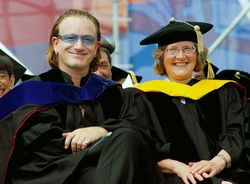
BonoScientists are trained to be skeptics, and Elizabeth H. Blackburn considers herself one of the biggest. Show her the data, and be ready to defend it. But even though she relishes the give and take, Dr. Blackburn admits to impatience at times with the questions some scientists have raised about one of her ventures. “It’s just such a no-brainer, and yet people have such difficulty understanding it,” she said. At issue is a lab test that measures telomeres, stretches of DNA that cap the ends of chromosomes and help keep cells from aging too soon. Unusually short telomeres may be a sign of illness, and Dr. Blackburn, who shared the 2009 Nobel Prize in medicine for her work on telomeres (TEEL-o-meers), thinks measuring them could give doctors and patients a chance to intervene early and maybe even prevent disease. A company she helped found expects to begin offering tests to the public later this year. Other researchers have raised doubts about the usefulness of the measurement, which does not diagnose a specific disease.

But Dr. Blackburn, 64, a professor of biology and physiology at the University of California, San Francisco, says she has been convinced by a decade of data from her own team and others, linking short telomeres to heart disease, diabetes, cancer and other diseases, and to chronic stress and post-traumatic stress disorder. With studies that explore the connections among emotional stress, health and telomeres, she has delved into questions that she would have shied away from earlier in her career, as a woman trying to establish herself in science. But now, she has enough confidence and autonomy to follow the leads that intrigue her. The scope of her research has expanded tremendously, from a tight focus on molecular biology to broader questions about the implications of her work for health and public policy.

More here.

Monday, April 8, 2013

Sunday, April 7, 2013

On Gary Gutting on being Catholic

Galileo

Massimo Pigliucci over at Rationally Speaking:

I shouldn’t be surprised at the mental gymnastics that even some professional philosophers go through when they talk about their own religion. After all, mental gymnastics (in the positive sense of exercising one’s critical faculties) is what philosophy is all about. Still, the latest defense of Catholicism by Gary Gutting in the New York Times really rubbed me the wrong way. Here’s why.

Referring to something Gutting often hears from fellow philosophers, he sets out to answer the question: “Can reflective and honest intellectuals actually believe that stuff?” As the reader will have quickly surmised, my own answer is a resounding no. But let’s proceed with order.

Gutting thinks that his Catholic faith is a matter of self-respect, and he defines the latter as respect for the sources of one’s self. Fair enough, as far as it goes. The trouble begins immediately afterwards, when he proceeds to tell his readers about the two sources from which his own self identity emerged: the Enlightenment and the Catholic Church. This willprima facie sound a bit strange, considering that it was one of the Enlightenment’s foremost exponents, Voltaire, who famously took to signing his letters with “Ecrasez l’infame,” let us crush the infamous, where “the infamous” was, you guessed it, the Catholic Church! [Incidentally, Voltaire was a deist, not an atheist, and he actually thought atheists were a pernicious element of society. Pobody’s nerfect…]

In order to rationalize (I really can’t find any other suitable term here) his conviction that he can juggle within his philosophical framework both the Enlightenment and Catholicism, Gutting has to explain why he is attached to the latter (presumably he feels — and rightly so — that as a philosopher committed to the role of reason in human affairs he doesn’t have to justify his intellectual kinship with the thinkers of the Enlightenment).

Guest Workers As Bellwether

1364821886guestworkeralliance

Josh Eidelson in Dissent:

By the time Martha Uvalle’s boss threatened to have her children assaulted, she’d already lowered her expectations. Uvalle, a forty-year-old from Tamalipas, Mexico, has come to Louisiana as a guest worker every year since 2006. “I came to fulfill the American Dream,” Uvalle told me with a laugh in November. Her choice to become a guest worker was “difficult, because you know you’re leaving your children.” But given “the chance to make a little money…you decide the sacrifice is worth it.” Each year, Uvalle worked for two to five months for CJ’s Seafood in Louisiana, supplying shrimp to companies including the retail giant Wal-Mart. “You have the costs here, the costs there, the costs to come here, so you really can’t save any money.” She also took out high-interest loans to pay for the costs of the travel. Still, “it’s more than you can make in Mexico. But it’s not what I was expecting.” (Interviews with Uvalle and other guest workers were conducted in Spanish.)

For years, the hours at CJ’s were long, and the work was hard. Then, in 2011, Mike LeBlanc replaced his father as the head of the company. “That,” said CJ’s worker Ana Rosa Diaz, “was when it started to get out of control.” Workers say they were required to come to work earlier and stay later, sometimes working as many as sixteen to twenty-four hours straight. Management installed security cameras in the plant and also around the company-owned trailers where the workers lived. Workers say management imposed a curfew, threatened to confiscate the keys to their cars, and told them they couldn’t have visitors. Worse, one of the managers repeatedly said, “If you don’t understand that your break is over, I’ll make you understand with this shovel.” Uvalle understood: “He was saying he would beat us.”

The worst day at CJ’s, Uvalle remembered, was “the day of the threat.” It came after LeBlanc heard that a worker had attempted to report him to the police. Workers say they were called into a mandatory meeting where LeBlanc told them that if any of them got him in trouble, he wouldn’t just get them deported forever. He would send armed men to assault their families back in Mexico.

A Secret Deal on Drones, Sealed in Blood

Mark Mazzetti in the New York Times:

ScreenHunter_168 Apr. 07 14.50Nek Muhammad knew he was being followed.

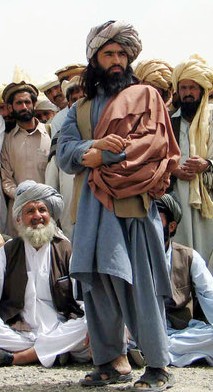
On a hot day in June 2004, the Pashtun tribesman was lounging inside a mud compound in South Waziristan, speaking by satellite phone to one of the many reporters who regularly interviewed him on how he had fought and humbledPakistan’s army in the country’s western mountains. He asked one of his followers about the strange, metallic bird hovering above him.

Less than 24 hours later, a missile tore through the compound, severing Mr. Muhammad’s left leg and killing him and several others, including two boys, ages 10 and 16. A Pakistani military spokesman was quick to claim responsibility for the attack, saying that Pakistani forces had fired at the compound.

That was a lie.

Mr. Muhammad and his followers had been killed by theC.I.A., the first time it had deployed a Predator drone in Pakistan to carry out a “targeted killing.” The target was not a top operative of Al Qaeda, but a Pakistani ally of theTaliban who led a tribal rebellion and was marked by Pakistan as an enemy of the state. In a secret deal, the C.I.A. had agreed to kill him in exchange for access to airspace it had long sought so it could use drones to hunt down its own enemies.

That back-room bargain, described in detail for the first time in interviews with more than a dozen officials in Pakistan and the United States, is critical to understanding the origins of a covert drone war that began under the Bush administration, was embraced and expanded by President Obama, and is now the subject of fierce debate. The deal, a month after a blistering internal report about abuses in the C.I.A.’s network of secret prisons, paved the way for the C.I.A. to change its focus from capturing terrorists to killing them, and helped transform an agency that began as a cold war espionage service into a paramilitary organization.

More here.

it’s better to accept the facts of death

From The Telegraph:

IanBanks_2528826bIain Banks has written startlingly dark, intelligent novels – most notably The Wasp Factory – but tells the world that the new one will be the last. He announces his coming death with characteristic humour but without darkness, only frank resignation: “I am officially Very Poorly.” He has gall bladder cancer and counts his remaining life in months. He asked his partner, Adele Hartley, “to do me the honour of becoming my widow”, apologising for the “ghoulish humour”. All public appearances are cancelled in favour of seeing friends and relatives. He has gone on honeymoon and reports via a friend that he is in Italy “enjoying life to the max”. There is an admirable breezy gallantry and good example about the way in which public people have begun to take back ownership of their own mortality, kicking away the cobwebs of terror and denial and dispelling the sickly, deceptive miasma of false hope. It is not the same as ''giving up” or refusing to “fight” (terminal cancer patients get really sick of that language, with its implication that if they were a bit more positive they’d get better). There is a time to fight and hope for life, but when modern medicine, despite its bias in favour of prolonging life at all costs, admits that it can do no more, acceptance is healthy. Use the time, smell the roses, speak your love.

Dennis Potter said, when he was dying, that looking at spring outside the window had become marvellous. “The whitest, frothiest, blossomest blossom that there ever could be, and I can see it… the nowness of everything is absolutely wondrous, the glory of it, the comfort of it, the reassurance… The fact is, if you see the present tense, boy do you see it! And boy can you celebrate it.” More recently, Terry Pratchett confronted his illness with a riveting, troubling exploration of the Dignitas assisted suicide clinic, in which he publicly considered whether he would want to take that route rather than decline into helplessness. He came to no conclusion, but examined medical research into the illness with the words: “I’m going to make Alzheimer’s sorry it got ME!” He does not pretend that any day now he will be cured, however. He is grown-up enough to know better, and to know, as Iain Banks does, that death has made an appointment. Accepting this, in the long or the short term, is the ultimate test of adulthood: when Damien Hirst titled his pickled shark, The physical impossibility of death in the mind of someone living, he revealed nothing but his own callow youth.

More here.

NIH explains Brain Research through Advancing Innovative Neurotechnologies (BRAIN) initiative

From Kurzweil:

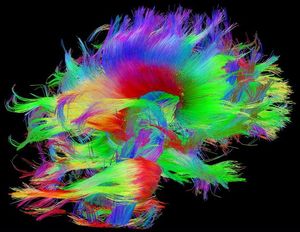
Human_connectome1With nearly 100 billion neurons and 100 trillion connections, the human brain remains one of the greatest mysteries in science and one of the greatest challenges in medicine. Neurological and psychiatric disorders, such as Alzheimer’s disease, Parkinson’s disease, autism, epilepsy, schizophrenia, depression, and traumatic brain injury, exact a tremendous toll on individuals, families, and society. Despite the many advances in neuroscience in recent years, the underlying causes of most of neurological and psychiatric conditions remain largely unknown, due to the vast complexity of the human brain. If we are ever to develop effective ways of helping people suffering from these devastating conditions, researchers will first need a more complete arsenal of tools and information for understanding how the brain functions both in health and disease.

Why is now the right time for the NIH BRAIN Initiative?

In the last decade alone, scientists have made a number of landmark discoveries that now create the opportunity to unlock the mysteries of the brain. We have witnessed the sequencing of the human genome, the development of new tools for mapping neuronal connections, the increasing resolution of imaging technologies, and the explosion of nanoscience. These discoveries have yielded unprecedented opportunities for integration across scientific fields. For instance, by combining advanced genetic and optical techniques, scientists can now use pulses of light in animal models to determine how specific cell activities within the brain affect behavior. What’s more, through the integration of neuroscience and physics, researchers can now use high-resolution imaging technologies to observe how the brain is structurally and functionally connected in living humans.

More here.

Sunday Poem

Sonnet 18

Shall I compare thee to a summer's day?
Thou art more lovely and more temperate:
Rough winds do shake the darling buds of May,
And summer's lease hath all too short a date:
Sometime too hot the eye of heaven shines,
And often is his gold complexion dimmed,
And every fair from fair sometime declines,
By chance, or nature's changing course untrimmed:
But thy eternal summer shall not fade,
Nor lose possession of that fair thou ow'st,
Nor shall death brag thou wander'st in his shade,
When in eternal lines to time thou grow'st,
So long as men can breathe, or eyes can see,
So long lives this, and this gives life to thee.
.

William Shakespeare

“In 2001 or 2002, guitarist and singer David Gilmour of Pink Floyd recorded a musical interpretation of William Shakespeare’s “Sonnet 18″ at his home studio aboard the historic, 90-foot houseboat the Astoria. This video of Gilmour singing the sonnet was released as an extra on the 2002 DVD David Gilmour in Concert, but the song itself is connected with When Love Speaks, a 2002 benefit album for London’s Royal Academy for the Dramatic Arts.”

from openculture.com

Interpreting The World, Changing The World

Marx6

Onora O’Neill in Philosophy Now:

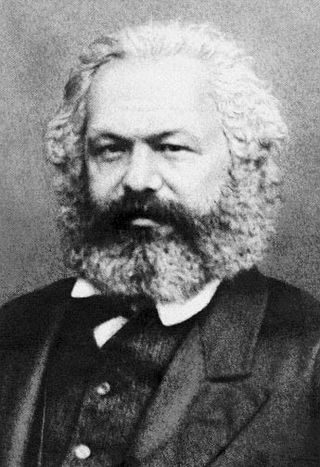
In his 11th thesis on Feuerbach, Marx wrote, “The philosophers have only interpreted the world in various ways; the point, however, is to change it.” (Theses on Feuerbach, 1845.) Although it may not be a fair accusation, his acid comment sits in the recesses of memory, and plenty of people still share this view, including a lot of philosophers. Sometimes they are queasy about aiming to change the world, and feel that there is something unsavoury, irresponsible or self-important about philosophers who try to. Yet, like others, philosophers are under pressure to show that what they do matters, that they contribute to changing the world – to show, indeed, to use modish jargon, that work in philosophy has ‘impact’. ‘Impact’ is a multiply ambiguous term, and a lot of impact has negative value, so presumably what is meant is that philosophers should show that their work has impact of a desirable sort. On a simplistic view, good impact is economic impact. When claims about impact first came to prominence in academia a few years ago, many people assumed that this meant that the research in some subjects clearly had economic impact, but research in other areas – including philosophy – clearly did not. Some welcomed the thought that funders might be persuaded to channel all the research money towards the former areas. At its crudest, this approach assumed that desirable impact only occurred if research findings yielded novel products, increased productivity, new jobs, or more exports.

Spotting Winners?

This picture of research with ‘impact’ is not particularly helpful, even for the natural sciences. It is the nature of the case that outcomes are unknown when research is being done. So to discover the impact of research, one needs to look at matters retrospectively, tracing back from successful innovations to the research from which they grew. This exercise reveals that successful innovations often depend on manypieces of research in a multiplicity of disciplines, and that the interval from research to innovation can bemany decades. For example, the GPS capabilities that are built into humble mobile phones incorporate corrections that depend on Einstein’s theory of General Relativity, research that was published in 1916. There is no way of telling upstream how great an impact any specific bit of research will have. That is why research councils, foundations or universities typically fund or undertake a portfolio of research projects, and why companies that do research – Big Pharma, for example – fund a lot of projects, and expect a high rate of failure. Nobody can spot the winners upstream.

Saturday, April 6, 2013

Why I Study Duck Genitalia

Patricia Brennan in Slate:

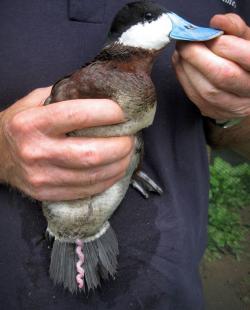
130402_SCI_DuckPenis.jpg.CROP.article250-mediumIn the past few days, the Internet has been filled with commentary on whether the National Science Foundation should have paid for my study on duck genitalia, and 88.7 percent of respondents to a Fox news online poll agreed that studying duck genitalia is wasteful government spending. The commentary supporting and decrying the study continues to grow. As the lead investigator in this research, I would like to weigh in on the controversy and offer some insights into the process of research funding by the NSF.

My research on bird genitalia was originally funded in 2005, during the Bush administration. Thus federal support for this research cannot be connected exclusively to sequestration or the Obama presidency, as many of the conservative websites have claimed.

Since Sen. William Proxmire's Golden Fleece awards in the 1970s and 1980s, basic science projects are periodically singled out by people with political agendas to highlight how government “wastes” taxpayer money on seemingly foolish research. These arguments misrepresent the distinction between and the roles of basic and applied science. Basic science is not aimed at solving an immediate practical problem. Basic science is an integral part of scientific progress, but individual projects may sound meaningless when taken out of context. Basic science often ends up solving problems anyway, but it is just not designed for this purpose. Applied science builds upon basic science, so they are inextricably linked. As an example, Geckskin™ is a new adhesive product with myriad applications developed by my colleagues at the University of Massachusetts. Their work is based on several decades of basic research on gecko locomotion.

More here.