
Category: Recommended Reading
A brilliant example of meaningful innovation: Roberto Benigni, Dante and the television
From Lucaleordini.com:
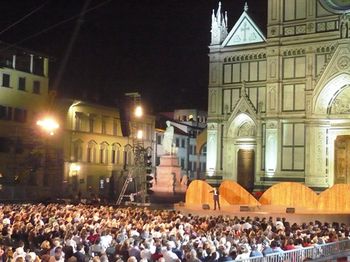
The second example follows in the footsteps of the first: this time Benigni presents, on television, the Constitution of the Italian Republic, the document that contains and inspires the principles upon which the democratic life of the country is founded, defining the rules and functioning of political life. In this case as well, Benigni's performance differs from the normal way of discussing legal matters. His visceral and uncontainable love for Italy, along with his gifts as an actor and comic, make such technical issues as law accessible, compelling, and fascinating. In both cases, the result was an extraordinary success in all respects, both as a televised event and for Benigni personally as an actor. In the first case, he reawakened in his audience the desire to re-read, to re-discover the Divine Comedy and become excited by the subject. In the second case, he reawakened patriotic pride in millions of people. He achieved success through stimulating and inspiring more engaging, interesting, and modern approaches to the teaching of the Divine Comedy and the Constitution.
…Dante, the opening of the Divine Comedy:
Midway upon the journey of our life, I found myself within a dark forest, for the straightforward path had been lost.
In the course of our existence, many of us are forced to face the dark woods of our problems, and to find a guide who can show us the way out. It could help us to consider that, because of Virgil’s guidance, Dante “went out to gaze at the stars” only after having passed through the fires of hell.
More here. (Note: I heard Benigni recite (perform?) the XXXIII canto from Paradiso in 2003 and it inspired me to commit it to memory and to make my 9 year old daughter do the same. He is truly brilliant)
HOW TO CREATE A MIND
From The New York Times:
Kurzweil, author of “The Singularity Is Near: When Humans Transcend Biology,” may be best known as a polymath inventor and futurist, but he’s really a cyborg sent back from the year 2029 to save humanity from the nature-nurture debate. His mission is not to provide a final score (nature 20 percent, nurture 80 percent!) but to reframe the dispute and the ancient anxieties that feed into it: What is the essence of identity? How do we slip the noose of determinism? Is our free will really free, and if it is free, is it really ours? These questions shift when you factor in technology and understand that the human future will be shaped by nature-nurture-manufacture.
Kurzweil examines the human brain and makes a case for its artificial enhancement, if not total replacement. Apparently, the trick to reverse-engineering a brain is wrestling with “many billions of cells and trillions of connections” in order to extract the simple operating principles. He discusses how evolution expanded the human neocortex, and its current constraints. We can’t squeeze much more neocortex into our skulls, but we can augment our frontal lobes with technology. He walks readers through breathtaking experiments, like an artificial replacement for a rat hippocampus, and he proposes a few tweaks to the classic brain design, like a digital module to root out and resolve cognitive dissonance. Kurzweil’s vision of our super-enhanced future is completely sane and calmly reasoned, and his book should nicely smooth the path for the earth’s robot overlords, who, it turns out, will be us.
More here.
Saturday Poem
One Car Garage
Chuck Berry made Maybelline
from the snarl of parts
he found hopelessly tangled
in a rough cut pine crate
on a high mossy shelf
above a calloused window
weeping jaundiced light
in trailing veins
across the fender skirts of a well-appointed
Cadillac shoehorned between
Mark Twain’s cobbled vernacular and Edward Hopper’s
blackened crucible
curved lip spackled
with the flat light of day and late night shadow.
White wall tires
suggest life preservers to Hank Williams
drowning in the deep plush
of the back seat
while Louis Armstrong and Arthur Miller
uncoil jumpers
and argue whether it’s red to red
black to black
Friday, May 3, 2013
A MOST PROFOUND MATH PROBLEM
Alexander Nazaryan in The New Yorker:
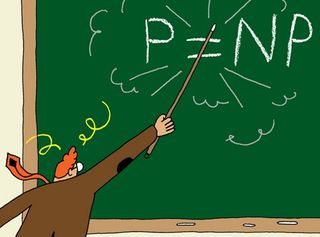
A few of the Clay problems are long-standing head-scratchers. The Reimann hypothesis, for example, made its debut in 1859. By contrast, P versus NP is relatively young, having been introduced by the University of Toronto mathematical theorist Stephen Cook in 1971, in a paper titled “The complexity of theorem-proving procedures,” though it had been touched upon two decades earlier in a letter by Kurt Gödel, whom David Foster Wallace branded “modern math’s absolute Prince of Darkness.” The question inherent in those three letters is a devilish one: Does P (problems that we can easily solve) equal NP (problems that we can easily check)?
Take your e-mail password as an analogy. Its veracity is checked within a nanosecond of your hitting the return key. But for someone to solve your password would probably be a fruitless pursuit, involving a near-infinite number of letter-number permutations—a trial and error lasting centuries upon centuries.
More here.
BRET EASTON ELLIS: “YOU CAN’T LIE ANYMORE”
From The Talks:
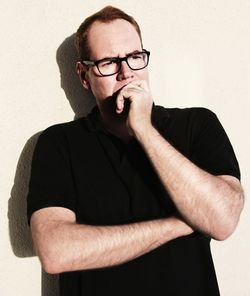
I feel that I am portrayed in the press as being this person who wears masks. But I feel that I am a completely transparent person and yet people seem to think that I am not. They are unable to deal with my candor and my honesty. I remember a girl, it was for this New York Magazine piece that came out a few months ago, that was very shocked when I talked about this cocaine mistake that I made.
That sounds interesting.
I tweeted drunkenly that I wanted some coke. And I said: I am going to tell you the whole story and you can print it. I don’t care. This is what really happened. She said: “I am really shocked that you are going to talk about this.” And I said, “What’s wrong about it? Why can’t you talk about it?” She thought I was playing a kind of game. Because I was so upfront in talking about it, that she was not able to believe that I was telling her the truth.
Well a lot of people wouldn’t be honest in a situation like that.
But those days are over. We don’t live in that world anymore. Some people still live in this shadow world of non-transparency and inauthenticity. I think that world is leaving us, because of – yawn! – technology, social media and the overabundance of sharing. You really can’t lie anymore.
More here.
With Friends Like These: On Pakistan
Christian Parenti in The Nation:

More here.
The Matrix Retold by Mom
Teaching My Fair Lady how to speak Yinglish
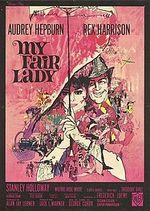
Present-day audiences know My Fair Lady best through George Cukor’s 1964 film adaptation, but these parodies were contemporary with the stage production and its unprecedentedly popular cast recording. Their central conceit will be obvious to anyone familiar with the originals: All three translate the struggle over linguistic difference, which is at the heart of the play and musical alike, into the dialects of their respective milieus. There is no doubt that Shaw’s intent was to present the political and cultural faces of such a struggle as well as the comic one; it is less evident that this intent survived Pygmalion’s own transformation into a glossy, tuneful Broadway property—or that it was recognized by My Fair Lady’s vast midcentury audience. Understanding what it meant for the Queen’s English of Shaw’s play to pass through Lerner and Loewe’s show tunes and emerge in Brooklynese, Yinglish, and Canadian requires learning the local vocabulary: Versions of once-standard songs must be compared, locations mapped, allusions glossed, and jokes explained.
more from Franklin Bruno at Triple Canopy here.
war and the camera
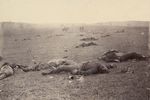
Slavery is America’s permanent Agony in the Garden of Gethsemane, in which our country carries a cup it can never pass. The closest that white America has ever come to experiencing what James Baldwin described as “the Negro’s past, of rope, fire, torture, castration, infanticide, rape … fear by day and night, fear as deep as the marrow of the bone” was in 1861, when the country tore itself in half over race and money. The Metropolitan Museum of Art’s incredibly affecting “Photography and the American Civil War” is a shocking view of a pain so deep, destruction in blood and psyche, that seeing these 200 or so photographs installed in eleven galleries amounts to a silent scream. Viewers walk through this show—its galleries painted charcoal, its walls covered in canvas—in hushed silences, reverent, shaken, respectful of the ineffable suffering and almost mystical sickness depicted. D. H. Lawrence’s words come to mind: “Doom! Doom! Doom! Something seems to whisper it in the very dark tress of America. Doom!” I do not remember experiencing a more poignant and pathos-filled photography exhibition at any museum.
more from Jerry Saltz at New York Magazine here.
“would-be mainstream Negroes on the path to mediocrity”

The lynching of Emmett Till, Rosa Parks’s resistance, Dr. King and the Montgomery Bus Boycott (the peoples’ resistance), the bombing of Dr. King’s home in Montgomery. The sit-ins, sclc, the Civil Rights Movement. The emergence of Robert F. Williams and his direct attack on the Klan. The emergence of Malcolm X. I went to Cuba on the first anniversary of the Cuban revolution. The rise and murder of Patrice Lumumba, the African Liberation Movement. I met poets like Askia M. Touré and Larry Neal in front of the un screaming our condemnation of the us, the un, Belgium, Rockefeller for murdering Lumumba and our support for Maya Angelou, Louise Meriwether, Rosa Guy, Abbey Lincoln (all great artists), running up into the un to defy Ralph Bunche. The March on Washington, the bombing 0f 16th St. Baptist Church and the murder of four little girls. JFK’s assassination, Watts, Malcolm’s assassination, Dr. King’s assassination, rebellions across America! All those major events we lived through. If we responded to them as conscious Black intellectuals, we had to try to become soldiers ourselves. That is why we wrote the way we did, because we wanted to. We wanted to get away from the faux English academic straitjackets passed down to us by the Anglo-American literary world.
more from Amiri Baraka at Poetry here.
Friday Poem
Episode
We walk by the sea-shore
holding firmly in our hands
the two ends of an antique dialogue
—do you love me?
—I love you
with furrowed eyebrows
I summarize all wisdom
of the two testaments
astrologers prophets
philosophers of the gardens
and cloistered philosophers
and it sounds about like this:
—don’t cry
—be brave
—look how everybody
you pout your lips and say
—you should be a clergyman
and fed up you walk off
nobody loves moralists
what should I say on the shore of
a small dead sea
slowly the water fills
the shapes of feet which have vanished
.
.
by Zbigniew Herbert
Salman Rushdie on Chinese Censorship
From The Atlantic:

I've always thought of it this way: Politicians and creative writers both try and shape visions of society, they both try and offer to their readers or to the public a view of the world, or a vision of the world, and these visions of the world are at odds with authoritarian regimes. Those regimes attempt to shut down the limits of the possible while fiction tries to push out the limits of the possible. So in effect their visions are in opposition to each other.
Last year, you criticized the Nobel laureate Mo Yan for being a “patsy”. Do writers living in regimes such as China's have a responsibility to oppose censorship? Or simply not to defend it?
I don't feel that writers should be pushed into corners, and there are many writers who aren't temperamentally suited to political engagement in whatever society they happen to be in, so you wouldn't want to make such a writer feel obliged to make a decision. But the reason that so many are upset with Mo Yan isn't that he didn't oppose censorship, but that he went out of his way to defend it. That was the problem.
Nearly a quarter century has passed since you were forced into hiding by the Ayatollah's fatwa. In the ensuing years, how would you assess the worldwide climate for censorship? Have things generally gotten better, or worse?
I'd say that, in general, they've gotten worse. But one of the things our report highlights is that people have more tools to resist censorship using new media. For instance, in China, while there's increased repression in the form of arbitrary arrests, artists held incommunicado and put under house arrest, and increasing hostility towards literature and free expression, there is at the same time a growing willingness of Chinese citizens to find ways to express themselves. In spite of all the repression, there's been a growth of independent, non-state publishers to print things that wouldn't be approved by state houses, and people have shown the willingness to post things online even if they're not to the liking of the state.
More here.
Pesticides aren’t the biggest factor in honeybee die-off
From MSNBC:

“The decline in honeybee health is a complex problem caused by a combination of stressors, and at EPA we are committed to continuing our work with USDA, researchers, beekeepers, growers and the public to address this challenge,” acting EPA Administrator Bob Perciasepe said in a statement. Deputy Agriculture Secretary Kathleen Merrigan promised that “key stakeholders will be engaged in addressing this challenge.” The report draws upon a gathering of officials and stakeholders that took place in Alexandria, Va., last October. It says that the parasitic Varroa mite is the “major factor” behind CCD in the United States and other countries. Varroa mites latch onto the bees and feed on their fluids, weakening the insects. The mites have developed widespread resistance to the chemicals that have been used to control them. The report says more attention should be given to breeding bees that can weather the mites, and notes that gene-sequencing projects focusing on honeybees as well as Varroa mites may provide fresh insights. Beekeepers have long known about the mite problem, as well as the other causes listed in the EPA-USDA report: poor nutrition, reduced genetic diversity, the Nosema gut parasite, emerging viruses and a bacterial disease called European foulbrood. But figuring out the role played by pesticides has posed the biggest challenge for researchers as well as policymakers.
Picture: A worker bee carries a Varroa mite, visible in this close-up view
More here.
Thursday, May 2, 2013
I Dreamed I Was a Very Clean Tramp
Steve Danziger in Open Letters Monthly:
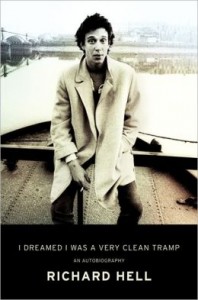
Everybody in the band had short, hacked-up hair and torn clothes and there were safety pins and shredded suit jackets and wacked-out T-shirts and contorted defiant facial expressions. The lead singer had changed this name to something ugly…. I thought, “This thing is really breaking out.”
The band was the Sex Pistols, the “thing” was Punk, and in any history of the music written since, Hell has as much claim to starting the movement as anyone else. He’s that breed of celebrity revered in certain sub-cultures and utterly unknown otherwise, but for those whose lives were changed by the punk/new wave movement in mid-1970s New York City, he’s a bit of a legend. In a five year period, he defined the look and attitude for a new international youth culture, was instrumental in turning the Bowery dive bar CBGB’s into a breeding ground for groups like Television, Talking Heads, Patti Smith Group, and the Ramones, and with his band the Voidoids, produced Blank Generation, one of the seminal, and most enduring, albums of the new wave zeitgeist. Then, alas, came heroin. I Dreamed I Was a Very Clean Tramp is Hell’s memoir of his rise and fall, an eccentric testament to the powers and limitations of self-invention, and like his career, a hodgepodge of singular achievement and dwindled potential.
More here.
‘Time Crystals’ Could Upend Physicists’ Theory of Time
Natalie Wolchover in Wired:
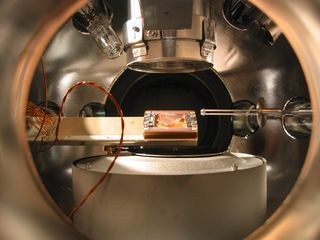
“Most research in physics is continuations of things that have gone before,” said Wilczek, a professor at the Massachusetts Institute of Technology. This, he said, was “kind of outside the box.”
Wilczek’s idea met with a muted response from physicists. Here was a brilliant professor known for developing exotic theories that later entered the mainstream, including the existence of particles called axions and anyons, and discovering a property of nuclear forces known as asymptotic freedom (for which he shared the Nobel Prize in physics in 2004). But perpetual motion, deemed impossible by the fundamental laws of physics, was hard to swallow. Did the work constitute a major breakthrough or faulty logic? Jakub Zakrzewski, a professor of physics and head of atomic optics at Jagiellonian University in Poland who wrote a perspective on the research that accompanied Wilczek’s publication, says: “I simply don’t know.”
Now, a technological advance has made it possible for physicists to test the idea. They plan to build a time crystal, not in the hope that this perpetuum mobile will generate an endless supply of energy (as inventors have striven in vain to do for more than a thousand years) but that it will yield a better theory of time itself.
More here.
Debtors Prisons Are Punishing the Poor Across America
Bill Berkowitz in AlterNet:

In 2011, Think Progress' Marie Diamond wrote: “Federal imprisonment for unpaid debt has been illegal in the U.S. since 1833. It's a practice people associate more with the age of Dickens than modern-day America. But as more Americans struggle to pay their bills in the wake of the recession, collection agencies are using harsher methods to get their money, ushering in the return of debtor's prisons.”
In 2010, the ACLU did a study titled In for a Penny: The Rise of America's New Debtors' Prisons, which revealed the use of debtors prison practices in five states, Louisiana, Michigan, Ohio, Georgia and Washington.
More here.
SCREENGRAB
SCREENGRAB from Willie Witte on Vimeo.
the work of grief

“ How do you turn catastrophe into art?” This bold question, posed by Julian Barnes in a fabulist exegesis of Géricault’s great painting “The Raft of the Medusa”, in A History of the World in 10½ Chapters (1989), might be said to be answered by his new book, Levels of Life, a memoir of his wife of thirty years, Pat Kavanagh, who died of a brain tumour in 2008. With few of the playful stratagems and indirections of style typical of his fiction, but with something of the baffled elegiac tone of his Booker Prize-winning short novel The Sense of an Ending (2011), Levels of Life conveys an air of stunned candour: “I was thirty-two when we met, sixty-two when she died. The heart of my life; the life of my heart”. The end came swiftly and terribly: “Thirty-seven days from diagnosis to death”. The resulting memoir, a precisely composed, often deeply moving hybrid of non-fiction, “fabulation”, and straightforward reminiscence and contemplation, is a gifted writer’s response to the incomprehensible in a secular culture in which “we are bad at dealing with death, that banal, unique thing; we can no longer make it part of a wider pattern”.
more from Joyce Carol Oates at the TLS here.
raghu rai’s bangladesh
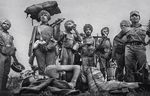
FOR A PHOTOGRAPHER, what sets apart a war zone from other locations is the imminence of danger. Raghu Rai had gone along with the first column of Indian troops entering what was still officially East Pakistan from the Khulna border in early December 1971. Pakistani forces had retreated to defend the capital, Dacca, as it was then known. But after they had travelled about 50 km, Pakistanis attacked with artillery fire. Rai shot photographs of wounded soldiers being taken away. After the situation subsided, Rai was relieved to find a teashop and decided to have a moment’s respite, although the Indian army major told him to be careful. Just as Rai ordered tea and biscuits, a bullet whizzed past him. “The major shouted for me to lie down,” Rai wrote. “I did, and another bullet went past me. I crawled back to the shop and was told by the shopkeeper that the Pakistani army was on the other side of the railtrack, just half a kilometer away.” Photographers are meant to be impartial observers, or witnesses. But to the Pakistani sniper, Rai was a participant, entering enemy territory, accompanied by a foreign army. He was a target, fair game. He may have come to record, but he was intervening.
more from Salil Tripathi at Caravan here.