
Category: Recommended Reading
Eat, drink, write
Suman Bolar in Himal Southasian:
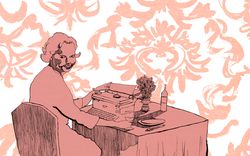
Wrong on all three counts.
First, I am a food writer, not a food critic. Food is meant to nourish and enrich our lives; it exists for our sustenance and pleasure. Food is perfect in and of itself and does not need to be criticised. Cooks, chefs, and restaurants – now those are a different matter entirely. So restaurant critic, yes; food critic, no. Second, I am not 'lucky'. Like any other professional, I have worked hard and spent big to be able to do what I do – I have travelled the world and sampled various cuisines on my own dime, spent time and money tracking down interesting foodstuffs and experiences, attended writing and food-related classes and workshops, and often gone out on a limb with an unpopular opinion and paid the price for my candour. And last, you may be a 'foodie', but I am not. In fact, I don’t even know what that means. Does it mean you’re addicted to food, like a druggie is addicted to drugs? Or does it mean you are a trained cook, in the same way that a techie is trained to work with technology? Or wait! Could it mean that you eat a lot of food? In which case, 'glutton' would probably be a better word to use. If, however, you enjoy trying different kinds of food and learning as much as you can about every aspect of whatever you are eating – if you are, shall we say, hungry to develop an intimate knowledge of everything you consume – then you, like me, are an epicure. Call yourself one.
And now that I have that off my chest: Yes, I love what I do.
More here.
Variations on a Gene, and Tools to Find Them
From The New York Times:
CANCERS were once named strictly for the tissue where they originated in the breast, prostate or other part of the body. Now, in the age of genetically informed medicine, cancers may also come with a more specific lexicon: the names of mutated genes deep within tumors that cause cells to become cancerous. Most of these gene flaws — there are scores of them, and they have names like BRAF V600E — are relative newcomers to medical terminology, as are most of the anticancer drugs, still in early testing, that are aimed at them. Development of the new drugs has been spurred by the falling cost of decoding DNA and the prospects of premium prices for drugs that specifically attack the molecular drivers of cancer. Even medical oncologists can be daunted by the complexity of these genes and the therapies intended to fight them, said Dr. William Pao, a physician and scientist at Vanderbilt University who studies cancer mutations in addition to seeing patients. “There are so many genes and so many mutations,” he said. “The human brain can’t memorize all those permutations.”
To guide doctors and their patients, many tools are on the market, including one created by Dr. Pao and colleagues: the Web site My Cancer Genome. The site, which started two years ago, is maintained by 51 contributors from 20 institutions. It lists mutations in different types of cancer, as well as drug therapies that may or may not be of benefit. Most of the drugs are in clinical trials; a few have been approved by the Food and Drug Administration. The typical user of this information is an oncologist, Dr. Pao said. At the Web site, the doctor can select “melanoma” and “BRAF,” for instance, or “lung cancer” and “BRAF,” and see all types of mutations in the BRAF gene that occur in those instances. The doctor can then check for national and international drug trials aimed at these alterations. Different treatments may work in different molecular subsets of cancer, depending on the mutation. More than 700 oncology drugs are now in development, many aimed at DNA defects, Dr. Pao said, “and the number will only accelerate.” “We are moving away from the tissue of origin to the molecular basis of the cancer, using the mutation to search for a treatment,” he said.
More here.
Tuesday Poem
Self Introduction
I am an old man, short and bald
For over half a century
I have spent my life grappling with words:
nouns, verbs, postpositional particles, question marks and the like
Now I rather prefer silence
I do not dislike mechanical tools
Though I love trees, too, including shrubs
I am not good at remembering their names
I am somewhat indifferent to dates in the past
I harbor antipathy against so-called authority
I am cross-eyed, astigmatic and presbyopic
My house has no Buddhist altar or Shinto shrine, but
I have a gigantic mail box that connects directly to my room
Sleep is a sort of pleasure for me
If I dream, I do not remember it when I awake
All the above are facts, but
once I put them down in words like this, somehow they do not ring true
I have two independent children and four grandchildren, do not keep a cat or a dog
In summer I am in T-shirts most of the time
A price may be paid for the words I write
.
by Shuntaro Tanikawa
from Watashi (I Myself)
publisher, Shichosha, Tokyo, 2007
translation, 2011, Takako Lento
from The Art of Being Alone: Poems 1952-2009
publisher, Cornell Univ. East Asia Program, 2011
Monday, April 29, 2013
Perceptions
Diego Fazo (aka: Diegokoi). Sensazioni. (Model: Federica Ferragine)

Pencil drawing on paper!!
“… Diego is a self-taught pencil master whose technique has matured. He started out as a tattoo artist, and developed a passion for creating photo-realistic drawings. Inspired by the works of Japanese artists from the Edo period, like Katsushika Hokusai, he captures people’s imaginations with his precise lines and oriental drawing techniques.”
Thanks to Abbas Raza.
Andrew Sullivan Gives the Brothers Tsarnaev Too Much Credit
by Zujaja Tauqeer
After reading all of his posts, I reached a different conclusion: by calling this act of terror “jihad”, Sullivan is imbuing Tamerlan Tsarnaev with too much representational power over Islam and giving Tsarnaev too much credit by accepting his (unsaid) claims of carrying out actual Islamic injunctions.
Sullivan maintains that Tamerlan was so far gone in his religiosity that one must conclude that his primary motive for acting was religion. Unlike the Obama administration, Sullivan doesn’t conclude that the religious sanction was all in Tamerlan’s head. He cites Rod Dreher, from The American Conservative, who notes that Muslims like Tsarnaev, when they kill, are sometimes carrying out Allah and the Prophet Muhammad's (pbuh) orders, such that Islam, when taken to its logical extreme, is a spur for violent expression. Islam’s violent and fundamentalist strains derive from the fact that it is a religion whose founder practiced violence. According to Sullivan there are concrete reasons why Muslims exhibit a unique proclivity to violence, post-18th century—modernity has exacerbated the inability of extremely religious Muslim loners to find meaning. Hence, killing of civilians.
Playing up Tsarnaev as a staunch, observant Muslim is made possible solely because of Sullivan’s claim that Tamerlan was acting in obedience to actual religious teachings. While there is in fact ample proof to the contrary in the history and scripture of Islam, Sullivan chooses to ignore that mountain of evidence. Instead he wants us to take the word of a 19th century Roman Catholic, Alexis de Tocqueville, for Tamerlan's jihadism. When it comes to talking about Islam, Sullivan sets aside customary rigor in investigating claims or citing sources.
In assigning jihad as the motive, Sullivan makes the ballsy and dangerous move of taking a term of holy war, imbued with much meaning and carrying with it many stipulations, and grants it just like that to the Tsarnaevs. Terming this act “jihad” is a grave mistake because it grants moral legitimacy to terrorism and accepts the rhetoric of terrorists that their acts are in fact exactly the kind of holy acts they say they are. This argument is nothing new. But I maintain that to describe the Brothers Tsarnaev as jihadis and simultaneously invest them with a reputation as devout Muslims, even though they were in fact acting in direct contravention to Islamic teachings, leads to the offensive and fallacious conclusion that a murderer is a model of what Muslims in their full devoutness would be. It gives undeserved power to the most egregiously insincere and disobedient Muslims who cause suffering to innocents to define the meaning of this religion.
Sunday, April 28, 2013
Physicist Proposes New Way To Think About Intelligence
Chris Gorski in Physics Central:
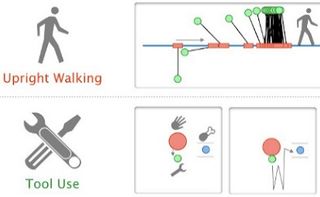
The researchers suggest that intelligent behavior stems from the impulse to seize control of future events in the environment. This is the exact opposite of the classic science-fiction scenario in which computers or robots become intelligent, then set their sights on taking over the world.
The findings describe a mathematical relationship that can “spontaneously induce remarkably sophisticated behaviors associated with the human 'cognitive niche,' including tool use and social cooperation, in simple physical systems,” the researchers wrote in a paper published today in the journal Physical Review Letters.
“It's a provocative paper,” said Simon DeDeo, a research fellow at the Santa Fe Institute, who studies biological and social systems. “It's not science as usual.”
Wissner-Gross, a physicist, said the research was “very ambitious” and cited developments in multiple fields as the major inspirations.
The mathematics behind the research comes from the theory of how heat energy can do work and diffuse over time, called thermodynamics. One of the core concepts in physics is called entropy, which refers to the tendency of systems to evolve toward larger amounts of disorder. The second law of thermodynamics explains how in any isolated system, the amount of entropy tends to increase. A mirror can shatter into many pieces, but a collection of broken pieces will not reassemble into a mirror.
The new research proposes that entropy is directly connected to intelligent behavior.
“[The paper] is basically an attempt to describe intelligence as a fundamentally thermodynamic process,” said Wissner-Gross.
More here.
Bee Wilson reviews ‘Cooked,’ by Michael Pollan
Bee Wilson in the New York Times:
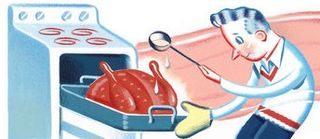
A life involving no home cooking, Pollan convincingly argues, is a life diminished. It’s not just that you probably eat food that’s of worse quality (in Pollan’s world, cooks seldom burn things or give their guests food poisoning). It’s also because the noncook suffers a loss of engagement “with the material world.” And cooking may be the best line of defense against obesity: Pollan cites a 2003 Harvard study that correlated the increase of obesity in America with the decline of home cooking.
If such an absence is indeed disastrous, you might expect that “Cooked” would examine how to get more people to change their habits. Now, Pollan notes, the typical American household devotes “a scant 27 minutes a day” to food preparation. Pollan rounds up the usual enemies of home cooking: “longer workdays and overscheduled children,” and, of course, convenience foods. But instead of considering ways to make cooking easier to fit into time-pressed lives, he sets off on a personal quest — albeit written with all his trademark lyricism — to master techniques that are perversely slow and difficult, from cheese making to kimchi fermentation.
More here.
Interpreting Tino Sehgal
Justin E. H. Smith in his blog:
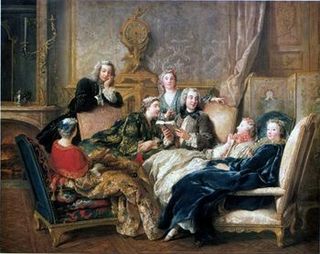
More here.
round midnight
lionel hampton
danse russe
Sunday Poem
I Sit
.
.
One afternoon with the sky covered in thin clouds
I sit on a sofa
like a shelled clam
I sit on a sofa
like a shelled clam
There are things I must tend to
but I do nothing
simply sitting enchanted
Those that are beautiful are beautiful
Even those that are ugly
somehow look beautiful
Simply being here is
wondrous
I become something other than myself
I stand up to
drink a sip of water
water is also wondrous
.
by Shuntaro Tanikawa
from minimal
publisher, Shichosha, Tokyo, 2002
What Alexander Graham Bell Sounded Like
From The Atlantic:
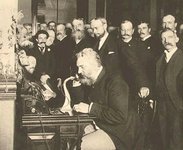
…But there are sound recordings that survive from as far back as the 1860s, '70s, and '80s. It's just that, until very recently, they were unplayable. We no longer had the right tools, and even if we had, playing them would ruin the wax cylinders or fragile records upon which the sounds were stored. But over the past few years, physicists have developed tools for creating 3D scans of the old records and converting those scans into playable audio files. Last year, they released the oldest playable American recording, a series of sounds from an 1878 demonstration of sound-recording technology in St. Louis. In it, you can hear laughter, a song, and some counting, all spoken into the world by people of another century. But until today, the voice that spoke that age of far-traveling sound into being has remained unknown — no living person had ever heard it. What did he sound like? “Did Bell speak with a Scottish burr? What was the pitch and depth of the voice with which he loved to belt out ballads and music hall songs?” Bell biographer Charlotte Gray asks in Smithsonian. He had lived in England, Canada, the eastern United States. He summered in Nova Scotia where people spoke Gaelic. How did all these influences combine in his speech? And now Gray has her answer. The Smithsonian has released audio recovered from a wax and cardboard disc dated April 15, 1885. In it, you can clearly hear the inventor speak the words: “Hear my voice — Alexander Graham Bell.”
More here.
Breakthrough Diabetes Discovery Offers Potential Treatment
From Harvard Magazine:
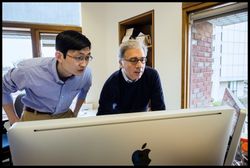
Melton has been seeking a cure for diabetes ever since his son, and later his daughter, were diagnosed with type 1 diabetes, a disease in which the immune system attacks and kills off insulin-producing beta cells. Melton said in an interview that this latest discovery is not likely to be an effective treatment for type 1 diabetes because it requires existing beta cells in a patient: the treatment works by causing those cells to divide. But he says it might help in the early stages of type 1 diabetes, before all the beta cells had been eliminated. And it holds further promise: if in the future scientists find a way to stop the immune attack on beta cells, then betatrophin might become an important treatment for even the type 1 form of the disease.
More here.
The Austerity Delusion

Mark Blyth in Foreign Affairs:
The eurozone countries, the United Kingdom, and the Baltic states have volunteered as subjects in a grand experiment that aims to find out if it is possible for an economically stagnant country to cut its way to prosperity. Austerity — the deliberate deflation of domestic wages and prices through cuts to public spending — is designed to reduce a state’s debts and deficits, increase its economic competitiveness, and restore what is vaguely referred to as “business confidence.” The last point is key: advocates of austerity believe that slashing spending spurs private investment, since it signals that the government will neither be crowding out the market for investment with its own stimulus efforts nor be adding to its debt burden. Consumers and producers, the argument goes, will feel confident about the future and will spend more, allowing the economy to grow again.
In line with such thinking, and following the shock of the recent financial crisis, which caused public debt to balloon, much of Europe has been pursuing austerity consistently for the past four years. The results of the experiment are now in, and they are equally consistent: austerity doesn’t work. Most of the economies on the periphery of the eurozone have been in free fall since 2009, and in the fourth quarter of 2012, the eurozone as a whole contracted for the first time ever. Portugal’s economy shrank by 1.8 percent, Italy’s fell by 0.9 percent, and even the supposed powerhouse of the region, Germany, saw its economy contract by 0.6 percent. The United Kingdom, despite not being in the eurozone, only barely escaped having the developed world’s first-ever triple-dip recession.
Saturday, April 27, 2013
Austerity: The Biggest Roadblock To Progressive Change

Ruy Teixeira's post in the Think Progress Ideas symposium on Mark Blyth’s Austerity: The History of a Dangerous Idea:
Arguably, there is no greater obstacle to progressive change than the idea of austerity. Austerity dominates economic policy discussions in Europe, resulting in policies in country after country that ensure continued slow growth (or outright contraction) and high unemployment. These conditions have produced demoralized electorates that lack faith in all politicians, including those on the left, a cynicism that has only been deepened when left parties have attained power and failed to revive growth. In such an environment, progressive change is not possible and the left is reduced to purely defensive actions.
In the US, things are slightly better. Nevertheless, our economic policy discussions are still dominated by variants of austerity. The fiscal cliff deal at the beginning of this year slowed the economy and the sequestered spending cuts are slowing it more. Yet with unemployment still at 7.6 percent, growth projections for the year halved to 1.4 percent and the latest jobs report coming in at an anemic 88,000 jobs created, policy discussion continues to focus on the need to cut the deficit more (despite the fact it has already gone down dramatically) and solve a national debt “crisis” whose effects, if any, are many years away (and may never appear). Of course, such a focus precludes any progressive economic policies, including critically, spending programs that would help revive the economy and invest in our economic future.
How did we get into such a pickle? Does the current mania for austerity make any sense whatsoever? And could the recent discrediting of Carmen Reinhart’s and Kenneth Rogoff’sinfluential pro-austerity paper provide any hope for defusing this mania? Mark Blyth’s timely new book, Austerity: The History of a Dangerous Idea, provides answers to these questions. They are not necessarily comforting ones.
Perpetual Motion Test Could Amend Theory of Time
Natalie Wolchover in the Simons Foundation (via io9):
In February 2012, the Nobel Prize-winning physicist Frank Wilczek decided to go public with a strange and, he worried, somewhat embarrassing idea. Impossible as it seemed, Wilczek had developed an apparent proof of “time crystals” — physical structures that move in a repeating pattern, like minute hands rounding clocks, without expending energy or ever winding down. Unlike clocks or any other known objects, time crystals derive their movement not from stored energy but from a break in the symmetry of time, enabling a special form of perpetual motion.
“Most research in physics is continuations of things that have gone before,” said Wilczek, a professor at the Massachusetts Institute of Technology. This, he said, was “kind of outside the box.”
Wilczek’s idea met with a muted response from physicists. Here was a brilliant professor known for developing exotic theories that later entered the mainstream, including the existence of particles called axions and anyons, and discovering a property of nuclear forces known as asymptotic freedom (for which he shared the Nobel Prize in physics in 2004). But perpetual motion, deemed impossible by the fundamental laws of physics, was hard to swallow. Did the work constitute a major breakthrough or faulty logic? Jakub Zakrzewski, a professor of physics and head of atomic optics at Jagiellonian University in Poland who wrote a perspective on the research that accompanied Wilczek’s publication, says: “I simply don’t know.”
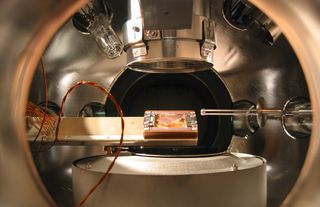
Now, a technological advance has made it possible for physicists to test the idea. They plan to build a time crystal, not in the hope that this perpetuum mobile will generate an endless supply of energy (as inventors have striven in vain to do for more than a thousand years) but that it will yield a better theory of time itself.
The idea came to Wilczek while he was preparing a class lecture in 2010. “I was thinking about the classification of crystals, and then it just occurred to me that it’s natural to think about space and time together,” he said. “So if you think about crystals in space, it’s very natural also to think about the classification of crystalline behavior in time.”
When matter crystallizes, its atoms spontaneously organize themselves into the rows, columns and stacks of a three-dimensional lattice. An atom occupies each “lattice point,” but the balance of forces between the atoms prevents them from inhabiting the space between. Because the atoms suddenly have a discrete, rather than continuous, set of choices for where to exist, crystals are said to break the spatial symmetry of nature — the usual rule that all places in space are equivalent. But what about the temporal symmetry of nature — the rule that stable objects stay the same throughout time?
taste of ashes

“When thinking about the fall of any dictatorship, one should have no illusions that the whole system comes to an end like a bad dream,” Ryszard Kapuscinski wrote 30 years ago. A Polish journalist, Kapuscinski was ostensibly reporting on the fall of the shah of Iran, but his devoted Polish readers knew that everything he said applied to their part of the world as well. “A dictatorship . . . leaves behind itself an empty, sour field on which the tree of thought won’t grow quickly. It is not always the best people who emerge from hiding.” Far more than peoples who’ve weathered revolutions and counterrevolutions, Americans too often assume that once a tyranny has collapsed and elections follow — whether in the Soviet Union, Iraq or Egypt — whatever comes next will be far better. Things are more complicated, of course, and this is the timely theme of Marci Shore’s “Taste of Ashes,” a book by turns insightful and exasperating.
more from Adam Hochschild at the NY Times here.
David Wolpe on Greg Bellow’s Memoir of His Father, Saul Bellow
David Wolpe in the Los Angeles Review of Books:

Bellow knew all this before we did, of course; each effect was written and rewritten, and his almost formless books are the messy, canny reflection of a remarkable mind. Still, he hides less than other authors, giving himself to his readers with both hands; this is not Joyce’s artist, like God beyond creation, paring his nails. This is the author as courtesan, beguiling us not only into reading, but loving him.
So what reader of Bellow does not wonder about the man? After James Atlas’s 2002 biography, widely panned, with its portrayal of an altogether unappealing philanderer, is there balm in Gilead?
“Our father was always easily angered, prone to argument, acutely sensitive, and palpably vulnerable to criticism.” Reading this sentence in Greg Bellow’s new memoir, Saul Bellow’s Heart, one remembers the saying attributed to a French King, “I would rather be killed by my enemies than by my children.” Maybe we should have stuck with Atlas.
More here.