solidarity

Zygmunt-Bauman-006

It is difficult to ascertain what the cause is and what the result is here – but in parallel to the withering of interest in the quality of the common good (and, most importantly, of society itself), the demise and dismantling of traditional “factories of solidarity” can be observed, that is, of institutions that encouraged attitudes of solidarity. The “deregulation of the labour market” and the resultant fluidity of workplace communities characterized by a decreasing – less and less protected by law – stability strongly disfavours forming tighter bonds with “colleagues”. The philosophy of management in its current form transfers the responsibility for financial results of a given company from the superiors to the subordinates, thus putting every employee in a situation of competing with everyone else. This philosophy demands that the utility of every employee is measured according to his or her personal contribution to the profitability of the company: he or she is forced to compete with the rest of the working team. In essence, forcing workers to fight for their chance to survive another round of dismissals, a move often disguised by such “politically correct” cryptonyms as “contracting out” or “outsourcing”. In a clearly zero-sum game, joining and closing ranks will be of little use and will not help much in surviving – on the contrary, it is becoming dangerously close to a suicidal urge.

more from Zygmunt Bauman at Eurozine here.

Exclusive interview with Noam Chomsky on Pakistan elections

Ayyaz Mallick in Dawn:

Coming to election issues, what do you think, sitting afar and as an observer, are the basic issues that need to be handled by whoever is voted into power?

Noam-chomsky-afp-670NC: Well, first of all, the internal issues. Pakistan is not a unified country. In large parts of the country, the state is regarded as a Punjabi state, not their (the people’s) state. In fact, I think the last serious effort to deal with this was probably in the 1970s, when during the Bhutto regime some sort of arrangement of federalism was instituted for devolving power so that people feel the government is responding to them and not just some special interests focused on a particular region and class. Now that’s a major problem.

Another problem is the confrontation with India. Pakistan just cannot survive if it continues to do so (continue this confrontation). Pakistan will never be able to match the Indian militarily and the effort to do so is taking an immense toll on the society. It’s also extremely dangerous with all the weapons development. The two countries have already come close to nuclear confrontation twice and this could get worse. So dealing with the relationship with India is extremely important.

And that of course focuses right away on Kashmir. Some kind of settlement in Kashmir is crucial for both countries. It’s also tearing India apart with horrible atrocities in the region which is controlled by Indian armed forces. This is feeding right back into society even in the domain of elementary civil rights. A good American friend of mine who has lived in India for many years, working as a journalist, was recently denied entry to the country because he wrote on Kashmir. This is a reflection of fractures within society. Pakistan, too, has to focus on the Lashkar [Lashkar-i-Taiba] and other similar groups and work towards some sort of sensible compromise on Kashmir.

And of course this goes beyond. There is Pakistan’s relationship with Afghanistan which will also be a very tricky issue in the coming years. Then there is a large part of Pakistan which is being torn apart from American drone attacks. The country is being invaded constantly by a terrorist superpower. Again, this is not a small problem.

More here.

shorthand is the language of angels

ID_PI_GOLBE_SHORT_AP_001

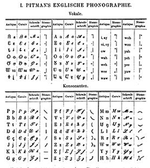
The decision to translate Emmanuel Swedenborg’s Rules into shorthand was not a random choice. Isaac Pitman was a devout member of the controversial Swedenborgian New Church, and was fired from his teaching post because of it, two years after the publication of Phonography. The loss of his job and religious discrimination were the real impetus behind the establishment of Pitman’s independent publishing house and school. Emmanuel Swedenborg had a good career as an all-around, 18th-century scientist/philosopher/inventor. That is, until one Easter weekend in 1744, when he started having visions. Swedenborg wrote many books about this spiritual awakening. He wrote that the Church was in man and not outside of him. He wrote that if man lived in love and charity he would understand the Word — and not the other way around. He claimed that he spoke with demons and angels, that he spoke with spirits on other planets, that he had visited both heaven and hell. Emmanuel Swedenborg was a scientist-turned-mystic whose extraordinary accounts went on to fascinate many artists and intellectuals. Not just Isaac Pitman but Ralph Waldo Emerson, William Blake, Immanuel Kant, Carl Jung, August Strindberg, Jorge Luis Borges, George Inness, Honoré de Balzac, Helen Keller, Czesław Miłosz, August Strindberg, W. B. Yeats.

more from Stefany Anne Golberg at The Smart Set here.

the new anarchists

130513_r23499_p233

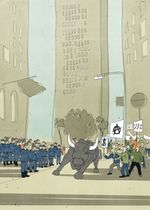
Is it fair to describe the Occupy movement as anarchist? In “We Are Many,” Cindy Milstein, a longtime activist, stipulates that radicals in Zuccotti Park were outnumbered by liberals, including those she deprecates as “militant liberals.” But she argues that, even if the Occupiers weren’t all anarchists, they were nevertheless “doing anarchism.” In Zuccotti Park and elsewhere, “doing anarchism” often meant struggling not against bankers, directly, but against local government and local police. (In New York, one galvanizing figure was Anthony Bologna, a senior police officer who was disciplined after video surfaced showing him squirting protesters with pepper spray.) Perhaps this was a smart strategy: instead of arguing about economics and ideology, the Occupiers could affirm, instead, their unanimous commitment to freedom of assembly. Occupy may have begun with a grievance against Wall Street, but the process of occupation transformed the movement into a meta-movement, peopled by activists demanding the right to demand their rights.

more from Kelefa Sanneh at The New Yorker here.

Why Good People Are Divided by Politics and Religion

From The Guardian:

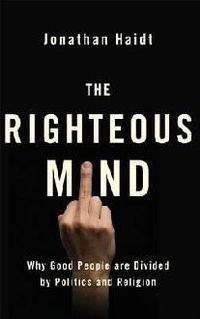
GetImageAs you are reading this newspaper and not another, there is a good chance you may have wondered why some people you know, whose moral compasses seem otherwise to be functioning well, nevertheless vote for the Conservatives or their equivalent whenever offered the chance. This is the question Jonathan Haidt has set out to answer – and his conclusions may make unsettling reading for those of a liberal (American sense) persuasion.

Professor Haidt's premise is, as far as I can see, fairly easy to summarise: the reason republicans and conservatives persist in winning elections (if you discount Obama's last two victories, which I must say rather gum up the works of his argument) is because they appeal to a greater range of moral impulses than do more leftwing parties. Haidt claims that just as we have the taste receptors of salt, sweet, bitter, and so on, so we generally work on five basic moral receptors: those pertaining to caring, fairness, loyalty, authority and sanctity. (These terms vary: “purity” replaces “sanctity” on a website co-founded by Haidt, yourmorals.org, which, after a simple test, allows you to see how you scored in comparison with liberals or conservatives. It turns out that I am not as caring as I thought I was. Have a go – it's the foundation for the research that has gone into this book.) Liberals are very big on caring and fairness, but tend not to mind so much about “sanctity”. Conservatives, however, care about all these things. The more rightwing they are, the less bothered they are about fairness, and the more bothered they are about “sanctity”. So for liberals to appeal more to everyone, and to win more elections, what they should do is press the buttons pertaining to good order and individual responsibility towards the herd harder than they do.

More here.

All Europeans are related if you go back just 1,000 years

From MSNBC:

A genetic survey concludes that all Europeans living today are related to the same set of ancestors who lived 1,000 years ago. And you wouldn't have to go back much further to find that everyone in the world is related to each other. “We find it remarkable because it's counterintuitive to us,” Graham Coop, an evolutionary biologist at the University of California at Davis, told NBC News. “But it's not totally unexpected, based on genetic analysis.”

Family researchers have long known that if you go back far enough, everyone with a European connection ends up being related to Charlemagne. The concept was laid out scientifically more than a decade ago. Now Coop and University of Southern California geneticist Peter Ralph have come up with the evidence. Their findings were published on Tuesday in the open-access journal PLOS Biology “Anyone alive 1,000 years ago who left any descendants will be an ancestor of every European,” the researchers say in an FAQ file about their study. “While the world population is larger than the European population, the rate of growth of number of ancestors quickly dwarfs this difference, and so every human is likely related genealogically to every other human over only a slightly longer time period.”

More here.

Obama Might Actually Be the Environmental President

Jonathan Chait in New York Magazine:

ScreenHunter_183 May. 08 11.53State of the Union addresses are wearying rituals, in which stitched-together lists of never-gonna-happen goals are woven into idealistic catchphrases, analyzed as rhetoric by an unqualified panel of poetry-critic-for-a-night political reporters, quickly followed by a hapless opposition-party response, and then, in almost every case, forgotten. This year, plunked into the midst of the tedium was a gigantic revelation, almost surely the most momentous news of President Obama’s second term. “I will direct my Cabinet,” he announced, “to come up with executive actions we can take now and in the future to reduce pollution, prepare our communities for the consequences of climate change, and speed the transition to more sustainable sources of energy.”

Here was a genuine bombshell. It sounded a little vague, and the president did not explain precisely what he intended to do or how he would pull it off. But a handful of environmental wonks had a fairly strong grasp of the project he had committed himself to, and they understood that it was very, very real and very, very doable. If they were to have summarized the news, the headline would have been OBAMA TO SAVE PLANET.

Few outside the green community grasped the meaning of the revelation, and it sank beneath the surface with barely a ripple as bored reporters quickly turned to other matters. Several elements of the Obama agenda—immigration reform, gun control, the budget wars—have since churned busily away in plain view, while his climate pledge has generated no visible action. (Which, as we’ll see, may be just how the administration wants it.)

More here.

Tuesday, May 7, 2013

“Like Someone in Love” directed by Abbas Kiarostami

Alan A. Stone in the Boston Review:

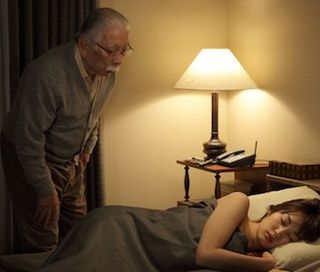
ScreenHunter_183 May. 07 16.49Imagine a jealous and angry lover; his childlike girlfriend who is secretly a call girl; and her newest client, an 80-year-old retired professor. Like Someone in Love brings together this unlikely mix of characters. The film is set in Tokyo but was written and directed by the renowned Iranian filmmaker Abbas Kiarostami, who is apparently in difficulty with the authorities in Tehran and now working outside the country. His previous film, Certified Copy (2010), was made in Italy.

Kiarostami’s most celebrated Iranian film, Taste of Cherry (1997), produced conflicting reactions among discerning critics. It was awarded the Palme D’Or, but the late Roger Ebert gave it a decided thumbs down. Like Someone in Love has generated a similar response. Ian Buruma, who as a young man studied and worked in Japanese film, has proclaimed it “the best film ever made by a non-Japanese in Japan.” Lest anyone think this stinting praise, he adds, “It is a great movie tout court.” Yet Stanley Kauffmann believes Like Someone in Love is a failure and a betrayal of the films “rooted in Iranian culture and a love of it” that made Kiarostami famous.

Kiarostami’s earliest films embraced what critics describe as “earnest realism.” I take the earnestness to be a result of Kiarostami’s on-location depictions of the human condition. The films that earned him this reputation adopted the perspective of children in the villages of northern Iran.

More here.

poems and pictures

Pelizzon-hospital

For a long time I regarded poems about photos as examples of ekphrasis, that “verbal representation of visual representation” genre theorized by scholars like W.J.T. Mitchell. As Mitchell sees it, the relationship between verbal and visual arts is contentious. Verbal texts like poems are time-based, while visual arts such as painting and sculpture are primarily spatial. Poetry, like music, is dynamic; its duration is essential to its effect. Painting and sculpture, on the other hand, are generally static. And so, ekphrastic writing often positions itself as a controlling voice that must speak for the silent art object. Keats’s Grecian urn, say, is beautiful, enigmatic, and mute; the poem masters, defines, and vivifies its stillness. In ekphrastic writing time and space confront each other, and the ways poets negotiate this contest gives the genre its energy. But I now think that photo-poems like Rilke’s “Portrait of My Father” are not really ekphrastic. Photographs don’t derive their essence from their spatial quality. They exist in space, of course. But a photograph, like a poem and unlike a painting, depends on time.

more from V. Penelope Pelizzon at Poetry Magazine here.

falling upwards

Perry_05_13

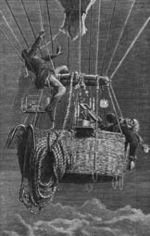
Balloonophiles must nurse a particular affection for Wolverhampton, for it was from there that, on 5 September 1862, one of the most celebrated ascents began. The pilots were James Glaisher, secretary to the Royal Meteorological Society, and Henry Coxwell, whose claim to scientific knowledge derived from his former career as a dentist, but who was a seasoned balloonist and, as it transpired, a good man to have in a tight spot. The balloon left the ground at one o’clock in the afternoon, filled with buoyant coal gas from the Wolverhampton gasworks. It was a beautiful day and they climbed quickly: forty minutes later they were past 20,000 feet; just before an hour was done they were at 29,000 feet. Then they hit a snag. Coxwell realised that the rope working the release valve had got tangled up, so he struggled out of the basket to try to unravel it. Oxygen grows thin at such altitudes and at this point both men began to feel the lack of it.

more from Seamus Perry at Literary Review here.

Beauty is difficult

Article_legro

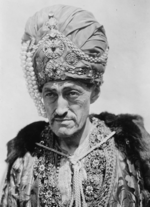
Sadakichi Hartmann arrived in America in 1882, at the age of twelve, disowned by his father in Hamburg and shipped off to live with a great-uncle in Philadelphia. The young man had only lived for one year or less in his native country. He spoke with a strong accent, later described by a newspaper as “half German, the other half not altogether definable.” He was thoroughly German in all that he did, sarcastic and serious, forever hunched under a small rain cloud. And yet he was hailed by friends and strangers as coming directly from the Orient. Self-taught and curious, he made his first contact with what would become an influential circle of acquaintances by knocking unannounced on the door of the poet who lived across the river in Camden, New Jersey: “I would like to see Walt Whitman.” The poet—with his long gray beard and open, flowing shirt, which revealed his naked chest—greeted him by sight. “That’s my name. And you are a Japanese boy, are you not?”

more from Michelle Legro at The Believer here.

Final fragments of Giuseppe Tomasi di Lampedusa

From The Independent:

Giuseppe Tomasi di Lampedusa, the author of The Leopard, one of the most poignant and enduringly popular novels of the 20th century, left only a few other pieces of fiction when he died in 1957 at the age of 60. A new book, published by Alma Classics in a new translation by Stephen Parkin, collects Lampedusa’s extant shorter fiction and provides a glimpse into the writer’s workshop and the background to the composition of his masterpiece. It also includes the previously unpublished fragment “The Turret”, which we reproduce here.

And then there was Torretta. As much as Santa Margherita was loved, Torretta was detested. It has always symbolized and accompanied illness and death, and for me continues to do so. Torretta is a village around 20 kilometres outside Palermo, inland from the coast and about 500 metres above sea level. Its lofty position gave it the reputation as a cool and healthy spot; in reality the place, hemmed in by a narrow valley, overlooked by steep and barren mountains on every side, and devoid of sewers, running water, a postal service and electricity, is one of the least healthy places on earth. Whenever any members of my family fell sick and were sent to Torretta to “recover”, they wasted away, grew melancholy and within three months died. The local population were sullen, dirty, uncouth, and lived like rats among those sordid alleyways. Our house was the “baronial residence” of the village, and as such was located on the main square – just as in Santa Margherita, but with a world of difference. There the square was spacious, tree -lined and sunny, and all the houses surrounding it were in at least decent condition; in Torretta it was narrow, dark and closed in, its cobblestones were always damp and adorned by the golden excrement deposited by the local mules. In the middle of it, there was an ugly baroque fountain with three wretchedly small spouts from which the only fresh water available in the village spewed forth; as a result it was surrounded day and night by a throng of women and boys holding their pitchers, or quartare, in their hands, who, with a typically Sicilian scorn for any kind of order or waiting in line, created all sorts of scenes by shouting, jostling, trampling and threatening each other.

More here. (Note: If you have not already done so, please read The Leopard immediately. Here is my favorite quote from it: “If we want things to stay as they are, things will have to change”)

Symmetry study deemed a fraud

From Nature:

TRIVVERSFew researchers have tried harder than Robert Trivers to retract one of their own papers. In 2005, Trivers, an evolutionary biologist at Rutgers University in New Brunswick, New Jersey, published an attention-grabbing finding: Jamaican teenagers with a high degree of body symmetry were more likely to be rated ‘good dancers’ by their peers than were those with less symmetrical bodies. The study, which suggested that dancing is a signal for sexual selection in humans, was featured on the cover of this journal (W. M. Brown et al. Nature 438, 1148–1150; 2005). But two years later, Trivers began to suspect that the study data had been faked by one of his co-authors, William Brown, a postdoctoral researcher at the time. In seeking a retraction, Trivers self-published The Anatomy of a Fraud, a small book detailing what he saw as evidence of data fabrication. Later, Trivers had a verbal altercation over the matter with a close colleague and was temporarily banned from campus. An investigation of the case, completed by Rutgers and released publicly last month, now seems to validate Trivers’ allegations. Brown disputes the university’s finding, but it could help to clear the controversy that has clouded Trivers’ reputation as the author of several pioneering papers in the 1970s. For example, Trivers advanced an influential theory of ‘reciprocal altruism’, in which people behave unselfishly and hope that they will later be rewarded for their good deeds. He also analysed human sexuality in terms of the investments that mothers and fathers each make in child-rearing.

Steven Pinker, a psychologist at Harvard University in Cambridge, Massachusetts, calls the dancing paper “a lark” and “journalist bait” that lacks a firm basis in theory. “It was cute rather than deep,” he says. But he describes Trivers’ earlier work as “monumental”, and says that it would be a travesty if Trivers became known for one controversial study rather than his wider contributions to evolutionary biology. “Trivers is one of the most important thinkers in the history of the biological and social sciences,” Pinker says.

More here.

Tuesday Poem

Service Office
.
I played the part of man, and more or less
it came to me quite well. I used deceptions,makeup,
mascara, base, a huge number
of words, for nearly everything is possible
.
with words, and everything was going well,
life from a suitcase, life on credit, nerves
before a trip, a house, a name and surname,
words, a whole host. I played the part of man,
.
and I was expert at it. Words like friendship,
father, woman, love, the word betrayal,
the word forgive. I could have forgotten myself,
I could have gotten lost in making words
.
my body, hands, and heart, little was missing.
Only the dog could tell. He bristled in his sleep.

.

by Tomaz Rozycki
from Colonies
published in The Hampden Sydney Poetry Review
translation, Mira Rosenthal

Prominent Scholar Was Banned From Rutgers Campus

Photo_36461_landscape_large

Christopher Shea in the Chronicle of Higher Education:

A long-simmering feud between the prominent evolutionary theorist Robert Trivers and a colleague at Rutgers University took a strange turn last month, when Mr. Trivers revealed that he had been banned from the New Brunswick campus for five months last year for violent and threatening behavior.

He says the accusations were trumped up, prompted by his efforts to bring an alleged academic fraud to light. Mr. Trivers says he was allowed back on the campus last fall, provided that he stay at least 20 feet from the office of a colleague he'd argued with.

In “Fraud at Rutgers,” an angry post on his Web site last month, he explicitly contrasted his treatment with that of the men's basketball coach, Mike Rice, who—at first—received a mere three-game suspension when the university became aware of his beaning players with basketballs and shouting slurs at them. (Mr. Rice was subsequently fired, in April.)

“Rutgers turns a blind eye to real violence by its basketball coach but uses its antiviolence policy to harass a professor with no violent tendencies but who is acting as a whistle-blower,” Mr. Trivers wrote.

Lee Cronk, the anthropology professor from whose office Mr. Trivers has been banned, says that when Mr. Trivers confronted him in March 2012, he felt genuinely disturbed. The university declined to comment on the subsequent investigation, which—according to documents provided by Mr. Trivers in which he responded to the charges—found a pattern of violent or threatening behavior by Mr. Trivers.

The professor's reference to whistle-blowing opens the door to a complex saga of academic infighting, one that involves both substantive and personal issues. Since 2008, Mr. Trivers has contended that one of his six co-authors on a 2005 paper, “Dance Reveals Symmetry Especially in Young Men,” published in Nature, had doctored the data, leading to a bogus result.

Kierkegaard’s ‘Antigone’

0505STONE-tmagArticle

Ulrika Carlsson in the NYT's The Stone:

Perhaps the most central theme in Soren Kierkegaard’s religious thought is the doctrine of original sin: the idea that we share in some essential human guilt simply by being born. But guilt is an important concept also in Kierkegaard’s secular writings. He thought that the modern era was defined by its concept of guilt. Kierkegaard’s 200th birthday gives us an occasion to assess the modern relevance of his legacy and the viability of his own view of modernity.

Kierkegaard thought of Socrates as the person who first discovered human autonomy — the fact that we are free to determine our own actions and therefore responsible for those actions. This insight undermined the ancient worldview, which found its perfect representation in tragic drama, where characters bring about their own ruin because they are fated to do so. In his 1843 essay “Ancient Tragedy’s Reflection in the Modern,” Kierkegaard grappled with this question partly through an analysis of the work of Sophocles. In the play “Oedipus the King,” the gods have cursed the tragic hero with a fate to commit two terrible crimes.

The curse is visited upon his children, too, including his daughter who in the follow-up play “Antigone” commits a crime of her own. Sophocles thus invites us to think of this curse as something like a hereditary disease, passed on from parents to children.

What Do You Desire?

Image (1)

Emily Witt in n+1:

On a Monday last April, I stood in line at JFK Airport to board a plane to San Francisco. Before me stood a silver-headed West Coast businessman. His skin had the exfoliated, burnished sheen of the extremely healthy; his glasses were of an advanced polymer; he had dark jeans. He wore the recycled ethylene-vinyl acetate shoes that are said never to smell. His fleece coat was of an extraordinary thickness and quality, with a lissome external layer that would not pill. He seemed like the sort of man who would pronounce himself a minimalist and say that everything he bought was selected for its extraordinary craftsmanship and beautiful design. But the silver fox’s computer bag was a cheap thing with netting and buckles that saidGOOGLE on it. The person in front of him in line wore a Google doodle T-shirt with Bert and Ernie where the Os would be. In front of him was a Google backpack.

Until I left San Francisco it never went away. It was embroidered on breast pockets, illustrated with themes of America’s cities, emblazoned on stainless-steel water bottles, on fleece jackets, on baseball caps, but not on the private coach buses that transported workers to their campus in Mountain View, where they ate raw goji-berry discs from their snack room and walked about swathed, priestlike, in Google mantles, with Google wimples and Google mitres, seeking orientation on Google Maps, Googling strangers and Google chatting with friends, as I did with mine, dozens of times a day, which made the recurrence of the logo feel like a supremacist taunt.

My first day in the city I sat in a sunlit café in the Mission District, drank a cappuccino, and read a paper copy of the San Francisco Chronicle that lay anachronistically on the counter. I overheard someone talking about his lunch at the Googleplex. “Quinoa cranberry pilaf,” I wrote down. And then, “coregasm.” Because that was the subsequent topic of discussion: women who have spontaneous orgasms during yoga. The barista was saying how wonderful it was that the issue was receiving attention, coregasms being something a lot of women experienced and were frightened to talk about. Those days were over.

Monday, May 6, 2013

Here a quack, there a quack

by Gautam Pemmaraju

Coppersmith_Barbet_I_IMG_0006As the Bombay heat began to set in this morning at nine o'clock, I heard amidst the cawing crows, the shouts of a street vendor, local kids playing cricket, and cars and motorcycles, a long metronomic birdcall emitted from a tiny, fleeting visitor. The Coppersmith Barbet, adopted as the city's official bird, is known so because of its signature call – a metallic evenly paced sound, “tuk…tuk…tuk (or tunk), reminiscent of a copper sheet being beaten”. Rickshaws were passing by raucously; on occasion one would sputter into action after picking up a fare. It is intriguing to consider the only similarity between the two – how the sounds they make are described in speech. If the little crimson-throated visitor's call can be described with a set of phonemes that attempt to approximate it, then the rickshaw's steady rhythm as it charges down streets have led to it being named onomatopoeically. From the tuk-tuk in the tree to the tuk-tuk on the street, it is both the ubiquity and the boundaries of onomatopoeia that is fascinating. I cannot recall now, if I sipped my tea, or slurped it, as the Barbet's sound ceased and the distressing white-noise of the water-pump took over.

From babbling brooks to angry oceans, soft breezes to fierce gales, trains, bullets, rockets, machine guns, and the purrs, meows of cats to the roars of wild beasts, we find ways, in all cultures and languages, to phonetically transform the sounds we hear into words that can be spoken and written. Songs, poetry, and literature are suffused with the sounds of the world we live in through onomatopoeic words.

The steady rhythm of human life itself, the beating of hearts, is cross-linguistically broad in description – from bumm-bumm in German, lab-dab in Tamil and Telugu, doki-doki in Japanese to tum-tum in Arabic, the way chests throb and pulses race find varying phonetic forms across the globe. Boom-boddie-boom was the way it went for Peter Sellers and Sophia Loren in the promotional song for the 1960's film The Millionairess, and in Hindi cinema, we have long known of dil ki dhadkan and the pulsating dhak-dhak. From the diastolic to the systolic, to aches and sighs, the heart and its cadences is widely found in song form.

Onomatopoeia-Is-A-Straight-Forward-Disease-Comic-By-Cyanide-HappinessThe role of onomatopoeia in evolutionary linguistics is highly disputed, and the theories of ‘opprobrious names', the ding-dong, bow-wow, and pooh-pooh, which do not heed visual signs and cues, writes EL Thorndike, are largely discredited. However, the role phonetic elements play in mimetic gestures is an interesting one and the links between sound and sense is an essential aspect of language and speech.

Read more »