
Alex Browne in Phenomenal World:
On January 10, 2021, four days after the January 6 attack at the Capitol, Goldman Sachs, JPMorgan Chase, Citigroup, and Morgan Stanley—four of the six largest banks in the United States—suspended contributions to the Republican Party. The next day, the Chamber of Commerce declared that politicians who had voted against certifying the election would no longer receive its financial support. “The president’s conduct last week was absolutely unacceptable and completely inexcusable,” said Thomas Donahue, the Chamber’s CEO: “By his words and actions, he has undermined our democratic institutions and ideals.” Over 123 Fortune 500 firms—collectively accounting for a quarter of American GDP—eventually did the same.
American capital’s boycott against the Republican Party, signifying new heights of estrangement between organized business and what it saw as a dangerously anti-system conservative movement, lasted less than two months. By March, the Chamber had reversed course. “We do not believe it is appropriate to judge members of Congress solely based on their votes on the electoral certification,” explained Ashlee Rich Stephenson, the Chamber’s senior political strategist. Citi and JPMorgan Chase resumed their donations to the GOP in June, once a bipartisan group of senators emerged to separate infrastructure spending from the administration’s proposals for a tax increase. In the 2022 primaries, Republican members of Congress who refused to certify the 2020 election still faced an average fundraising penalty of $100,000 from Fortune 500 PACs; this penalty dropped in the 2022 general election, and once again in the 2024 primaries. Within two years, organized business’s opposition to the Republican Party had disintegrated.
More here.
Enjoying the content on 3QD? Help keep us going by donating now.
 Progress used to be glamorous. For the first two thirds of the twentieth-century, the terms modern, future, and world of tomorrow shimmered with promise. Glamour is more than a synonym for fashion or celebrity, although these things can certainly be glamorous. So can a holiday resort, a city, or a career. The military can be glamorous, as can technology, science, or the religious life. It all depends on the audience. Glamour is a form of communication that, like humor, we recognize by its characteristic effect. Something is glamorous when it inspires a sense of projection and longing: if only . . .
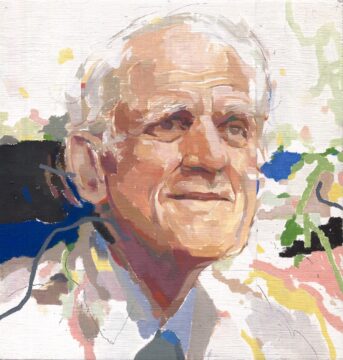 Lyric poets and mathematicians, by general agreement, do their best work young, while composers and conductors are evergreen, doing their best work, or more work of the same kind, as they age. Philosophers seem to be a more mixed bag: some shine early and some, like
  Anyway, in the video recording of The Cure performing A Forest for Dutch television in 1980 one encounters a version of The Cure that doesn’t quite jibe with later versions of the band. Robert Smith, in particular, has short spiky hair and looks nothing like the fully-coiffed gothic prince that he would soon become. He also looks annoyed or indifferent. And he has swapped instruments with Simon Gallup, the bassist for the band. Simon plays guitar in this live version. Robert Smith plucks away at the familiar bassline. Strange. Even stranger when one realizes that the strings on the bass are so slack there is no way they could be making any proper sound. And Robert Smith isn’t playing the notes correctly or in the right rhythm anyway.
 There appear to be two types of drivers in North America these days: those who think about headlights only when one of theirs goes out, and those who fixate on them every time they drive at night. If you’re in the first camp, consider yourself lucky. Those in the second camp—aggravated by the excess glare produced in this new era of light-emitting diode headlights—are riled up enough that the National Highway Traffic Safety Administration receives more consumer complaints about headlights than any other topic, several insiders told me.
 Noam Chomsky, one of the world’s most famous and respected intellectuals, will be 96 years old on Dec. 7, 2024. For more than half a century, multitudes of people have read his works in a variety of languages, and many people have relied on his commentaries and interviews for insights about intellectual debates and current events.
 Many of the innovators who are advancing science, technology and culture are those whose unique cognitive abilities were identified and supported in their early years through enrichment programmes such as Johns Hopkins University’s
  Jim and Louise
 This book review is a Trojan horse. Ostensibly it concerns a collection of letters titled “Love, Joe,” written by the downtown
 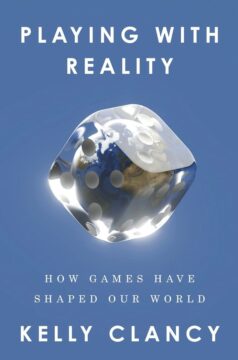 JULIEN CROCKETT: You dedicate Playing with Reality to the next generation, writing, “If play is the engine of creation, I cannot wait to see what new worlds you build.” A recurring theme in your book is the primacy of play and games to what it means to be human—that playing games is universal, an instinct. What makes games and play so important to understanding ourselves?
 I’m at DealBook Summit in NYC today and I just heard Sam Altman