
Philip Ball in The Guardian:
 ‘From Adam has sprung one mass of sinners and godless men,” wrote St Augustine, arguably the key architect of the Christian doctrine of original sin. The notion that babies are born with this indelible stain, the residue of Adam’s fall in Eden, can seem one of the most pernicious features of Christian dogma. But as Guy Leschziner argues in Seven Deadly Sins, we could interpret Augustine’s austere judgment as an acknowledgment that we are inherently inclined to do things we shouldn’t. The catalogue of seven direst vices first adduced by Tertullian and immortalised in Dante’s Divine Comedy – pride, greed, wrath, envy, lust, gluttony and sloth – may seem arbitrary, but we can all recognise aspects of them in ourselves.
Leschziner, a consultant neurologist at Guy’s Hospital in London, explores the physiological and psychological roots of these “failings” and argues that, in mild degree, all might be considered not just universal but necessary human attributes. The goal, he implies, is not to renounce them but to align our natural impulses with the demands of living healthily and productively in society. Seven Deadly Sins takes the case-study format pioneered by Oliver Sacks in using dysfunction to explore the neurological origins of behaviour. It is a profoundly humane book, occasionally compromised by excessive clinical detail and perhaps more so by its lack of wider context.
More here.
Enjoying the content on 3QD? Help keep us going by donating now.
 A hypothesis called “The Silurian hypothesis” wins the title of “most interesting hypothesis most likely to be false” for all of science. In brief, the hypothesis postulates that previously a species different from ours had achieved high intelligence and technological civilization on this planet. The Silurian hypothesis (named after “Silurian” aliens in the brainy British TV series “Doctor Who”) was initially proposed by two astronomers, Gavin A. Schmidt and Adam Frank, as a thought experiment, to see if it would even be feasible to detect the traces of such a hypothetical civilization which had existed many millions of years ago. Would there still be detectable changes in the sedimentation patterns if someone (not human) had built cities and military bases a hundred million years ago? Would ancient trash dumps be conserved somewhere, somehow? Would there be changes in the patterns of radioisotopes in the rocks as a result of an ancient nuclear war?
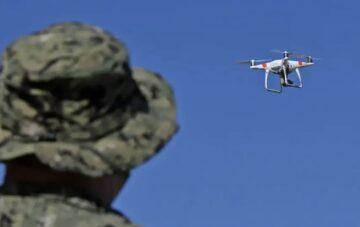 Mysterious drones have been swarming the night skies above New Jersey and other nearby states for a month. They have been spotted over
 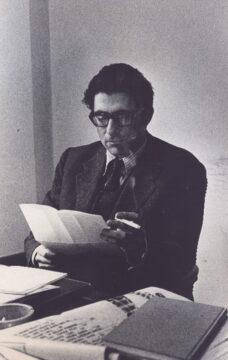 “November is a mournful month in the history of Palestine,” Edward Said began his
 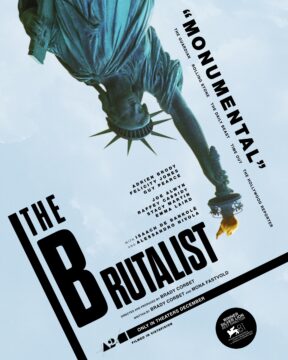 “Cinema is frequently associated with glamour, but the reality is that it’s labor,” Corbet told me. In the case of “The Brutalist,” his work seemed to be paying off. Initial reactions had been ecstatic. At Venice, where the film premièred, in early September, viewers had applauded for somewhere between twelve minutes (according to Variety) and thirteen minutes and five seconds (according to Deadline), longer than for any other festival entry but Pedro Almodóvar’s, and Corbet won the Silver Lion for Best Director. The film, which will be released in late December, was already being discussed as a Best Picture contender, and Brody as a Best Actor front-runner. (This week, it was nominated for both awards, plus five more, by the Golden Globes.)
 The chance of meeting a person like you is the only reason I talk to strangers.
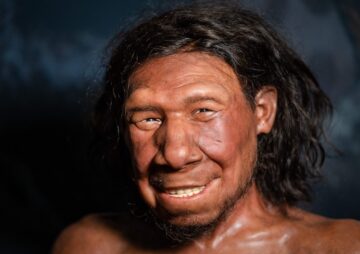 Do you find it easy to wake up early? You may have Neanderthals in your ancestry.
 Now it was June, and we were at the National Hot Rod Association’s Nostalgia Nationals at Beech Bend Raceway in Bowling Green, Kentucky. The weather was brutal, and it was forecast to remain so: sunny, low to mid-nineties, wiltingly humid. In the distance, an antique roller coaster creaked along wooden tracks, and I wondered who would choose to ride it when there were so many cars to ogle and races to watch and people to meet.
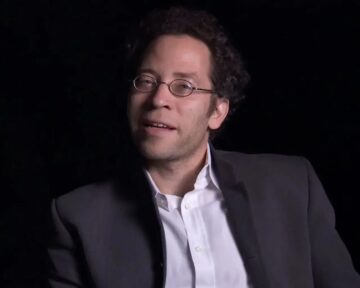 Like the writing of book reviews, the live author interview has been placed under the sign of “marketing and publicity,” and treated less as a distinct skill than part of an ethos of service—something that “professional” writers do for other writers and for their publishers—as well as signaling everyone’s support for the perennially endangered small bookstores and event spaces that host them. The assumption is that the interviewer, like the interviewee, has something to sell. Since everyone is engaged in promotion, no one has to be paid. The sense that the interview is a devalued form, anyone can do it, especially if they published a book a year before the book under discussion, makes it a kind of professional corvée for writers whose value accrues elsewhere. This can often have a corrosive effect on the quality of the events. I have been to evenings where it appears the interviewer hasn’t even read the author’s book. More recently they have become another opportunity to indulge in guilty feelings and remind everyone in attendance that something more important and painful is happening elsewhere. In general, people come to these things to look rather than to listen and they do them to be seen rather than heard. The author will be signing books afterwards; there will be free drinks before you go out to pay for drinks; you can take a selfie if you want.
 The number of neurons in the human brain is comparable to the number of stars in the Milky Way galaxy. Unlike the stars, however, in the case of neurons the real action is in how they are directly connected to each other: receiving signals over synapses via their dendrites, and when appropriately triggered, sending signals down the axon to other neurons (glossing over some complications). So a major step in understanding the brain is to map its wiring diagram, or