Saturday Poem

A Song on the End of the World

On the day the world ends 
A bee circles a clover, 
A fisherman mends a glimmering net. 
Happy porpoises jump in the sea, 
By the rainspout young sparrows are playing 
And the snake is gold-skinned as it should always be.

On the day the world ends 
Women walk through the fields under their umbrellas, 
A drunkard grows sleepy at the edge of a lawn, 
Vegetable peddlers shout in the street 
And a yellow-sailed boat comes nearer the island, 
The voice of a violin lasts in the air 
And leads into a starry night.

And those who expected lightning and thunder 
Are disappointed. 
And those who expected signs and archangels’ trumps 
Do not believe it is happening now. 
As long as the sun and the moon are above, 
As long as the bumblebee visits a rose, 
As long as rosy infants are born 
No one believes it is happening now.

Only a white-haired old man, who would be a prophet 
Yet is not a prophet, for he’s much too busy, 
Repeats while he binds his tomatoes: 
There will be no other end of the world, 
There will be no other end of the world. 

by Czeslaw Milosz
from The Collected Poems
Penguin Books 1988                            
translated by Anthony Milosz  

rereading Maurice by EM Forster

Laurence Scott in The Guardian:

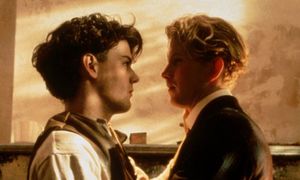
MAURICE-008This year marks the centenary of one of the best known gropes in English letters. A hundred years ago, the writer Edward Carpenter's young lover George Merrill placed a hand on the indeterminate region between EM Forster's buttocks and back. Shortly thereafter, Forster began his novel Maurice, and in a “Terminal Note” written almost 50 years later he identified Merrill's touch as its inspiration. While this genesis story gets a lot of press in Forster circles, for me what is more striking is Forster's description of Maurice as belonging “to an England where it was still possible to get lost”. The militaristic demands of two world wars – the extensive mapping of England in the name of security – had, for Forster, robbed the island of its wild places. In Maurice, the ability to become lost in “the greenwood” provides the book's homosexual lovers their escape from society's punishments, and indeed even this happy ending can be traced back to the upper slope of Forster's bottom. As well as sparking a novel, Merrill's caress further initiated Forster into the comradely haven of his and Carpenter's rural domesticity: a Derbyshire homestead, safe from public scrutiny.

Throughout his life, Forster kept Maurice from mass consumption. Today it isn't widely considered a literary success, but, despite its failings, both the book's plot and its life as a secret manuscript have something to say about a major debate of our times: the extent to which the bounds of privacy are being redrawn. By means of the posthumous publications of Maurice and the homoerotic short stories of The Life to Come, Forster's ghost fought in the battle against censorship. The decriminalisation of homosexuality was tied to its demystification, and the fact that same-sex love now has a public dimension is a triumph of civilisation. But while the publishing history of Maurice engages with the politics of free expression and visibility, the novel's text radiates a nostalgia for reticence and a desire to fall off the grid. This instinct for withdrawal and obscurity speaks to present critiques of digitised life. In a world increasingly patrolled by online analytics and social media, Maurice's political dilemma still resonates: how might you not be in hiding while not being on display?

More here.

Deadlines

Meghan O'Rourke in The New York Times:

DeathDeath has been a great literary theme for so long you might think there’d be little left to say on the subject, but in recent decades the literature of death has taken an interesting and novel turn. Writers are recording their own deaths as they happen. In “Endpoint” (2009), John Updike chronicles his last years and his struggles with metastatic lung cancer. In “Mortality” (2012), a collection of his final columns for Vanity Fair, Christopher Hitchens documented his brutal experiences with cancer; Roger Ebert did the same in “Life Itself: A Memoir” (2011), as did the Washington Post columnist Marjorie Williams in her shattering essays collected in “The Woman at the Washington Zoo.” Earlier examples include Anatole Broyard’s “Intoxicated by My Illness” (1992), in which the author, a former editor at The New York Times Book Review, muses on dying, having learned he has late-stage prostate cancer; Paul Zweig’s memoir “Departures” (1986); and James Merrill’s final poetry collection, “A Scattering of Salts” (1995). Today’s literature of death consists mainly of a subgenre, the literature of dying.

…Hitchens’s “Mortality” — an extraordinary book — offers an exquisitely detailed portrait of dying underscored by the author’s reluctance to be sentimental and his hatred of self-pity. (Losing one’s writerly control is one of the obvious pitfalls here.) One day, Hitchens finds himself covered with a red radiation rash — “To say that the rash hurt would be pointless. The struggle is to convey the way it hurt on the inside.” He describes being “recently scheduled for the insertion of a ‘PIC’ line” — a procedure meant to take 10 minutes. Two hours later, he lies “between two bed-pads that were liberally laced with dried or clotting blood.” He quips about the medical paperwork (“curse of Tumortown”) and the “boring switch from chronic constipation to its sudden dramatic opposite,” offering all the details that Nora Ephron wrote about not wanting to burden friends and family with. This is the special humiliation of the slow death — the days spent on what Sidney Hook (as Hitchens reminds us) called a “mattress grave.” Hitchens makes us contemplate the central question of the modern death: Are these slow, medicated processes worth the pain? No, you think, fiercely — but, he acknowledges, he’s glad he bought himself more time.

More here.

Europe in the Trap

Offe_468w

Claus Offe in Eurozine:

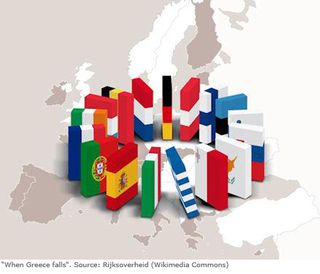
Europe finds itself in what may well be its worst crisis since 1945. More and more historically aware commentators are reminded of the situation prior to 1933. If this crisis cannot be overcome, then the political project of European integration will suffer serious harm, as will the European and even the global economy – not to mention the far-ranging social harm that the crisis has already caused in the countries of the European periphery.

The crisis is so serious because of the seemingly insoluble contradiction it presents. In simple terms: the course of action so urgently needed is extremely unpopular and thus cannot be implemented by democratic means. Nor does the post-democratic, technocratic option present a feasible solution. Experts are “in principle” agreed on what is required – namely a long-term debt-sharing agreement, or other grandiose transnational measures to spread the burden – but it is difficult to make electorates in the rich nations listen.

The situation in the countries of the periphery is similar: they must quickly become more competitive and remain so, while driving down labour costs to achieve some semblance of a sustainable balance of trade and a half-way manageable budget deficit. The experts and elites regard all this as “necessary”, but it is clearly unattainable without seriously damaging these nations' democratic sovereignty, since their populations “demand” exactly the opposite. Thus the mismatch between what is economically necessary and what is politically feasible can be seen on both sides of Europe's north-south divide today. If the eurozone collapses because it proves impossible to square that circle, this will most likely mean the end of the EU as well. Chancellor Merkel is quite right to warn of this outcome.

Friday, July 5, 2013

Review of Paul Theroux’s supposedly last book on Africa

Graeme Wood in The American Scholar:

ImagesPaul Theroux’s globe, if it had a pin stuck in it for every visited city and town, would bristle like a frightened porcupine. The west coast of Africa has remained one of its last barren patches, and for good reason: hostile governments, tropical disease, ravaged environments, and predators, both human and non. In 2003’sDark Star Safari, he traveled bumptiously down the east coast of the continent, which, compared with Africa’s left coast—to say nothing of its interior—is virtually Scandinavian in its safety and ease of movement.

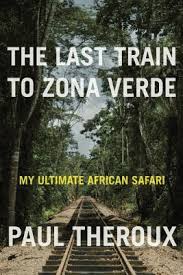
The Last Train to Zona Verde advertises itself as Theroux’s “final African adventure,” and few who read it will doubt his promise never to return. In his previous Africa book, he wrote convincingly of the destructive effects of foreign aid and how it robs Africans of the ingenuity and initiative they displayed when he taught in Malawi (then Nyasaland) as a Peace Corps volunteer in the 1960s. On this return journey, he begins where he left off, in Cape Town, deeply perturbed and skeptical about the future of the continent. He heads for points north and west, first to Namibia and Botswana, then to Angola. I spoil little by saying that Theroux’s original plan to proceed to Timbuktu is thwarted, and the total mileage covered in this book is the least of any of his travelogues.

Theroux’s great realization—starting with The Great Railway Bazaar in 1975—was that travel writing didn’t require, or even reward, the sort of quasi-omniscient narration that one finds in guidebooks, or the inhumanly sunny disposition of magazine writing. Instead, the pleasures of the genre could be character-driven (“I sought trains; I found passengers”) and leave in the bits about hassles and inconvenience that make up the bulk of the experience of getting from place to place. No depiction of Kabul would be frank if it included Babur’s gardens but omitted the city’s daily horrors and bloodshed.

More here.

Sean Carroll: What is science?

Sean Carroll in Preposterous Universe:

Sean_carroll_biopic-smallDefining the concept of “science” is a notoriously tricky business. In particular, there is long-running debate over the demarcation problem, which asks where we should draw the line between science and non-science. I won’t be providing final any final answers to this question here. But I do believe that we can parcel out the difficulties into certain distinct classes, based on a simple scheme for describing how science works. Essentially, science consists of the following three-part process:

  1. Think of every possible way the world could be. Label each way an “hypothesis.”
  2. Look at how the world actually is. Call what you see “data” (or “evidence”).
  3. Where possible, choose the hypothesis that provides the best fit to the data.

The steps are not necessarily in chronological order; sometimes the data come first, sometimes it’s the hypotheses. This is basically what’s known as the hypothetico-deductive method, although I’m intentionally being more vague because I certainly don’t think this provides a final-answer definition of “science.”

The reason why it’s hard to provide a cut-and-dried definition of “science” is that every one of these three steps is highly problematic in its own way.

More here.

Metazoa

Animcoll

Paleontologists tell us that no new species was domesticated after the era of animal sacrifices. Were animals domesticated then—that is, made partially human—in order to sacrifice them, with domestication as a structural by-product of the religious? At the beginning of his essay “Goya’s Dog,” László Földényi quotes a line from an aboriginal Creation Myth—“Once upon a time when the animals were still human.” He remarks that, though the ancient aborigines saw an evident kinship between animals and humans, to suggest today that somebody has something “animalistic” about him is a not inconsequential judgment. It might have been possible for these aborigines to have felt that somebody (what we would recognize as a human) lacked the full qualities of being animal. “The animal is for us the extreme point of humanity. For the ancients, however, the extreme point of animality was the human.” Rilke in his Eighth Duino Elegy saw animals as looking out with full sight into the “open,” which is written all over them, our eyes being, as it were, turned back on themselves to form “traps” for the rest of the world as it emerges into our visual field. We are still in Plato’s cave, or in a deeper cave behind what we thought was philosophy’s back wall.

more from Iain Bamforth at Threepenny Review here.

Against Environmental Panic

Photo_37949_wide_large

This fear of the future, of science, and of technology reflects a time when humanity, and especially Western humanity, has taken a sudden dislike to itself. We are exasperated by our own proliferation and can no longer stand ourselves. Whether we want to be or not, we are tangled up with seven billion other members of our species. Rejecting both capitalism and socialism, ecologism has come to power almost nowhere. But it has won the battle of ideas. The environment is the new secular religion that is rising, in Europe especially, from the ruins of a disbelieving world. We have to subject it to critical evaluation in turn and unmask the infantile disease that is eroding and discrediting it: catastrophism. There are at least two ecologies: one rational, the other nonsensical; one that broadens our outlook while the other narrows it; one democratic, the other totalitarian. The first wants to tell us about the damage done by industrial civilization; the second infers from this the human species’ guilt. For the latter, nature is only a stick to be used to beat human beings. Just as third-worldism was the shame of colonial history, and repentance was contrition with regard to the present, catastrophism constitutes the anticipated remorse of the future: The meaning of history having evaporated, every change is a potential collapse that augurs nothing good.

more from Pascal Bruckner at The Chronicle Review here.

Clive James – a life in writing

From The Guardian:

Clive-James-008I'm told that I'm looking quite shiny,” says Clive James, putting his best face on things with a vintage display of Anglo-Australian stoicism. It's an instinctive optimism that is what you'd expect, but still it is moving. Almost everything in the life of this great literary polymath is edged with darkness. James now dwells in a kind of internal exile: from family, from good health and from convivial literary association, even from his own native land. His circumstances in old age – James is 73 – evoke a fate that Dante might plausibly have inflicted on a junior member of the damned in one of the less exacting circles of hell. James's health has lately been so bad that, last year, he was obliged publicly to deny a viral rumour of his imminent demise. Two or three times, indeed, since falling ill on New Year's day in 2010, he has nearly died, but has somehow contrived (so far) to play the Comeback Kid. Perhaps he has found rejuvenation in the macabre satisfaction of reading premature rave obituaries from fans around the English-speaking world. If word of his death has been exaggerated, there's no question, on meeting him, that he's into injury time, with a nagging cough that punctuates our conversation. “Essentially,” he says, as we settle into the rather spartan living room of his two-up, two-down terraced house in Cambridge, “I've got the lot. Leukaemia is lurking, but it's in remission. The thing that rips up my chest is the emphysema. Plus I've got all kinds of little carcinomas.” He points to the place on his right ear where a predatory oncologist has recently removed a threatening growth. “I'd love to see Australia again,” he reflects. “But I can't go further than three weeks away from Addenbrooke's hospital, so that means I'm here in Cambridge.”

In a recent, valedictory poem, “Holding Court”, which describes his involuntary sequestration, he writes: “My wristband feels too loose around my wrist.” In all other respects, he is tightly shackled to his fate. Exiled from his homeland, where he has now become a much-loved grand old man of Australian letters, James is also exiled in Cambridge. His wife of 45 years, the Dante scholar Prue Shaw, kicked him out of the marital home last year on the disclosure of his long affair with a former model, Leanne Edelsten. This betrayal also devastated his two daughters, though it has ultimately brought them closer to their father. In “Holding Court”, James writes ruefully that “retreating from the world, all I can do, is build a new world”.

More here.

Miniature human liver grown in mice

From Nature:

LiverTransplanting tiny 'liver buds' constructed from human stem cells restores liver function in mice, researchers have found. Although preliminary, the results offer a potential path towards developing treatments for the thousands of patients awaiting liver transplants every year. The liver buds, approximately 4 mm across, staved off death in mice with liver failure, the researchers report this week in Nature1. The transplanted structures also took on a range of liver functions — secreting liver-specific proteins and producing human-specific metabolites. But perhaps most notably, these buds quickly hooked up with nearby blood vessels and continued to grow after transplantation.

The results are preliminary but promising, says Valerie Gouon-Evans, who studies liver development and regeneration at Mount Sinai Hospital in New York. “This is a very novel thing,” she says. Because the liver buds are supported by the host’s blood system, transplanted cells can continue to proliferate and perform liver functions. However, she says, the transplanted animals need to be observed for several more months to see whether the cells begin to degenerate or form tumours. There is a dire scarcity of human livers for transplant. In 2011, 5,805 adult liver transplants were done in the United States. That same year, 2,938 people died waiting for new livers or became too sick to remain on waiting lists. However, attempts to create complex organs in the laboratory have been challenging. Takanori Takebe, a stem-cell biologist at Yokohama City University in Japan who co-led the study, believes this is the first time that people have made a solid organ using induced pluripotent stem cells, which are created by reprogramming mature skin cells to an embryo-like state.

More here.

Friday Poem

A Parable of the Poppy

On a poppy seed is a tiny house,
Dogs bark at the poppy-seed moon,
And never, never do those poppy-seed dogs
Imagine that somewhere there is a world much larger.

The Earth is a seed—and really no more,
While other seeds are planets and stars.
And even if there were a hundred thousand,
Each might have a house and a garden.

All in a poppy head. The poppy grows tall,
The children run by and the poppy sways.
And in the evening, under the rising moon,
Dogs bark somewhere, now loudly, now softly.
.

by Czeslaw Milosz
from The Collected Poems 1391-1987
Penguin Books, 1988

Isaac and Isaiah: The Covert Punishment of a Cold War Heretic

ISAIAH-BERLIN-010

Tariq Ali reviews David Caute's book in The Guardian:

For decades, David Caute has written both histories of ideas and novels. I've always preferred his novels, in particular Comrade Jacob, a sympathetic account of Gerrard Winstanley and the Diggers during the English revolution (Caute's history tutor at Oxford was Christopher Hill). In his new book, he has expanded a cold war footnote into an entire volume, but has performed a valuable service in doing so. The work is a portrait of Isaiah Berlin, with whom the author shared a perch at All Souls College, Oxford, where they engaged in lofty conversations. One of the less elevated talks concerned Isaac Deutscher, and troubled Caute.

Berlin the liberal political philosopher and Deutscher the Marxist historian were both asylum seekers, given refuge and residence in Britain during the early decades of the last century. That was about all they had in common. Their intellectual trajectories pointed in opposite directions. Berlin was escaping the Russian revolution, Deutscher was fleeing from the armies of the Third Reich, poised to take Poland. Both were Jews: the first was a Zionist, who annoyed Chaim Weizmann by refusing all his requests to move to Tel Aviv and become an adviser; the second famously defined himself as a “non-Jewish Jew”, and despite arguing with David Ben-Gurion, remained sympathetic to Israel – until the 1967 war. Deutscher's next of kin had perished in the camps. His surviving relations lived in Israel. He died in 1967 aged 60, and his last interview in the New Left Review took the form of a prescient warning to Israel, comparing its intransigence to that of old Prussia: “To justify or condone Israel's wars against the Arabs is to render Israel a very bad service indeed and harm its own long-term interest … The Germans have summed up their own experience in the bitter phrase: 'Man kann sich totsiegen!' 'You can triumph yourself to death'.”

On Remembering, and Technological Progress

PIC

Houman Barekat in 3:AM Magazine:

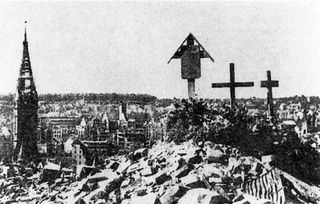
The trauma of growing up among the ruins of World War Two was a formative experience, not only for the late WG Sebald (1944-2001), but for the modern German nation as a whole. The memory of the incineration of large swathes of several of its major cities was tucked away in an obscure recess of the collective consciousness, to be occasionally revisited by scholars and historians but largely effaced in the wider society. Sebald’s Zurich lectures, an impassioned yet laconic interrogation of this historical amnesia, became On the Natural History of Destruction. Originally published in German in 1999 under the title Luftrkridg und Literatur, Anthea Bell’s English translation was first published in 2003 by Hamish Hamilton, and reappears here in a slim hardback courtesy of Notting Hill Editions.

For Sebald, the tragedy of the war and its aftermath had its roots in a fundamental weakness in the national character: he traces a link between ‘the German catastrophe ushered in under Hitler’s regime and the regulation of intimate feelings within the German family.’ This notion was subtlety alluded to in Michael Heneke’s 2009 film, White Ribbon, which hints at a connection between the repressed rigidity of social life in early 20th century Germany and the later brutality of the Third Reich. The same emotionally detached Protestant stoicism that had allowed National Socialism to thrive also coloured the character of the post-war rebuilding – the nation became like a family with dark secret about which it dared not speak. Sebald takes us beyond the cordon sanitaire, and back to the burning cities:

At its height the storm lifted gables and roofs from buildings, flung rafters and entire advertising hoardings through the air, tore trees from the ground and drove human beings before it like living torches. Behind collapsing facades the flames shot up as high as houses, rolled like a tidal wave through the streets at a speed of over 150 kilometres an hour, spun across open squares in strange rhythms like rolling cylinders of fire. The water in some of the canals was ablaze.

His purpose is not to exculpate or rehabilitate the German nation or even to elicit sympathy as such, but merely to invite recognition on a basic human level, to claw something back for posterity in defiance of that blanket silence. ‘The majority of Germans today know,‘ he candidly maintains, ‘that we actually provoked the annihilation of the cities in which we once lived.’

Thursday, July 4, 2013

In Egypt the Military is Supreme

Images (2)

Esam Al-Amin in Counterpunch:

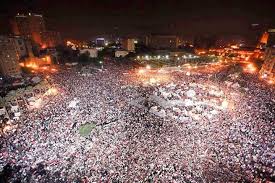
The people in Egypt went to the polls at least six times: to vote for a referendum to chart the political way forward (March 2011), to vote for the lower and upper house of parliament (November 2011-January 2012), to elect a civilian president over two rounds (May-June 2012), and to ratify the new constitution (December 2012). Each time the electorate voted for the choice of the Islamist parties to the frustration of the secular and liberal opposition.

To the discontent of the Islamists, all their gains at the polls were reversed by either the Mubarak-appointed Supreme Constitutional Court (SCC) or the military. The lower house of parliament, of which the Islamists won seventy three percent of the seats, was dissolved by the SCC a year ago, while the military has just suspended the new constitution, while ousting the democratically-elected president.

Undoubtedly, the MB committed colossal mistakes. For example, they reneged on several promises to their secular and liberal coalition partners, including to not contest the majority of parliamentary seats, field a presidential candidate, or exclude others in the composition of the Constitution Constituent Assembly. Perhaps, their gravest mistake was to ally themselves closely with the Salafist groups during the process of writing the constitution, thus alienating many of the secularists, liberals, as well as Christians even though the MB did not care much about the constitutional ideological battle. Their motivation was not to be outflanked by the Salafis on the Islamic identity of the state. To accomplish this objective, they lost most of the others.

In addition, Morsi and the MB did not adhere to their promise of full partnership in governance. Many of the youth and opposition groups felt that the president and MB leadership were not genuine in their outreach and only sought their participation for cosmetic reasons. Even their Islamic partners such as the Salafist Al-Noor Party complained that the MB wanted to monopolize the major power centers in the state.

The Rise of Narendra Modi

Zahir Janmohamed in the Boston Review:

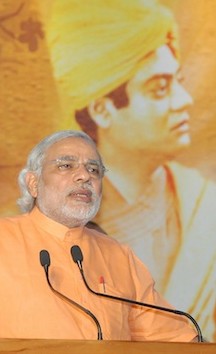
ScreenHunter_234 Jul. 04 16.56The physician sat in the corner of his office in Ahmedabad, a map of India’s western state of Gujarat on one side, a map of the human nervous system on the other, his hip leaning against the drawer that I spent weeks trying to convince him to open.

After agreeing to a list of conditions—I could not take any photographs, I could not remove anything from his office—he agreed to show me the drawer’s contents. It was a six-inch stack of letters between two longtime pen pals, the physician and a young man named Narendra Modi, the current chief minister of Gujarat and the official candidate from the Bharatiya Janata Party to contest next year’s elections for India’s prime minister. I took out my digital recorder and began reading each letter aloud. A few days before I boarded my return flight to California, the physician called me to his office.

“Zahir bhai,” he said. It was unusual for him to address me this way—he is in his 60s, twice my age, and “bhai” means brother in Hindi and is used most often with someone older.

“Zahir bhai,” he repeated. “I am very sorry. You cannot use my name in your piece.”

I was not surprised; very few in Gujarat are willing to use their real name when asked about Modi. I told him I would be happy to change his name.

“No, you cannot use my name or my letters or my story. I have three children. Modi will ruin their lives if people know my views on him.”

I pleaded with him to reconsider but he would not budge.

“You do not have children. You do not know what it is like to live in Gujarat. You will return to America eventually. Please, you must understand.”

Unfortunately, I do understand.

More here.

sheet music

Baer

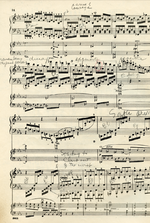
Last fall, the publishing industry met the music world in a cheerfully anachronistic way when Beck, a darling of literary indie-rock aficionados, released Song Reader, an album in the form of sheet music. No downloadable tracks, no limited-edition vinyl, just a big book of notes. The album was published by McSweeney’s and was supplemented with a crowd-sourced website, where fans uploaded their own interpretations of Beck’s songs. Within weeks the site had amassed a kaleidoscopic array of performances—including polished, even animated, videos. Song Reader became a favorite of the staffs at NPR, NewYorker.com, and Kurt Andersen’s Studio 360, where the host and a handful of editors and producers performed a version of “Saint Dude.” Even USAToday’s Pop Candy blog asked, in a somewhat cheeky headline, “Have You Played It Yet?” Far from an old-timey, craft-movement stunt, Song Reader was embraced by both critics and consumers as a legitimate attempt to publish music that people could play—an invitation to musicians, amateur and professional, to interpret the works and share their musical gifts, promising or mediocre. For some of us concerned about the fate of sheet music, Song Reader also served as a litmus test of sorts: How many music fans (at least among the sample Beck attracts) still read, or know someone who reads, Western music notation, notes and chords placed on a five-line staff with clefs, rests, and time signatures?

more from Adam Baer at VQR here.