Tuesday Poem

Meditation on a Grapefruit

To wake when all is possible

before the agitations of the day
have gripped you
To come to the kitchen
and peel a little basketball
for breakfast
To tear the husk
like cotton padding a cloud of oil
misting out of its pinprick pores
clean and sharp as pepper
To ease
each pale pink section out of its case
so carefully without breaking
a single pearly cell
To slide each piece
into a cold blue china bowl
the juice pooling until the whole
fruit is divided from its skin
and only then to eat
so sweet
a discipline
precisely pointless a devout
involvement of the hands and senses
a pause a little emptiness

each year harder to live within
each year harder to live without

.

by Craig Arnold
from: Poetry, Vol. 195, No. 1, October, 2009

The Nobel Prize Is Really Annoying

Sean Carroll in Preposterous Universe:

NobelOne of the chapters in Surely You’re Joking, Mr. Feynmanis titled “Alfred Nobel’s Other Mistake.” The first being dynamite, of course, and the second being the Nobel Prize. When I first read it I was a little exasperated by Feynman’s kvetchy tone — sure, there must be a lot of nonsense associated with being named a Nobel Laureate, but it’s nevertheless a great honor, and more importantly the Prizes do a great service for science by highlighting truly good work.

These days, as I grow in wisdom and kvetchiness myself, I’m coming around to Feynman’s point of view. I still believe that on balance the Prizes are a very good thing, and generally they honor some of the very best work in physics. (Some of my best friends are winners!) But having written a book about the Higgs boson discovery, which is on everybody’s lips as a natural candidate (though not the only one!), all of the most annoying aspects of the process are immediately apparent.

More here.

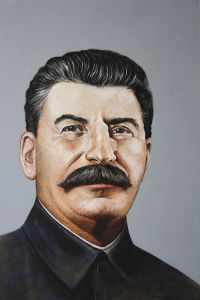
The Tyrant as Editor

Photo_41925_portrait_large

Holly Case in The Chronicle of Higher Education:

Joseph Djugashvili was a student in a theological seminary when he came across the writings of Vladimir Lenin and decided to become a Bolshevik revolutionary. Thereafter, in addition to blowing things up, robbing banks, and organizing strikes, he became an editor, working at two papers in Baku and then as editor of the first Bolshevik daily,Pravda. Lenin admired Djugashvili's editing; Djugashvili admired Lenin, and rejected 47 articles he submitted to Pravda.

Djugashvili (later Stalin) was a ruthless person, and a serious editor. The Soviet historian Mikhail Gefter has written about coming across a manuscript on the German statesman Otto von Bismarck edited by Stalin's own hand. The marked-up copy dated from 1940, when the Soviet Union was allied with Nazi Germany. Knowing that Stalin had been responsible for so much death and suffering, Gefter searched “for traces of those horrible things in the book.” He found none. What he saw instead was “reasonable editing, pointing to quite a good taste and an understanding of history.”

Stalin had also made a surprising change in the manuscript. In the conclusion, the author closed with a warning to the Germans lest they renege on the alliance and attack Russia. Stalin cut it. When the author objected, pleading that the warning was the whole point of the book, Stalin replied, “But why are you scaring them? Let them try. …” And indeed they did, costing more than 30 million lives—most of them Soviet. But the glory was Stalin's in the end.

The editor is the unseen hand with the power to change meaning and message, even the course of history. Back when copy-proofs were still manually cut, pasted, and photographed before printing, a blue pencil was the instrument of choice for editors because blue was not visible when photographed. The editorial intervention was invisible by design.

More here.

Poetry for an Ailing Homeland

9387736712_bdf17b2be6_z

Shaj Mathew in Guernica:

Chemical weapons have been deployed in Syria. After over two years of fighting, the conflict between rebel forces and the government of Bashar al-Assad shows no signs of abatement. Foreign powers may intervene. And yet, the sonorous voice of Adunis, the Syrian-born writer widely considered the world’s foremost Arab poet, has largely been silent. He did write an open letter to Bashar al-Assad in June 2011, but he was roundly criticized by fellow Arab intellectuals as being too soft on the dictator. Perhaps stung by this criticism, he has offered little comment since then.

His absence hasn’t prevented a new vein of Syrian poetry from emerging out of this uprising; a poem by Najat Abdul Samad, translated by Ghada al-Atrash for al Jazeera, epitomizes this movement’s jarring, visceral realism: “I bandage my heart with the determination of that boy/ they hit with an electric stick on his only kidney until he urinated blood./ Yet he returned and walked in the next demonstration…/ I bandage it with the outcry: ‘Death and not humiliation.’”

That said, according to fellow Syrian poet Maram al-Masri, “people are waiting for opposition poems from Adunis. He does a little, but for me and for a lot of people, we feel disappointed. It’s not enough. We need the fathers of modern Syrian poetry to speak out.” More damningly, the Iraqi littérateur Sinan Antoon told the Guardian that the Arab Spring has “consigned Adunis, the self-proclaimed revolutionary, to irrelevance.”

More here.

Speak For Yourself: A Meditation on the Marketplace of Ideas

First-amendment-area-243x366Stuart Whatley in LA Review of Books:

How does a marketplace of ideas operate? Most who use the phrase today would say they’re speaking figuratively; a free market itself is a liberal ideal, positing that rational self-interest on the part of individuals will, collectively, lead to the best outcomes. In the realm of ideas, the maxim that “the market knows best” seems promising, but it doesn’t always work out that way. As Cass Sunstein, one critic of the metaphor, notes, valid information can be elusive in an open exchange because of various cognitive biases and information cascades:

Rumor transmission often involves the rational processing of information, in a way that leads people, quite sensibly in light of their existing knowledge, to believe and to spread falsehoods […] the processes that underlie the “marketplace of ideas” sometimes work poorly, because they ensure that many people will converge on falsehoods rather than truth.

Or, as Stendhal observed long ago, “petty despotisms reduce to nothing the value of public opinion.”

Beyond Sunstein’s heuristic critiques, markets in the real world are susceptible to monopolistic machinations, asymmetrical information, and distortions from government, industry, speculation, and malfeasance. It is important to remember that the marketplace of ideas is a market, and it fails as a metaphor for anyone lacking a starry-eyed view of markets themselves. It is not the “contest of opinion” Thomas Jefferson once described in his first inaugural address; there is an aspect of business to it, and with this, certain consequences.

In fact, the metaphor of a market for ideas isn’t really a metaphor at all. It’s a description of public relations, the one industry where ideas are actually supposed to be bought and sold; it shouldn’t come as much of a surprise, then, to learn that it was PR men who helped to bring the “marketplace of ideas” into common usage in the first place.

More here.

Monday, October 7, 2013

3 Quarks Daily is looking for New Monday Columnists

Dear Reader,

6a00d8341c562c53ef010536413bef970b-400wiHere's your chance to say what you want to the large international audience of highly educated readers that make up the 3QD audience. Several of our regular columnists have had to cut back or even completely quit their columns for 3QD because of other personal and professional commitments and so we are looking for new voices. We do not pay, but it is a good chance to draw attention to subjects you are interested in, and to get feedback from us and from our readers.

You would have a column published at 3QD every fourth Monday. It should generally be between 1000 and 2500 words and can be about any subject at all. To qualify for a Monday slot, please submit a one or two paragraph bio and a sample column to me by email (s.abbas.raza.1 at gmail.com) as an MS Word-compatible document, or a URL if what you want us to look at is available online, which I will then circulate to the other editors and we will let you know our decision by about November 4. If you are given a slot on the 3QD schedule, your sample can also serve as your first column if it has never been published anywhere in print or online before. Feel free to use pictures, graphs, or other illustrations in your column. Naturally, you retain full copyright over your writing.

Please DO NOT submit more than one piece of writing, and also do not send the URL for a whole blog or website. I do not have the time to look through multiple postings. Select one piece of writing that you think is representative of the kinds of things you'd like to do at 3QD and just send that please.

Several of the people who started writing at 3QD have gone on to get regular paid gigs at well-known magazines, others have written well-received books. Even those who have not, have written to us saying that it has been a uniquely rewarding experience. If you have a blog or website of your own, please help us to spread this invitation by linking to this post.

The deadline for submissions is 11:59 PM New York City time, Sunday, October 13, 2013.

Yours,

Abbas

Sunday, October 6, 2013

David Grossman v. Max Blumenthal

Corey Robin in his blog:

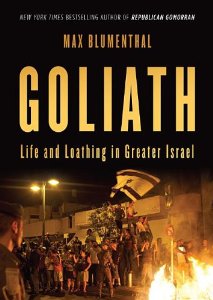
51-jsDj2gPL._SY300_Anyone familiar with Max Blumenthal’s journalism—in print or video (his interviews with Chicken Hawk Republicans are legendary)—knows him to be absolutely fearless. Whether he’s exploring the id of American conservatism orthe contradictions of Israeli nationalism, Max heads deep into the dark places and doesn’t stop till he’s turned on all the lights.

Courage in journalism requires not only physical fortitude but also an especially shrewd and sophisticated mode of intelligence. It’s not enough to go into a war zone; you have to know how to size up your marks, not get taken in by the locals with their lore, and know when and how to squeeze your informants.

Max possesses those qualities in spades. With laser precision, he zeroes in on the most vulnerable point of his subjects’ position or argument—he reminds me in this respect of an analytical philosopher—and quietly and calmly takes aim. In academia, this can make people squirmy and uncomfortable; in politics, it makes them downright nasty and scary. But Max remains unflappable; he’s never fazed. And that, I think, is because he’s not interested in making people look foolish or absurd. He’s not a gonzo of gotcha. He’s genuinely interested in the truth, and knows that the truth in politics often lurks in those dark caves of viciousness.

Max’s new book Goliath: Life and Loathing in Greater Israel has just come out. It’s a big book, but it’s conveniently organized into short chapters, each a particular vignette capturing some element of contemporary Israeli politics and culture (not just on the right but across the entire society).

More here.

How to Write a Crap Philosophy Essay

James Lenman of Sheffield University:

Essay_-_Stations_of_the_CrossAlways begin your essay along these lines: “Since the very dawn of time the problem of free will has been considered by many of the greatest and deepest thinkers in history.”

Always end your essay along these lines: “So it can be seen from the above arguments that there are many different points of view about the free will problem.”

Whenever in any doubt as to what to say about X, say, apropos of nothing in particular and without explanation, that X is extremely subjective.

When that gets boring, try saying that X is all very relative. Never say what it is relative to.

Use language with as little precision as possible. Engage heavily in malapropism and category mistakes. Refer to claims as “arguments” and to arguments as “claims”. Frequently describe sentences as “valid” and arguments as “true”. Use the word “logical” to mean plausible or true. Use “infer” when you mean “imply”. Never use the expression “begging the question” with its correct meaning but use it incorrectly as often as possible.

More here. [Thanks to David Livingstone Smith.]

Sunday Poem

On The Shore

The winter sun was at its zenith.
His head poking above dry grass on a riverbank,
an old man of eighty-nine was fishing.
Holding a pole,
talking over old times with winter fish
swimming under reflected scatterd clouds,
he died.
The glittering
sun was lowering.
A cabbage butterfly tottered
toward the other bank.

Fish were calling the old man.
A small red cork
bobbing up and down,
made faint ripples.
.
.
by Shinjiro Kurahara
from Iwana
publisher Dowaya, Tokyo, 2010
translation Mariko Kurihara, William I. Elliott, Katsumasa Nishihara

The Physics of Flamingos

Ethan Siegel in Starts With A Bang!:

ScreenHunter_350 Oct. 06 12.19The long legs and long necks work in tandem, and it’s easy to see why evolution would favor these traits in flamingos: the longer their legs and necks are, the deeper the waters they can reliably feed in. If shallow-water food becomes scarce, it’s the long-legged-and-necked flamingos that survive.

But what’s the deal with the standing on one leg? Flamingos spend a lot of their time in the water, and whenever they’re there and not actively feeding, you can find them standing on just one leg, something that they even sometimes do when they’re on dry land.

Why on Earth would it be advantageous for a flamingo to stand on one leg instead of two?

Because physics, that’s why!

And it’s physics that anyone who’s ever been in the pool on a hot summer’s day will understand all too well.

More here.

The U.S. government deployed nonhuman operatives: ravens, pigeons, even cats, to spy on cold war adversaries

Tom Vanderbilt in Smithsonian Magazine:

ScreenHunter_348 Oct. 06 12.07There would be a rustle of oily black feathers as a raven settled on the window ledge of a once-grand apartment building in some Eastern European capital. The bird would pace across the ledge a few times but quickly depart. In an apartment on the other side of the window, no one would shift his attention from the briefing papers or the chilled vodka set out on a table. Nor would anything seem amiss in the jagged piece of gray slate resting on the ledge, seemingly jetsam from the roof of an old and unloved building. Those in the apartment might be dismayed to learn, however, that the slate had come not from the roof but from a technical laboratory at CIA headquarters in Langley, Virginia. In a small cavity at the slate’s center was an electronic transmitter powerful enough to pick up their conversation. The raven that transported it to the ledge was no random city bird, but a U.S.-trained intelligence asset.

Half a world away from the murk of the cold war, it would be a typical day at the I.Q. Zoo, one of the touristic palaces that dotted the streets of Hot Springs, Arkansas, in the 1960s. With their vacationing parents inca tow, children would squeal as they watched chickens play baseball, macaws ride bicycles, ducks drumming and pigs pawing at pianos. You would find much the same in any number of mom-and-pop theme parks or on television variety shows of the era. But chances are that if an animal had been trained to do something whimsically human, the animal—or the technique—came from Hot Springs.

More here.

Haruki Murakami: How a Japanese writer conquered the world

Stephanie Hegarty in BBC News:

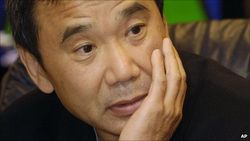
HarukiWhen Haruki Murakami's new book, 1Q84, was released in Japanese two years ago, most of the print-run sold out in just one day – the country's largest bookshop, Kinokuniya, sold more than one per minute. A million copies went in the first month. In France, publishers printed 70,000 copies in August but had to reprint within a week. The book is already on the top 20 list of online booksellers Amazon.com – hence the plans for midnight openings in the UK and across the US from New York to Seattle. “The last time we did this was for Harry Potter,” says Miriam Robinson of Foyles, just one of the bookshops in London opening at midnight for the launch. “It's hard to find a book that merits that kind of an event.” This is the kind of hype that usually surrounds serialised teen literature, says Paul Bogaards of Knopf, the book's US publishers. It is entirely unprecedented in the case of a work translated into English. The novel has been worked on by two English translators to speed up publication. At 1,600 pages, the book- which will come out in two parts in the UK – is not to be taken lightly. The book is set in an alternate 1984 – the title plays on the Japanese pronunciation of Q, which is the same as of the number nine. Its two main characters, a male novelist and a female serial killer, exist in parallel universes but are searching for each other as the novel winds its way between their worlds.

Classic Murakami themes are here in the new novel – love and loneliness, alternative and surreal worlds, enigmatic characters and people who seem impassive but are stirred by deep emotions. Not for the first time, questions are raised about free will and cult religion. “There really isn't anyone like him right now, he is completely different,” says Dan Pryce, a member of the sales staff at Waterstone's bookshop in central London, who has been reading the new book in spare moments, in the shop's basement. “I like the way he never really explains what is happening, he just presents storylines and just lets them flow. Also, there is no real resolution at the end of the book, which leaves you wanting more.

More here.

For Better Social Skills, Scientists Recommend a Little Chekhov

Pam Belluck in The New York Times:

SkillSay you are getting ready for a blind date or a job interview. What should you do? Besides shower and shave, of course, it turns out you should read — but not just anything. Something by Chekhov or Alice Munro will help you navigate new social territory better than a potboiler by Danielle Steel. That is the conclusion of a study published Thursday in the journal Science. It found that after reading literary fiction, as opposed to popular fiction or serious nonfiction, people performed better on tests measuring empathy, social perception and emotional intelligence — skills that come in especially handy when you are trying to read someone’s body language or gauge what they might be thinking.

The researchers say the reason is that literary fiction often leaves more to the imagination, encouraging readers to make inferences about characters and be sensitive to emotional nuance and complexity. “This is why I love science,” Louise Erdrich, whose novel “The Round House” was used in one of the experiments, wrote in an e-mail. The researchers, she said, “found a way to prove true the intangible benefits of literary fiction.” “Thank God the research didn’t find that novels increased tooth decay or blocked up your arteries,” she added.

More here.

Saturday, October 5, 2013

ON MIKLÓS SZENTKUTHY’S ARS POETICA

SzM.-íróasztalnál-1983caRainer J. Hanshe at The Quarterly Conversation:

Originally published in 1935 and republished in 1985, Towards the One and Only Metaphor, Szentkuthy’s second book, is comprised of 112 numbered sections ranging in length from one sentence to several pages. The seeding ground out of which much of Szentkuthy’s future work would come, it is a text that defies classification, yet is perhaps most accurately thought of as literature in Blanchot’s expansive sense of the term, that which ‘ruins’ distinctions and limits in its creation of a unique and amorphous hybrid beyond the distinctions of a particular genre. As Dezső Baróti described when reviewing the book in 1935, it is comprised of “unconventional journal-like passages expanded into short essays, plans for novels, poetic meditations that have the effect of free verse, and paradoxical aphorisms,” all of which reveal a moral philosophy, a politics, an erotics. “Its predominant motifs (insofar as one can succinctly describe it in a few words) are most especially nature, love, eroticism, sex. All that, however, is constantly painted over by the vibration of the unconcealed presence of a writer constantly in search of himself, and rife with beguiling, stimulating, and ever-renewed surprises.”[16] This accords with Szentkuthy’s grandiose if not quixotic goal of creating what he repeatedly called “a Catalogus Rerum, a listing of entities and phenomena, a Catalogue of everything in the Entire World.”

more here.

why watching “The Room” is like getting stabbed in the head

06BLACK-articleInlineMichael Ian Black at The New York Times:

If you have not already done so, please see “The Room.” Certain films elicit so much joy they cannot be recommended highly enough. “The Room” is such a film. Not because it is good. No. “The Room” is not a good film. It is bad. Some call it “the best bad movie ever made.” But “bad” does not do it justice. In fact, no adjective I know fully conveys the comprehensive artistic disaster that is “The Room.” Perhaps some Amazonian tribe has a word that means “something so terrible it achieves a certain kind of majesty,” but in English we do not.

What makes “The Room” so very wonderfully, hilariously horrendous? Everything — Every. Single. Thing. The script? Yes. The performances? Yes. The costumes, sets, lighting? Yes, yes, yes. It is the “Citizen Kane” of awful, with the writer/director/producer/star Tommy Wiseau as its bizarro Orson Welles.

Self-financed by Wiseau in 2003 for an estimated $6 million, “The Room” grossed $1,800 in its initial two-week Los Angeles run, with one early review stating, “Watching this film is like getting stabbed in the head.”

more here.