The Rise of the Machines

2013_0708_images_10_risemachines

Meredith Hindley in Humanities:

In the years following World War II, the sciences—physical, biological, and social—embraced computers to work on complex calculations, but it took the humanities a little longer to see the value of computing. One of the biggest challenges for humanists was the question of how to turn language, the core operating system of the humanities, into numbers in order to be compiled and calculated. At this point in the history of computing, all data had to be in numerical form. It’s not sur-prising, then, that some of the first humanities projects were indexes and concordances, since the location of a word could be given a numerical value.

The first concordance was made for the Vulgate Bible, under the direction of Hugo of St-Cher, a Dominican scholar of theology and member of the faculty at the University of Paris. When completed in 1230, theConcordantiae Sacrorum Bibliorum enabled the Dominicans to locate every mention of “lamb” or “sacrifice” or “adultery.” According to legend, five hundred monks toiled to complete the concordance. Herein lay the challenge of making concordances and indexes: You either had to command a team of multitudes or be willing to devote yourself to the project for years. John Bartlett, he of the Familiar Quotations, spent two decades working with his wife on the first full Shakespeare concordance. The volume, given the unwieldy name of New and Complete Concordance or Verbal Index to Words, Phrases and Passages in the Dramatic Works of Shakespeare, with a supplementing concordance to his poems (1894), ran to 1,910 pages.

The story of digital humanities often begins with another theologian on a quest to make a concordance. In the mid 1940s, Father Roberto Busa, an Italian Jesuit priest, latched onto the idea of making a master index of works by Saint Thomas Aquinas and related authors. Busa had written his dissertation on “the metaphysics ofpresence” in Aquinas. Looking for the answer, he created 10,000 hand-written index cards. His work demonstrated the importance of how an author uses a particular word, especially prepositions. But making an index for all of Aquinas’s works required wrangling ten million words of Medieval Latin. It seemed an impossible task.

More here.

Why I Am Going on Hunger Strike

Image

Nadezhda Tolokonnikova in n+1:

It has been a year since I arrived at Penal Colony No. 14 [henceforth, PC-14 —Trans.] in the Mordovian village of Partsa. As the women convicts say, “Those who haven’t done time in Mordovia haven’t done time at all.” I had heard about the Mordovian prison camps while I was still being held at Pre-Trial Detention Center No. 6 in Moscow. They have the harshest conditions, the longest workdays, and the most flagrant lawlessness. Prisoners see their fellows off to Mordovia as if they were headed to the scaffold. Until the last, they keep hoping: “Maybe they won’t send you to Mordovia after all? Maybe the danger will pass you by?” It didn’t pass me by, and in the autumn of 2012, I arrived in the prison country on the banks of the Partsa River.

My first impression of Mordovia was the words uttered by the prison’s deputy warden, Lieutenant Colonel Kupriyanov, who actually runs PC-14. “You should know that when it comes to politics, I am a Stalinist.” Colonel Kulagin, the other warden (the prison is administered in tandem) called me in for a chat my first day here in order to force me to confess my guilt. “A misfortune has befallen you. Isn’t that right? You’ve been sentenced to two years in prison. People usually change their views when bad things happen to them. If you want to be paroled as soon as possible, you have to confess your guilt. If you don’t, you won’t get parole.” I told him right away I would work only the eight hours a day stipulated by the Labor Code. “The code is the code. What really matters is making your quota. If you don’t, you work overtime. And we’ve broken stronger wills than yours here!” Colonel Kulagin replied.

My whole shift works sixteen to seventeen hours a day in the sewing workshop, from seven-thirty in the morning to twelve-thirty at night. At best, we get four hours of sleep a night. We have a day off once every month and a half. We work almost every Sunday. Prisoners “voluntarily” apply to work on weekends. In fact, there is nothing “voluntary” about it.

More here.

Tuesday Poem

The Mexican Cabdriver

We were sitting in traffic
on the Brooklyn Bridge,
so I asked the poets
in the back seat of my cab
to write a poem for you.
They asked
if you are like the moon
or the trees.
I said no,
she is like the bridge
when there is so much traffic
I have time
to watch the boats
on the river.

by Martin Espada
from A Mayan Astronomer in Hell's Kitchen
W.W. Norton, 2000

Malcolm Gladwell interview

Gaby Wood in The Telegraph:

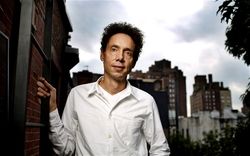
Malcolm-gladwell-p_2683360bMalcolm Gladwell says he never knows what people will take from his books. “It’s never what I think it’s going to be,” he shrugs. “Parts that you think are going to make this big impact are ignored, and parts that you wrote in a day are like the 10,000 hours stuff – I thought no one would ever mention that again. And it is, in fact, all people talk about. Who knew?” Not dissimilarly, the story of Malcolm Gladwell himself has taken off in ways that would have been difficult to predict. Once a journalist, he is now a phenomenon, revered and scoffed at in different quarters, somewhere between social scientist, motivational speaker and preacher-like source of consolation. He plays one-man shows to packed theatres on both sides of the Atlantic; he gives talks to businessmen about subjects such as Fleetwood Mac, earning tens of thousands of dollars per speech; his books are automatic bestsellers. His work has coined an adjective – “Gladwellian” refers to a sort of nerdy and captivating formula, against which there has been an inevitable backlash. A website called The Malcolm Gladwell Book Generator mocked up fake Gladwell covers: “Blank”, one read, referring to his book Blink, “300 Empty Pages to Fill With Your Own F—ing Thoughts”.

Gladwell is often accused of stating the obvious. The topics he covers – turning points (The Tipping Point), acting on instinct (Blink), working hard to achieve success (Outliers) – are, on the face of it, the bland raw material of everyday life. He is now famous for the observation that in order to succeed at anything you need 10,000 hours of practice. But that calculation wasn’t entirely what Outliers was about, and “stating” is not what Gladwell does. Even if he’s interpreting the obvious or diagnosing the obvious, that’s a big step further. And most of the time he synthesises zanily sourced evidence with such alchemy that you can’t work out if it was obvious all along, or if it only seems obvious now that it has passed through Gladwell’s hands. That is his trick. He’d say he is just telling stories, which makes him a Scheherazade for our time, stringing out tales about the power within us, talking to keep us going and make us think. His new book, David and Goliath: Underdogs, Misfits and the Art of Battling Giants, is his most accessible. Some would say it's too accessible – perhaps because of Gladwell’s mass audience or his habits as a speaker, he can swerve oddly into diction worthy of Richard Scarry – “Can you see why no Israelite would come forward to fight Goliath?”; “Would you send your child to Shepaug Middle School?”; “Do you know how few things 77 per cent of Americans agree on?”.

More here.

The World as They Knew It: Legacy of Greco-Roman Mapmaking

John Noble Wilford in The New York Times:

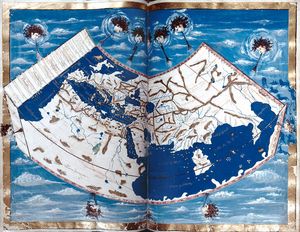
MapLong before people could look upon Earth from afar, completing a full orbit every 90 minutes, the Greeks and the Romans of antiquity had to struggle to understand their world’s size and shape. Their approaches differed: the philosophical Greeks, it has been said, measured the world by the stars; the practical, road-building Romans by milestones. As the Greek geographer Strabo wrote at the time: “We may learn from both the evidence of our senses and from experiences, that the inhabited world is an island, for wherever it has been possible for men to reach the limits of the earth, sea has been found, and this sea we call ‘Oceanus.’ And whenever we have not been able to learn by the evidence of sense, there reason points the way.”

Strabo’s words will greet visitors to a new exhibition, “Measuring and Mapping Space: Geographic Knowledge in Greco-Roman Antiquity,” which opens Friday at the Institute for the Study of the Ancient World, at 15 East 84th Street in Manhattan. The show runs through Jan. 5. Roger S. Bagnall, director of the institute, an affiliate of New York University, said the exhibition would not only cross ancient borders and cultures but also modern disciplines. “Our exhibitions and digital teams,” he said, “present a 21st-century approach to the ancient mentality concerning geographic space and how it is represented.” The show brings together more than 40 objects that provide an overview of Greco-Roman geographical thinking — art and pottery, as well as maps based on classical texts. (Hardly any original maps survive; the ones in the exhibition were created in the Middle Ages and the Renaissance from Greek and Roman descriptions.)

More here.

Monday, September 30, 2013

3 Quarks Daily Reader Survey

ScreenHunter_345 Sep. 30 11.53Dear Reader,

This fall we are on a roll and making various improvements at 3QD. As we proceed with some planned changes, it would be nice if we knew a little more about our current readers. Will you help us by taking a 5-minute survey?

Please click here to take the survey.

Thanks to Zujaja Tauqeer for putting the survey together, and thank you very much.

Yours,

Abbas

P.S. NEW POSTS BELOW

Sunday, September 29, 2013

Salman Rushdie, Edward Said, and Moral Courage

Sarah Waheed in the Asian American Writers' Workshop:

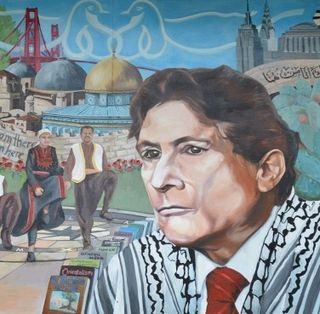
ScreenHunter_342 Sep. 29 20.39This past April, in an op-ed for the New York Times, Salman Rushdie pondered over the ways in which public respect for moral courage has diminished, noting how strange it is that we have become increasingly “suspicious of those who take a stand against the abuses of power or dogma.” Rushdie provided several examples of moral courage, ranging from South African activist Nelson Mandela, to Saudi poet Hamza Kashgari, to the Russian band Pussy Riot. The one that caught my eye was the late cultural critic and scholar of comparative literature, Edward Said (1935-2003). Rushdie, in the op-ed, described Said as an “out of step intellectual,” noting that he was “dismissed, absurdly, as an apologist for Palestinian terrorism.” Said had been one of Rushdie’s greatest admirers, and was particularly enamored of the way Rushdie wove the complexity of cultural differences into his early literature, essays and critiques. One wonders what route the friendship between Said and Rushdie would have taken, since such complexity no longer informs Rushdie’s political stances.

More here.

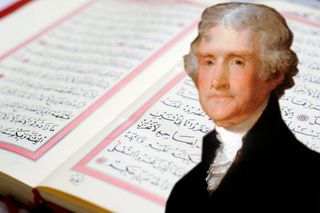
Thomas Jefferson’s Quran: How Islam Shaped the Founders

Richard B. Bernstein in The Daily Beast:

1380404692998.cachedOne of the nastiest aspects of modern culture wars is the controversy raging over the place of Islam and Muslims in Western society. Too many Americans say things about Islam and Muslims that would horrify and offend them if they heard such things said about Christianity or Judaism, Christians or Jews. Unfortunately, those people won’t open Denise A. Spellberg’s Thomas Jefferson’s Qur’an: Islam and the Founders. This enlightening book might cause them to rethink what they’re saying.

Thomas Jefferson’s Qur’an examines the intersection during the nation’s founding era of two contentious themes in the culture wars—the relationship of Islam to America, and the proper relationship between church and state. The story that it tells ought to be familiar to most Americans, and is familiar to historians of the nation’s founding. And yet, by using Islam as her book’s touchstone, Spellberg brings illuminating freshness to an oft-told tale.

Spellberg, associate professor of history and Middle Eastern Studies at the University of Texas at Austin, seeks to understand the role of Islam in the American struggle to protect religious liberty. She asks how Muslims and their religion fit into eighteenth-century Americans’ models of religious freedom. While conceding that many Americans in that era viewed Islam with suspicion, classifying Muslims as dangerous and unworthy of inclusion within the American experiment, she also shows that such leading figures as Thomas Jefferson, James Madison, and George Washington spurned exclusionary arguments, arguing that America should be open to Muslim citizens, office-holders, and even presidents. Spellberg’s point is that, contrary to those today who would dismiss Islam and Muslims as essentially and irretrievably alien to the American experiment and its religious mix, key figures in the era of the nation’s founding argued that that American church-state calculus both could and should make room for Islam and for believing Muslims.

More here.

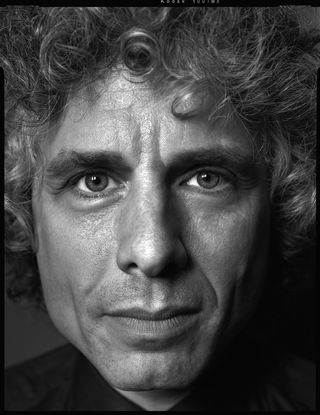
Science vs. the Humanities, Round III

Steven_pinker3_4x6_300dpi

In TNR, Steven Pinker, on one side:

In his commentary on my essay “Science is Not your Enemy,” Leon Wieseltier writes, “It is not for science to say whether science belongs in morality and politics and art.” I reply: It is not for Leon Wieseltier to say where science belongs. Good ideas can come from any source, and they must be evaluated on their cogency, not on the occupational clique of the people who originated them.

Wieseltier’s insistence that science should stay inside a box he has built for it and leave the weighty questions to philosophy is based on a fallacy. Yes, certain propositions are empirical, others logical or conceptual or normative; they should not be confused. But propositions are not academic disciplines. Science is not a listing of empirical facts, nor has philosophy ever confined itself to the non-empirical.

Why should either discipline stay inside Wieseltier’s sterile rooms? Does morality have nothing to do with the facts of human well-being, or with the source of human moral intuitions? Does political theory have nothing to learn from a better understanding of people’s inclinations to cooperate, aggress, hoard, share, work, empathize, or submit to authority? Is art really independent of language, perception, memory, emotion? If not, and if scientists have made discoveries about these faculties which go beyond received wisdom, why isn’t it for them to say that these ideas belong in any sophisticated discussion of these topics?

And Leon Wieseltier on the other:

What Pinker cannot bring himself to accept is that his beloved sciences, even when they do shed some light on aspects of art and literature, may shed little light and—for the purpose of understanding meaning (Pinker’s scare quotes around “meaning” may indicate a scare)—unexciting or inconsequential light. I gave the examples of the chemical analysis of a Chardin painting and the linguistic analysis of a Baudelaire poem. Many other examples could be given. “The theory of parent-offspring conflict”—I hope the grants for that particular breakthrough were not too large—is quite superfluous for the explication of Turgenev or Gosse. Nothing in the physical world, in the world of the senses, in the world of experience, can be immune from or indifferent to the categories of the sciences; but there are contexts in which scientific analysis may be trivial. That is not to say that science is trivial, obviously. But the belief that science is supreme in all the contexts, or that it has the last word on all the contexts, or that all the contexts await the attentions of science to be properly understood—that is an idolatry of science, or scientism. Pinker is wrong: I am not censoring scientists. They can say anything they want. But everything they say may not be met with grateful jubilation. So let the scientists in—they are already swarming in—to the humanities, but not as saviors or as superiors. And those swaggering scientists about whose intentions Pinker wants humanists to “relax”: they had better prepare themselves for a mixed reception over here, because over here the gold they bring may be dross.

More here. (Also see Daniel Dennett's comments on the earlier round of Pinker v. Wieseltier over at Edge.)

The Writer as Reader: Melville and his Marginalia

Moby_dick-243x366

William Giraldi in The LA Review of Books:

Melville remains one of the best American examples of how every important writer is foremost an indefatigable reader of golden books, someone who kneels at the altar of literature not only for wisdom, sustenance, and emotional enlargement, but with the crucial intent of filching fire from the gods.

How might Melville react to today's writers' conferences and creative writing workshops in which so many have no usable knowledge of literary tradition and are mostly mere weekend readers of in-vogue books? An untold number of Americans will finish a book manuscript this year, and the mind-numbing majority of them will be confected by nonreaders. How can a nonreader imagine himself an author, the creator of an artifact that he himself admittedly would have no interest in? Can you fathom an architect who's not fond of impressive buildings, or a violinist who has never listened to music? The erroneous assumption among the multitude is that writing doesn't demand specialized skills. In The War Against Cliché, Martin Amis offers this explanation why so many wish to “join in” the game of literature: “Because words (unlike palettes and pianos) lead a double life: we all have a competence.”

The Austrian journalist Karl Kraus, an aphorist as scathingly accurate as Oscar Wilde and H.L. Mencken, once quipped: “So many people write because they lack the character not to.” By “character” Kraus meant the good sense to know that not every story is worth telling; not everyone can muster the intellectual, emotional, and narrative equipment needed to succeed as a novelist. But the abracadabra of the internet has transformed us into a society of berserk scribblers; now anyone can have a public voice and spew his middling stories and thoughts at will. Forget that blog is just one letter away from bog, or that the passel of burgeoning “literary” websites is largely a harvest of inanity with only the most tenuous hold on actual literature. Our capacity for untamed, ceaseless communication has convinced us that we have something priceless to say.

More here.

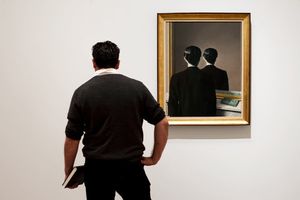
There’s More Than Meets the Eye: A René Magritte Survey

Holland Cottor in The New York Times:

MagOh, no, I thought when I heard that the Museum of Modern Art’s big fall show was a René Magritte survey. Dozens of undersung modernist painters, many of them women, on at least five continents, have never had a New York moment, and here we’re getting an artist we practically can’t avoid. The pipe; the giant eye; the choo-choo in the fireplace. As it turns out, “Magritte: The Mystery of the Ordinary, 1926-1938,” which opens at MoMA on Saturday, is good solid fun, because Magritte is solid and fun. There’s no mystery about why he’s so popular. His paint-by-numbers illustrational mode reads loud and clear from across a room — a good thing, as the exhibition galleries are sure to be jammed — and reproduces faultlessly, even on a cellphone screen. And he had ideas. He was a sophisticated trickster, a bourgeois gentilhomme with a geek inside, hacking into everyday life and planting little weirdness bugs: legs sprouting from shirt collars, rain falling upward, words having lives of their own. He was an attention-grabber with one gift, but a crucial one: for puzzle-making. You may not get, at first glance, what’s going on in his paintings, but you get that there’s something to get. So you look again. And again. Which is, of course, a marketer’s dream.

One thing’s for sure: We’re unlikely ever to see Magritte look better than he does in the MoMA show. Its organizers, Anne Umland, a curator of painting and drawing at the museum, and Danielle Johnson, a curatorial assistant, have zeroed in on a single — and I would say the only — consistently fresh and interesting decade in his long career, when he was inventing the artist he wanted to be and when his art was all over the place in a good way: witty, nasty, brilliant and bad at the same time.

More here. (Note: Saw the show. Loved it. Recommend highly.)

What are the rules of polygamy?

Julia Layton in How Stuff Works:

Rules-polygamy-1Plural marriage is as old as the Bible. Abraham and Jacob each had more than one wife. King David had six. King Solomon had 700 (not to mention 300 concubines). Solomon lost God's favor when he married women who did not give up idolatry, David when he sent a woman's husband to the front lines so he could marry her. Whether ancient or modern, polygamous or monogamous, marriage has rules. There may be ages and genders to consider. In early America, there were races to consider. Often, those considerations draw on religious beliefs: The Quran allows a man to take up to four wives. In Fundamentalist Mormonism, there is no set limit to the number of wives in one marriage. Joseph Smith, the Mormon Prophet who first delivered God's directive that Mormons practice plural marriage, ultimately took dozens of wives.

More here.

Sunday Poem

Dream Tales From the Barn

The white rooster is too new at this,
too newly glorious, victorious, to notice
how the west wind has flattened
its hand against the barnboards.

Yesterday's hero, named Choochoo,
still flaunting the sheen of his plumage
minus the prize green tail feathers, waiting
for his red crest to rise bravely
from the ashes of frostbite,
has taken it all in, flat wind and flimsy wood,
but he's too busy stewing about the hens
gone over to the other side, and the bald spot
on his back pecked larger by the day.

The flea-bitten brown cock who never stood a chance,
never sees the light of day, sits drilled into his lonely corner,
smugly aware of the wind's highly organized goings-on
cheering for it in his sad, airless heart, waiting
for the barn to cave in on a wild feathered frenzy,
waiting for the dust to settle, one chance in three.
.

by Ellen Doré Watson
from We live in Bodies
Alice James Books 1997

Rafiq Kathwari wins Kavanagh poetry award

From the Irish Times:

RafiqThe winner of this year’s Patrick Kavanagh Poetry Award is Rafiq Kathwari, who lives in Omeath, Co Louth.

He graduated from the University of Kashmir in 1969 before studying at the New University in New York and Columbia University. Most of his working life has been spent with Ethan Allen, a large manufacturer and retailer of home furnishings based in the United States. He has also worked as photojournalist. Mr Kathwari has published poems in print and online in the US, Ireland and Asia.

More here.

Saturday, September 28, 2013

Building India’s “Shock City of the Twentieth Century” from the Top Down

Ahmedebad

Samantha Christiansen in Berfrois reviews Howard Spodek's Ahmedabad: Shock City of Twentieth-Century India:

The field of South Asian urban history has a rich history of examining India’s major urban centers. Numerous astute studies of Delhi, Bombay (Mumbai), and Calcutta (Kolkata), for example, have contributed to our understanding of not only the rapid urbanization (and later suburbanization, as explored in the remarkable collection of essays that appeared in a recent special edition of Urban History [February 2012]) of the subcontinent, but the human and economic development that has shaped the region as well.[1] Yet while the field is rich, there are noticeable silences around relatively large swaths of the region. Cities outside of the Indian national border, such as Karachi or Dhaka, rest quietly in the periphery of the historiography; others within the border, such as Ahmedabad, while mentioned in virtually all historical discussions of the subcontinent (being the site of Mahatma Gandhi’s ashram after all), have received little focused attention. Howard Spodek’s Ahmedabad thus provides an important contribution to the field as both an examination of a place conspicuously underrepresented in the urban history of the region and as an excellent piece of urban history that not only greatly informs our understanding of South Asian development, but also has application to a number of cities globally.

Spodek presents a compelling sketch of the last hundred or so years in a city that has been called the “Manchester of India.” In Spodek’s presentation of the city, we see a microcosm of some of India’s major political, economic, and social trajectories: the rise of Gandhi and the independence movement, the drive for modernity and industrialization in postcolonial India, the collapse of the labor unions and the restructuring of the economy within new global markets, and struggles with communal violence and corruption. Spodek successfully balances his portrayal of a city shaped by a concentrated body of power elites within a larger global context, placing Ahmedabad at the center, but recognizing the external forces playing out in the process. In this way, as a case study in urban history, Ahmedabad is instructive both in content and method.

More here.