being a medical actor

Article_jamisonLeslie Jamison at The Believer:

My job title is Medical Actor, which means I play sick. I get paid by the hour. Medical students guess my maladies. I’m called a Standardized Patient, which means I act toward the norms of my disorders. I’m standardized-lingo SP for short. I’m fluent in the symptoms of preeclampsia and asthma and appendicitis. I play a mom whose baby has blue lips.

Medical acting works like this: you get a script and a paper gown. You get $13.50 an hour. Our scripts are ten to twelve pages long. They outline what’s wrong with us—not just what hurts but how to express it. They tell us how much to give away, and when. We are supposed to unfurl the answers according to specific protocols. The scripts dig deep into our fictive lives: the ages of our children and the diseases of our parents, the names of our husbands’ real-estate and graphic-design firms, the amount of weight we’ve lost in the past year, the amount of alcohol we drink each week.

My specialty case is Stephanie Phillips, a twenty-three-year-old who suffers from something called conversion disorder.

more here.
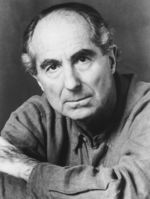
cynthia haven chats with philip roth

Roth4-771x1024Cynthia Haven and Philip Roth at The Book Haven:

Haven: Many consider you the preeminent Jewish American writer. You told one interviewer, however, “The epithet ‘American Jewish writer’ has no meaning for me. If I’m not an American, I’m nothing.” You seem to be so much both. Can you say a little more about your rejection of that description?

Roth: ”An American-Jewish writer” is an inaccurate if not also a sentimental description, and entirely misses the point. The novelist’s obsession, moment by moment, is with language: finding the right next word. For me, as for Cheever, DeLillo, Erdrich, Oates, Stone, Styron and Updike, the right next word is an American-English word. I flow or I don’t flow in American English. I get it right or I get it wrong in American English. Even if I wrote in Hebrew or Yiddish I would not be a Jewish writer. I would be a Hebrew writer or a Yiddish writer. The American republic is 238 years old. My family has been here 120 years or for just more than half of America’s existence. They arrived during the second term of President Grover Cleveland, only 17 years after the end of Reconstruction. Civil War veterans were in their 50s. Mark Twain was alive. Sarah Orne Jewettwas alive. Henry Adams was alive. All were in their prime. Walt Whitman was dead just two years. Babe Ruth hadn’t been born. If I don’t measure up as an American writer, at least leave me to my delusion.

more here.

why bach moves us

Stauffer_1-022014_jpg_250x1185_q85George B. Stauffer at the New York Review of Books:

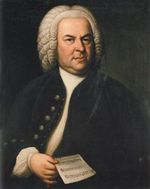
Just how Bach managed to express the inexpressible, especially with regard to death, and what life experiences stood behind his compositional decisions are at the center of a lively new book by the distinguished British conductor John Eliot Gardiner. Stepping in as president of the Leipzig Bach Archive at the beginning of this year, Gardiner has devoted his life to the performance of Bach’s vocal works (he has conducted them all), and the biographical gaps he seeks to close in his lengthy study have perplexed Bach scholars for more than two hundred years.

Unlike Mozart, Beethoven, and other classical composers for whom personal letters abound, Bach left behind little correspondence. He never wrote an autobiographical sketch, even though he was invited to do so several times, and in only three instances—a job inquiry to an old school chum, a concerned exchange with town officials over the misdemeanors of his son Johann Gottfried Bernhard, and underlinings and marginalia in his Calov Bible—does he offer a glimpse of his inner self. All the rest must be pieced together from council records, pay receipts, anecdotes, brief printed notices, a carefully worded obituary, and other scraps of information. Bach’s character has remained largely hidden from view.

more here.

Genetic determinism: why we never learn—and why it matters

Nathaniel Comfort in Genotopia:

Human-hamster-wheelHere it is, 2014, and we have “Is the will to work out genetically determined?,” by Bruce Grierson in Pacific Standard (“The Science of Society”).

Spoiler: No.

The story’s protagonist is a skinny, twitchy mouse named Dean who lives in a cage in a mouse colony at UC Riverside. Dean runs on his exercise wheel incessantly—up to 31 km per night. He is the product of a breeding experiment by the biologist Ted Garland, who selected mice for the tendency to run on a wheel for 70 generations. Garland speculates that Dean is physically addicted to running—that he gets a dopamine surge that he just can’t get enough of.

Addiction theory long ago embraced the idea that behaviors such as exercise, eating, or gambling may have similar effects on the brain as dependence-forming drugs such as heroin or cocaine. I have no beef with that, beyond irritation at the tenuous link between a running captive mouse to a human junkie. What’s troubling here is the genetic determinism. My argument is about language, but it’s more than a linguistic quibble; there are significant social implications to the ways we talk and write about science. Science has the most cultural authority of any enterprise today—certainly more than the humanities or arts!. How we talk about it shapes society. Reducing a complex behavior to a single gene gives us blinders: it tends to turn social problems into molecular ones. As I’ve said before, molecular problems tend to have molecular solutions. The focus on genes and brain “wiring” tends to suggest pharmaceutical therapies.

More here.

Taliban’s rise in Karachi must be stopped

Rafia Zakaria in Al Jazeera:

Src.adapt.960.high.1391482153122There have been more than 80 terrorism-related deaths and about 46 reported injuries in 2014 in Karachi, Pakistan’s most populous metropolis. Most of the incidents tallied multiple fatalities and injuries, including police. In some cases, unidentified assailants ambushed busy intersections or desolate roads, leaving unrecognized after wreaking havoc. In other instances, bodies of victims were found abandoned in ditches. Some of the victims were killed en route to work in their cars by drive-by shooters. Others were attacked leaving mosques, and one victim was killed while selling peanuts on the streets.

The escalation in attacks reflects a significant strategic victory for the Pakistani Taliban. Their ability to target important officials and use attacks to terrorize a megacity shows their expansion and strength. The government, on the other hand, seems powerless to halt the mayhem or to provide the resources it needs to fight the Taliban in an urban battlefield. In a sign of their relative strengths, the Taliban announced on Saturday a five-member committee to pursue talks with the government but did not offer to halt the attacks as a condition. If the Taliban’s rise is to be contained, Pakistan needs to take urgent measures to stabilize Karachi.

More here.

First monkeys with customized mutations born

Helen Shen in Nature:

CrispThe ultimate potential of precision gene-editing techniques is beginning to be realised. Today, researchers in China report the first monkeys engineered with targeted mutations1, an achievement that could be a stepping stone to making more realistic research models of human diseases. Xingxu Huang, a geneticist at the Model Animal Research Center of Nanjing University in China, and his colleagues successfully engineered twin cynomolgus monkeys (Macaca fascicularis) with two targeted mutations using the CRISPR/Cas9 system — a technology that has taken the field of genetic engineering by storm in the past year. Researchers have leveraged the technique to disrupt genes in mice and rats2, 3, but until now none had succeeded in primates.

Previous attempts to genetically modify primates have relied on viral methods4, 5, which create mutations efficiently, but at unpredictable locations and in uncontrolled numbers. Prospects for primates brightened with the emergence of the CRISPR/Cas9 gene-editing system, which uses customizable snippets of RNA to guide the DNA-cutting enzyme Cas9 to the desired mutation site. Huang and his team first tested the technology in a monkey cell line, disrupting each of three genes with 10–25% success. Encouraged, the scientists subsequently targeted the three genes simultaneously in more than 180 single-celled monkey embryos. Ten pregnancies resulted from 83 embryos that were implanted, one of which led to the birth of a pair with mutations in two genes: Ppar-γ, which helps to regulate metabolism, and Rag1, which is involved in healthy immune function.

More here. (Note: CRISPR is one of three most important biologic discoveries of the last century.)

New York City Slave Uprising (1712)

From Blackpast.org:

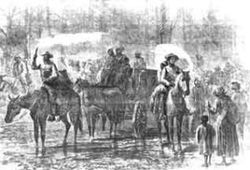
NYC_Slave_RevoltBetween twenty-five and fifty blacks congregated at midnight in New York City on April 6, 1712. With guns, swords and knives in hand the slaves first set fire to an outhouse then fired shots at several white slave owners, who had raced to scene to fight the fire. By the end of the night, nine whites were killed and six whites were injured. The next day the governor of New York ordered the New York and Westchester militias to “drive the island.” With the exception of six rebels who committed suicide before they were apprehended, all of the rebels were captured and punished with ferocity ranging from being burned alive, to being broken by a wheel.

But the swift punishment of the guilty was not enough to quell the concerns of slave owners and their political body. Within months, the New York Assembly passed “an act for preventing, suppressing and punishing the conspiracy and insurrection of Negroes and other slaves.” Masters were permitted to punish their slaves at their full discretion, “not extending to life or member.” Even the manumission of New York slaves was deterred by this bill; masters were required to pay two hundred pounds security to the government and a twenty-pound annuity to the freed slave. Despite these stringent laws, New York would escape slave rebellion for only twenty-nine years.

More here. (Note: One post every day throughout February will be dedicated to Black History Month.)

Monday, February 3, 2014

Perceptions

HV

Jaffer Kolb, Ang Li, Phoebe Springstubb. Horror Vacui, Lisbon Triennale 2013.

“Embedding architecture into critical economic systems was central to the installation Horror Vacui. The project paired local manufacturers with Autodesk to produce a large-scale façade made of thousands of tiles—each a photograph contributed by the public. From afar, the tiles aggregated as pixels into a reproduced image of the building façade behind. Up close, they could be read individually as discrete stories, an idea rooted in Lisbon’s blue-and-white tile murals depicting heroic narratives …”

From Wired UK: “The name (“fear of openness”) comes from a 15th century technique of making historical blue-and-white murals out of painted tiles. For a modern interpretation, Kolb and his associates replaced the façade with crowdsourced photos of Lisbon's interiors and exteriors printed on tiels. 'It was no longer about one man and one conquest, but about thousands of different stories which together form a kind of meta-mural', says Kolb.”

Valentina Ciuffi in Abitare: “from close-up the façade of the building, the ceramic skin that follows its external forms, looked at azulejo after azulejo, turns out to be a controlled journey into the “belly” of a thousand different buildings. This shift towards the intimacy of spaces is an even stronger spur to personal narration, a stimulus to interpret, to relate to the city in a less passive and perhaps in an “emotional” way. Something that Michel de Certeau would have loved to find in his streets.”

With permission from Jaffer Kolb.

Sunday, February 2, 2014

Jeopardy’s Controversial New Champion Is Using Game Theory To Win Big

Arthur-chu-jeopardy

Using game theory for actual games?!?!?… Eric Levenson over at Business Insider's The Wire (via Farhad Manjoo):

It's Arthur's [Chu] in-game strategy of searching for the Daily Double that has made him such a target. Typically, contestants choose a single category and progressively move from the lowest amount up to the highest, giving viewers an easy-to-understand escalation of difficulty. But Arthur has his sights solely set on finding those hidden Daily Doubles, which are usually located on the three highest-paying rungs in the categories (the category itself is random). That means, rather than building up in difficulty, he begins at the most difficult questions. Once the two most difficult questions have been taken off the board in one column, he quickly jumps to another category. It's a grating experience for the viewer, who isn't given enough to time to get in a rhythm or fully comprehend the new subject area. And it makes for ugly, scattered boards, like above.

However, Wednesday's game showed the benefits of that strategy. Arthur's searching was rewarded with all three of the game's Daily Doubles. Arthur was particularly fond of the “true” Daily Double, wagering all his money the first time (he lost it all) but quickly recovering with a massive wager later on another Daily Double. While most contestants are hesitant to go all-or-nothing, Arthur is happily taking those calculated risks.

One Daily Double, in which he wagered just $5, was particularly strange. Arthur's searching landed him a Daily Double in a sports category, a topic he knew nothing about. (Ever the joker, he tweeted he'd rather have sex with his wife than learn about sports). Most contestants will avoid their topics of weakness, but not Arthur. Instead, he wagered just $5 on the sports question, effectively making its specifics irrelevant. Trebek and the audience giggled, and when the question came, Arthur immediately blurted out “I don't know.” But that wasn't a waste of a Daily Double, as he kept that question out of the hands of the other contestants.

More here.

Social Animals: Pondering the limits of anthropomorphism

Wray Herbert in The Weekly Standard:

BOB.v19-21.Feb10.Herbert.Getty_I could, if I chose to, make this sentence go on and on and on—forever, really. Don’t worry: I’m not going to do that, but it’s noteworthy that I could. In fact, I have the ability to write a sentence that’s longer than the longest sentence previously written, just by adding another relative clause, then another, and so on.

That may seem like a cheesy way to play the longest-sentence game, but it’s actually linguistically clever—very clever. The longest sentence game is not just a parlor trick. It demonstrates an important linguistic principle. The fact that I can think to do this, and that you can understand what I am doing, reveals characteristics of language and of mind that are unique to humans. With a finite store of symbols, I am generating one novel combination after another, all of which you can more or less comprehend. I’m counting on you to understand what I’ve written here, which is in itself remarkable. My idea is now in your head, and, importantly, that pleases me.

I, in turn, am taking these ideas from the mind of Thomas Suddendorf, a psychologist at the University of Queensland, Australia, and author of this fine new book. Even though I have never met Suddendorf,and have never been even close to Australia, I can nevertheless comprehend his thinking and share it with you. Suddendorf’s main idea is that we humans are capable of cognitive feats to which no other animal—not even our impressive cousin the ape—comes close. We are able to imagine endless situations, to create scenarios and narratives about distant places, including the past and future. And, equally important, we have an insatiable drive to share those imaginings with other scenario-building minds. Our uniqueness, the author argues, rests on these two fundamental traits, but plays out in various domains of the human mind.

More here.

No Black Holes? Here’s What Stephen Hawking Actually Said

Laura Dattaro in Popular Mechanics:

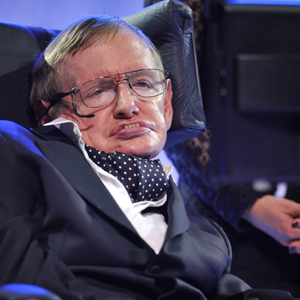
Hawking-mdnA four-page scientific paper about a theoretical physics question has been making the media rounds this week. That should be no surprise, though, given the author—Stephen Hawking—and the claim he appears to make: There are no black holes. But that's far from the end of the story.

The study, published on the open-access research site arXiv, does, in fact, include the words “there are no black holes.” But the sentence continues on: “—in the sense of regimes from which light can't escape to infinity. There are, however, apparent horizons which persist for a period of time.”

The problem of the black hole's event horizon, the boundary beyond which nothing can escape, is one Hawking raised in the 1970s. That's when he discovered, contrary to popular belief of the time, that black holes radiate energy. This means there is no such thing as a black hole from which nothing can escape.

So what is actually new about Hawking's latest paper?

“That's a really good question,” says Don Marolf, a theoretical physicist who studies black holes at the University of California, Santa Barbara. “Most people that I know that read the paper see this as an expression of his opinion on a current debate without necessarily adding new scientific ingredients.”

The debate comes down to a deceivingly simple question that has all kinds of implications for understanding the nature of the universe: If you drop information into a black hole, can you ever get it back?

More here.

William Dalrymple on Hamid Karzai

Isaac Chotiner in The New Republic:

ScreenHunter_480 Feb. 02 17.24To discuss Karzai’s tenure in office—set to end this year—and help make sense of the current disagreements between him and the Obama administration, I spoke on the phone with William Dalrymple, who recently interviewed Karzai for a profile in The New York Times Magazine, and who has written several books on Afghanistan and South Asia, the most recent of which is Return of a King: The Battle for Afghanistan, 1839-42. We discussed Karzai’s mental state, his anger at the United States, and what will happen after American troops depart.

Isaac Chotiner: What game is Karzai playing?

William Dalrymple: I think he’s actually playing a much cleverer game than he’s given credit for. It’s very clear. He knows the United States needs him so he doesn’t have to play to an American audience. America has invested too much in Afghanistan to just turn back and cut its losses–although the Obama administration is showing every sign of wanting to get out as fast as it possibly can. Therefore his concern is to leave a legacy, which he views as divorcing himself as much as he possibly can from the United States, while still gaining access to American money and arms.

More here.

Stem cell ‘major discovery’ claimed

James Gallagher at the BBC:

Stem_cell_research-splScientists in Japan showed stem cells can now be made quickly just by dipping blood cells into acid.

Stem cells can transform into any tissue and are already being trialled for healing the eye, heart and brain.

The latest development, published in the journal Nature, could make the technology cheaper, faster and safer.

The human body is built of cells with a specific role – nerve cells, liver cells, muscle cells – and that role is fixed.

However, stem cells can become any other type of cell, and they have become a major field of research in medicine for their potential to regenerate the body.

Embryos are one, ethically charged, source of stem cells. Nobel prize winning research also showed that skin cells could be “genetically reprogrammed” to become stem cells (termed induced pluripotent stem cells).

More here.

Mai Inspires Opera in Manhattan

Fabrice Coffrini in Newsweek Pakistan:

MaiTo those who complain that opera is an elitist indulgence served up to snobs in dinner jackets, New York’s latest world premiere may come as something of a shock. Inspired by the horrific gang rape of illiterate Pakistani woman Mukhtaran Mai on orders of a village council, Thumbprint is a $150,000 production currently having an eight-night run in a basement theater in Manhattan. One of the most infamous sex crimes against women in South Asia, Mai’s 2002 rape, survival and metamorphosis into an international rights icon is as far removed from opera-house pomp as possible. It may have earned a less-than-glowing review from The New York Times—“muted,” “not quite enough”—but the score is an alluring blend of South Asian and Western music, and the production starkly innovative. With a simple backcloth doubling up as a film projection screen, a few chairs and charpoys, the simple but powerful staging evokes the heat, the dust and the traditions of a Pakistani village. Mai, now in her 40s, was raped to avenge her 12-year-old brother’s alleged impropriety with a woman from a rival clan. Six men were sentenced to death for her rape in a landmark ruling. But five were later acquitted and the main culprit had his sentence reduced to life imprisonment: facts the opera omits. There is no staged recreation of the rape, which is instead portrayed by muffled shrieks of terror interspersed with a knife slashing open bags of sand.

Mai’s story has fresh resonance since the brutal gang rape of a student on a New Delhi bus and her death a little over a year ago sparked international outrage about the levels of violence against women in India

More here.