
Category: Recommended Reading
Why Language and Thought Resemble Russian Dolls
Gary Stix in Scientific American:
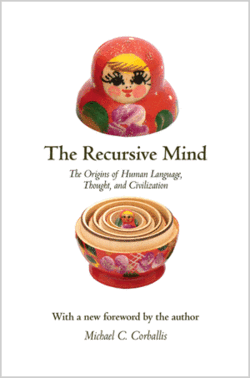
Recursion can refer to a procedure that references itself or similar procedures, or to a structure that contains an embedded structure of the same type. It is important because it allows one to build entities of theoretically unlimited complexity by progressively embedding structures within structures.
Some scholars think that language may be built on the use of recursive building blocks. Isn’t that a fundamental tenet of the modern linguistics pioneered by Noam Chomsky.
Yes, Chomsky’s view of language is that it is recursive, and this gives language its potential for infinite complexity—or what he has also called “discrete infinity.” In recent formulations, this is achieved through an “unbounded Merge,” in which elements are merged, and the merged elements can then themselves be merged—a process that can be repeated without bounds. To Chomsky, though, language is essentially internal thought, a mental monologue, known as I-language, and not a means of communication. The structure of language is therefore a by-product of internal thought. This implies a common structure, called “universal grammar,” that underlies all languages. But there is growing doubt as to whether such a structure exists.
More here.
Friday Poem
Bull Song
For me there was no audience
no brass music either,
only wet dust, the cheers
buzzing at me like flies,
like flies roaring.
I stood dizzied
with sun and anger,
neck muscle cut,
blood falling from the gouged shoulder.
Who brought me here
to fight against walls and blankets
and the gods with sinews of red and silver
who flutter and evade?
I turn, and my horns
gore blackness.
A mistake, to have shut myself
in this cask skin,
four legs thrust out like posts.
I should have remained grass.
The flies rise and settle.
I exist, dragged, a bale
of lump flesh.
The gods are awarded
the useless parts of my body.
For them this finish,
this death of mine is a game:
not the fact or act
but the grace with which they disguise it
justifies them.
by Margaret Atwood
Thursday, May 8, 2014
Thomas Piketty answers David Brooks: The best-selling economist sounds off to Salon
Josh Eidelson in Salon:
David Leonhardt, in his New York Times Magazine essay on your book, writes that rather than a wealth tax, there’s “another, more politically plausible force that can disrupt [Piketty’s] first law of inequality: education. When a society becomes more educated, many of its less-wealthy citizens quickly acquire an ephemeral but nonetheless crucial form of capital — knowledge — that can bring enormous returns.” Do you share that view?
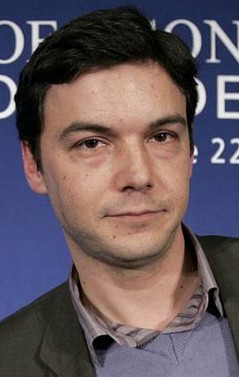
The question is, is that going to be sufficient?
…You need education but you also need progressive taxation.
It’s not an all-or-nothing solution. I think a lot can be done at the national level. We do already have progressive taxation of income, progressive taxation of inherited wealth, at the national level. We also have annual taxation of wealth at the national level. For instance, in the U.S. you have a pretty big property tax… Technically, it is perfectly possible to transform it into a progressive tax on net wealth…
The main difficulty is not so much to make it a global tax. The main difficulty is not international tax competition. The main difficulty is more internal political [obstacles]… Right now the property tax is a local tax, and so the federal government cannot do anything. You know, it was the same with the income tax one century ago.
So I don’t share the pessimistic view that a progressive wealth tax will never happen.
More here.
Concern for the Destiny of the Country: Indian Feminist Novels
Elen Turner in Critical Flame:
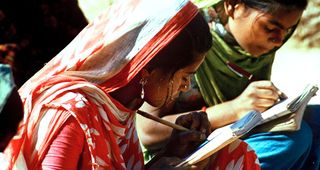
Qurratulain Hyder (1928-2007) wrote Mere Bhi Sanamkhane in 1947 at age nineteen. She was unusual in translating (or “transcreating,” the term she preferred,) many of her novels herself: Mere Bhi Sanamkhane was transcreated as My Temples, Too. The novel is set in Lucknow, long a cosmopolitan center with a combination of Muslim and Hindu inhabitants, in the lead-up to and aftermath of Indian Independence. Founded in 1775 when the Muslim nawabs of Avadh shifted court there, Lucknow had a large and well-educated Hindu middle-class. Though the monarchy fell to the British in 1856, the traditional feudal system that upheld high-cultural traditions (poetry, arts, and music) lasted until Independence in 1947. My Temples, Too depicts a post-Independence period of growing suspicion and animosity between religious groups, when large numbers of Punjabi refugees were entering Lucknow. Hyder’s novel documents the rapid disintegration of the city—and, by extension, India—as an ideal of Hindu-Muslim unity that would prove unattainable.
More here.
Examined Life: Martha Nussbaum
A Foreign Policy for the Left
Is there such a thing as a leftist foreign policy? What are the characteristic views of the left about the world abroad? When have leftists, rightly or wrongly, defended the use of force? The arguments about what to do in Syria have led me to ask these questions, but I am after a more general answer, looking not only at the left as it is today but also at the historical left. The questions aren’t easy—first, because there have been, and there are, many lefts; and second, because left views about foreign policy change more often than left views about domestic society. Relative consistency is the mark of leftism at home, but that’s definitely not true abroad. Still, it’s possible to make out a kind of default position and then to describe the various alternative positions and the arguments for and against them. I want to join those arguments and suggest why they have gone well, sometimes, and very badly at other times.
The basic position appears early in recorded history. I first discovered it when reading the biblical prophets, who have often been an inspiration to Western leftists. The prophets argued that if the Israelites obeyed the divine commandments, stopped grinding the faces of the poor, and established a just society, they would live in their land forever, safe against Assyrian and Babylonian imperialism.
more here.
Georges Simenon returns

What do “literary” novelists admire in Simenon? The combination of a positive and a negative, perhaps: a mixture of what he can do better than they, and of what he can get away with not doing. His admirable positives: swiftness of creation; swiftness of effect; clearly demarcated personal territory; intense atmosphere and resonant detail; knowledge of, and sympathy with, les petites gens; moral ambiguity; a usually baffling plot with a usually satisfactory denouement. As for his enviable negatives: Simenon got away with a very restricted and therefore very repetitive vocabulary (about 2,000 words, by his own estimation) – he didn’t want any reader to have to pause over a word, let alone reach for the dictionary. He kept his books very short, able to be read in one sitting, or (often) journey: none risks outstaying its welcome. He eschews all rhetorical effect – there is rarely more than one simile per book, and no metaphors, let alone anything approaching a symbol. There is text, but no subtext; there is plot but no subplot – or rather, what appears to be possible subplot usually ends up being part of the main plot. There are no literary or cultural allusions, and minimal reference to what is going on in the wider world of French politics, let alone the international arena. There is also – both admirable positive and enviable negative – no authorial presence, no authorial judgement, and no obvious moral signposts. Which helps make Simenon’s fiction remarkably like life.
Though his romans durs may be superior, it was the seventy-five Maigret novels that were best known during Simenon’s lifetime, and continue to be so.
more here.
Karl Ove Knausgaard’s epic struggle
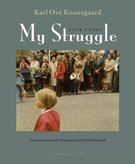
My Struggle,the celebrated six-volume novel (or memoir) by the Norwegian writer Karl Ove Knausgaard, is—like nearly all grand endeavors—one of those books that shouldn’t work, but somehow does. He finished the project in 2009 in his adopted homeland, Sweden, where it was both a best seller and a lightning rod for literary debate. Three volumes have now been translated in the United States. The novel draws explicitly from Knausgaard’s own life—the narrator is named Karl Ove Knausgaard—and uses the real names of his wife, children, parents, and friends. Nearly four thousand pages, it is packed with the kind of quotidian detail that is hardly the stuff of high drama: some one hundred pages on the teenage narrator trying to buy beer; long descriptions of the mechanics of cleaning house and of a fight with his wife over the dishes. Knausgaard has said he wrote My Struggle fast and without much revision. He is not averse to cliché, his metaphors are mixed (“His fury struck like a wave, it washed through the rooms, lashed at me, lashed and lashed and lashed at me”); he often gets “needlessly” bogged down in exposition about who is walking where and exactly how his mother turns the key in the ignition and backs out of the driveway. Scenes that seem as if they are building to a crescendo, making the reader worry (will his mother get in an accident?), often just stop. On the face of it, Knausgaard seems to be making every mistake a novelist is taught not to make.
In lesser hands, these qualities would strike readers as boring and self-indulgent, but My Struggle is a revolutionary novel that is highly approachable, even thrilling to read. The book feels like a masterpiece—one of those genuinely surprising works that alters the tradition it inherited.
more here.
Looking for convict heritage
Clare Anderson in Carceral Archipelago
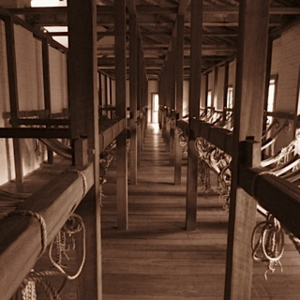
Convict hammocks at Hyde Park Barracks Museum. Photo: Eureka Henrich
These manifestations of convict heritage are indicative of my generation. By the 1980s, fuelled by a resurgence in family history, an embrace of the ‘new nationalism’ and the opening of state archives, Australians were discovering their convict ancestors anew – no longer shameful skeletons best kept in the closet, they could now be regarded as a badge of honour, or even as the founders of the nation (hence the naming of the iconic ferries). During the official celebration of the Bicentenary of British colonisation, convicts were even cast as the first migrants, credited with kicking off the ‘nation of immigrants’ in a similar fashion to the Mayflower pilgrims in America. But the government-choreographed 1988 celebrations were also marked by a profound collective unease. Could our convict ancestors be founders, as well as invaders? The gulf between stories of settler survival against the odds, and the mounting historical evidence of the violent dispossession that was part of that ‘survival’, could no longer be ignored or glossed over. As a result, the History I leant at school was vastly different to the previous generation of Australian schoolchildren. While explorers and empires still held sway, they were joined by other historical actors – workers, women, migrants and Indigenous Australians, each with a compelling claim to belonging in the story of the nation.
Since I began to research representations of transportation at convict heritage sites in Australia for the CArchipelago project, I’ve gained a new appreciation of the heritage I unknowingly soaked up as a child. As an Australian without direct ancestral links to convicts, I wonder whether I would feel differently if the connections were familial, as well as cultural. And what about international visitors to Australia – what kind of convict heritage do they encounter? And how has it changed over recent years? Heritage – or ‘things worth saving’, in David Lowenthal’s apt words – can encompass the tangible, such as places, and the intangible, such as songs; the visible, such as buildings, and the hidden, such as archaeological remains. But most importantly, the designation of ‘heritage’ significance infers an opinion, a ‘worth’, a judgement on the past and a construction of that past for a present audience or consumer. These constructions are constantly changing, making the study of convict heritage sites a fascinating window onto the ways that Australians have related to their carceral past and presented that past to others. And now is a particularly interesting time to conduct this research, as eleven of Australia’s historic places were in 2010 recognised by UNESCO as being of ‘outstanding universal value’. Encompassing colonial homesteads, probation stations, barracks, penitentiaries, female factories and coal mines, across New South Wales, Western Australia and Tasmania, these places now form the Australian Convict Sites World Heritage Property. I have been studying these sites and others from afar, combing through the writings of historians, archaeologists, tourism researchers and heritage practitioners to gain an overview of the main themes and debates in the field. A recent trip to Sydney afforded me the opportunity to experience two of these sites in person: Hyde Park Barracks, and the Old Great North Road on the Hawkesbury River. Both sites are included in the World Heritage listing, and both date from a similar period in the history of the colony, however they represent very different ‘experiences’ for a visitor, as I discovered.
Read the rest here.
first living organism that transmits added letters in DNA ‘alphabet’
From Scientific American:

The report on the achievement appears May 7, 2014, in an advance online publication of the journal Nature. Romesberg and his laboratory have been working since the late 1990s to find pairs of molecules that could serve as new, functional DNA bases — and, in principle, could code for proteins and organisms that have never existed before. The task hasn't been a simple one. Any functional new pair of DNA bases would have to bind with an affinity comparable to that of the natural nucleoside base-pairs adenine-thymine and cytosine-guanine. Such new bases also would have to line up stably alongside the natural bases in a zipper-like stretch of DNA. They would be required to unzip and re-zip smoothly when worked on by natural polymerase enzymes during DNA replication and transcription into RNA. And somehow these nucleoside interlopers would have to avoid being attacked and removed by natural DNA-repair mechanisms.
More here.
Mind Games: Making the case for an academic calling
Siva Vaidhyanathan in Bookforum:
That’s when I first began to recognize my calling as a scholar of the humanities—a vocation that these days is steeped in a corrosive identity crisis, seemingly never-ending job insecurities, and no small amount of wider cultural embarrassment. But from my outsider’s perch as a hitherto aimless humanities student rebounding from a dismaying false start to my career in the no-less-precarious field of journalism, this fugitive communion in song persuaded me, on some other-than-conscious level, that there was real joy to be had in the academic calling. And when I met with Professor Stott in his office after class, his ebullient description of his scholarly passions helped me grasp this crucial point more clearly.
More here.
Thursday Poem
The Dead Man Walking
They hail me as one living,
But don't they know
That I have died of late years,
Untombed although?
I am but a shape that stands here,
A pulseless mould,
A pale past picture, screening
Ashes gone cold.
Not at a minute's warning,
Not in a loud hour,
For me ceased Time's enchantments
In hall and bower.
There was no tragic transit,
No catch of breath,
When silent seasons inched me
On to this death ….
— A Troubadour-youth I rambled
With Life for lyre,
The beats of being raging
In me like fire.
But when I practised eyeing
The goal of men,
It iced me, and I perished
A little then.
When passed my friend, my kinsfolk,
Through the Last Door,
And left me standing bleakly,
I died yet more;
And when my Love's heart kindled
In hate of me,
Wherefore I knew not, died I
One more degree.
And if when I died fully
I cannot say,
And changed into the corpse-thing
I am to-day,
Yet is it that, though whiling
The time somehow
In walking, talking, smiling,
Wednesday, May 7, 2014
Why Neil deGrasse Tyson is a philistine
Damon Linker in The Week:

But now it's been definitively demonstrated by a recent interview in which Tyson sweepingly dismisses the entire history of philosophy. Actually, he doesn't just dismiss it. He goes much further — to argue that undergraduates should actively avoid studying philosophy at all. Because, apparently, asking too many questions “can really mess you up.”
Yes, he really did say that. Go ahead, listen for yourself, beginning at 20:19 — and behold the spectacle of an otherwise intelligent man and gifted teacher sounding every bit as anti-intellectual as a corporate middle manager or used-car salesman. He proudly proclaims his irritation with “asking deep questions” that lead to a “pointless delay in your progress” in tackling “this whole big world of unknowns out there.” When a scientist encounters someone inclined to think philosophically, his response should be to say, “I'm moving on, I'm leaving you behind, and you can't even cross the street because you're distracted by deep questions you've asked of yourself. I don't have time for that.”
“I don't have time for that.”
With these words, Tyson shows he's very much a 21st-century American, living in a perpetual state of irritated impatience and anxious agitation. Don't waste your time with philosophy! (And, one presumes, literature, history, the arts, or religion.) Only science will get you where you want to go! It gets results! Go for it! Hurry up! Don't be left behind! Progress awaits!
More here.
The Moody Blues: Ride my see-saw
For Azra and Sughra:
Peter Matthiessen’s Orientalism
Joel Whitney in the Boston Review:
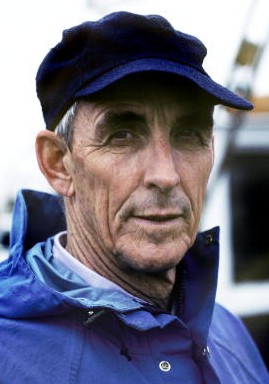
On September 28, 1973, Matthiessen sets out from Pokhara, Nepal for a two-month trek in the mountains, accompanied by the cranky field biologist George Schaller. They plan to observe the blue sheep’s fall rut and, if they’re lucky, glimpse the very rare snow leopard. In truth, though, Matthiessen and Schaller, like hordes of explorers before them, are searching for more than the elusive cat: a nebulous native authenticity, an encounter with pure life, whether in wilderness or in “the country folk,” as Matthiessen calls them.
When Matthiessen turns his gaze on some of these country folk—the Sherpa porters traveling with him—the book’s difficulties begin. He repeatedly projects apprehensions and urges onto them. He imagines that they wish him hurt or dead and fantasizes about holding them by their pigtails, beating them into bloody submission.
Much of this could be written off as an attempt to leaven the book’s Buddhist mystique with a bit of Western muscle. But it is an incessant thread that bespeaks deeply woven cultural tendencies. The porters are fellow Buddhists who, by Matthiessen’s own account, do their tasks well, with hospitality and good cheer. Yet he dubs one in particular a “red-faced devil,” a “yellow-eyed” “evil monk,” a “sorcerer.” The rest are “childlike” or “unsophisticated.” Matthiessen reveals himself as part of a long tradition of Orientalist writers who see themselves as gods, saviors, and knowledge bearers.
More here.
Unprepared: Rob Lowe on sending his son off to college
Rob Lowe in Slate:

I have been emotionally blindsided. I know that this is a rite many have been through, that this is nothing unique. I know that this is all good news; my son will go to a great school, something we as a family have worked hard at for many years. I know that this is his finest hour. But looking at his suitcases on his bed, his New England Patriots posters on the wall, and his dog watching him pack, sends me out of the room to a hidden corner where I can’t stop crying.
Through the grief I feel a rising embarrassment. “Jesus Christ, pull yourself together, man!” I tell myself. There are parents sending their kids off to battle zones, or putting them into rehabs and many other more legitimately emotional situations, all over our country. How dare I feel so shattered? What the hell is going on?
One of the great gifts of my life has been having my two boys and, through them, exploring the mysterious, complicated and charged relationship between fathers and sons.
More here.
Wednesday Poem
Vanity Flare
Don’t get me wrong: I know
that knowledge is power,
that mystery’s water,
that hunger makes
a gargantuan
lover,
and yes, I’ve drunk
of the river Lethe,
from the breath of the Celts,
from the echo of
the bugling elk,
and yet,
alas,
here I be,
small and twee,
all liquored up
on song and love,
hard as rails
and light as air,
expecting the heavens
to throw down a flare,
to send in the clowns,
to burn a bush,
strike up the sea,
anything
that might mean
those cloudy bastards
have noticed me.
.
by Wendy Videlock
from Poetry, Vol. 193, No. 5, February
publisher: Poetry, Chicago, 2009
the return of theology
THIS IS AN ODD TIME in history to be reading and discussing theology. On the one hand, Richard Dawkins — a rock star, if atheists ever had one — avers with the utmost confidence that no sane, educated person could possibly take theology seriously. Thinking about God, for him — and a significant segment of the educated classes — is akin to mulling over the existence of unicorns. The only measure of truth is empirical observation: if we can’t observe it, it ain’t real.
On the other hand, some of the most brilliant secular minds of our time have stumbled on theology and discovered it to be an indispensable tool. These late-comers to theology see in it an important antidote to the ethical and political cul-de-sac brought about by the past century’s fashionable intellectual bandwagons. Ironically, just as organized religion has effectively collapsed in Western Europe, some of the most important European thinkers have been insisting that theology offers invaluable critical resources for thinking about the most vexing problems we face today.
For many of these philosophers, the turn to theology is not motivated by a newfound faith (most are self-declared atheists), but rather a recognition that theological questioning allows us access to ways of thinking that conventional philosophy might otherwise foreclose. Thinkers such as Giorgio Agamben, Jean-Luc Nancy, Simon Critchley, and Slavoj Žižek have defended, sometimes vociferously, the necessity to engage with theology.
more here.
the descent of the celebrity profile
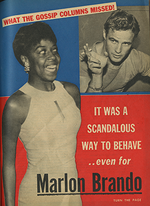
One didn’t have to be friends with the stars to write about them. Rex Reed’s “Do You Sleep in the Nude?,” a profile of aging star Ava Gardner, serves as the lead essay to The New Journalismcollection. Much like Capote’s profile of Brando, it flips the genre on its head. Reed describes her “Ava elbows” and declares her “gloriously, divinely barefoot,” claiming that “at forty-four, she is still one of the most beautiful women in the world.” But Reed also manages to make her look like what today’s gossip columnists would call a “hot mess.” After kicking her press agent out of the room (“Out! I don’t need press agents!”) she queries Reed: “You do drink—right, baby? The last buggar who came to see me had the gout and wouldn’t touch a drop.” She then pours herself a “champagne glass full of cognac with another champagne glass full of Dom Perignon, which she drinks successively, refills, and sips slowly like syrup through a straw.”
The whirlwind interaction that follows—in which several men come to call and the assembled group leaves the hotel room, avoids swarms of autograph-seekers, and retreats to the Regency Hotel bar—seems to oscillate, dreamily, between Gardner’s cynical analysis of her career and palpable evidence of her charisma. When Reed asks of her tenure at MGM, she responds, “Christ, after seventeen years of slavery, you can ask that question? I hated it, honey. I mean, I’m not exactly stupid or without feeling, and they tried to sell me like a prize hog. They also tried to make me into something I’m not then and never could be.”
more here.