Nobel acceptance speech of Nelson Mandela

From Pantagraph:

NmI am indeed truly humbled to be standing here today to receive this year’s Nobel Peace Prize. I extend my heartfelt thanks to the Norwegian Nobel Committee for elevating us to the status of a Nobel Peace Prize winner. I would also like to take this opportunity to congratulate my compatriot and fellow laureate, State President F.W. de Klerk, on his receipt of this high honor. Together, we join two distinguished South Africans, the late Chief Albert Luthuli and His Grace Archbishop Desmond Tutu, to whose seminal contributions to the peaceful struggle against the evil system of apartheid you paid well-deserved tribute by awarding them the Nobel Peace Prize.

It will not be presumptuous of us if we also add, among our predecessors, the name of another outstanding Nobel Peace Prize winner, the late African-American statesman and internationalist, the Rev Martin Luther King Jr. He, too, grappled with and died in the effort to make a contribution to the just solution of the same great issues of the day which we have had to face as South Africans. We speak here of the challenge of the dichotomies of war and peace, violence and non-violence, racism and human dignity, oppression and repression and liberty and human rights, poverty and freedom from want. We stand here today as nothing more than a representative of the millions of our people who dared to rise up against a social system whose very essence is war, violence, racism, oppression, repression and the impoverishment of an entire people.

More here.

reading Giacomo Leopardi’s Zibaldone

Leopardi,_Giacomo_(1798-1837)_-_ritr._A_Ferrazzi,_Recanati,_casa_LeopardiJoshua Cohen at Harper's Magazine:

Leopardi regards paganism’s lapses as purer than Christianity’s because at least pagans who act unethically are acting naturally, not contradictorily. At least the Greek and Roman gods were humane, he maintains, in that they felt human passions, even to the point of meddling in our affairs; they patronized, and were influenced by, our art. If you died as a Greek or Roman you took your memories and emotions with you into a sort of exile. This was infinitely preferable to the Christian heaven, which cast life on earth as the exile, from which redemption was a calculation, or a transaction. In the Roman Catholic rite Hell became avoidable via a formalized penance, the sacrament of confession. Each dead person’s soul, however, had to be judged for assignation — this suggested a Purgatory: an amorphous transitional state, until the Medieval Church deemed it a locatable space or place because the fate of dead unbaptized newborns required the accommodation of a Limbo, located adjacent. The next logical provision was time, and though each sin earned its sinner a designated wait, the popes offered swifter passage for a price: indulgences. To Leopardi, each innovation merely distanced humanity farther from the true religion, which wasn’t the one Constantine adopted, or the one Jesus bled for, or even Olympus’s — but “certainty,” “negligence,” unicity.

more here.

on the subject of death

Albrecht_Durer_-_Knight_Death_and_DevilJenny Diski at berfrois:

On the subject of death I’m inclined to turn to my two favourite writers. Vladimir Nabokov beginsSpeak Memory, an autobiography of sorts, with the kind of banality any reader of his knows better than to get cosy with: ‘The cradle rocks above an abyss and common sense tells us that our existence is but a brief crack of light between two eternities of darkness.’ Given how much respect he had for common sense we shouldn’t be anything but wary. Before the end of the paragraph the old ‘chronophobiac’ (though he claimed it to be ‘a young chronophobiac of his acquaintance’) is trembling at the memory of a home movie of his mother waving from a window just weeks before he was born (‘some mysterious farewell’), and most frightening, ‘the sight of a brand-new baby carriage standing there on the porch, with the smug, encroaching air of a coffin’. Then: ‘I rebel against this state of affairs. I feel the urge to take my rebellion outside and picket nature’. Quite right, and common sense go hang, I say.

more here.

Two new books wrestle with Mailer’s myths and his legacy

Cover00Christian Lorentzen at Bookforum:

Mailer’s novels—there are twelve of them—resist easy groupings. No logic connects them, only the circumstances of their author’s working life. There were four books he conceived of as the first parts of epic series he never got around to completing. There were two he was able to dash off in the course of a summer, Why Are We in Vietnam? (1967) and Tough Guys Don’t Dance (1984)—he considered them “gifts.” Another resulted from a commission from Esquire to write a novel for serialization. And one, Of Women and Their Elegance, indeed amounted to “a quick turn for his creditors,” or in this case the swift fulfillment of an outstanding British publishing contract. His fame allowed him to be something of a literary hustler, writing his first drafts in public, promising interviewers books that would never be written. Novelists are cannier than that today, but few of them are as well paid. Starting in the 1990s, Mailer received $30,000 a month from Random House. With more than a dozen dependents, he still needed another $300,000 yearly on the side (speaking engagements, teleplays, consulting on films) to keep the Mailer machine in motion.

It’s easy to think of Mailer’s career as a case of overcompensation for a youth in Brooklyn as a diligent student and “physical coward.” When he was a freshman at Harvard, he read the books that gave him “the desire to be a major writer”: Studs Lonigan, U.S.A., The Grapes of Wrath. He majored in engineering, but wrote constantly.

more here.

Friday poem

I Dreamed I Got A Letter From Ezra Pound

Oh I got jammed among the bodies as
they yelled away the air, enclosed. I slept
naked between to living pains. My chin-
bone plowed the floorboards as my talk,
all teeth, chewed at the salt ankle of
a raving man. I have been sent here
to commit the psychopaths to violence
and have succeeded. I have my disciples.

by Alan Dugan
from New and Selected Poems 1961-1983
Ecco Press, 1983

Mandela’s Favorite Poem

From which he drew inspiration while in prison, often reciting it to fellow inmates at Robben Island, was “Invictus,” by English poet William Ernest Henley:

Nelson_mandela_in_prison1Invictus

Out of the night that covers me,
      Black as the pit from pole to pole,
I thank whatever gods may be
      For my unconquerable soul.
 
In the fell clutch of circumstance
      I have not winced nor cried aloud.
Under the bludgeonings of chance
      My head is bloody, but unbowed.
 
Beyond this place of wrath and tears
      Looms but the Horror of the shade,
And yet the menace of the years
      Finds and shall find me unafraid.
 
It matters not how strait the gate,
      How charged with punishments the scroll,
I am the master of my fate,
      I am the captain of my soul.

Listening to the inner voice

John Hewitt in MedicalXpress:

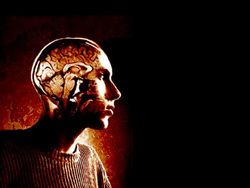
ListeningtotPerhaps the most controversial book ever written in the field of psychology, was Julian Janes' mid-seventies classic, “The Origin of Consciousness in the Breakdown of the Bicameral Mind.” In it, Jaynes reaches the stunning conclusion that the seemingly all-pervasive and demanding gods of the ancients, were not just whimsical personifications of inanimate objects like the sun or moon, nor anthropomorphizations of the various beasts, real and mythical, but rather the culturally-barren inner voices of bilaterally-symmetric brains not yet fully connected, nor conscious, in the way we are today. In his view, all people of the day would have “heard voices”, similar to the schizophrenic. They would have been experienced as a hallucinations of sorts, coming from outside themselves as the unignorable voices of gods, rather than as commands originating from the other side of the brain. After a long hiatus, the study the inner voice, and the larger mental baggage that comes along with having one, has returned to the fore. Vaughan Bell, a researcher from King's College in London, recently published an insightful call to arms in PlOS Biology for psychologists and neurobiologists to create a new understanding of these phenomena.

A coherent inner narrative in synch with our actions, is something most of us take for granted. Yet not everyone can take such possession. The congenitally deaf, for example, may later acquire auditory and communicative function through the use of cochlear implants. However, their inner experiences of sound-powered word, which they acquire through the reattribution of percepts of a previous gestural or visual nature, is something not typically shared or appreciated at the level of the larger public. A similar lack of comprehension at the research community level exists regarding those with physically intact senses, but with some other mental process gone awry. We may note with familiarity the shuffling and muttering of a homeless schizophrenic, yet have no systematic way to comprehend their intuitions, no matter how deluded they may appear. Bell notes that current neurocognitive theories tend to ignore how those who hear voices first acquire what he describes as “internalized social actors.”

More here.

Thursday, December 5, 2013

RAGNARÖK ON THE SEINE

Justin E. H. Smith in The American Reader:

ScreenHunter_444 Dec. 05 16.34What is Europe? Where are its cracks? The Italian philosopher Giorgio Agamben recently argued that a ‘Latin Union’ should be carved out of the crumbling EU, on the basis of shared linguistic and cultural heritage.[1] Agamben would like to include France in this breakaway federation, yet there is in fact some ancient and medieval basis for the belief that French identity, unlike Italian, is not simply descended from the Romans, but indeed is forged out of a significant encounter with the Germanic and Celtic worlds.

For one thing, the very ethnonym, français, denotes in the first instance Frankish people, speakers of the Germanic Old Franconian language, who also left their name to a certain fort that would grow into a city later distinguished as the birthplace of Goethe and the home of the German stock exchange. Students in traditional programs of Romance philology were required to master the non-Romance languages of influential neighbors; those specializing in Spanish also took Arabic, while those focused on France had to prove mastery of German. But here in fact the neighboring relation does not do justice to the nature of the influence in question. The two cultural spheres are co-generated, and share much of the same stock of treasures. Before there was Tristan und Isolde there was Tristan et Yseult. La Fontaine and the Brothers Grimm tell many of the same tales, gathered from the French and German countrysides like mushrooms. The German word for ‘France’, Frankreich, hits us like Thor’s hammer, even as it accurately describes the thing in question. France is the Reich of the Franks.

More here.

Should chimpanzees be granted ‘legal personhood’?

Kenan Malik in Pandaemonium:

ScreenHunter_443 Dec. 05 16.24The Nonhuman Rights Project, an organization founded by Massachusetts lawyer and animal rights activist Steven Wise, has this week filed a series of lawsuits in New York demanding that chimpanzees be granted ‘legal personhood’. The lawsuit seeks to extend the concept of habeas corpus to chimpanzees, drawing an analogy with one of the most famous anti-slavery cases, that of James Somerset in 1772, an American slave:

…who had been taken to London by his owner, escaped, was recaptured and was being held in chains on a ship that was about to set sail for the slave markets of Jamaica. With help from a group of abolitionist attorneys, Somerset’s godparents filed a writ of habeas corpus on Somerset’s behalf in order to challenge Somerset’s classification as a legal thing, and the case went before the Chief Justice of the Court of King’s Bench, Lord Mansfield. In what became one of the most important trials in Anglo-American history, Lord Mansfield ruled that Somerset was not a piece of property, but instead a legal person, and he set him free.

‘We are claiming that chimpanzees are autonomous’, Wise has said. ‘That is, being able to self-determine, be self-aware, and be able to choose how to live their own lives.’

I hope to write a proper response to this. In the meantime, I am republishing an old debate between myself and Peter Singer on the question of rights for Great Apes. In the form of an exchange of letters, it was first published in Prospect magazine in in April 1999.

More here.

A neuroscientist’s radical theory of how networks become conscious

Brandon Keim in Wired:

ScreenHunter_442 Dec. 05 16.06It's a question that's perplexed philosophers for centuries and scientists for decades: where does consciousness come from? We know it exists, at least in ourselves. But how it arises from chemistry and electricity in our brains is an unsolved mystery.

Neuroscientist Christof Koch, chief scientific officer at the Allen Institute for Brain Science, thinks he might know the answer. According to Koch, consciousness arises within any sufficiently complex, information-processing system. All animals, from humans on down to earthworms, are conscious; even the internet could be. That's just the way the universe works.

“The electric charge of an electron doesn't arise out of more elemental properties. It simply has a charge,” says Koch. “Likewise, I argue that we live in a universe of space, time, mass, energy, and consciousness arising out of complex systems.”

More here.

the history of the pacific

P10_armitage_recrop_389866hDavid Armitage at the Times Literary Supplement:

The Pacific has long been the hole at the heart of world history. For two centuries, global historians from the First World have hardly known what to make of the “fifth part of the world”. There’s just “so much ocean, too many islands”, the late Australian historian Greg Dening lamented ironically: over 25,000 islands in an ocean covering more than a third of the Earth’s surface and spanning from the Arctic to the Antarctic and from Southeast Asia to Central America. In the ages of paddle and sail, steam and propeller, every traveller could feel the connections between land and sea, the continents and the islands. The jet age seemingly rendered the Pacific Basin a kind of intellectual flyover territory – “the earth’s empty quarter” – for outsiders to Oceania and Australasia. The upshot, as the i-Kiribati scholar Teresa Teaiwa noted in 2002, was that “the dialogue between studies of humanity and studies of the Pacific” broke down. Only lately has the conversation resumed among historians. It now includes fish, mammals and birds. It takes place amid metaphorical mountains of fur, blubber and faeces. And it has lessons, even warnings, for the rest of the world.

more here.

dyer on arctic photos

Snow_noise1Geoff Dyer at Threepenny Review:

“I hate traveling and explorers.” A great and famous first line (from Claude Levi-Strauss’s Tristes Tropiques) because, for the reader—and who knows, maybe even for the author as well—it is such a provocative untruth: we love explorers. When we’re tired of every other kind of reading expedition, we’ll trudge along in the footsteps of the great explorers; even if we no longer have the stamina to read about them, we’ll settle for pictures of them.

And what about Albert Camus’s claim, in the opening line of his essay “The Minotaur or the Halt at Oran,” that “There are no more deserts, there are no more islands”? How can that be true, even at some metaphorical level? Okay, the Maldives might sink beneath the waves in the not-too-distant future, but there are still plenty of islands left—I live on one—and there are loads of deserts. The danger, as I understand it, is that if we’re not careful we’ll lose some islands and there will be nothing but deserts.

It’s the ice that’s endangered, receding and melting by the day, making polar exploration a thing of the past when it’s already a thing of the past.

more here.

An Underground Passion for a Star’s Stuff: ‘Buyer & Cellar,’ With Michael Urie

David Rooney in The New York Times:

Buyer-popupSince the dawn of time — well O.K., since the mid-’60s — gay men have been fiercely divided into love-her or hate-her camps by their feelings for Barbra Streisand. The intensity of those relationships is perhaps equaled by the subject’s self-regard, at least based on the evidence of her hilariously unnecessary 2010 coffee-table book, “My Passion for Design.” The volume is a personal tour and chronicle of the creation and construction of Ms. Streisand’s extensive Malibu compound, a “dream refuge” that includes a Connecticut-style mill house and water wheel. (Why not?) The author is also credited as principal photographer for the book, available in both regular and limited signed-and-numbered deluxe editions, the latter in a cloth-covered box that also includes a DVD, directed and narrated by… guess who? A steal at $500! But even in the more modest $60 version, this is a jaw-dropping digest of narcissism, obsessive folly and stifling tastefulness, which makes it a delicious target for satire. Jonathan Tolins has turned this tome into a springboard for “Buyer & Cellar,” a featherweight but irresistible play about celebrity false bonding, the solitude of über-fame and the seductive allure of expensive chintz.

A wonderful solo vehicle for Michael Urie to purvey his wicked winsomeness, the show, which opened on Wednesday at the Rattlestick Playwrights Theater, is a work of extravagant fiction, albeit one rooted in bizarre fact. The sheer excess of Babs-ylonia is of less interest to Mr. Tolins than the actual underground Main Street in the basement of a barn on the estate. Inspired by Winterthur, the American decorative arts museum in Delaware, it’s an avenue of quaint storefronts — a doll shop, an antiques emporium, a gift shoppe, a vintage clothing boutique, etc. — all built to house Ms. Streisand’s vast collection of “stuff.” “Remember, this is the part that’s real,” Mr. Urie says before he slips into character, with a nod of complicity that reads, “Crazy, right?” That character is Alex More, a struggling gay Los Angeles actor licking his wounds after being fired as the mayor of Toontown at Disneyland. The play’s cheeky premise is that since Ms. Streisand has fabricated herself a shopping mall with one customer, it also requires an employee to run it. That’s where the freshly hired Alex comes in. Idling away his days in this subterranean arcade with only the purr of the frozen yogurt machine for company, he is a symbol for the indignities endured by out-of-work actors in survival jobs. But Alex’s boredom is instantly forgotten when his employer pops downstairs to browse.

More here. (Note: This is the best play I have seen in NY in the last year! Go immediately if you can!)

sondheim, failed filmmaker

FolliesTheaterPosterlargeMatt Weinstock at Paris Review:

“If I had any visual talent, I would have loved to be a filmmaker,” Stephen Sondheim told me in a recent phone interview. “But I didn’t. So this is what I became.” It’s jarring to think that the legendary composer-lyricist of Sweeney Todd and Into the Woods only resorted to musical theater out of an inability to compose a wide shot. In the 1950s Sondheim directed amateur horror movies (“The photography is like a five-year-old’s”) and he later co-wrote the enjoyably chilly mystery film The Last of Sheila, but he has made a relatively piddling contribution to the art form that is deepest in his bones. As he told Frank Rich in 2000, “Movies were, and still are, my basic language.”

It’s the language he used to write Follies, the sumptuous 1971 Broadway musical about middle-aged showgirls gathering for a boozy, confrontational reunion on the eve of their old theater’s destruction. While critics have treated the show as an elegy to the theater, Hollywood seems to have been the headiest influence on Follies’ creative team. Sondheim has said that during the writing process, he “could only imagine the spectacle of a Ziegfeldian ‘Loveland’ in terms of movie musicals,” and co-director Harold Prince’s concept for Follies as a story about “rubble in the daylight” grew out of Life magazine photo of Gloria Swanson standing in the ruins of the Roxy movie palace.

more here.

One million deaths: unprecedented survey of mortality in India

Erica Westly in Nature:

Illos-02In 1975, when Prabhat Jha was growing up in Canada, his family received a report from India that his grandfather had died; the cause was unclear. Like many people living in rural India, Jha's grandfather had died at home, without having visited a hospital. Jha's mother was desperate for more information, so she returned to her home village to talk to locals. Years later, when Jha was at medical school, he reviewed his mother's notes and realized that his grandfather had probably died of a stroke. Now Jha, an epidemiologist at the University of Toronto, is nearing the end of an ambitious public-health programme to document death in India using similar 'verbal autopsy' strategies.

The Million Death Study (MDS) involves biannual in-person surveys of more than 1 million households across India. The study covers the period from 1997 to the end of 2013, and will document roughly 1 million deaths. Jha and his colleagues have coded about 450,000 so far, and have deciphered several compelling trends that are starting to lead to policy changes, such as stronger warning labels on tobacco. Public-health experts need mortality figures to monitor disease and assess interventions, but quality mortality data are scarce in most developing countries. Seventy-five per cent of the 60 million people who die each year around the globe are in low- and middle-income countries such as India, where cause of death is often misclassified or unreported. Groups such as the World Health Organization (WHO) typically base mortality estimates on hospital data, but in many developing countries most people die outside hospitals. As global health researchers increasingly turn to indirect computer models, many applaud the MDS's low-tech, on-the-ground approach and see it as a model for assessing true health burdens in the developing world. “For countries like India, there will almost certainly continue to be a role for verbal autopsy,” said Colin Mathers, coordinator of mortality and burden of disease at the WHO. “It's a crucial source of information.”

More here.

Thursday Poem

A Question for Grace

I feel dead. I never managed to ask Grace
if one may open a text with such a statement,
meanwhile we left New York to pick apples
and on both sides of the road pumpkins burned around us.
I’d never travelled inside a sleeve
so orange
and when we stopped to drink cider at a local inn
I imagined I saw Grace’s gray head
among the wheat-haired people
and at home I read that she was dead.
.

by Shulamit Apfel
from Pahot me-emet ain ta’am liktov
publisher: Safra, Tel Aviv, 2012
translation: 2013, Lisa Katz

Poets's Note: The American writer and activist Grace Paley (1922-2007)

Wednesday, December 4, 2013

Iran’s Economic Crossroads

Vali Nasr in the New York Times:

ScreenHunter_441 Dec. 04 20.30Critics have dismissed the Nov. 24 interim accord reached with Iran on its nuclear program as marginal, tenuous and easily reversed. But an enormous amount has changed, especially from Iran’s viewpoint. Essentially, Iran agreed to freeze its enrichment program for six months to allow time for talks on a potential final agreement, while a few sanctions were lifted. Overlooked in the debate over the merits of the deal are the economic dimensions that are surely a factor in Iran’s calculus.

These considerations, more than ideological ones, may well shape the landscape of future bargaining. It would be a colossal error to restore or expand the few sanctions that are being lifted, as some members of the United States Congress are threatening to do.

Before the deal started developing, in secret talks that started in March, Iran’s leaders faced a dilemma: scrap their whole nuclear program or live indefinitely under sanctions that were strangling their economy. Rather than surrender completely, they swallowed the economic hardship and eventually came to think that they could endure it for longer than the West expected.

But now they can envision a compromise that allows them a nominal right to enrichment if they forgo a path to nuclear weapons — and full relief from sanctions once they sign a permanent accord. That is a deal that might be accepted even by the most hard-line forces in Iran.

More here.