7 Medical Advances to Watch in 2014

From Smithsonian:

BacteriaGut reactions: Another area of research showing a lot of promise has to do with our guts, specifically all the bacteria residing there. Among the more recent findings: That there may be a direct physiological connection between the mix of microbes in our digestive tract and how our brain functions, and that that mix can also be a factor in whether a person is thin or obese. Expect more focus this year on how gut bacteria affect not just gastrointestinal diseases, such as ulcerative colitis and Crohn’s disease, but also cancer and allergies. In fact, a study just published in the Proceedings of the National Academy of Sciences determined that when dust from houses in which dogs lived was introduced into the gut bacteria of mice, the lab animals were less likely to develop symptoms of asthma.

Take that, cancer!: The War on Cancer has been going on a long time, with its share of false hopes, but a growing number of experts suggest that the fight may have turned a corner with a treatment known as cancer immunotherapy. Last month, for instance, Science magazine named it the “Breakthrough of the Year.” So what exactly is cancer immunotherapy? Put simply, it is using drugs that spur the body’s immune system to battle tumor cells directly. The reason this doesn’t happen naturally, as researchers discovered a few years ago, is that tumor cells are able to wrap themselves in a protective shield. But new drugs are being tested that have been able to empower the immune system to break through that protection and allow the body to do its job in fighting cancer cells on its own. The number of cases where immunotherapy has been tested is still relatively small, but the results have been encouraging. And, as Jennifer Couzin-Frankel wrote in Science, “Immunotherapy marks an entirely different way of treating cancer—by targeting the immune system, not the tumor itself.”

More here.

What to expect in 2014: Nature takes a look at what is in store for science in the new year.

Richard Van Noorden in Nature:

CometSpace probes: The European Space Agency’s Rosetta spacecraft could become the first mission to land a probe on a comet. If all goes well, it will land on comet Churyumov–Gerasimenko in November. Mars will also be a busy place: India’s orbiter mission should arrive at the planet in September, about the same time as NASA’s MAVEN probe. And NASA’s Curiosity rover should finally make it to its mission goal, the slopes of the 5.5-kilometre-high Aeolis Mons, where it will look for evidence of water. Back on Earth, NASA hopes to launch an orbiter to monitor atmospheric carbon dioxide.

Neural feats: Neurobiologist Miguel Nicolelis at Duke University in Durham, North Carolina, has developed a brain-controlled exoskeleton that he expects will enable a person with a spinal-cord injury to kick the first ball at the 2014 football World Cup in Brazil. Meanwhile, attempts are being made in people with paralysis to reconnect their brains directly to paralysed areas, rather than to robotic arms or exoskeletons. In basic research, neuroscientists are excited about money from big US and European brain initiatives, such as Europe’s Human Brain Project.

Novel drugs: In the pharmaceutical industry, all eyes are on trial results from two competing antibody treatments that harness patients’ immune systems to fight cancer. The drugs, nivolumab and lambrolizumab, work by blocking proteins that prevent a person’s T cells from attacking tumours. In early tests, the drugs evoked a better level of response in patients than ipilimumab, a similar therapy that was launched in 2011 to treat advanced melanoma.

More here.

Wednesday Poem

Are You There

Are you here?
I don’t know, Unnamed, I don’t know.
Look at me.
Look at me.
When you like.
When I die.
When it shines.
When my body is extinguished.
When I breathe.
When I go.
I didn’t write like this yet.
I don’t know what will happen.
I see stars.
Does it spin round?
I don’t know what spins round.
Can one hear?
I’m out of the cup.
I eat bran.
You found the cap.
I put on pajamas.
Everything goes into me.
I glued myself.
I write slowly.
You are, what I see.
When I’ll breathe, I’ll die.
The reward is terrible.
I have everything.
There’re lumberjacks.
The hour came.
There’re apricots.
I hear touches.
There’s a lock.
They said.
They danced.
Give me your cap.
I breathed.
I fell asleep.
You were fast.
I was late.
I have painted.

by Tomaž Šalamun
from Ko vdre senca/When the Shadows Breaks In/Lorsque l’ombre force
publisher: Litterae Slovenicae, Ljubljana, 2010
translation: 2010, Michael Thomas Taren and Tomaž Šalamun

Tuesday, January 7, 2014

Does Immigration Mean ‘France Is Over’?

Justin E. H. Smith in the New York Times:

ScreenHunter_485 Jan. 07 17.10It is difficult to go more than a day in France without hearing someone express the conviction that the greatest problem in the country is its ethnic minorities, that the presence of immigrants compromises the identity of France itself. This conviction is typically expressed without any acknowledgment of the country’s historical responsibility as a colonial power for the presence of former colonial subjects in metropolitan France, nor with any willingness to recognize that France will be ethnically diverse from here on out, and that it’s the responsibility of the French as much as of the immigrants to make this work.

In the past year I have witnessed incessant stop-and-frisk of young black men in the Gare du Nord; in contrast with New York, here in Paris this practice is scarcely debated. I was told by a taxi driver as we passed through a black neighborhood: “I hope you got your shots. You don’t need to go to Africa anymore to get a tropical disease.” On numerous occasions, French strangers have offered up the observation to me, in reference to ethnic minorities going about their lives in the capital: “This is no longer France. France is over.” There is a constant, droning presupposition in virtually all social interactions that a clear and meaningful division can be made between the people who make up the real France and the impostors.

More here.

How Dale Carnegie’s self-help movement is now more about entitlement than enlightenment

Tom Jokinen in The Globe and Mail:

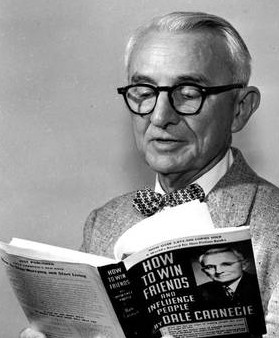
ScreenHunter_484 Jan. 07 15.55Want to change your life, your career, your outlook this year? Plenty of successful go-getters say they owe their go-getterness to Dale Carnegie’s bestseller How To Win Friends And Influence People: Warren Buffett, Lee Iacocca, Charles Manson. In 1957, Manson took a Carnegie self-improvement course while doing time in a California prison for car theft. “Virtually every word in the Carnegie publications resonated with Charlie,” writes Jeff Guinn in Manson: The Life and Times of Charles Manson. “For the first time in his life he was considered an outstanding pupil.” Carnegie’s advice was simple: make the other fellow feel important and he’ll follow you anywhere. Manson took it to heart, and from this homespun, self-improvement philosophy, the Manson Family was born 10 years later. There are still Family members in prison who are denied parole, year after year, because they still think of Charlie as a great man. The lesson? Don’t be so quick to dismiss Dale Carnegie as corn-pone pop psychology: This stuff works.

And sells. Considered the stem cell of the self-help publishing line, How To Win Friends… has sold over 30 million copies since its first printing in 1936 – more than Gone With The Wind and The Very Hungry Caterpillar.Carnegie’s skill was in adapting early-20th-century academic psychology, from Alfred Adler to William James, into cracker-barrel idiom: “Become genuinely interested in other people.” “Smile.” “Remember that a person’s name is, to that person, the sweetest and most important sound in any language.” An off-the-rack hit, the book would redefine the American promise of the “pursuit of happiness,” as Steven Watts writes in his new biography Self-Help Messiah: Dale Carnegie and Success in Modern America, a straight-up, warm-hearted account of the life of an unlikely American role model. It would also, according to Watts, launch a therapeutic industry that leads directly from Carnegie to Oprah, Dr. Phil, the Landmark seminars, and conference hall roomfuls of unhappy people standing on chairs and hollering about their neglectful parents. How did that happen? How did Dale Carnegie, who urged people to be nice to each other, spawn a pseudo-religion of narcissism?

More here.

HARDING, KERRIGAN: SPECTACLES OF FEMALE POWER AND PAIN

Article_marshallSarah Marshall at The Believer:

First, the facts: on January 6, 1994, Nancy Kerrigan left the ice after a public practice session in Detroit’s Cobo Arena, where she was to compete in the US Figure Skating Championships the following day. “I was walking toward the locker rooms, away from the ice,” she said later, “and someone was running behind me. I started to turn, and all I could see was this guy swinging something… I don’t know what it was.” The man had been aiming for her left knee, but missed, instead hitting her on the lower thigh. Later, in an exclusive interview with Jane Pauley, Nancy put a brave face on the assault, reassuring Americans that she knew how lucky she was, because if the man had actually hit her knee she would undoubtedly have been unable to skate at the Olympics. She had to feel thankful, she said in a moment of good-natured wit, for his poor aim. By then, however, it didn’t really matter what she had to say. To the public, her injury had already been transformed into a gangland kneecapping, while the assailant’s weapon, revealed soon after the assault to have been a collapsible police baton, was routinely characterized as everything but—a crowbar, a wrench, a lead pipe—in an ongoing public game of Clue. Nancy, meanwhile, would be remembered not for anything she was doing now, but for the way she had acted immediately following the assault. There was room for only one image of Nancy in the public’s memory, and it had already been chosen.

more here.

Maps and Monsters

Balena-orchas-2_jpg_600x650_q85Marina Warner at the New York Review of Books:

If animals are not only bons à manger but also bons à penser (good to eat, good to think with), according to the celebrated dictum of Claude Lévi-Strauss, then monsters, while perhaps less inviting to the palate, make even better food for thought. Themselves the direct and fanciful products of attempts to understand phenomena, they appear in a wonderful variety of forms on the maps drawn up by medieval and Renaissance cartographers, as Joseph Nigg and Chet van Duzer show in two resplendently illustrated and thoughtful recent studies. Scylla and Charybdis, sea serpents and pristers offer a range of explanations for natural phenomena, such as whirlpools and reefs; indeed the abundant stories that Homer and Ovid tell draw up a wonderful narrative geography as much as a mythical history.

Yet in many ways maps and monsters would appear antithetical: maps are about measurement and evidence; they attempt to document a real world out there in an objective way with empirical tools tested over time; by contrast, monsters are fantasies, mostly sparked by terrors, but sometimes born of desiring curiosity, too.

more here.

Move over, Kerouac! “Grand Theft Auto” is the American Dream narrative now

Ryan Leas in The Atlantic:

GtaAin’t the American Dream grand? Michael, one of three playable characters in “Grand Theft Auto V,” yells this periodically during firefights, typically when you’re rampaging against cops. In a nutshell, that context is all you need to understand the wicked smirk specific to the GTA franchise’s exaggerated vision of America. It’s always hard to pin down exactly what the ultra-successful series is. “GTA” is equal parts incisively clever and on the nose. It pushes boundaries with some of the most mature content in mainstream video games while channeling that content toward juvenile ends, tapping into latent teenage dreams of anarchy. The games acerbically critique American consumerism while also offering a world in which driving up on a sidewalk and running down civilians is cause for laughing out loud.

Throughout, one thing has been consistent. In its continual mining of classic American crime dramas, from “The Godfather” to “Scarface” to “Heat,” the GTA franchise automatically inherits that tradition’s outlaw take on undying American Dream tropes. The upward mobility, the rags to riches, all with a pistol in one hand and a bag of money in the other. Through its knowing recalibration of this traditional structure, “GTA” would like to position itself as subversive. And, no doubt, its vision of America has always been an amusingly satirical one, that proclamation of “Ain’t the American Dream grand?” delivered with a healthy amount of sarcasm. But it’s also fantasy fulfillment. As much as this newest iteration of “GTA” skewers American culture, it also captures how the GTA franchise as a whole plays into a more contemporary tradition — a new, digital American frontier in which to play out our inherited myth over and over. One that urges us to press “Start” once more, but on the pretense of what is, ultimately, a batch of false promises.

Read more here.

Camille Paglia: A Feminist Defense of Masculine Virtues

Bari Weiss in The Wall Street Journal:

Camille'What you're seeing is how a civilization commits suicide,” says Camille Paglia. This self-described “notorious Amazon feminist” isn't telling anyone to Lean In or asking Why Women Still Can't Have It All. No, her indictment may be as surprising as it is wide-ranging: The military is out of fashion, Americans undervalue manual labor, schools neuter male students, opinion makers deny the biological differences between men and women, and sexiness is dead. And that's just 20 minutes of our three-hour conversation. When Ms. Paglia, now 66, burst onto the national stage in 1990 with the publishing of “Sexual Personae,” she immediately established herself as a feminist who was the scourge of the movement's establishment, a heretic to its orthodoxy. Pick up the 700-page tome, subtitled “Art and Decadence From Nefertiti to Emily Dickinson, ” and it's easy to see why. “If civilization had been left in female hands,” she wrote, “we would still be living in grass huts.” The fact that the acclaimed book—the first of six; her latest, “Glittering Images,” is a survey of Western art—was rejected by seven publishers and five agents before being printed by Yale University Press only added to Ms. Paglia's sense of herself as a provocateur in a class with Rush Limbaugh and Howard Stern. But unlike those radio jocks, Ms. Paglia has scholarly chops: Her dissertation adviser at Yale was Harold Bloom, and she is as likely to discuss Freud, Oscar Wilde or early Native American art as to talk about Miley Cyrus.

…She starts by pointing to the diminished status of military service. “The entire elite class now, in finance, in politics and so on, none of them have military service—hardly anyone, there are a few. But there is no prestige attached to it anymore. That is a recipe for disaster,” she says. “These people don't think in military ways, so there's this illusion out there that people are basically nice, people are basically kind, if we're just nice and benevolent to everyone they'll be nice too. They literally don't have any sense of evil or criminality.”

More here.

cheap crap and Europe

Jergovic_468wMiljenko Jergovic at Eurozine:

However, as I made my way through the endless crowds and neared the end of Wroclaw's enormous, bazaar-like market, I realised that instead of getting more interesting, more select, more redolent of the past, the goods simply became cheaper and tattier, until finally they just turned into rubbish. In among this rubbish were a few items from the socialist period: the odd Soviet badge bearing the profile of Vladimir Lenin, a broken Romanian water heater, and piles of vinyl records featuring the kind of second-rate Western pop that had probably meant something to someone in the Poland of the 1970s and 1980s. But there was nothing of local provenance, nothing original, nothing that bore the stamp of the city or its collective memory. It was as if Frankfurt had preserved more of itself in the wake of the air-raids of 1945 than Wroclaw could muster for the entire period prior to 1990.

I was disappointed, but not exactly surprised. I felt as if I was at home in the Balkans. Our own open-air markets frequently look pretty similar: a mountain of cheap clothes, but very little in the way of history or memory. In essence, that is what the Balkans are today: a worthless pile of cheap clothes, without history, memory or true identity. It is from this basic pattern that all of today's Balkan nationalisms have been cut. And it is only by means of these bloodthirsty and mindless nationalisms that politics and culture in the Balkans can be recognized.

more here.

Tuesday Poem

Oxbow Lake

From Lesotho to Sullivan’s Quay,
Maurice Scully inscribed in his book
of poetry to me. Because I caught
wind of him mentioning a Basotho blanket
in one of his poems. We got
talking—how we both went to Lesotho:
seeking adventure, growing our hair.
And we ran through places
we visited there, like a river snaking down
the mountains, till our paths
criss-crossed here—converging
like an oxbow lake. From The Kingdom in the Sky
to the People’s Republic of Cork
below the sea. And under his signature
X marked the spot to me.

X marked the spot to me
below the sea, and under his signature,
to the People’s Republic of Cork.
Like an oxbow lake from The Kingdom in the Sky,
criss-crossed here—converging
the mountains. Till our paths
we visited there, like a river snaking down.
And we ran through places,
seeking adventure, growing our hair.
Talking—how we both went to Lesotho
in one of his poems. We got
wind of him mentioning a Basotho blanket
of poetry to me. Because I caught
Maurice Scully—inscribed in his book,
From Lesotho to Sullivan’s Quay.

by Adam Wyeth
from Landing Places: Immigrant Poets in Ireland
Dedalus Press, Dublin, 2010

The Brain, in Exquisite Detail

James Gorman in The New York Times:

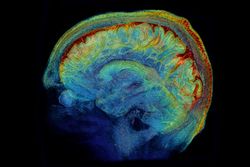
BRAIN-sfSpanAs a professor at Washington University and a leader of one of five teams there working on the Human Connectome Project, Dr. Barch focuses her research on the way individual differences in the brains of healthy people are related to differences in personality or thinking. For instance she said, people doing memory tasks in the M.R.I. machine may differ in competitiveness and commitment to doing well. That ought to show up in activity in the parts of the brain that involve emotion, like the amygdala. However, she points out that the object of the Connectome Project is not to find the answers to these questions, but to provide the database for others to try to do so.

Perhaps the greatest challenge is that the brain functions and can be viewed at so many levels, from a detail of a synapse to brain regions trillions of times larger. There are electrical impulses to study, biochemistry, physical structure, networks at every level and between levels. And there are more than 40,000 scientists worldwide trying to figure it out. This is not a case of an elephant examined by 40,000 blindfolded experts, each of whom comes to a different conclusion about what it is they are touching. Everyone knows the object of study is the brain. The difficulty of comprehending the brain may be more aptly compared to a poem by Wallace Stevens, “13 Ways of Looking at a Blackbird.” Each way of looking, not looking, or just being in the presence of the blackbird reveals something about it, but only something. Each way of looking at the brain reveals ever more astonishing secrets, but the full and complete picture of the human brain is still out of reach. There is no need, no intention and perhaps no chance, of ever “solving” a poet’s blackbird. It is hard to imagine a poet wanting such a thing. But science, by its nature, pursues synthesis, diagrams, maps — a grip on the mechanism of the thing. We may not solve the brain any time soon, but someday achieving such a solution, at least in scientific terms, is the fervent hope of neuroscience.

More here.

Monday, January 6, 2014

Sunday, January 5, 2014

Syed Ali Raza, 1913-2005

This Obituary is in honor of our father who died nine years ago today.

MEMBER OF PAKISTAN CIVIL SERVICE, RESPECTED AUTHOR AND INTELLECTUAL, SYED ALI RAZA DIES AT 91

by Azra Raza
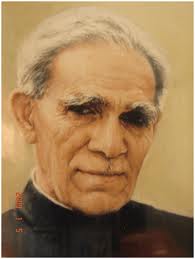
AliSyed Ali Raza, Retired Director, Ministry of Foreign Affairs, Pakistan, died peacefully in his sleep at Musa House, Karachi, on Wednesday, January 5th, 2005 at 2:25 a.m. The youngest of four children of Syed Zamarrud Hussain (1876-1932) and Hashmi Begum (1885-1956), he was born in Bijnor, India, on November 29th, 1913. His paternal lineage is Rizvi Syed, tracing back to the Prophet Muhammad through Imam Ali Raza whose descendent Shah Syed Hassan Rasoolnuma arrived in Bengal from Sabzwar, Iran, in 1355 AD. Apparently he so impressed the ruling monarch Badshah Ghiassuddin with his charm and intellect that the King gave him the hand of the Royal Princess in marriage. The ruler of Delhi, Mubarak Shah, then invited Shah Syed Hassan to his Court where he served faithfully by overpowering the rebellion mounted by a smaller Principality. He was rewarded by being given the properties of Jarcha and Chols in Bulandsheher, UP. Shah Syed Hassan’s grandson, Syed Shah Jalal distinguished himself even further through his exceptional scholarship, courage, intellect, and leadership such that both Hindus and Muslims viewed him with the respect and awe accorded a spiritual leader or Pir in his lifetime. His mausoleum in Bijnor became a site for worship and elaborate annual rites commemorate his many and varied accomplishments to this day. The maternal side of Syed Ali Raza’s lineage is Zaidi Syed, his maternal great-grandfather Syed Muzaffar Ali was attached to the Oudh court with extensive landholdings in Muzaffar Nagar. Stories of his extraordinary wealth circulated including the reputation of his wife for leaving behind enough gold and silver threads which fell from her exotic dresses, for the servants to fight over each time she left a party. Ali Raza’s parents lost 6 children (ranging in age from 1-16 years, named Zainul Ibad, Ali Murad, Ali Imjad, Ali Ibad, Sadiqa Khatoon and Muhammad Raza) to the epidemics of plague, influenza and typhoid over a decade. The extreme grief affected both parents, but especially disheartened Ali Raza’s father Syed Zamarrud Hussain, who simultaneously lost his 28 year old brother, 26 year old sister-in-law and their only child. Inconsolable and anguished by the deep sorrow of losing practically his entire close family, he left the ancestral home accompanied by his wife, for a more or less nomadic existence, wandering for several years through Dehradoon and smaller villages (Kandhra, Kirana, Shamli) of Muzaffar Nagar. Three more children were born during this period, and the family finally returned to Bijnor where Ali Raza was born in 1913.

More here.

Is Life a Ponzi Scheme?

Mark Johnston in the Boston Review:

ScreenHunter_481 Jan. 05 16.59Who knows what form the end of humanity will take? Will it come by extraterrestrial invasion, or by the erosion of the ozone layer, or by a large asteroid impacting the earth, or by mass starvation during a long nuclear winter, or by a bacterium running amok in the post-antibiotic age, or by a nomadic black hole sucking up everything in its path as it wanders toward us, or by a gamma ray burst from any one of the host of supernovas destined to occur within three thousand light years of the earth, or by the eruption of the massive volcano that now sits, waiting, under Yellowstone National Park? Or will it be as the apocalyptic literature of Judaism and Christianity describes it, with the last days consisting of the terrifying separation of the sheep from the goats? Even if humanity somehow avoids all this, and even if we escape the solar system before the inevitable heat death of the sun, eventually the universe will come to consist of a subatomic soup so thin that nothing recognizably human will be able to exist.

So we are doomed. There is no way around it. The hope is that doom is far enough away for humanity to flourish individually and collectively. The lights will eventually go out; the issue is just how brightly they will burn in the interim.

Here ignorance is not exactly bliss, but it is helpful. Unless you are professionally involved in existential risk assessment or in one of those fields, such as bio-warfare, where the resultant blowback could indeed wipe us out, it is wise to forget about our inevitable collective obliteration precisely because of its capacity to uselessly demoralize us. When it comes to the end of humanity, Spinoza’s advice to individuals concerning their own deaths seems even more pertinent: “A free man thinks of nothing less than of death, and his wisdom is a meditation not on death, but on life.”

But what if, as a brute psychological matter, we just cannot put the end of humanity out of our minds? There are two quite different cases in which the thought of our collective end might worry us: the case where we are demoralized because we really are, or take ourselves to be, in the last days, and the case where we are demoralized merely by the fact that there will be a last day.

More here.

German, Jewish and Neither

Yascha Mounk in the New York Times:

ScreenHunter_480 Jan. 05 16.51My family, too, came to West Germany as immigrants. Born in the shtetls of Eastern Europe, my grandparents embraced Communism as teenagers, leaving home to become political activists. They survived the Holocaust by fleeing to the Soviet Union and returned to Poland after the war, keen to put their ideals into practice at long last. But then the regime they had helped to build threw them out amid a large-scale anti-Semitic witch hunt. Out of options, my mother and her father sought refuge in West Germany.

Born in 1982 as the citizen of a peaceful, affluent and increasingly cosmopolitan country, I spent a mostly happy childhood in places like Munich, Freiburg and Karlsruhe. I was a fervent supporter of the national soccer team and dreamed of running for the Bundestag. German is, and will remain, the only language I speak without an accent.

My family’s Jewish identity has never been strong. I had neither a bris nor a bar mitzvah. When I was young, my mother gave me Christmas presents so that I wouldn’t feel left out.

Even so, as I grew older, I felt more and more Jewish — and less and less German. Gradually, I concluded that staying in Germany was not for me.

The reaction of my classmates in Laupheim might suggest that ignorance or hatred — which have subsided since I was a child, but remain real problems — are why I left. But that’s not quite true. If there was one thing that made me feel I would never truly belong, it wasn’t hostility: It was benevolence.

More here.

Can Islam and evolution be reconciled?

Muslimevolution-Shaha1

Alom Shaha at the Rationalist Association:

People often assume that because I am a science teacher and an atheist my faith in science is what led me to reject faith in a God. This is not the case – I stopped believing as a child, long before I knew anything about the Big Bang theory or evolution by natural selection – but, as I have seen in some of my own students, many religious people can lose their faith, or at least have it severely tested, as a result of learning science.

I met someone like this at a recent conference called “Have Muslims Misunderstood Evolution?” organised by the Deen Institute, an organisation that claims to want to “articulate faith, not in spite of, but through scientific inquiry, critical thinking and logical reasoning, reviving intellectuality among modern Muslims.” This young man, a postgraduate biochemist at Imperial College London, told me that he had come to the conference in the hope that he would find a way to reconcile his belief in the teachings of Islam with what he described as “evidence for evolution in everything I do at work”.

He seemed deeply anguished by the fact that evolution by natural selection contradicts the core belief with which he was brought up – that the Qur’an is the literal word of Allah. When I asked him if he might consider the idea that the Qur’an wasn’t a divine document he told me that this was “impossible” for him, that his “life would have no meaning” if the Qur’an was not literally true.

His struggle is not unique. According to writer and journalist Myriam Francois-Cerrah, who chaired the conference, many Muslim science students experience “inner turmoil” as a result of studying evolution.

More here.

How do we go about finding a meaningful life, not just a happy one?

Roy F Baumeister in Aeon:

Italian-familyParents often say: ‘I just want my children to be happy.’ It is unusual to hear: ‘I just want my children’s lives to be meaningful,’ yet that’s what most of us seem to want for ourselves. We fear meaninglessness. We fret about the ‘nihilism’ of this or that aspect of our culture. When we lose a sense of meaning, we get depressed. What is this thing we call meaning, and why might we need it so badly?

Let’s start with the last question. To be sure, happiness and meaningfulness frequently overlap. Perhaps some degree of meaning is a prerequisite for happiness, a necessary but insufficient condition. If that were the case, people might pursue meaning for purely instrumental reasons, as a step on the road towards happiness. But then, is there any reason to want meaning for its own sake? And if there isn’t, why would people ever choose lives that are more meaningful than happy, as they sometimes do?

The difference between meaningfulness and happiness was the focus of an investigation I worked on with my fellow social psychologists Kathleen Vohs, Jennifer Aaker and Emily Garbinsky, published in theJournal of Positive Psychology this August. We carried out a survey of nearly 400 US citizens, ranging in age from 18 to 78. The survey posed questions about the extent to which people thought their lives were happy and the extent to which they thought they were meaningful. We did not supply a definition of happiness or meaning, so our subjects responded using their own understanding of those words. By asking a large number of other questions, we were able to see which factors went with happiness and which went with meaningfulness.

More here.