Is the $1,000 genome for real?

Erika Check Hayden in Nature:

HiSeqX_Ten_Single_Instrument_630The US$1,000 genome is here. Or so says sequencing-technology company Illumina, based in San Diego, California. At a healthcare investors' conference on 14 January, Illumina CEO Jay Flatley announced that his company will begin producing a new system this year called the HiSeq X Ten, one that can deliver “full coverage human genomes for less than $1,000”. Here Nature assesses the claim.

How did they do it?

Christian Henry, a senior vice president at Illumina, said that the HiSeq X contains four main improvements to Illumina's existing HiSeq 2500 system. The workhorse of the HiSeq 2500 is the flow cell, which houses hundreds of millions to billions of individual DNA templates copied from a sample to be sequenced. The DNA in these templates is labelledusing flourescent dyes that are photographed by a camera, and the resulting images are analysed to detect the identity of each base. But while the HiSeq 2500 contains a random smattering of DNA templates all across the flow cell, the HiSeq X contains an ordered array of 'nanowells' to house these DNA templates. This means that the templates can be packed in more densely on the flow cell, enabling the machine to read data out more data per run of the machine. Illumina has also figured out a way to enhance clustering of identical DNA templates in most of the nanowells, further boosting speed. Finally, the company added a faster camera and new polymerase enzymes to carry out faster sequencing reactions on the DNA templates.

More here.
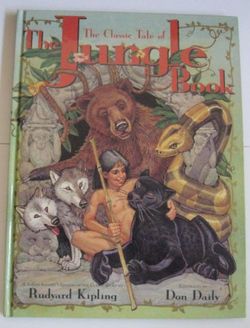
Rudyard Kipling: A Life

Harry Ricketts in delanceyplace:

BookAs a child, Kipling had been sent by his family from their home in India to live with an unfamiliar family in England, who subjected both Rudyard and his younger sister to the heartbreak of separation and emotional abuse. Both as a child and as an adult, Kipling lived in multiple worlds — crossing boundaries from India to England and America and back again — and learning to cope in these multiple worlds. These two themes, abandonment and boundary crossing, found full voice in his powerful stories of young Mowgli among the wolves. In Kipling's book, unlike in Disney's whimsical movie, these were characters of dignity and gravity. Note: If this selection seems obscure to those who are not familiar with the Mowgli stories, please forgive me — I'm celebrating. Sunday is my birthday and these books were my escape when I was very young. I read my tattered copy of the combined Jungle Books (an 1896 edition since lost) dozens of times:

“What is most striking about Mowgli's story, from a biographical point of view — as it unfolds in 'Mowgli's Brothers', 'Kaa's Hunting' and 'Tiger! Tiger!' — is watching Kipling once more rewriting aspects of his own childhood. The pattern of abandonment was repeated no fewer than three times: twice in 'Mowgli's Brothers', which opened with him losing his human parents and closed with him being cast out by the wolf-pack; and again at the end of 'Tiger! Tiger!', when he was rejected by the village. Mowgli became, in effect, a super-orphan. But while the abandonment motif was magnified, so too were the emotional compensations. Kipling provided Mowgli at each successive abandonment with a queue of would-be foster-parents, falling over each other to look after him: Father and Mother Wolf, Akela the Lone Wolf, Baloo the Bear, Bagheera the Black Panther and Kaa the Python. Not only were all these wild animals eager to care for Mowgli, but they competed with each other for his affection and acknowledged his power over them, a situation that has appealed to generations of child readers.

More here.

Thursday, January 16, 2014

We Didn’t Eat the Marshmallow. The Marshmallow Ate Us

Mag-12Riff-t_CA0-master1050

Michael Bourne in the New York Times Magazine:

In a series of famous experiments in the 1960s and ’70s conducted by the Stanford psychologist Walter Mischel, preschoolers were invited to sit alone in a room furnished only with a small desk. On the desk sat two marshmallows (or equivalently tempting treats) and a bell. The researcher told each child that he had to leave, but that when he returned, she could eat both marshmallows. If she wanted one marshmallow before then, however, she could ring the bell and eat one, but not both. Then the researcher shut the door, leaving the child alone with the forbidden marshmallows.

Some children gobbled a marshmallow the minute the door was closed, while others distracted themselves by covering their eyes, singing and kicking the desk. One resourceful child somehow managed to take a nap. But here’s the part that made the experiment famous: In follow-up studies, children who had resisted temptation turned out years later to be not only skinnier and better socially adapted, but they also scored as much as 210 points higher on their SATs than the most impatient children in the studies did.

I think I speak for thousands of my fellow Americans when I say that the first time I read about Mischel’s marshmallow study — in Daniel Goleman’s best seller, “Emotional Intelligence” — I imagined myself at age 4, staring at that fateful marshmallow. The tale of the marshmallows, as presented in Goleman’s book, read like some science-age Calvinist parable. Was I one of the elect, I wondered, a child blessed with the moral fortitude to resist temptation? Or was I doomed from age 4 to a life of impulse-driven gluttony?

Clearly I’m not alone in this reaction. Search for “marshmallow experiment” on YouTube, and you’ll find page after page of home-video versions of the experiment in which 4-year-olds struggle not to eat a marshmallow. The marshmallow study has been the subject of TED talks. The New Yorker published a long article about it. Radiolab did a show on it.

More here.

Teleology Rises from the Grave

Stephen T. Asma in Berfrois:

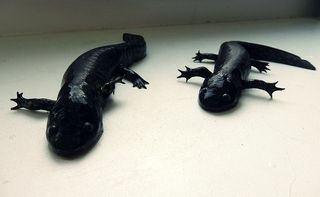
AmbystomasIn his 1790 Critique of Judgment, Kant famously predicted that there would never be a “Newton for a blade of grass.” Biology, he thought, would never be unified and reduced down to a handful of mechanical laws, as in the case of physics. This, he argued, is because we cannot expunge teleology (goal-directedness) from living systems. The question “what is it for?” applies to living structures in a way that has no corollary in physics.

Most Anglo and American philosophers, historians of science, and theologians have misunderstood this teleological argument, and the confusion has resurrected (with a vengeance) in the newest kerfuffle surrounding Thomas Nagel’s Mind and Cosmos: Why the Materialist Neo-Darwinian Conception of Nature is Almost Certainly False (Oxford, 2012). Nagel and his critics are rehearsing a tired debate that we may be doomed to repeat ad nauseum unless we gain some fresh perspective.

The usual narrative goes like this: Kant said there would be no Newton of biology; along comes Darwin, the Newton of biology, who shows that natural selection explains adaptation without appeal to teleology; fast-forward to the present and we are now the inheritors of a mechanical biology and only religious cranks still bleat on about teleology. Such is the standard narrative – clear, simple and wrong.

More here.

Metastatic cancer cells implode on protein contact

Blaine Friedlander in the Cornell Chronicle:

ScreenHunter_498 Jan. 16 16.56By attaching a cancer-killer protein to white blood cells, Cornell biomedical engineers have demonstrated the annihilation of metastasizing cancer cells traveling throughout the bloodstream.

The study, “TRAIL-Coated Leukocytes that Kill Cancer Cells in the Circulation,” was published online the week of Jan. 6 in the journal Proceedings of the National Academy of Sciences.

“These circulating cancer cells are doomed,” said Michael King, Cornell professor of biomedical engineering and the study’s senior author. “About 90 percent of cancer deaths are related to metastases, but now we’ve found a way to dispatch an army of killer white blood cells that cause apoptosis – the cancer cell’s own death – obliterating them from the bloodstream. When surrounded by these guys, it becomes nearly impossible for the cancer cell to escape.”

Metastasis is the spread of a cancer cells to other parts of the body. Surgery and radiation are effective at treating primary tumors, but difficulty in detecting metastatic cancer cells has made treatment of the spreading cancer problematic, say the scientists.

King and his colleagues injected human blood samples, and later mice, with two proteins: E-selectin (an adhesive) and TRAIL (Tumor Necrosis Factor Related Apoptosis-Inducing Ligand). The TRAIL protein joined together with the E-selectin protein stick to leukocytes – white blood cells – ubiquitous in the bloodstream. When a cancer cell comes into contact with TRAIL, which becomes unavoidable in the chaotic blood flow, the cancer cell essentially kills itself.

More here.

heloise: nine hundred and still full of surprises

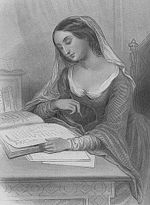
220px-Heloise_World_Noted_WomenBarbara Newman at the London Review of Books:

Nine hundred years ago, a celebrity philosopher fell in love with his star student and seduced her. Peter Abelard’s once brilliant lectures grew tepid, while his love songs placed the name of Heloise on every tongue. Passionate letters flew, and the Parisian gossip mill went into overdrive – until pregnancy, as so often, betrayed the secret. Much against Heloise’s will, Abelard insisted on marriage to soothe her enraged uncle Fulbert, and spirited their child off to his sister’s farm in Brittany. The pair married secretly at dawn, then went their separate ways. A resentful Heloise denied all rumours of the marriage, so Abelard, to protect her from Fulbert’s wrath, clothed her in a nun’s habit and hid her away at Argenteuil, the convent where she had been raised. This proved to be the last straw for Fulbert, whose hired thugs surprised Abelard in his sleep and ‘cut off the parts of [his] body whereby [he] had committed the wrong’. For want of a better option, the eunuch philosopher turned monk, while Heloise became a nun in earnest, prefacing her vows with a public lament.

Myth-making about the pair began almost immediately. The poet Jean de Meun, on discovering the letters they had exchanged in religious life, translated them into French and popularised their story in his Roman de la Rose.

more here.

nietzsche and megalomania

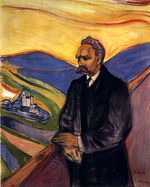
Friedrich-nietzsche-19061-1Peter Sloterdijk at The American Reader:

To learn more about Nietzsche’s theory and praxis of generosity, it is also—or above all—necessary to address his “megalomania,” supposing this an appropriate designation for this author’s extraordinary talent to speak about himself, his mission, and his writings in the highest of tones. Perhaps this issue here is one for which the expression addressed to the publisher about the “good news,” “something for which there is yet no name,” is once again appropriate. The alternative designations used to encompass the first parts of Thus SpokeZarathustra, “Poem” and “Gospel,” should also be kept in reserve as a way of qualifying Nietzsche’s megalomaniacal remarks.

Megalomania, then, or poetry, or something for which there is yet no name: what follows is advisably approached with a provision of alternative expressions, to avoid getting stuck with a designation reflex that is first best. The exposure value of Nietzsche’s most conspicuous statements about himself are so excessive that even the most favorable, the most free-spirited reader, yes even those who are willingly dazed, will look away from these passages as though not wanting to have perceived, to have countersigned, what has been committed to paper and put into print.

more here.

Robert Frost’s “doubleness,” revealed in his letters—and poems

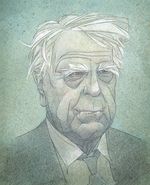
JF14_42_001Adam Kirsch at Harvard Magazine:

Thompson’s portrait of Frost was like a bomb dropped on the poet’s legend. The critic David Bromwich, writing about the last volume of Thompson’s biography in 1977, said that after reading it, “one feels that to stand in the same room with a man about whom one knew a quarter of the things one now knows about Frost would be more than one could bear.” But biography could do so much damage only because that legend was itself so imposing, and so carefully tended. Starting in the 1910s, around the time he turned 40, Robert Frost became the most famous American poet—and not just the most famous, but the best-loved, the one who seemed to embody all that America liked most about itself. At a time when modern poetry was growing increasingly arcane, here was a poet who wrote in straightforward language about ordinary New England farmers and laborers—a democrat in form and substance.

On a thousand podiums, Frost helped to create the image of a homespun American sage, reading his poems and delivering himself of crafty jokes and wise sayings. You can see this performance in action in The Collected Prose of Robert Frost, a volume in the continuing Harvard University Press (HUP) edition of Frost’s complete work. Once he became famous, Frost did not write much prose, and many of the items in the book are lectures or occasional remarks.

more here.

The Science of Citizenship: What’s at stake when schools skimp on science?

Belle Boggs in Orion Magazine:

Sciencereport_11How well we understand science affects almost every aspect of our personal and civic lives: our health, our reproductive choices, our understanding of the news, how and whether we vote, and our interaction with the environment. Many of the most important and contentious political issues of our time—climate change, hydraulic fracturing, offshore drilling—are also environmental and require an understanding of basic scientific principles that many of our poorest citizens lack. These same citizens will suffer from their lack of understanding: from water quality damaged by fracking, from mountaintop removal, from flooding caused by rising water levels. Poor people are disproportionately susceptible to poor health and more likely to be exposed to environmental or household pollutants. But for many of our poorest citizens, science education is largely ignored, especially in the foundational elementary and middle school years, as we favor the “basics” of reading and math through a testing and school accountability system that does not prepare our students for the significant social and environmental challenges to come.

More here.

Painting with Beads: A New Art Form Emerges in South Africa

Vicky Gan in Smithsonian:

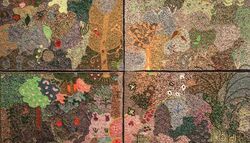
BeadsAt Little Farm, a former sugar plantation near Durban, women paint with beads. “Ubuhle Women: Beadwork and the Art of Independence,” a new exhibition at the Anacostia Community Museum, showcases the dazzling creations of this community of artists, living and working together in rural KwaZulu-Natal, South Africa. Called Ubuhle, or “beauty” in the Xhosa language, the community was founded in 1999 by migrant worker Ntombephi “Induna” Ntobela and local resident Bev Gibson, who co-curated the exhibition. Together the Ubuhle women have developed a new take on a South African tradition: the ndwango, a fabric panel of colored glass beads. Unlike traditional beadwork, which is worn on the body, these artworks are displayed on the walls like paintings. “By stretching this textile like a canvas,” writes Gibson, “the artists transform the flat cloth into a contemporary art form.”

Ubuhle came together in response to post-apartheid poverty in South Africa. Five of the artists are from the Transkei, the birthplace of Nelson Mandela, but left home in search of opportunity and financial independence. They found it at Little Farm, working day in and day out to create commissioned ndwangos; a single panel can take more than ten months to complete. At the same time, the women are raising families and running households. They bead while they cook, while they chop wood and while they feed the children. Work is an inextricable part of their daily lives, and vice versa. “The patterns and colors take on what happens to these artists over those months,” says James Green, a research scholar at the Metropolitan Museum of Art and co-curator of the exhibition. “They become true portraits of that time. These panels are their hope. They put everything into them.”

More here.

Thursday Poem

The Spider Knows

The spider knows
his centre

Like a sure
compass he paces
out the bounds of his decided
universe, remembering
which side of him is
centre

Narrowing in he fastens
often
back to the centre where he
rests or plots, he doesn’t
know about
mistakes

our spider sleeping
tight round his centre
though the thunder
blow

by Marvyne Jenoff
from Hollandsong
Oberon Press, 1975.

Pickles, Puja, and Pulp: On Tamil Pulp Fiction

Tamil-243x366

Kaavya Asoka in the LA Review of Books:

Unlike Bollywood’s avaricious national reach, the somewhat humbler linguistic ambitions of Tamil cinema dictated that it was usually about Tamilians, usually living in Tamil Nadu. Films therefore offered a peculiarly intimate window onto our lives. Although my own Tamil was poor — English having long usurped its place as my primary language — I could easily grasp the gist of the dialogue of my grandmother’s preferred brand of family melodrama. But their proximity to family life (ours and, I thought, everyone else’s) meant that they offered nothing new — they revolved endlessly around love, marriage, and familial duty, inevitably ending in dramatic monologues, tears, and death, which never came quickly enough. What fascinated were the rapid and logic-defying dress and scene changes during songs, where a dhavani-wearing peasant girl could be delivered from the tedium of tending water buffalo by a seamless camera cut, instantaneously depositing her into the perfectly reasonable confines of a blood-red cocktail dress as she sashayed down a London street. Movies seemed to capture both the provincial grip of our city of three million as well as our equally provincial ambitions to leave it.

Tamil thrillers and horror films, on the other hand, were riveting, their uncanniness­ only compounded by the fact that I couldn’t fully understand their more intricate plotlines. One film in particular comes hurtling back from the otherwise hazy cloud of cinematic childhood memory. In the 1979 Rajinikanth film Dharma Yuddham, the primary moral lessons of a son’s filial revenge for the murder of his parents washed over me with little effect. What grabbed me by the throat was Rajini’s gruesome discovery of glass jars filled with eyeballs in the villain’s refrigerator; the man who had killed his parents was also involved in the illicit trade of pilfered body parts. Rajini’s realization that what the villain had been referring to as his “black roses” were actually human eyeballs was rendered all the more unnerving because of their strangely captivating English moniker.

More here.

Wednesday, January 15, 2014

How was Emily Dickinson Able to be Frugal and Fruitful in Her Art?

Mlinko_infamyorurn_ba_img

Ange Mlinko in The Nation:

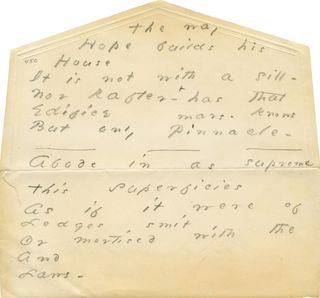
[T]he electronic age has a Dickinson of its own: edickinson.org. That’s the URL of the Emily Dickinson Archive, launched October 23 of last year, which features high-resolution images of the manuscripts included not only in Franklin’s Variorum Edition but also the collections of various libraries along the Eastern Seaboard: the American Antiquarian Society, Amherst College, Yale’s Beinecke Library, the Boston Public Library, Harvard’s Houghton Library, the Library of Congress, Smith College Libraries and the Vassar Special Collections. All of these institutions worked together to consolidate the scattered corpus, at least virtually, and make it available to the public under a Creative Commons license.

Are we now closer to the real Emily Dickinson? Not by a long shot, says the chief archivist at Amherst College, which owns 850 of her manuscripts, of which a little over half (539) are in the online archive. Another omission: only the manuscripts of her poems, not her letters, made the initial cut. But who decides what a poem is? Dickinson’s letters, like Keats’s, are universally acknowledged as masterpieces in their own right. Some of the letters are poems, and from others she culled many verses. Dickinson’s letters blur the boundaries between genres: she employed as much circumlocution, compression, metaphor and sound work in her correspondence as she did in her poetry.

Yet even if all, or most, of Dickinson’s manuscripts end up online, would we be any closer to the real thing? In a material sense, undoubtedly so: with the tools we already use to zoom in on maps (to find the location of a new restaurant) or shopping websites (to see the detail on a jacket), we can get as close as we want to examine how Dickinson formed her c’s or how little paper she required to write a quatrain in her own hand.

More here.

Subaltern Mythologies?

Editorsnote

Vivek Chibber in Jacobin responds to Bruce Robbins review of his book Postcolonial Theory and the Specter of Capital in n+1:

Bruce Robbins’ review in the latest issue of N+1 falls somewhere in-between. His tone for most of it is respectful, sometimes generous. He quite ably sets the context for the book’s arguments and tries to lay out what is at stake. In this, he rises above the mud-slinging that has been the resort of some of his colleagues. But once Robbins sets out his own criticisms, the essay degenerates into a series of distortions and misconceptions. What makes them interesting, and worth responding to, is that they converge with misgivings that even sympathetic readers have expressed.

The crux of Robbins’ criticism comes at the end of his review, and centers around three issues: whether my views of the English Revolution of 1640 and/or 1688 are defensible; whether my framework can apprehend the difference between East and West; and whether my materialism is really a restatement of rational choice theory. On all three counts his criticisms are mistaken.

More here. Robbins responds in n+1.

Culture as Opportunity?

Bytyci_intro_468w

Hamze Bytyci in Eurozine:

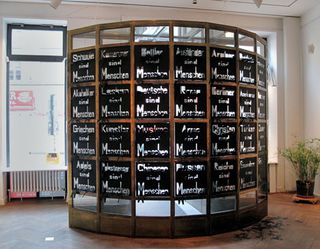
Art is here to provide individuals the freedom to express their own feelings, views or identity without having to give too much heed to social conventions. Yet when it is about the art and culture of Sinti and Roma, the situation seems to be a bit more complex. Here there are a number of prejudices, stereotypes or simply certain expectations that come to bear, be it on the part of the majority society or that of members of this minority itself. They influence not only the everyday life of many Sinti and Roma, but also, possibly their artistic production, be it only through the compulsion of having to react to and reflect on the overall situation.

In order to be able to assess the social effect that the art and culture work of Roma and Sinti has, it is necessary to first take at least a cursory look at the situation of the Sinti and Roma in Germany. This, however, proves difficult since there are no official studies on the situation of the non-German Roma in Germany. The following information is thus based on two studies that focus only on the situation of the German Sinti and Roma. It can be assumed that the situation of the non-German Roma – in particular among the Roma who have moved to Germany from Romania and Bulgaria – is even graver, especially in the field of education and in terms of economic and social factors. With regard to discrimination and racism, we can, by contrast, assume that the experience of the German Sinti and Roma is not much different from that of the non-German Roma.

More here.

The 100 best novels: No 17 – Moby-Dick

Robert McCrum in The Guardian:

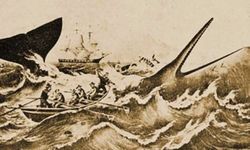
Moby-Dick-011On 5 August 1850 a party of writers and publishers climbed Monument Mountain in Massachusetts, during the American equivalent of a hike in the Lakes. Among the literati on this excursion were Nathaniel Hawthorne, 46, author of The Scarlet Letter (No 16 in this series), a recently published bestseller (although a term not yet in use), and the young novelist Herman Melville, who, after a very successful debut (Typee), was struggling to complete an unwieldy coming-of-age tale about a South Seas whaler. Melville, who was just 31, had never met Hawthorne. But after a day in the open air, a quantity of champagne, and a sudden downpour, the younger man was enraptured with his new friend, who had “dropped germinous seeds into my soul”. Rarely in Anglo-American literature has there been such a momentous meeting. It was the attraction of opposites. Hawthorne, from an old New England family, was careful, cultivated and inward, a “dark angel”, according to one. Melville was a ragged, voluble, romantic New Yorker from mercantile stock. Both writers had hovered on the edge of insolvency and each was a kind of outsider. A fervent correspondence ensued. Melville, indeed, became so infatuated that he moved with his wife and family to become Hawthorne's neighbour. Thus liberated, fulfilled, and inspired to say “NO! in thunder, to Christianity”, he completed Moby-Dick; or, The Whale, in the spring of 1851. After an early reading of the manuscript, Hawthorne acclaimed it in a letter that remains, tantalisingly, lost. All we have is Melville's ecstatic response (“Your heart beat in my ribs and mine in yours, and both in God's…”), and, subsequently, a dedicatory declaration of Melville's admiration for Hawthorne's “genius” at the front of Moby-Dick (the first edition hyphenated the whale's name). So how homoerotic was this friendship? No one will ever know; it remains one of the mysteries of American letters. All we can say for certain is that, after climbing Monument Mountain, Melville adopted Hawthorne's idea of the “romance” as a mixed-genre, symbolic kind of fiction, and found his creative genius somehow released in the making of his new book.

And that is everything, because Moby-Dick is, for me, the supreme American novel, the source and the inspiration of everything that follows in the American literary canon. I first read it, inspired by my sixth-form English teacher, Lionel Bruce, aged about 15, and it's stayed with me ever since. Moby-Dick is a book you come back to, again and again, to find new treasures and delights, a storehouse of language, incident and strange wisdom. Moby-Dick is – among some fierce contenders which will appear later in this series – the great American novel whose genius was only recognised long after its author was dead. From its celebrated opening line (“Call me Ishmael”) it plunges the reader into the narrator's quest for meaning “in the damp, drizzly November of my soul”.

More here. (Note: For Professor John Collins who is re-reading Moby Dick as a result of our recent conversation about Melville. It remains my favorite novel to which I return over and over in order to, among other things, understand the storms in the souls of men that make them go whaling)

Human–microbe mismatch boosts risk of stomach cancer

Ed Yong in Nature:

WEB_1_14501_42-31108440The Colombian town of Tuquerres, nestled high in the Andes Mountains, has one of the highest rates of stomach cancer in the world: about 150 cases per 100,000 people. Meanwhile in the coastal town of Tumaco, just 200 kilometres away, the equivalent rate is only around 6 in 100,000. The main cause of stomach cancer is Helicobacter pylori, a bacterium that infects half the world’s population. It is usually harmless, but occasionally leads to tumours. H. pylori has been infecting humans since our origins in Africa, and diversified with us as we spread around the world. But in places such as South America, the arrival of European colonists has broken this long history of co-evolution, leaving some people with H. pylori strains that do not share their ancestry.

Now, a team of scientists led by Pelayo Correa and Scott Williams at Vanderbilt University Medical Center in Nashville, Tennessee, has shown that this mismatch can turn a normally benign infection into a potentially carcinogenic one. When analysed together, the genomes of hosts and microbes give a better prediction of the risk of disease than when considered alone, the team found. Their results are published in Proceedings of the National Academy of Sciences1. “A lot of people have H. pylori, but very few have bad outcomes. Is that due to the organism or the host?” says Martin Blaser, a microbiologist at New York University School of Medicine. “This paper provides evidence that the fit is important. It’s a very nice advance.”

More here.

Wednesday Poem

Aboriginal Landscape

You’re stepping on your father, my mother said,
and indeed I was standing exactly in the center
of a bed of grass, mown so neatly it could have been
my father’s grave, although there was no stone saying so.

You’re stepping on your father, she repeated,
louder this time, which began to be strange to me,
since she was dead herself; even the doctor had admitted it.

I moved slightly to the side, to where
my father ended and my mother began.

The cemetery was silent. Wind blew through the trees;
I could hear, very faintly, sounds of  weeping several rows away,
and beyond that, a dog wailing.

At length these sounds abated. It crossed my mind
I had no memory of   being driven here,
to what now seemed a cemetery, though it could have been
a cemetery in my mind only; perhaps it was a park, or if not a park,
a garden or bower, perfumed, I now realized, with the scent of roses 
douceur de vivre filling the air, the sweetness of  living,
as the saying goes. At some point,

it occurred to me I was alone.
Where had the others gone,
my cousins and sister, Caitlin and Abigail?

By now the light was fading. Where was the car
waiting to take us home?

I then began seeking for some alternative. I felt
an impatience growing in me, approaching, I would say, anxiety.
Finally, in the distance, I made out a small train,
stopped, it seemed, behind some foliage, the conductor
lingering against a doorframe, smoking a cigarette.

Do not forget me, I cried, running now
over many plots, many mothers and fathers 

Do not forget me, I cried, when at last I reached him.
Madam, he said, pointing to the tracks,
surely you realize this is the end, the tracks do not go further.
His words were harsh, and yet his eyes were kind;
this encouraged me to press my case harder.
But they go back, I said, and I remarked
their sturdiness, as though they had many such returns ahead of them.

You know, he said, our work is difficult: we confront
much sorrow and disappointment.
He gazed at me with increasing frankness.
I was like you once, he added, in love with turbulence.

Now I spoke as to an old friend:
What of  you, I said, since he was free to leave,
have you no wish to go home,
to see the city again?

This is my home, he said.
The city — the city is where I disappear.


by Louise Glück
from Poetry, Vol. 203, No. 3, December, 2013